10 Cozy Scandinavian Home Decor Ideas for a Warm & Calm Home
Scandinavian style has a way of making a home feel instantly calmer. It is light without feeling stark, minimalist without feeling empty, and cozy without becoming visually cluttered. That balance is what makes Nordic-inspired interiors so appealing for everyday homes, especially when you want a space that feels comfortable, practical, and beautifully understated.
The best Scandinavian rooms are not simply collections of white walls and pale wood furniture. They are built around thoughtful choices: natural textures, functional layouts, soft lighting, comfortable fabrics, and a restrained color palette. In my experience, the look works particularly well when you focus on how a room feels rather than trying to copy a particular photograph.
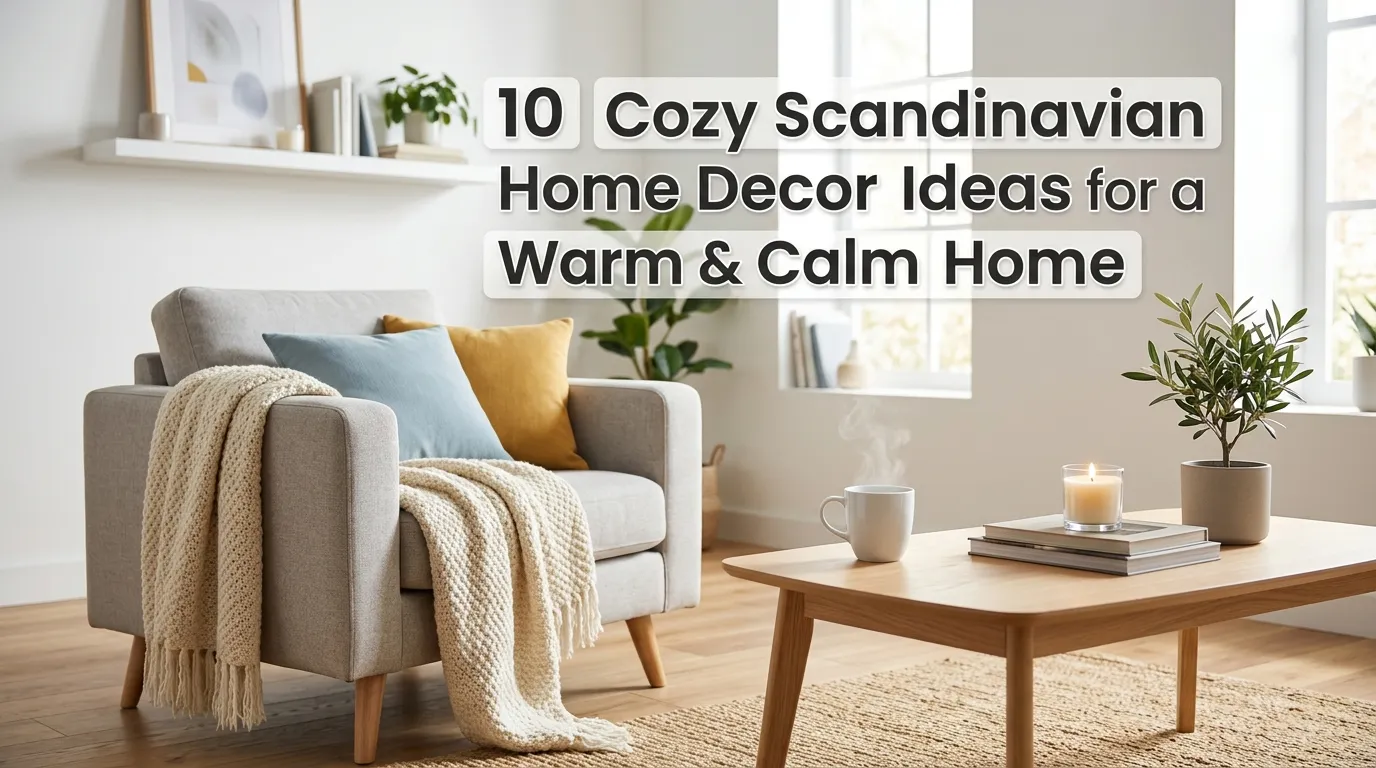
You can bring this aesthetic into a living room, bedroom, entryway, dining area, or even a small apartment without replacing everything you own. A chunky knit throw, woven basket, warm wood accent, linen curtains, or simple ceramic vase can shift the atmosphere surprisingly quickly. The trick is layering these elements so the room remains inviting rather than overly decorated.
Scandinavian decorating also works beautifully for busy households because function matters just as much as appearance. Furniture should be comfortable and useful, storage should be intentional, and decorative pieces should have enough breathing room around them.
Whether you’re starting with an empty room or simply want to soften your current decor, these ideas will help you create a warm Nordic-inspired home with timeless appeal. Think soft neutrals, natural materials, practical furniture, and plenty of cozy texture—and don’t be afraid to add personality along the way.
Table of Contents
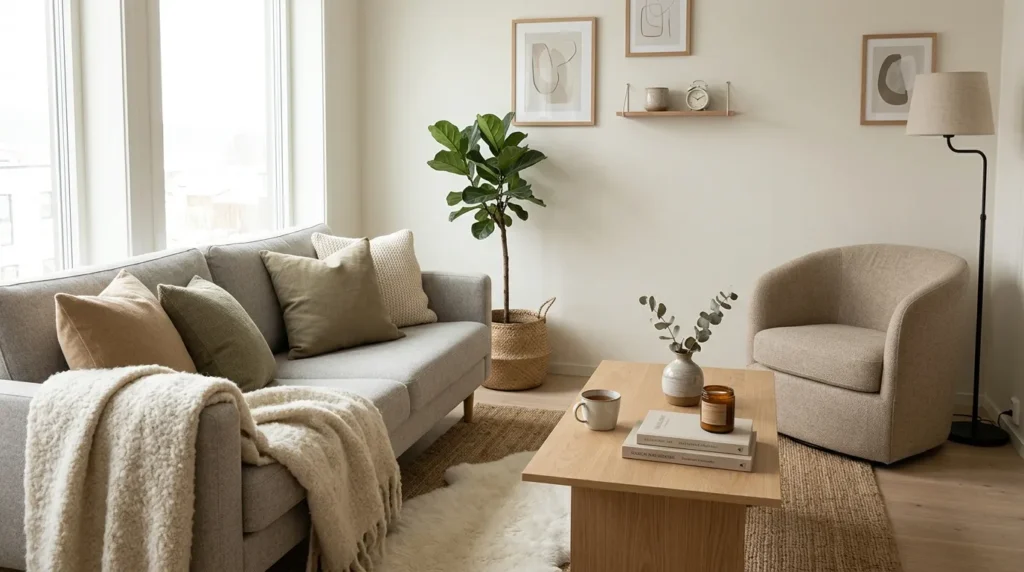
1. Warm Neutral Palette
Build a calm foundation with creamy whites, beige, taupe, and soft gray.
2. Natural Wood Accents
Use pale and medium wood tones to add warmth and organic character.
3. Layered Cozy Textures
Combine tactile fabrics and woven materials for a welcoming atmosphere.
4. Soft Ambient Lighting
Create a warm evening mood with multiple gentle light sources.
5. Simple Functional Furniture
Choose streamlined pieces that prioritize comfort and everyday usability.
6. Organic Greenery
Bring natural life indoors with simple plants and understated arrangements.
7. Minimal Open Shelving
Display useful and beautiful objects without creating visual clutter.
8. Hygge Inspired Corners
Create small spaces designed specifically for relaxation and comfort.
9. Handmade Decor
Add personality through ceramics, textiles, artwork, and artisan-style pieces.
10. Calm Layered Styling
Combine Scandinavian principles into a balanced, personal home.
1. Warm Neutral Palette
Quick Benefits
- Creates a peaceful foundation
- Makes rooms feel brighter
- Works with natural materials
- Easily adapts to different styles
- Keeps decor visually cohesive
Why It Works
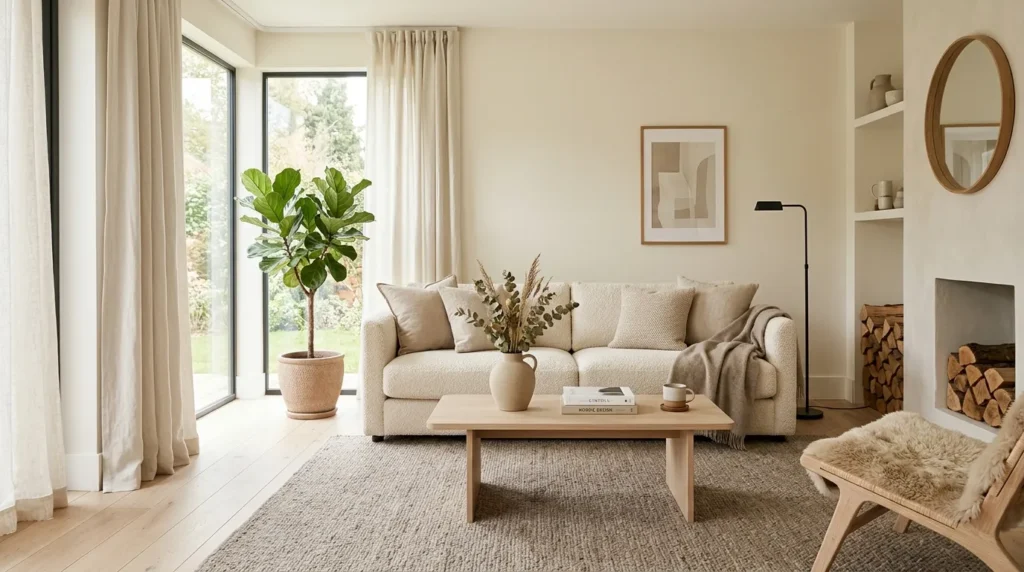
A warm neutral palette is one of the easiest ways to establish a Scandinavian-inspired atmosphere. Instead of relying on stark white, Nordic interiors often incorporate creamy ivory, warm beige, soft taupe, pale gray, and subtle mushroom tones. These shades reflect light while adding enough warmth to prevent the room from feeling cold.
The secret is variation. Using exactly one neutral everywhere can make a space feel flat, while combining several closely related shades creates depth without visual chaos. A cream sofa can sit beautifully against a warm white wall, while beige curtains, a taupe rug, and pale wood furniture add gentle layers.
I’ve noticed that this approach is particularly useful when you want a room that feels timeless rather than tied to one decorating trend.
How To Style It
Choose one light neutral as your dominant background color, then introduce two or three supporting shades through furniture, textiles, and accessories. For example, pair warm white walls with a beige sofa, oatmeal curtains, and light gray cushions.
Add contrast sparingly through darker wood, charcoal artwork, or black metal accents. These small touches keep the palette from becoming washed out.
When choosing textiles, prioritize texture over strong patterns. Linen curtains, boucle upholstery, woven baskets, cotton throws, and wool-style rugs can create visual interest while keeping the color scheme quiet.
Natural daylight should remain part of the design. Use simple window treatments that soften sunlight without unnecessarily blocking it.
2. Natural Wood Accents
Quick Benefits
- Adds warmth to neutral rooms
- Brings organic character indoors
- Works with minimalist furniture
- Creates visual balance
- Complements many color palettes
Why It Works
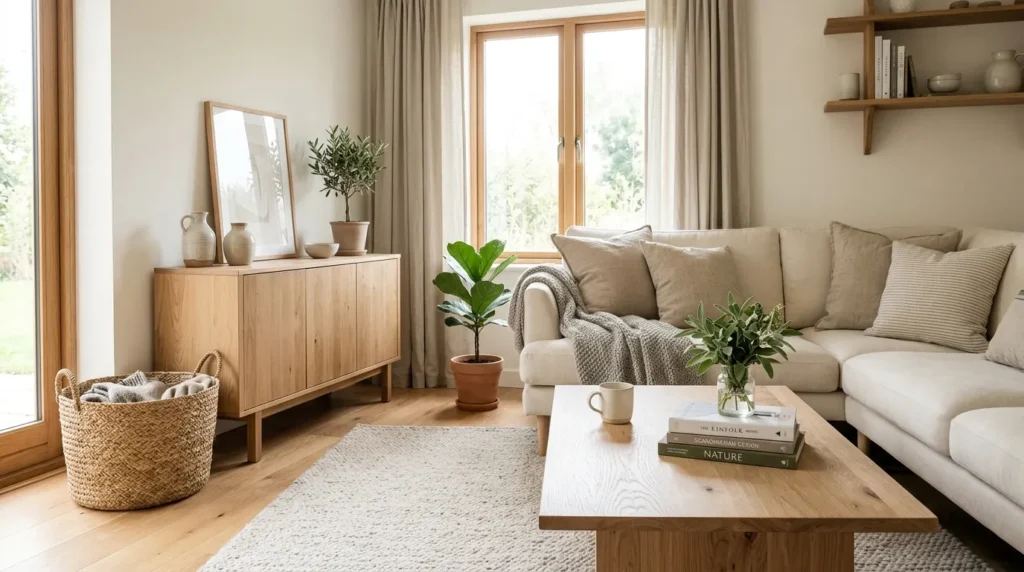
Natural wood is a defining ingredient in many Scandinavian-inspired spaces because it brings warmth and texture to otherwise restrained interiors. Pale oak, ash, birch, and other light woods work particularly well, but slightly deeper walnut or smoked finishes can also provide beautiful contrast.
Wood helps prevent minimalist spaces from feeling sterile. Even a simple wooden coffee table or dining chair can introduce an organic quality that makes the entire room feel more welcoming.
The goal is not to turn the room into a rustic cabin. Scandinavian interiors generally use wood in clean, uncomplicated forms. Smooth surfaces, simple silhouettes, and visible natural grain are often more effective than heavily distressed or ornate finishes.
How To Style It
Begin with one substantial wooden piece, such as a coffee table, dining table, console, or bed frame. Then repeat the material in smaller ways through picture frames, trays, stools, or decorative objects.
If your existing furniture is mostly white or upholstered, a light oak side table can instantly introduce warmth. In a room with pale flooring, slightly darker wood can provide useful contrast.
Avoid using too many competing wood finishes. Choose one dominant tone and perhaps one complementary darker shade.
Pair wood with linen, wool, cotton, ceramic, and woven fibers. These materials enhance the natural quality of the wood while keeping the overall room soft and comfortable.
3. Layered Cozy Textures
Quick Benefits
- Makes minimal rooms feel inviting
- Adds visual depth
- Creates tactile interest
- Softens hard furniture surfaces
- Supports a cozy everyday atmosphere
Why It Works
Minimalism can sometimes feel too bare if there isn’t enough texture. Scandinavian decorating solves that problem by layering tactile materials rather than filling a room with decorative objects.
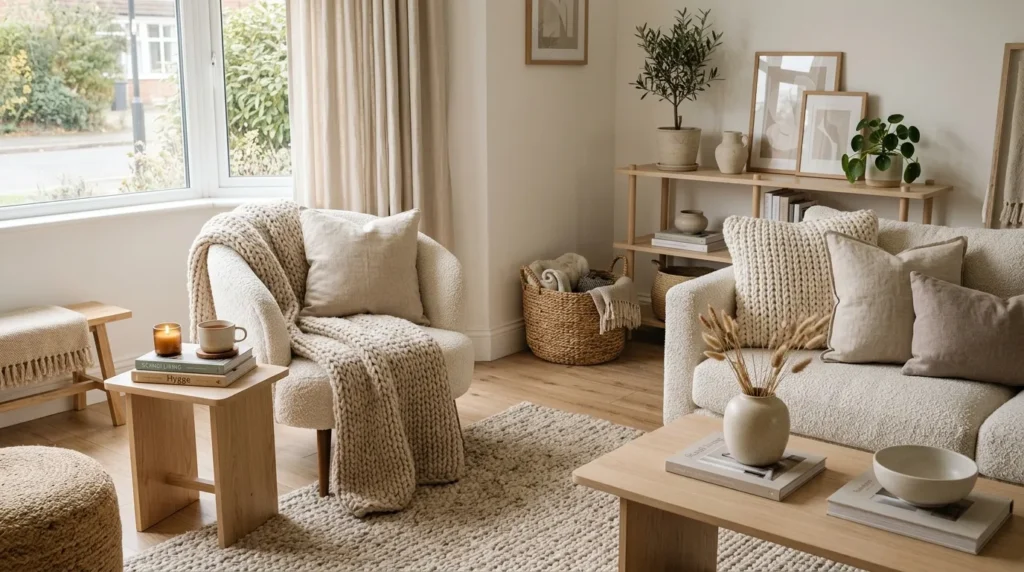
Think knitted throws, linen cushions, wool-style rugs, boucle upholstery, woven baskets, cotton bedding, sheepskin-inspired accents, and soft curtains. Each texture contributes something different while remaining within a restrained visual palette.
This is where the cozy quality of Scandinavian style really comes through. You don’t necessarily need more stuff—you need more variation in the materials already present.
One simple trick I always suggest is to look around the room and identify areas that feel visually flat. Adding texture there can have a greater impact than buying another decorative accessory.
How To Style It
Start with your largest soft surfaces. A textured rug beneath a sofa, linen curtains across a window, or a woven headboard can establish the foundation.
Then layer smaller elements such as cushions, throws, baskets, and fabric lampshades. Keep the colors relatively close together so the different textures become the focus.
For example, combine an oatmeal boucle chair with a chunky cream throw and a natural jute-style basket. In a bedroom, pair cotton sheets with a linen duvet and a knitted blanket.
Don’t overdo every surface. Leave some smooth areas, such as a clean wood table or simple ceramic piece, so the texture has room to stand out.
4. Soft Ambient Lighting
Quick Benefits
- Creates a cozy evening mood
- Reduces harsh shadows
- Makes neutral interiors warmer
- Adds visual depth
- Supports relaxing routines
Why It Works
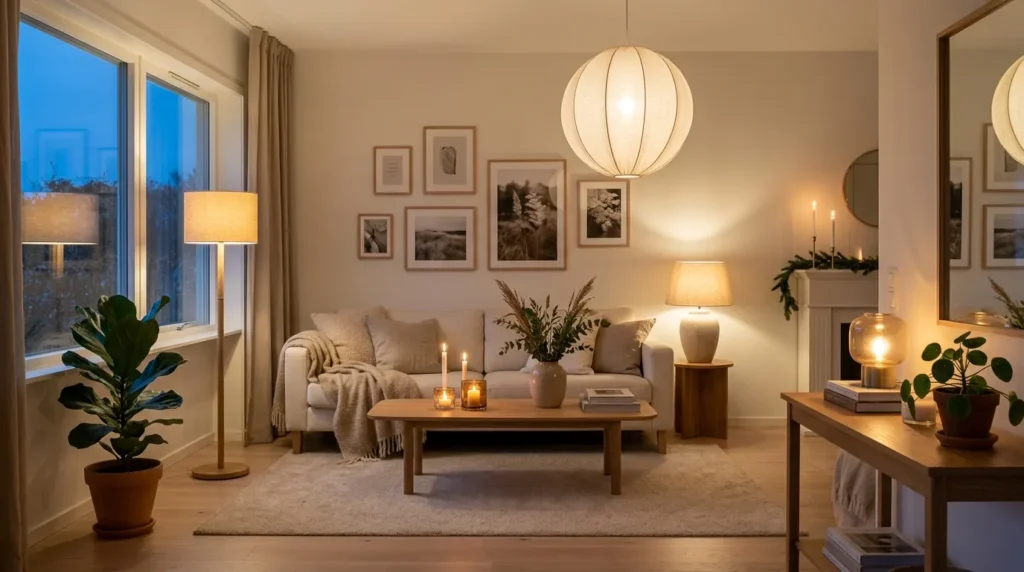
Lighting can completely change how Scandinavian decor feels after sunset. A room that looks bright and airy during the day can become warm and intimate at night when the right lighting layers are introduced.
Rather than depending entirely on one overhead fixture, use several sources at different heights. Table lamps, floor lamps, sconces, pendant lights, and candles can create a gentle glow throughout the room.
Warm lighting also enhances natural materials. Wood appears richer, textiles look softer, and neutral colors become more inviting.
Scandinavian-inspired interiors are generally designed around comfort, so lighting should support the way you actually use the space. A reading lamp should illuminate a chair, while a smaller table lamp can create a quiet glow beside the sofa.
How To Style It
Use a combination of overhead, task, and accent lighting. A simple pendant can provide general illumination, while a floor lamp beside a sofa creates a dedicated reading area.
Choose fixtures with uncomplicated silhouettes. Paper-style shades, matte finishes, natural fibers, and simple glass designs work beautifully.
Warm-toned bulbs can help create a softer evening atmosphere. If possible, choose dimmable fixtures so you can transition from daytime brightness to evening relaxation.
Candles can also add a cozy accent on dining tables, coffee tables, or shelves. Keep them grouped simply rather than scattering many decorative pieces around the room.
5. Simple Functional Furniture
Quick Benefits
- Keeps rooms uncluttered
- Prioritizes comfort
- Supports easy movement
- Creates a timeless appearance
- Works well in smaller homes
Why It Works
Scandinavian design places a strong emphasis on functionality. Furniture should look beautiful, but it should also make everyday life easier.
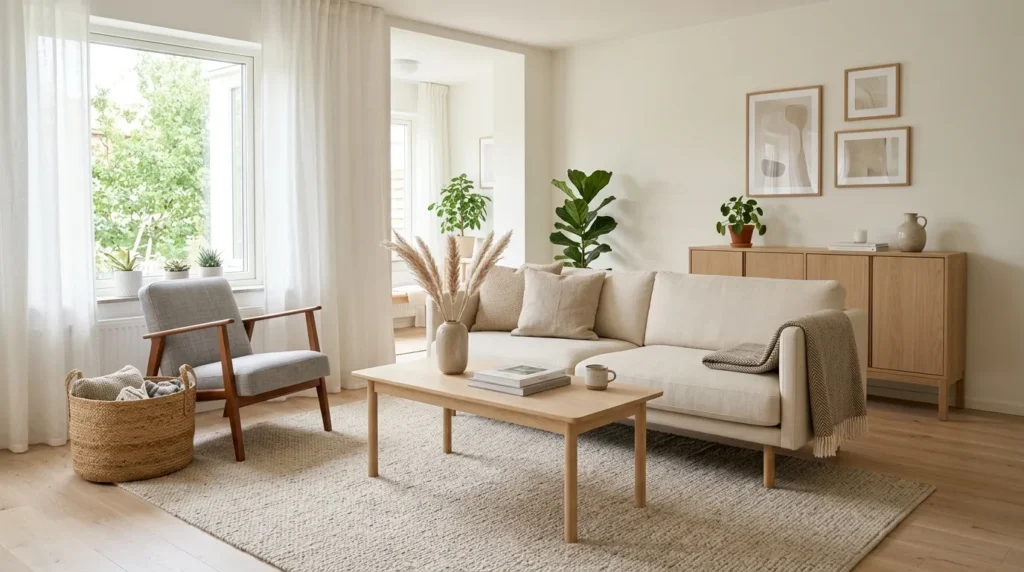
This doesn’t mean every piece needs to be minimalist or ultra-modern. A comfortable sofa, practical dining table, storage cabinet, or well-designed armchair can fit beautifully into the style when its shape is relatively simple and its purpose is clear.
The best Nordic-inspired furniture tends to have clean lines without feeling overly rigid. Rounded edges, natural materials, soft upholstery, and tapered legs can make streamlined pieces feel approachable.
A mistake many homeowners make is thinking that minimalist decor means owning as little furniture as possible. Instead, think about owning furniture that works hard and earns its place.
How To Style It
Choose furniture based on how you use each room. In the living room, prioritize a comfortable sofa, practical coffee table, and useful storage rather than numerous occasional pieces.
For dining spaces, a simple wood table paired with comfortable chairs can provide both warmth and functionality.
Look for furniture with concealed storage when possible. Sideboards, benches with compartments, and cabinets can help keep everyday clutter contained.
Maintain some open space around major furniture pieces. This gives the room a relaxed appearance and makes movement easier. Keep decorative styling simple so the furniture’s shape remains visible.
6. Organic Greenery
Quick Benefits
- Adds natural color
- Softens minimalist interiors
- Brings visual freshness
- Works with neutral palettes
- Creates a more lived-in feeling
Why It Works
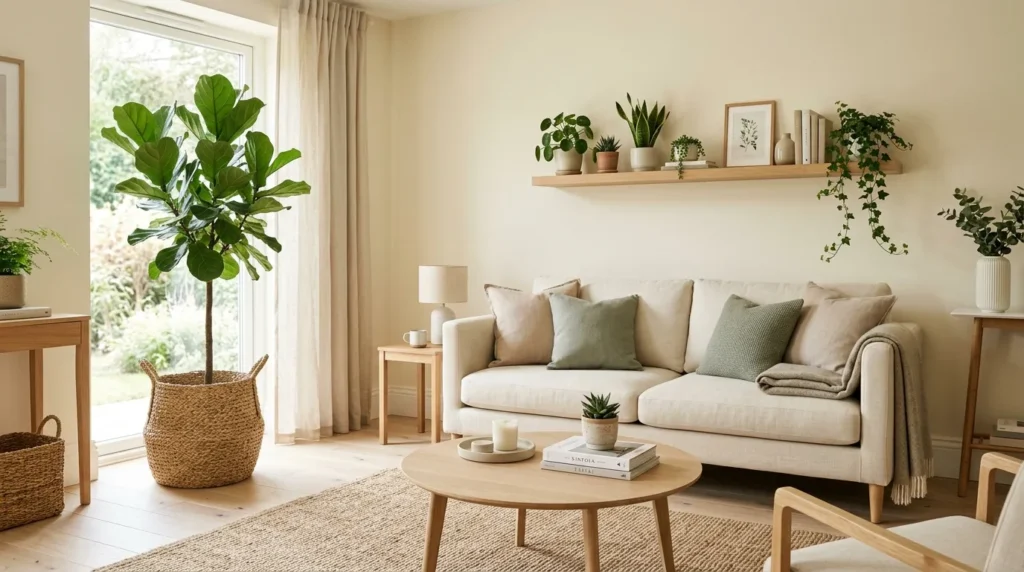
Plants can bring a subtle sense of life into a Scandinavian-inspired interior without disrupting its calm aesthetic. Greenery adds color naturally, making it especially useful when your room relies heavily on white, cream, beige, or pale wood.
You don’t need a jungle of houseplants to achieve the effect. A single large plant beside a sofa, a small potted plant on a shelf, or a simple branch arrangement can be enough.
The most successful plant styling often looks slightly effortless. Choose greenery with interesting shapes and let it become part of the room rather than treating every plant as a separate decorative statement.
How To Style It
Place a medium or large plant near a window where it can receive appropriate natural light. Simple ceramic or woven planters complement Scandinavian interiors particularly well.
For shelves, choose small plants with clean silhouettes. Avoid overcrowding them with multiple tiny pots unless you intentionally want a more collected look.
Branches in a tall ceramic vase can provide a beautiful alternative if you prefer minimal maintenance. Olive-style branches, eucalyptus, or simple leafy stems can introduce organic texture.
Repeat natural green in small doses elsewhere through artwork, cushions, or ceramics if desired. The goal is subtle connection rather than perfect color matching.
7. Minimal Open Shelving
Quick Benefits
- Provides accessible storage
- Creates a display opportunity
- Keeps walls visually interesting
- Encourages intentional decorating
- Works well in kitchens and living spaces
Why It Works
Open shelving can be beautiful in a Scandinavian home because it combines function and decoration. However, the key word is minimal. Shelves become visually overwhelming when every inch is filled.
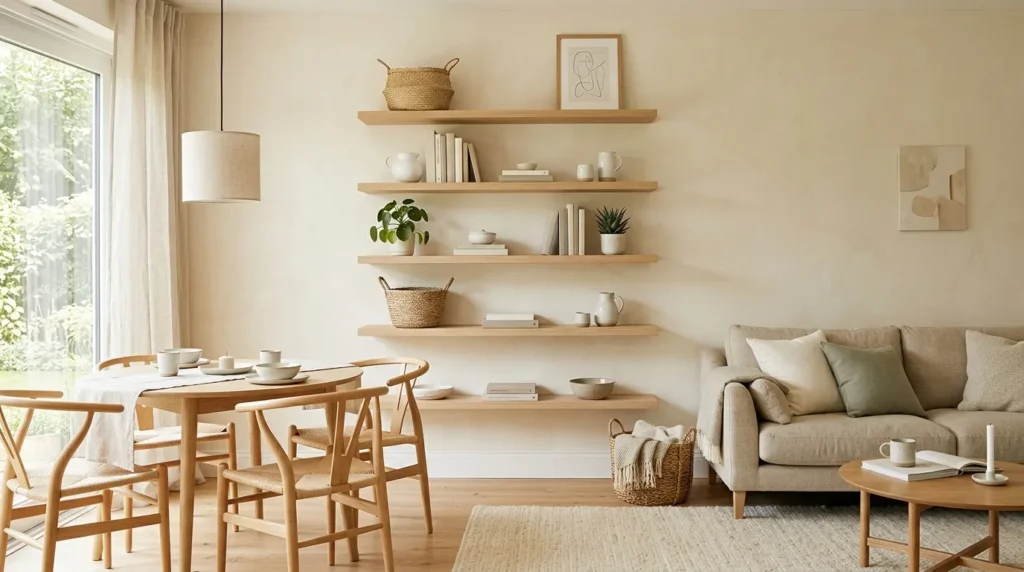
A restrained display of books, ceramics, plants, baskets, and everyday objects can make a room feel personal while preserving the airy quality associated with Nordic interiors.
Open shelving also encourages you to be selective. Because everything is visible, it becomes easier to notice which objects genuinely belong in the room and which items are simply taking up space.
In my experience, the best shelves usually contain a mixture of useful and decorative pieces rather than being purely ornamental.
How To Style It
Begin with the largest objects and distribute them across the shelves rather than placing them all together. Then fill the remaining spaces with smaller pieces.
Use ceramic bowls, simple vases, books, woven baskets, framed prints, and a few plants. Leave visible gaps between groups.
Vary height and shape to keep the display interesting. A tall vase can balance a horizontal stack of books, while a small plant can soften a hard corner.
Keep the color palette cohesive. White, cream, beige, natural wood, muted green, and soft charcoal work especially well.
8. Hygge Inspired Corners
Quick Benefits
- Creates dedicated relaxation areas
- Makes unused corners useful
- Adds warmth and personality
- Encourages slower routines
- Works in rooms of any size
Why It Works
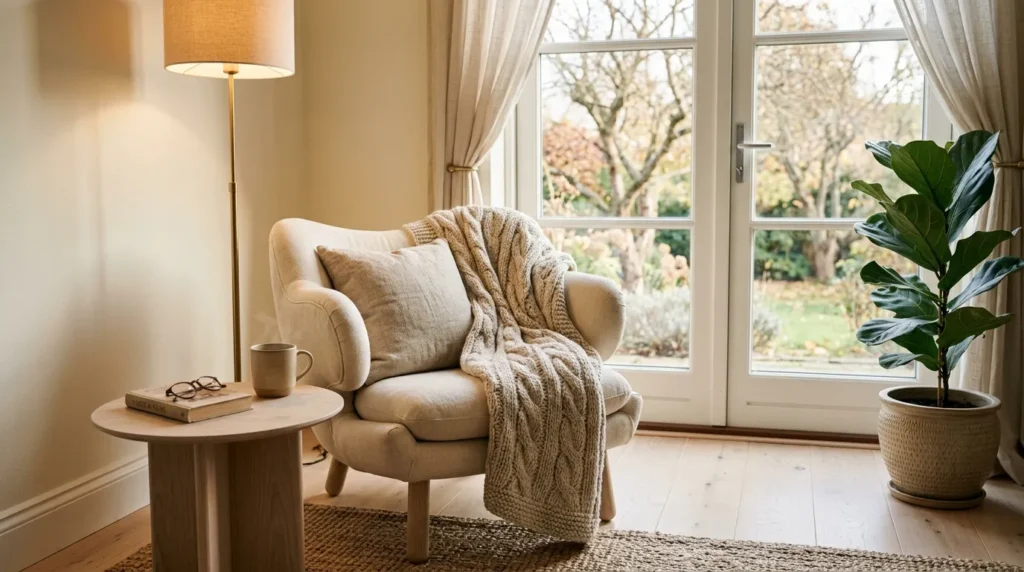
Scandinavian interiors often embrace the idea of creating comfortable little spaces for everyday enjoyment. A reading chair, window seat, cozy sofa corner, or small coffee station can make a home feel more personal.
The concept isn’t about filling the room with cozy accessories. It is about intentionally creating a place where you want to spend time.
A quiet corner with a comfortable chair and soft lighting can become a favorite reading spot. A bench near a window can provide a place to drink coffee in the morning. These small zones make a home feel designed around real life rather than simply decoration.
How To Style It
Choose one corner and give it a clear purpose. For a reading nook, combine a comfortable chair, small side table, soft throw, and warm floor or wall lamp.
For a living room relaxation corner, consider a low lounge chair with a textured cushion and small wooden stool.
Keep the palette consistent with the surrounding room. Add one or two personal elements, such as a favorite book, framed photograph, or handmade ceramic.
The most important ingredient is comfort. Choose fabrics you enjoy touching and lighting that feels pleasant in the evening.
9. Handmade Decor
Quick Benefits
- Adds personality
- Prevents minimalist rooms from feeling generic
- Introduces craftsmanship
- Creates visual warmth
- Works beautifully with natural materials
Why It Works
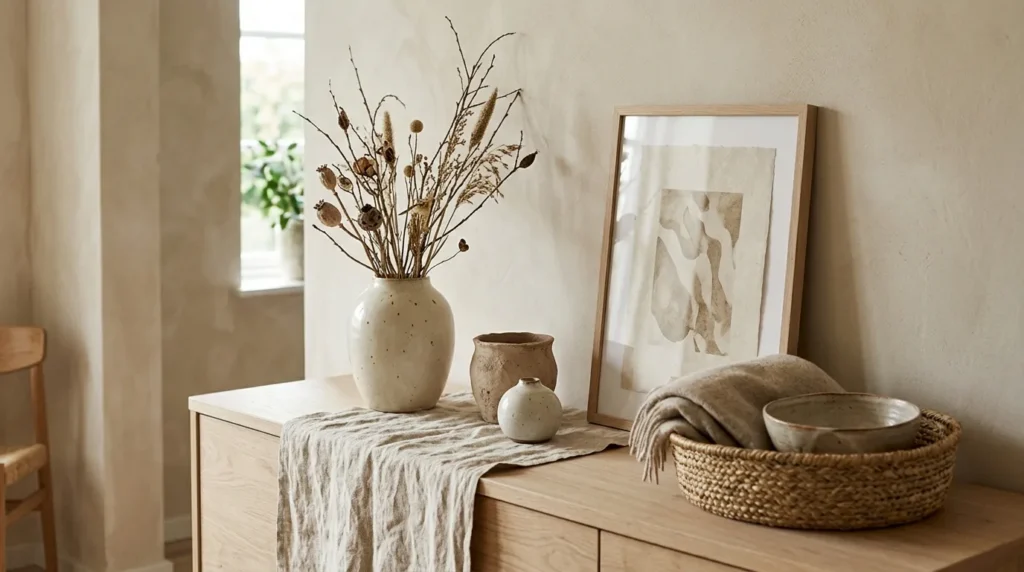
A Scandinavian-inspired home should feel lived in, not like a furniture showroom. Handmade-looking ceramics, woven textiles, simple artwork, carved wood, and artisan-style accessories introduce individuality without creating visual clutter.
These pieces are especially useful because they often have subtle imperfections or organic shapes that contrast beautifully with clean-lined furniture.
You don’t need dozens of handmade objects. One sculptural ceramic vase or woven wall hanging can provide enough character to make a neutral room feel personal.
The goal is to choose objects that you genuinely enjoy rather than decorating simply because something fits the aesthetic.
How To Style It
Look for ceramics with irregular edges, hand-thrown textures, matte finishes, or earthy tones. Display one statement piece on a coffee table, shelf, or console rather than grouping too many together.
Woven baskets can provide both storage and texture. Handmade-style wall art can add softness to a blank wall without overwhelming it.
Combine artisan pieces with simple modern furniture. That contrast is often what makes the room feel collected rather than overly coordinated.
Use natural shades such as clay, sand, cream, muted brown, soft green, and charcoal to keep the handmade elements connected to the broader palette.
10. Calm Layered Styling
Quick Benefits
- Pulls the entire look together
- Prevents minimalism from feeling sterile
- Creates visual balance
- Allows personal expression
- Keeps the home timeless
Why It Works
The most successful Scandinavian-inspired homes rarely depend on one dramatic decorating feature. Instead, they build atmosphere through many small, thoughtful decisions.
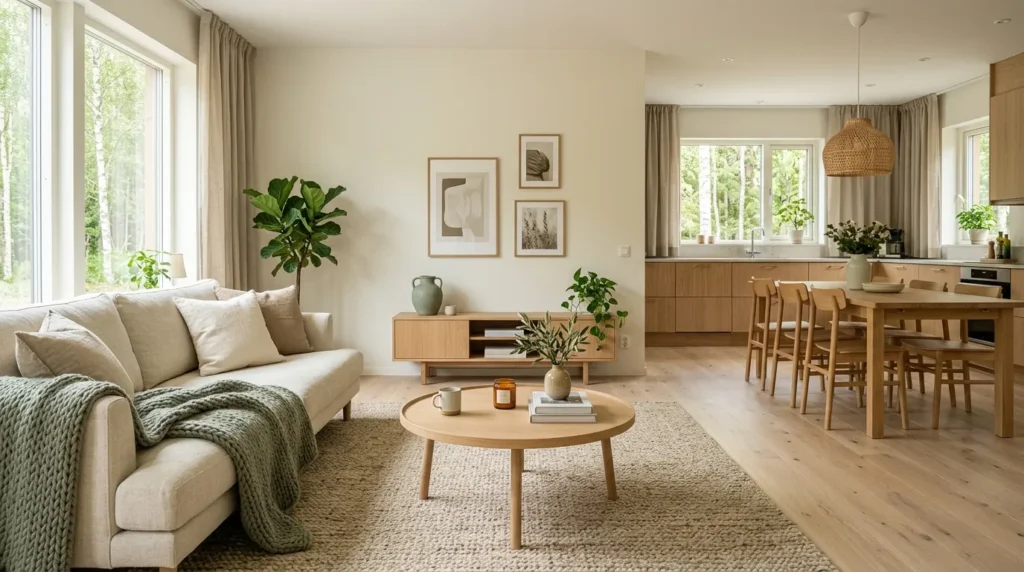
A neutral backdrop provides calm. Natural wood introduces warmth. Soft textiles create comfort. Plants add life. Simple lighting changes the mood. Personal objects make the space feel like home.
Layering these elements gradually is much more effective than purchasing an entire matching decor collection. It gives the room personality and allows you to adjust the balance over time.
This is also where you can make the style your own. Scandinavian design can lean modern, rustic, minimalist, vintage, or even slightly colorful depending on the pieces you choose.
How To Style It
Begin with the largest elements: walls, flooring, sofa or bed, and major storage pieces. Keep these relatively simple.
Then add natural wood, textiles, lighting, greenery, and artwork in layers. Step back regularly and look for areas that feel either too bare or too busy.
Use repetition to create cohesion. Repeat a wood tone, neutral shade, or metal finish in several areas rather than matching everything exactly.
Finally, add personal objects. Family photographs, travel finds, favorite books, handmade ceramics, and meaningful artwork can keep the room from feeling like a staged interior.
Creating a Scandinavian Home on a Budget
You don’t need to replace all your furniture to create a Scandinavian-inspired home. Start by editing what you already have.
Remove unnecessary decorative pieces and create more visual breathing room. Then introduce natural textures through affordable changes such as linen-look curtains, woven baskets, cotton throws, simple ceramic vases, or neutral cushion covers.
Paint can also make a significant difference. A warm white, soft beige, or gentle greige can provide a fresh backdrop for existing furniture.
When purchasing new pieces, prioritize items that solve a practical problem. A wooden storage bench, slim side table, or simple cabinet can improve both functionality and style.
Thrift stores and vintage markets can also be excellent sources for wood furniture, ceramics, woven baskets, and artwork. Don’t worry if everything isn’t perfectly coordinated. A few unique pieces often make a Scandinavian-inspired home feel more authentic.
Scandinavian Decor Color Combinations
A Scandinavian palette doesn’t have to be limited to white and gray. Warm combinations can create a much more inviting result.
Cream + Light Oak: Soft, timeless, and especially effective in living rooms and bedrooms.
Beige + Muted Sage: Adds a gentle natural color while preserving a calm atmosphere.
Warm White + Charcoal: Creates crisp contrast without becoming overly dramatic.
Taupe + Natural Wood: A sophisticated combination that feels grounded and cozy.
Cream + Dusty Blue: Adds personality while remaining soft and understated.
The easiest approach is to choose one dominant neutral, one supporting neutral, and one subtle accent color. This gives you enough variation without losing the cohesive quality that makes Scandinavian spaces so appealing.
Common Scandinavian Decorating Mistakes
Even a simple decorating style can become difficult to balance. A few common mistakes are worth avoiding.
Making everything white: Without warm textures and natural materials, an all-white room can feel cold.
Overdecorating shelves: Minimalism requires editing. Leave some empty space.
Using only modern furniture: A few vintage or handmade pieces can add personality and warmth.
Ignoring lighting: Beautiful daytime styling can feel completely different at night without layered illumination.
Choosing style over comfort: A beautiful chair that isn’t comfortable won’t create a relaxing home.
Matching everything too closely: Scandinavian interiors feel more natural when materials and finishes have subtle variation.
The goal is not perfection. It is creating a home that feels functional, warm, calm, and personal.
FAQ
What makes a home look Scandinavian?
Scandinavian interiors typically combine simple functional furniture, light neutral colors, natural wood, soft textiles, practical storage, and warm lighting. The style emphasizes comfort and everyday usability rather than excessive decoration. Plants, handmade ceramics, simple artwork, and woven materials can add personality while maintaining the clean, relaxed appearance associated with Nordic-inspired homes.
How do I make my home feel cozy and Scandinavian?
Start with a warm neutral palette and add natural wood, layered textiles, soft lighting, and simple greenery. Choose comfortable furniture with clean silhouettes and avoid overcrowding the room. A few tactile elements, such as a wool-style rug, linen curtains, knitted throw, or woven basket, can make a minimalist space feel considerably warmer.
What colors are common in Scandinavian decor?
Warm white, cream, beige, taupe, soft gray, pale blue, muted green, and natural wood tones are commonly used. Dark charcoal or black can provide contrast in small doses. The palette generally feels soft and restrained rather than highly saturated, although subtle accent colors can add personality without overwhelming the room.
Is Scandinavian decor the same as minimalist decor?
They overlap, but they aren’t identical. Both value simplicity and functionality, but Scandinavian interiors often place a stronger emphasis on warmth, comfort, natural materials, and cozy textures. A Scandinavian room can feel layered and inviting while still maintaining a clean and uncluttered appearance.
How can I add Scandinavian style without replacing my furniture?
Edit your existing decor first, then introduce a few high-impact elements. Try warm neutral textiles, natural wood accessories, woven baskets, simple ceramic pieces, greenery, and softer lighting. You can also simplify shelves and surfaces to create more breathing room. Small material and color changes can shift the overall atmosphere without requiring a complete furniture makeover.
What wood works best for Scandinavian decor?
Light woods such as oak, ash, and birch are especially popular because they keep interiors bright and natural. However, medium and darker woods can also work as accents. The important thing is maintaining a balanced mix and avoiding too many unrelated wood tones throughout the same room.
How do I keep Scandinavian decor from looking boring?
Use texture, natural materials, subtle contrast, and personal objects. Layer linen, wool, cotton, wood, ceramics, woven fibers, and greenery rather than relying on lots of colors. Add a few meaningful pieces of artwork or vintage decor to give the space personality. The combination of simple furniture and varied textures creates visual interest without clutter.
Conclusion
Scandinavian decorating works because it makes everyday comfort part of the design. Instead of asking how to fill a room, it encourages you to think about what the room needs to help you live well.
Start with a calm neutral foundation, then introduce natural wood, cozy textures, warm lighting, greenery, and practical furniture. From there, add handmade pieces and personal details that make the home feel like yours.
You don’t have to create the entire look at once. One woven basket, a new linen throw, a warmer lamp, or a simple wooden side table can be enough to begin shifting the atmosphere. Build gradually and pay attention to how each addition affects both the appearance and function of the room.
The beauty of this style is its flexibility. It can be modern or rustic, minimal or layered, neutral or gently colorful. What matters most is the balance between simplicity and comfort.
Choose the elements that genuinely fit your lifestyle, leave enough breathing room around them, and create little areas where you naturally want to relax. The result can be a home that feels warm, timeless, organized, and effortlessly welcoming.