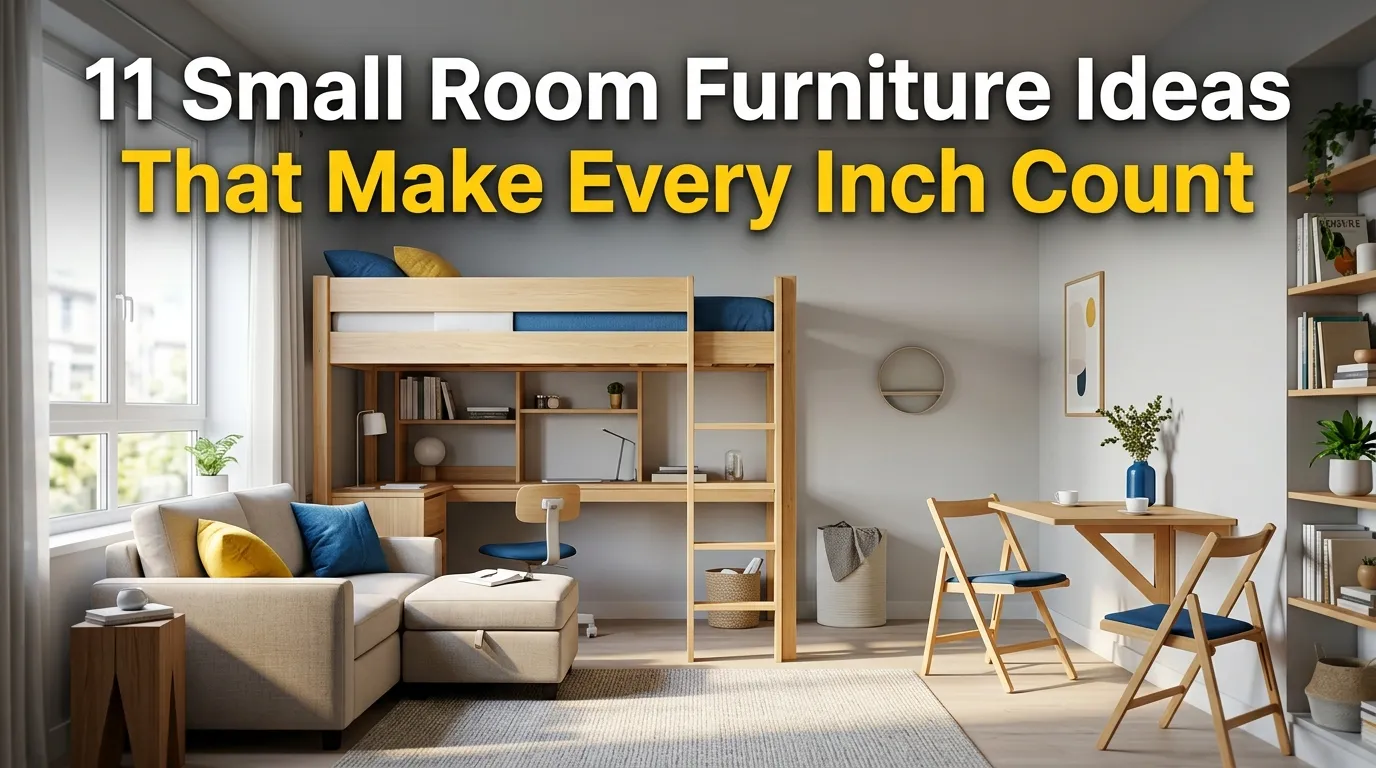
11 Small Room Furniture Ideas That Make Every Inch Count
Furnishing a small room can feel like solving a puzzle. You want enough furniture to make the space comfortable and functional, but too many bulky pieces can quickly make the room feel crowded.
The trick is not simply buying smaller furniture. It’s choosing pieces with the right proportions, useful storage, flexible functions, and enough visual breathing room around them.
I’ve found that the best small-room furniture often does more than one job. A storage ottoman can provide seating and hide blankets. A narrow console can double as a workspace. A bed with drawers can reduce the need for a separate dresser. Even a floating nightstand can provide useful surface space without taking up valuable floor area.
Scale matters, too. A room filled with tiny furniture isn’t necessarily going to feel bigger. Sometimes one well-proportioned piece creates a cleaner, more intentional appearance than several small items scattered around the room.
Whether you’re furnishing a compact bedroom, apartment living room, guest room, home office, or multipurpose space, these ideas focus on furniture that helps you use limited square footage more effectively.
Before buying anything, measure the room, identify the main walking paths, and decide what activities the space needs to support. Once those basics are clear, choosing furniture becomes much easier.
Table of Contents
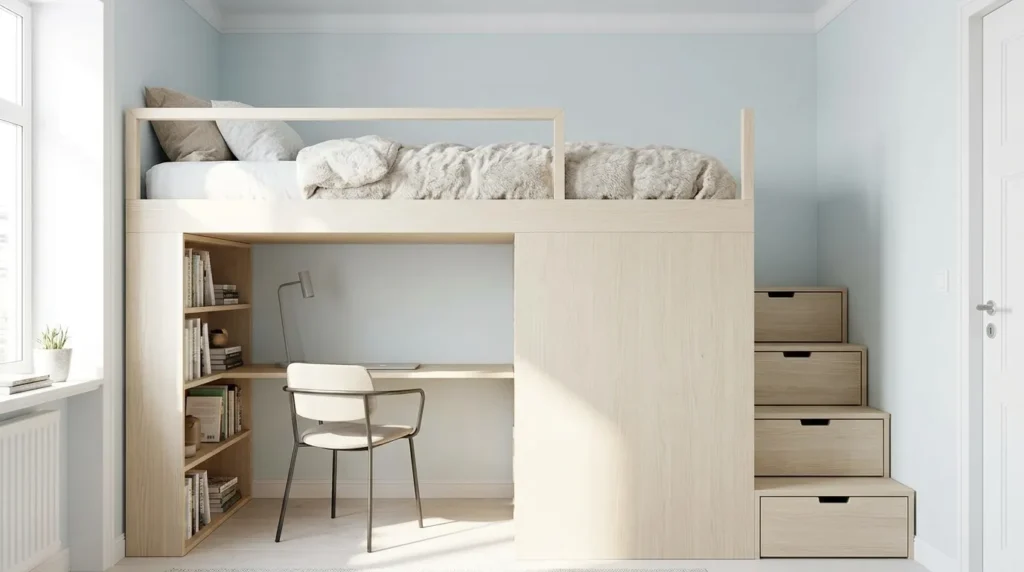
1. Storage Ottoman
Combine comfortable seating with concealed storage.
2. Slim Console Table
Add useful surface space without overwhelming the room.
3. Floating Desk
Create a workspace while preserving valuable floor area.
4. Storage Bed
Turn unused space beneath the mattress into practical storage.
5. Narrow Bookcase
Use vertical space instead of valuable floor width.
6. Nesting Tables
Create flexible surfaces that can expand when needed.
7. Wall-Mounted Cabinet
Add concealed storage while keeping the floor clear.
8. Compact Accent Chair
Introduce comfortable seating without oversized proportions.
9. Lift-Top Coffee Table
Combine a coffee table with hidden workspace and storage.
10. Slim Rolling Cart
Create portable storage for changing room needs.
11. Multifunctional Bench
Add seating, storage, and visual structure in one piece.
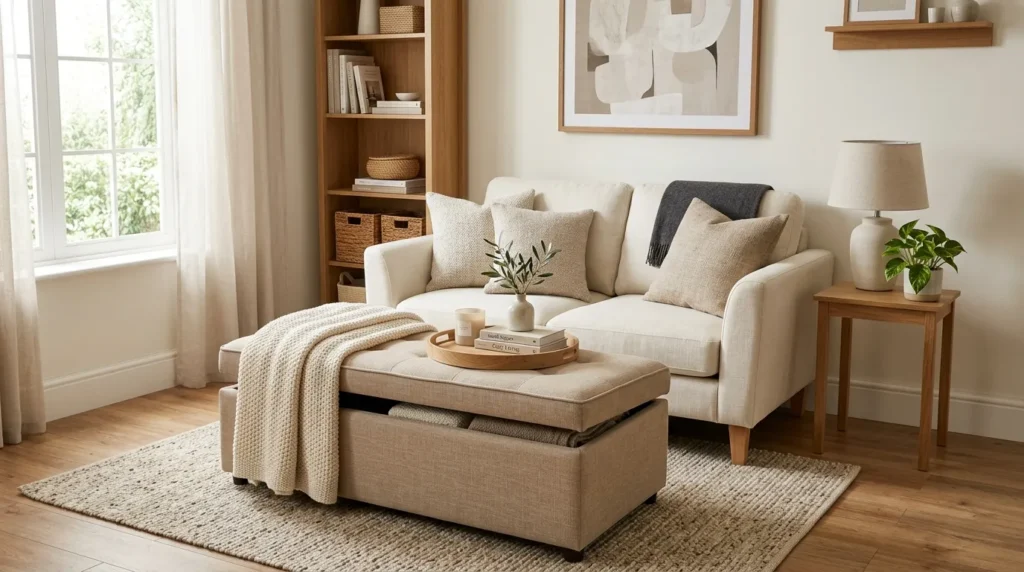
1. Storage Ottoman
Quick Benefits
- Provides extra seating
- Hides everyday clutter
- Can replace a bulky chair
- Works in bedrooms and living rooms
- Adds softness through upholstery
Why It Works
A storage ottoman is one of those pieces that can quietly solve several problems at once.
It can function as a footrest, occasional seat, blanket storage, or even a soft surface for placing a tray.
This makes it particularly useful when floor space is limited and you don’t want several separate pieces performing individual jobs.
In a small living room, an ottoman can replace a large coffee table while still providing a practical central surface when paired with a tray.
In a bedroom, it can sit at the foot of the bed and provide hidden storage for extra bedding.
How To Style It
Choose a size that leaves comfortable walking space around it.
For a compact room, look for a rectangular or narrow design rather than a large square ottoman.
Use a tray on top when you need a stable surface for drinks or decorative objects.
Choose upholstery that complements the room rather than introducing another competing color.
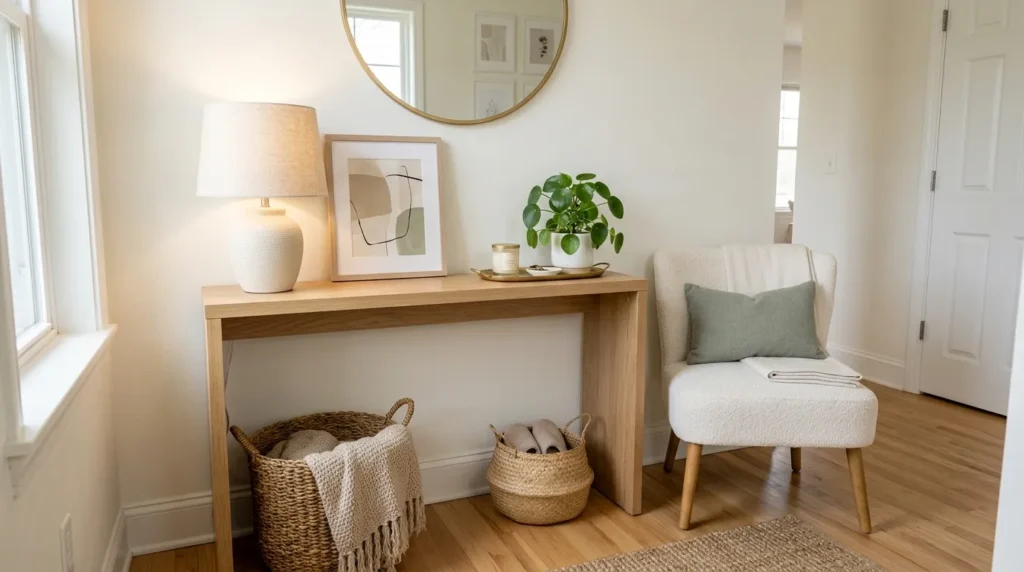
2. Slim Console Table
Quick Benefits
- Uses narrow wall space
- Adds storage or display space
- Works behind sofas
- Can become a desk
- Creates a finished appearance
Why It Works
A console table can provide useful surface area without requiring the depth of a traditional cabinet or desk.
Its slim profile makes it particularly helpful along narrow walls, behind a sofa, in an entryway, or against the back of a compact room.
Some consoles also include drawers or shelves, giving you a place to hide small belongings.
The important factor is depth. A narrow room benefits from furniture that doesn’t unnecessarily extend into the main walking area.
How To Style It
Choose a console with a relatively slim profile.
Place baskets underneath for concealed organization if the design allows.
Style the top with a lamp, framed artwork, small plant, or decorative tray.
If you’re using it as a workspace, keep the surface mostly clear and add a compact chair that can slide underneath.
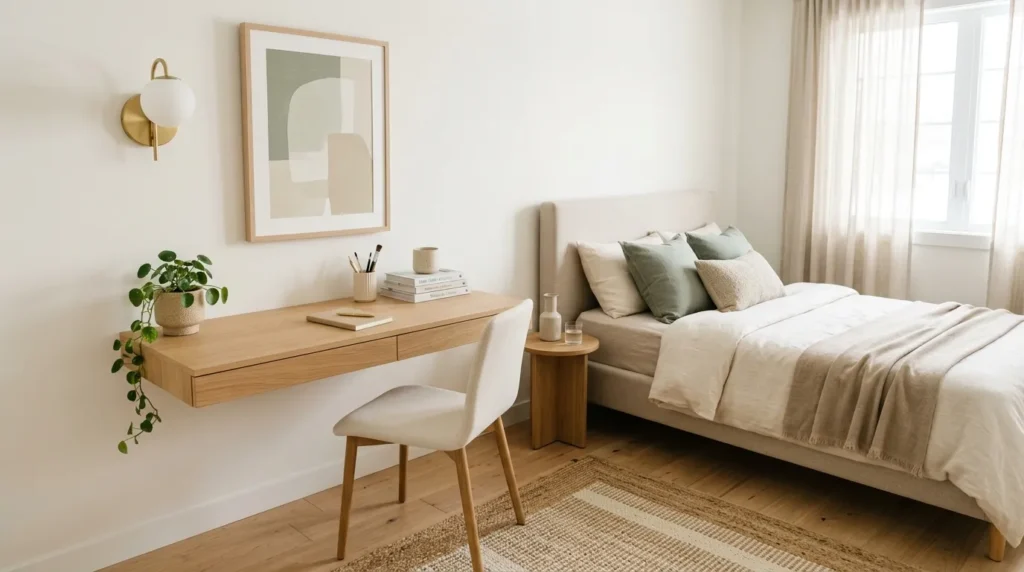
3. Floating Desk
Quick Benefits
- Saves floor space
- Creates a dedicated workspace
- Works in bedrooms
- Can double as a vanity
- Keeps the floor visually open
Why It Works
Traditional desks can be surprisingly deep, which makes them difficult to fit into a small room.
A floating desk provides a practical work surface while leaving the floor beneath it open.
That open space can make the room feel less crowded and can also make cleaning easier.
This is especially useful in bedrooms where a full home office isn’t necessary but you still need somewhere to work occasionally.
How To Style It
Choose a depth appropriate for your actual work needs.
Mount the desk at a comfortable height and use a slim chair that can slide beneath it.
Add a wall-mounted light rather than taking up desk space with a large lamp.
Use a small drawer organizer or wall storage for office supplies.
Keep cables managed so the minimalist setup remains visually clean.
4. Storage Bed
Quick Benefits
- Adds hidden storage
- Reduces furniture needs
- Uses otherwise wasted space
- Works well in bedrooms
- Keeps belongings accessible
Why It Works
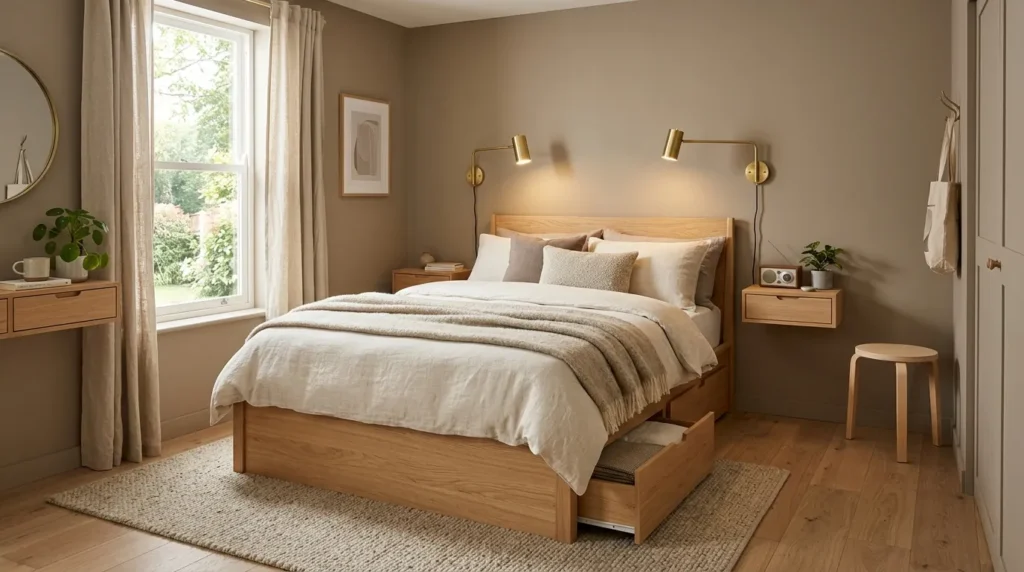
The space underneath a bed is often some of the most valuable unused storage in a small bedroom.
A storage bed turns that area into a practical compartment for clothing, bedding, shoes, luggage, or seasonal items.
This can reduce your dependence on large dressers and cabinets.
A storage bed is particularly helpful when closet space is limited.
How To Style It
Choose drawers if you want easy access to frequently used items.
Lift-up storage can provide a larger compartment but requires enough clearance around the bed to use comfortably.
Keep the bed frame visually streamlined.
Pair it with narrow nightstands or floating shelves to preserve circulation around the sleeping area.
5. Narrow Bookcase
Quick Benefits
- Uses vertical space
- Adds storage without much floor width
- Displays books and decor
- Works in multiple rooms
- Helps organize small spaces
Why It Works
When floor space is limited, height becomes an advantage.
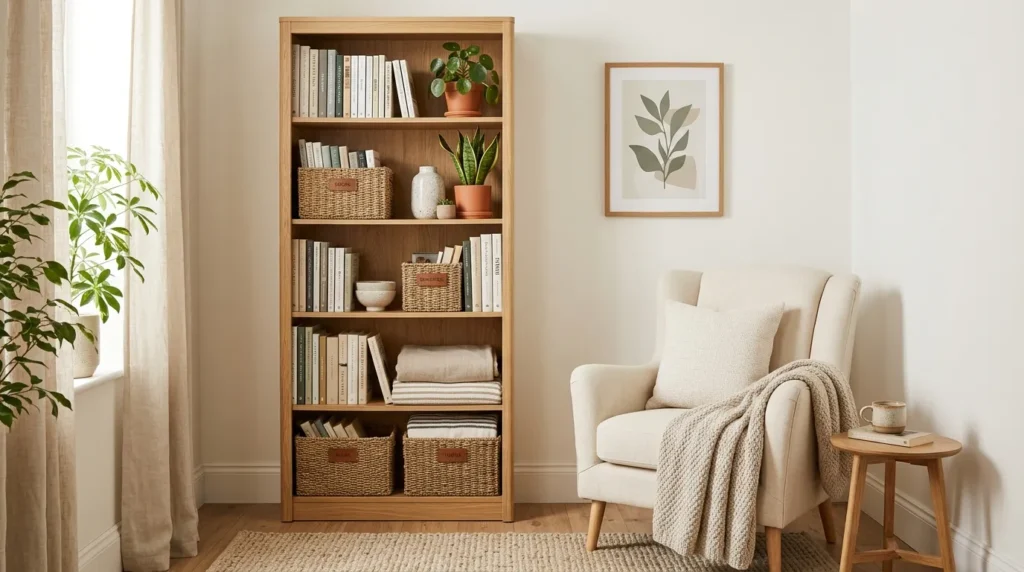
A tall, narrow bookcase can provide substantial storage while taking up relatively little floor area.
It can hold books, baskets, plants, decorative objects, or office supplies.
Unlike a wide cabinet, a narrow vertical piece can fit into spaces that would otherwise remain unused.
How To Style It
Choose a bookcase that is tall rather than excessively wide.
Place heavier objects on lower shelves and lighter decorative items higher up.
Use matching baskets to hide small belongings.
Leave some shelves partially empty to avoid creating a visually crowded wall.
Secure tall furniture appropriately to the wall, particularly in homes with children or pets.
6. Nesting Tables
Quick Benefits
- Provide flexible surface space
- Can be separated when needed
- Store compactly
- Work in living rooms
- Offer visual variety
Why It Works
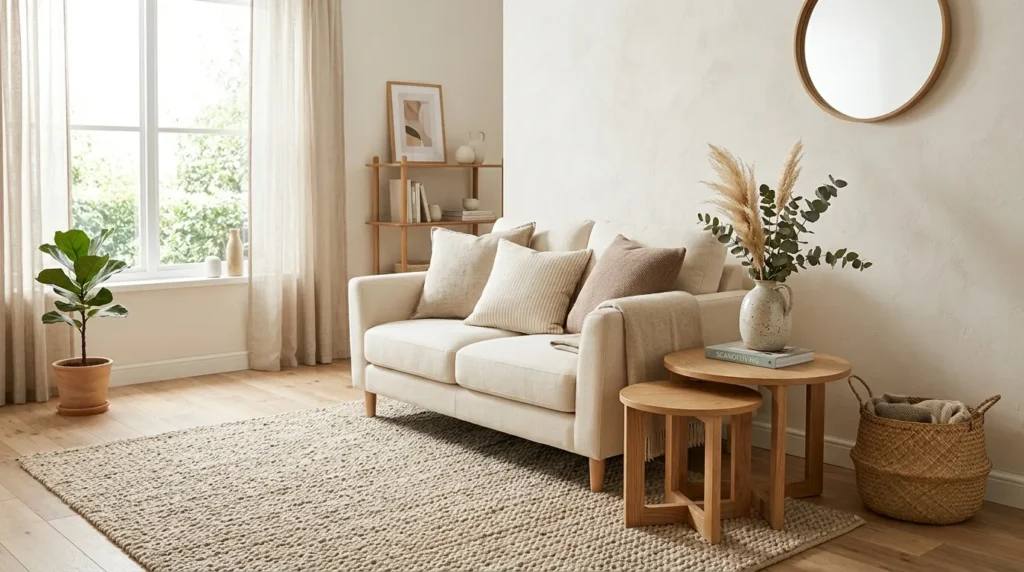
Nesting tables are useful because they provide multiple surfaces without requiring the footprint of several separate tables.
When you need more space, spread them around the room.
When you don’t, slide them together.
This flexibility is especially valuable in rooms where furniture arrangements change depending on whether you’re relaxing, entertaining, or working.
How To Style It
Choose tables with different heights so they nest neatly.
Round designs can soften rooms dominated by straight furniture lines.
Use one table beside a chair and another beside a sofa when needed.
Keep the surfaces relatively simple so the pieces don’t add unnecessary visual clutter.
7. Wall-Mounted Cabinet
Quick Benefits
- Adds concealed storage
- Keeps floors open
- Reduces visual clutter
- Works in compact rooms
- Creates useful vertical storage
Why It Works
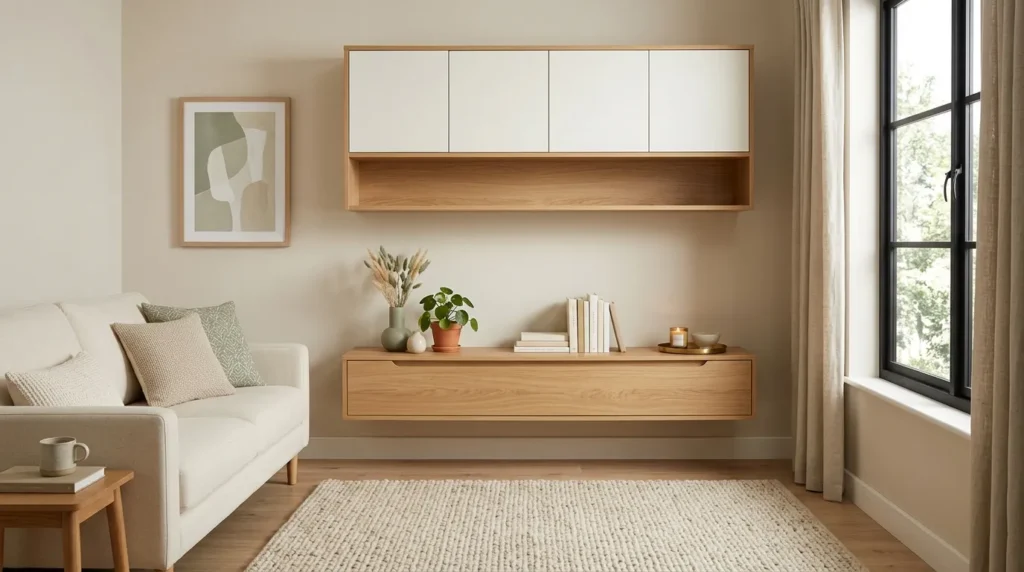
Wall-mounted cabinets can provide valuable storage without taking up floor space.
They’re especially useful for objects that you want nearby but don’t necessarily want on display.
In a bedroom, they can hold accessories or folded clothing.
In a living room, they can conceal electronics, games, documents, or miscellaneous household items.
How To Style It
Choose a cabinet that complements the wall rather than making the room feel visually heavy.
Light wood, warm white, and soft neutral finishes can blend easily with many interiors.
Use appropriate mounting hardware for the wall type and cabinet weight.
Keep the cabinet’s exterior relatively simple.
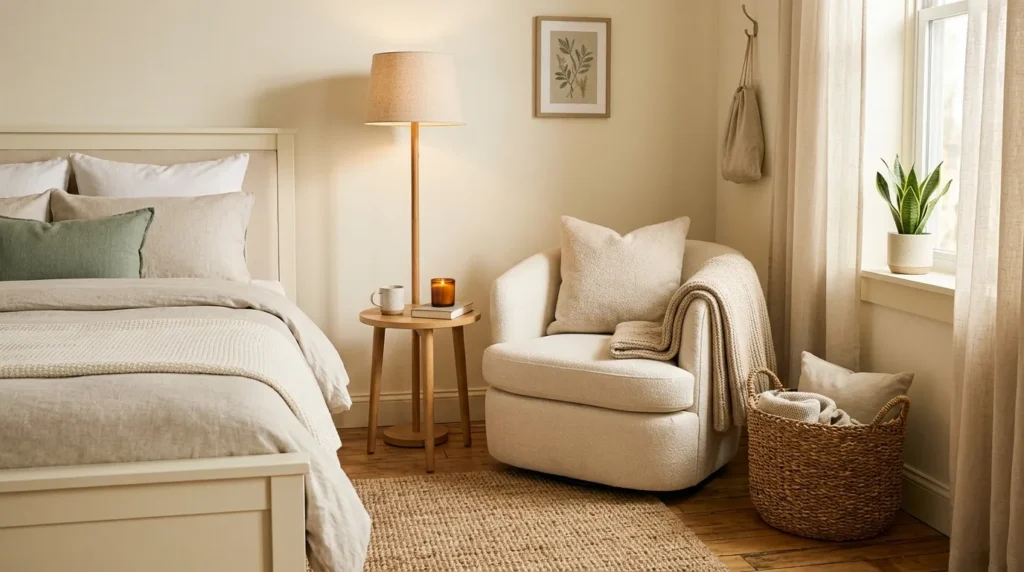
8. Compact Accent Chair
Quick Benefits
- Adds comfortable seating
- Creates a reading spot
- Provides personality
- Easier to move
- Works in unused corners
Why It Works
A small room doesn’t necessarily need to eliminate additional seating.
The key is choosing a chair with appropriate proportions.
A compact accent chair can turn an unused corner into a useful reading or relaxation area without consuming the space of a large lounge chair.
Look for visually light frames, narrower arms, or raised legs that allow more floor to remain visible.
How To Style It
Place the chair near a window if natural light makes the area pleasant.
Add a small side table rather than a large coffee table.
Use a slim floor lamp if additional lighting is needed.
A small cushion or throw can introduce texture without overwhelming the chair.
9. Lift-Top Coffee Table
Quick Benefits
- Doubles as a workspace
- Provides hidden storage
- Creates a useful central surface
- Reduces furniture requirements
- Works well in compact living rooms
Why It Works
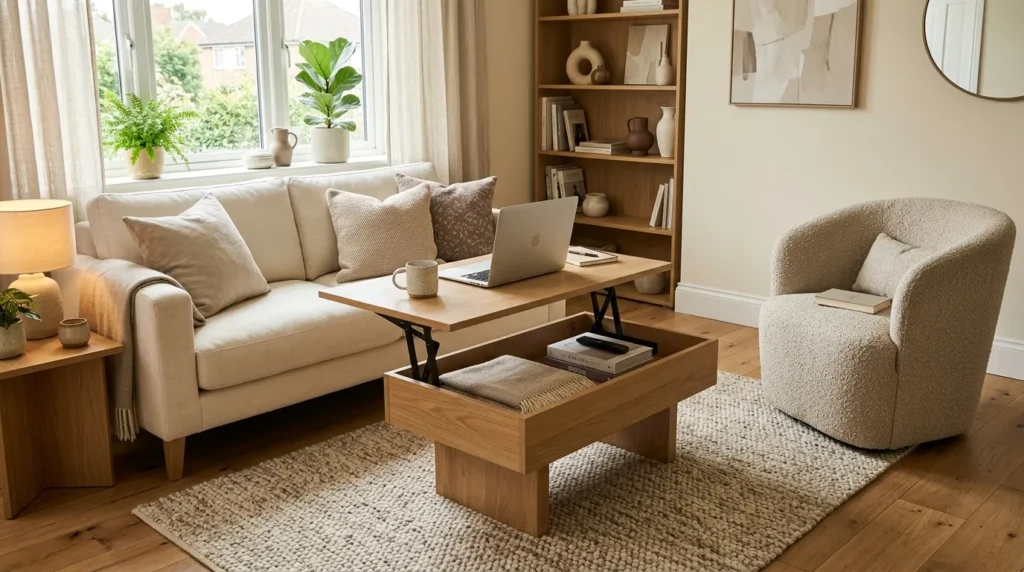
A coffee table that opens or raises can provide functionality beyond a traditional table.
The elevated surface can work for a laptop, writing, eating, or other occasional activities.
Hidden compartments can also provide storage for remotes, books, games, or other small items.
This makes the furniture more useful without increasing the number of pieces in the room.
How To Style It
Choose a table that fits comfortably within the seating arrangement.
Leave enough clearance for people to move around it.
Keep everyday items inside the storage compartment rather than leaving them scattered across the surface.
A simple tray can organize decorative objects when the table is being used conventionally.
10. Slim Rolling Cart
Quick Benefits
- Provides flexible storage
- Can move between spaces
- Uses narrow gaps
- Works for multiple purposes
- Easy to reorganize
Why It Works
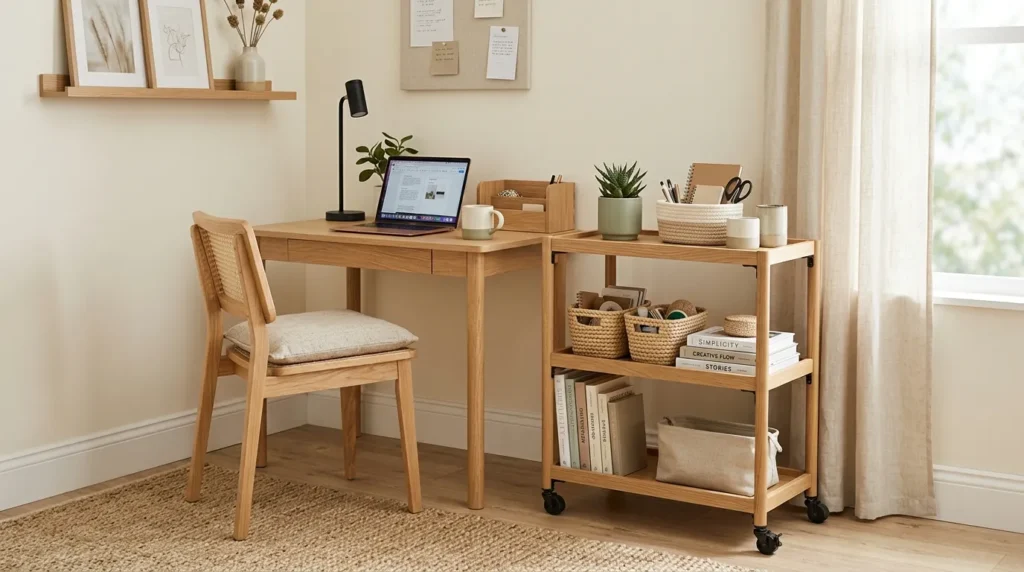
A rolling cart can be surprisingly useful in a small home because it doesn’t have to remain dedicated to one purpose.
It can hold beauty supplies, office materials, books, craft supplies, towels, or decorative items depending on the room.
Its narrow shape allows it to fit beside furniture or into awkward gaps.
And because it moves, you can reposition it whenever your needs change.
How To Style It
Choose a cart with multiple shelves or tiers.
Use small baskets or containers to keep loose items organized.
Place frequently used objects on the most accessible level.
When not needed, roll it beside a desk, dresser, or cabinet rather than leaving it in a main walking path.
11. Multifunctional Bench
Quick Benefits
- Provides seating
- Can add storage
- Works at the foot of a bed
- Creates a visual anchor
- Supports multiple uses
Why It Works
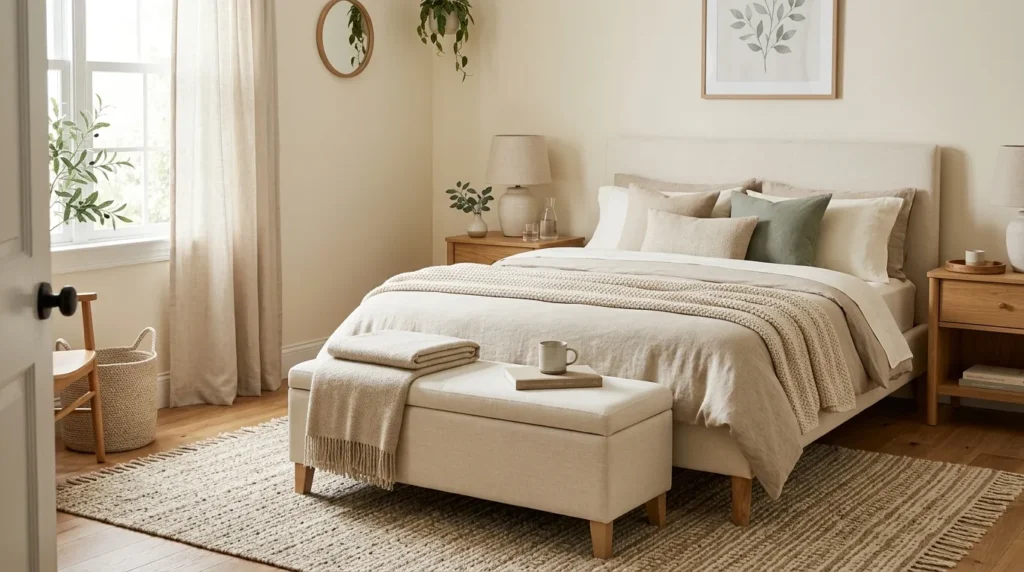
A bench can be one of the most versatile pieces in a compact room.
At the foot of a bed, it provides a place to sit while getting dressed.
In an entryway, it can offer seating while also holding shoes or baskets.
In a living room, a small upholstered bench can provide occasional seating without the bulk of another chair.
Storage versions make the furniture even more useful.
How To Style It
Choose a bench width that fits comfortably without blocking drawers or walking routes.
For bedrooms, keep enough space between the bench and surrounding furniture to move comfortably.
Use a storage bench for blankets, shoes, or other belongings.
Choose upholstery that complements the room’s existing palette so the bench feels integrated rather than visually heavy.
How to Choose Furniture for a Small Room
Before buying anything, measure the room carefully.
Record:
- Wall lengths
- Door openings
- Window locations
- Radiators or vents
- Closet doors
- Existing furniture dimensions
- Main walking paths
Then determine the room’s most important function.
A small bedroom may prioritize sleeping and clothing storage.
A compact living room may need seating, entertainment, and occasional workspace.
A multipurpose room may need furniture that can transform depending on the activity.
Once you know the priorities, choose furniture around those needs rather than buying individual pieces because they look attractive.
Furniture Features Worth Looking For
Built-In Storage
Useful when closet or cabinet space is limited.
Slim Profiles
Help preserve walking paths.
Vertical Designs
Take advantage of wall height.
Casters
Make furniture easier to move and reconfigure.
Foldable Elements
Useful when furniture only needs to be available occasionally.
Concealed Compartments
Keep everyday clutter out of sight.
Light Visual Frames
Furniture raised slightly from the floor can create a more open appearance.
How to Arrange Furniture in a Small Room
Start with the largest piece.
In a bedroom, that’s usually the bed.
In a living room, it may be the sofa.
Position that piece first and then build the rest of the arrangement around it.
Keep the primary walking path as clear as possible.
Don’t automatically push every piece against the wall. Sometimes leaving a small amount of breathing room creates a better flow.
Also consider sight lines from the doorway.
When you enter the room, the first thing you see should ideally feel intentional rather than cluttered.
FAQ
What furniture is best for a very small room?
Multifunctional and space-efficient furniture is usually the most useful. Storage beds, floating desks, narrow shelving, storage ottomans, nesting tables, and compact seating can provide important functions without requiring excessive floor space.
How can I fit more furniture into a small room?
Instead of adding more pieces, choose furniture that performs multiple jobs. Use vertical storage, hidden compartments, floating furniture, and pieces that can be folded or moved when necessary. Maintaining clear pathways is more important than maximizing the number of furnishings.
Is small furniture always better for a small room?
Not necessarily. Too many tiny pieces can make a room look cluttered. One appropriately scaled sofa, bed, or storage unit can sometimes look better than several miniature pieces. Proportion and layout matter more than simply choosing the smallest option.
What furniture saves the most space?
Furniture with integrated storage or multiple functions can save significant space. Examples include storage beds, lift-top tables, storage benches, ottomans, floating desks, and wall-mounted cabinets.
How do I make furniture look less bulky?
Choose lighter finishes, slimmer profiles, raised legs, open shelving, and colors that coordinate with the walls. Avoid placing too many large pieces next to one another, and leave enough open floor around major furniture.
Should I use a coffee table in a small living room?
You don’t always need a traditional coffee table. Nesting tables, a small round table, a storage ottoman, or a lift-top table may provide more flexibility depending on the room’s layout.
How much space should I leave between furniture?
There isn’t one universal measurement because furniture dimensions and room functions vary. The important goal is to maintain comfortable circulation, allow doors and drawers to open fully, and avoid creating narrow bottlenecks.
Conclusion
Small rooms don’t need small ambitions.
With the right furniture, even a limited footprint can support storage, seating, work, relaxation, and plenty of personal style.
The biggest shift is to stop thinking of furniture as having only one job. A storage ottoman can replace both a footrest and a storage box. A floating desk can create a workspace without consuming much floor area. A storage bed can reduce the need for another dresser. Nesting tables can provide extra surfaces only when you need them.
Scale and layout matter just as much as functionality. Measure before shopping, protect your main walking paths, and avoid filling every available corner simply because there’s space.
Then add the decorative details gradually.
A few well-chosen pieces, warm textures, and cohesive colors can make a small room feel intentional rather than cramped.
Start with the furniture that solves your biggest everyday problem. Once that piece is in place, build the rest of the room around it. The result can be comfortable, practical, and stylish without requiring a large footprint.