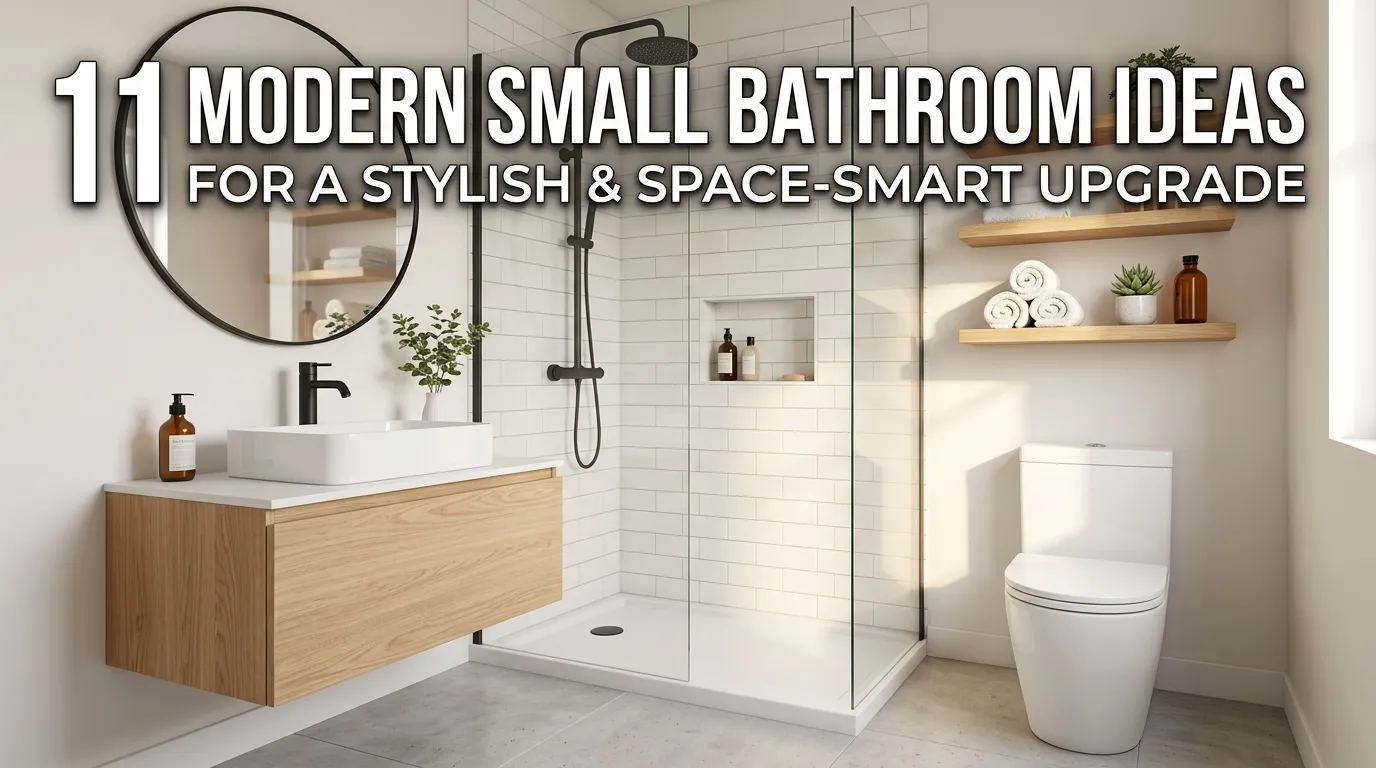
11 Modern Small Bathroom Ideas for a Stylish & Space-Smart Upgrade
A small bathroom doesn’t need a large footprint to feel modern, polished, and comfortable. In fact, compact bathrooms can be some of the most satisfying spaces to redesign because every detail has a purpose. When the layout is thoughtful and the finishes work together, even a narrow powder room or tiny full bath can feel surprisingly spacious.
The key is to avoid treating a small bathroom like a miniature version of a large one. Oversized vanities, bulky storage, busy tile patterns, and poorly placed fixtures can quickly make the room feel cramped. Instead, modern small-bathroom design focuses on clean lines, smart storage, reflective surfaces, and finishes that create visual continuity.
I’ve noticed that the biggest transformations often come from relatively simple choices. A wall-mounted vanity can open up the floor. A frameless shower enclosure can visually extend the room. Large-format tile can reduce distracting grout lines. Even a well-positioned mirror can make a compact bathroom feel brighter and more open.
You also don’t have to sacrifice personality for practicality. Modern bathrooms can incorporate warm wood tones, muted colors, sculptural lighting, natural stone, brushed metal, and beautiful accessories while still maintaining a streamlined appearance.
Whether you’re updating an apartment bathroom, remodeling a guest bath, or simply looking for ideas before your next renovation, these modern approaches can help you make better use of every inch. Use them as inspiration rather than rigid rules, and choose the combinations that fit your home’s architecture, budget, and daily routine.
Table of Contents
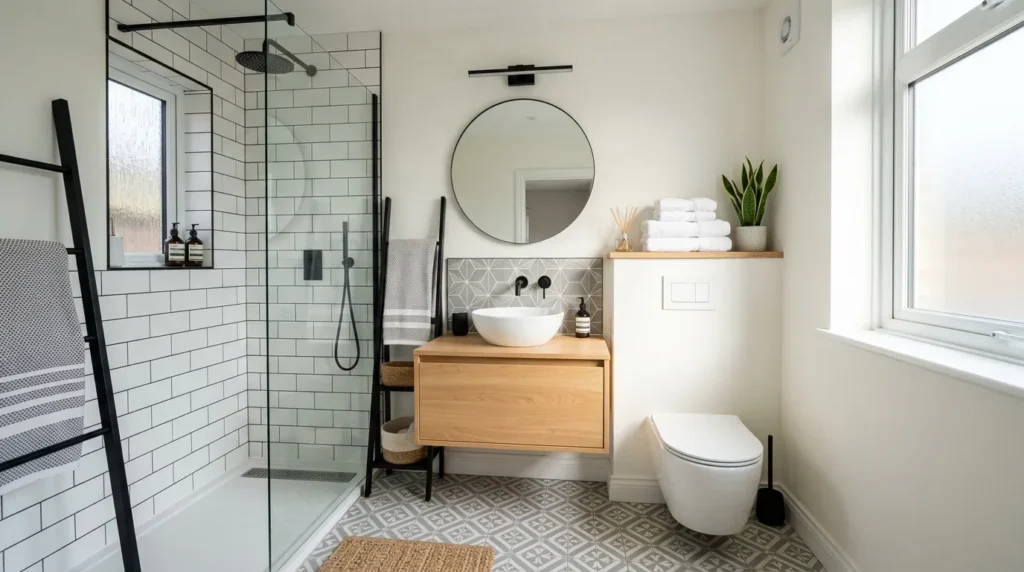
1. Floating Vanity
Create a lighter appearance while keeping essential storage below the sink.
2. Large Format Tile
Use fewer grout lines to create a cleaner, more continuous visual effect.
3. Frameless Glass
Open the shower area visually without adding another heavy boundary.
4. Wall Mounted Fixtures
Free up counter and floor space with streamlined fixtures.
5. Oversized Mirror
Reflect light and create a stronger sense of depth in compact spaces.
6. Soft Neutral Palette
Use warm neutrals to make the bathroom feel brighter and more relaxing.
7. Recessed Storage
Turn unused wall cavities into practical storage without crowding the room.
8. Vertical Tile Layout
Draw the eye upward with carefully positioned wall tile.
9. Warm Wood Accents
Add natural warmth to a crisp modern bathroom.
10. Curved Details
Soften hard architectural lines with rounded fixtures and accessories.
11. Layered Lighting
Combine several light sources for a brighter, more functional bathroom.
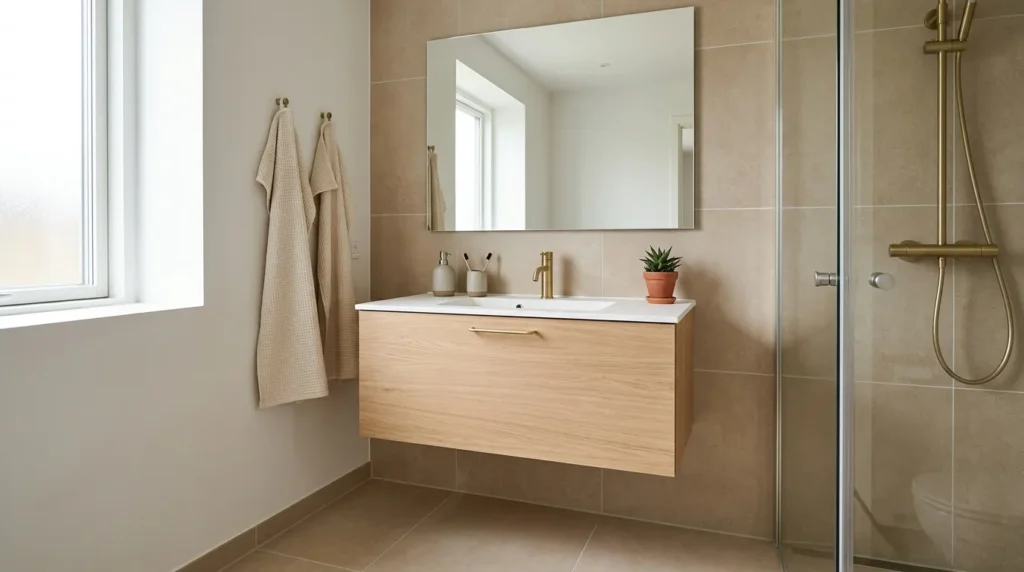
1. Floating Vanity
Quick Benefits
- Opens up visible floor space
- Creates a modern appearance
- Makes cleaning easier
- Works well in narrow bathrooms
- Provides useful under-sink storage
Why It Works
A floating vanity can make a surprisingly large difference in a compact bathroom because it allows the floor to remain visible underneath. That small strip of uninterrupted flooring creates a sense of openness and makes the vanity feel less bulky.
Wall-mounted vanities also tend to have clean, streamlined silhouettes that naturally suit modern interiors. You can choose a simple drawer design for toiletries, towels, and everyday essentials without adding a large cabinet footprint.
Another advantage is flexibility. Floating vanities can work in tiny guest bathrooms as well as compact primary bathrooms, and they can be paired with vessel, undermount, or integrated sinks depending on the look you’re after.
How To Style It
Choose a vanity with a relatively shallow depth if the bathroom has a narrow walkway. A wood-look finish can introduce warmth, while matte white or soft gray creates a cleaner contemporary appearance.
Keep the countertop relatively uncluttered. A small soap dispenser, ceramic tray, and one decorative object are often enough.
Pair the vanity with a large mirror and wall-mounted sconces if the layout allows. Brushed brass, matte black, or brushed nickel hardware can provide subtle contrast.
If storage is limited, choose a floating vanity with deep drawers rather than a small open shelf. This gives you a cleaner appearance while keeping everyday bathroom supplies organized.
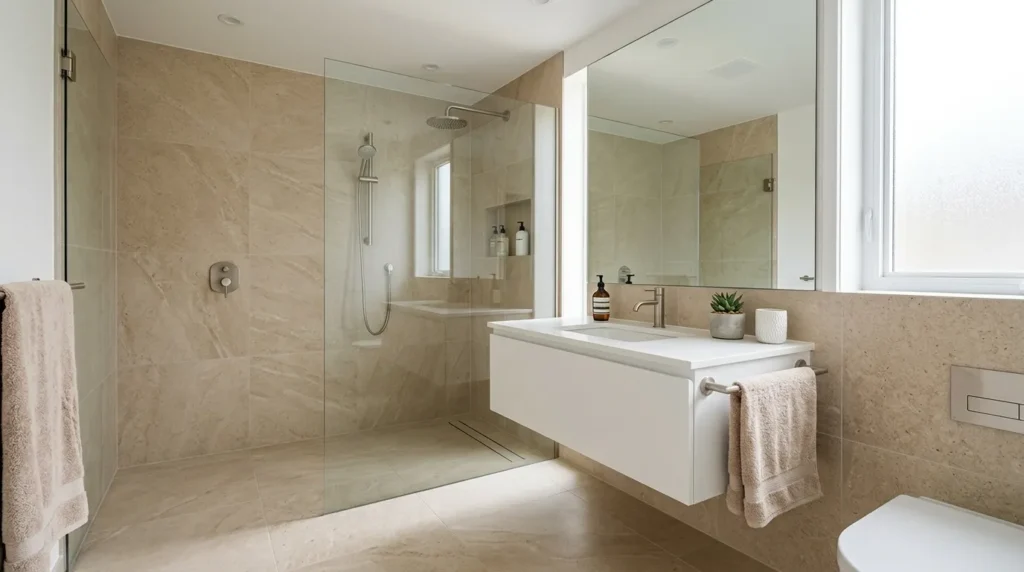
2. Large Format Tile
Quick Benefits
- Reduces visible grout lines
- Creates a cleaner appearance
- Can make walls feel more continuous
- Works well with modern styles
- Simplifies visual composition
Why It Works
Large-format tile can be particularly effective in small bathrooms because fewer grout lines create less visual interruption. Instead of seeing a grid of small tiles across the walls and floor, the eye reads broader, calmer surfaces.
This doesn’t physically increase the room’s dimensions, but it can make the space feel less visually busy. When the tile color is relatively close to the grout color, the effect becomes even more seamless.
Large tiles can work beautifully with modern bathrooms because they support the clean architectural lines associated with contemporary design. Stone-look porcelain, soft concrete-inspired finishes, and warm neutral surfaces are especially versatile.
How To Style It
Choose a tile size appropriate for the room and installation requirements. Soft beige, warm white, pale gray, and natural stone-inspired finishes are easy to combine with modern fixtures.
For a cohesive appearance, consider carrying the same or coordinating tile from the shower floor onto the bathroom floor when practical and safe.
Keep the grout relatively close in color to the tile if you want a continuous look. For stronger definition, choose a contrasting grout, but use that approach selectively in very small spaces.
Balance large tile with warmer materials such as wood cabinetry, textured towels, or woven accessories so the room doesn’t feel overly hard.
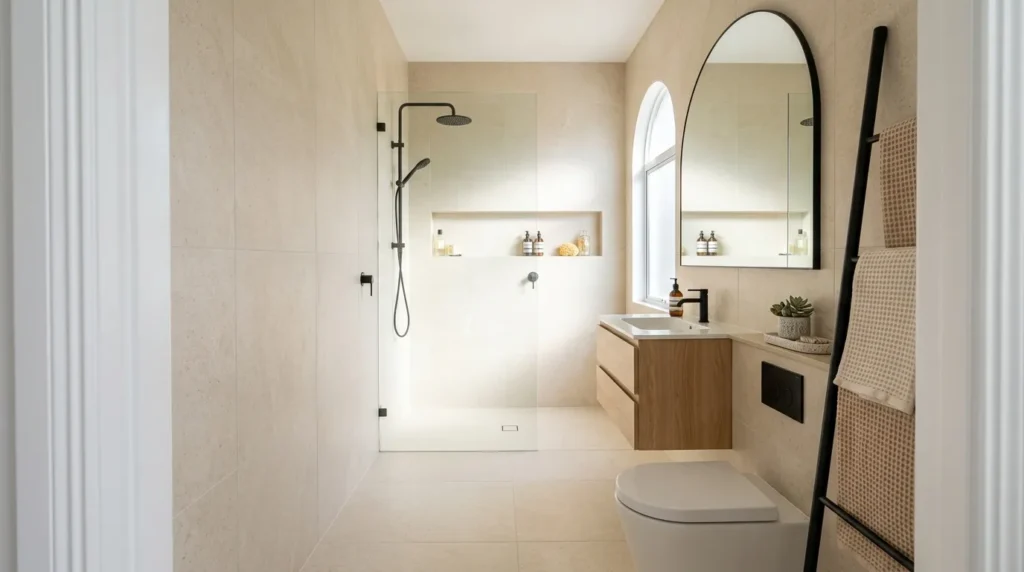
3. Frameless Glass
Quick Benefits
- Keeps the shower visually open
- Allows tile to remain visible
- Reduces visual barriers
- Creates a sleek modern look
- Works especially well in walk-in showers
Why It Works
A traditional shower curtain or heavy framed enclosure can visually divide a small bathroom into separate zones. Frameless glass does the opposite. It allows your eye to travel through the shower area, making the entire room feel more connected.
This is particularly effective when the same or coordinating tile continues across the shower and the rest of the bathroom. The result is a cleaner visual flow with fewer competing boundaries.
Frameless glass also lets architectural details shine. If you’ve invested in beautiful tile, a modern shower niche, or a sculptural shower fixture, keeping the enclosure visually quiet allows those features to remain part of the overall composition.
How To Style It
Use clear glass with minimal hardware whenever the bathroom layout and installation allow. Keep the shower interior simple so the enclosure doesn’t need to compete with excessive accessories.
A recessed niche can provide practical storage for shampoo and soap without requiring a hanging organizer.
Choose coordinating hardware throughout the bathroom. For example, matte black shower hardware can be repeated on the vanity pulls and mirror frame.
Keep towels neatly folded or hung outside the shower area when possible. The cleaner the visual transition between zones, the more spacious the bathroom tends to feel.
4. Wall Mounted Fixtures
Quick Benefits
- Frees counter space
- Creates cleaner sightlines
- Supports a contemporary aesthetic
- Works well in compact bathrooms
- Reduces visual clutter
Why It Works
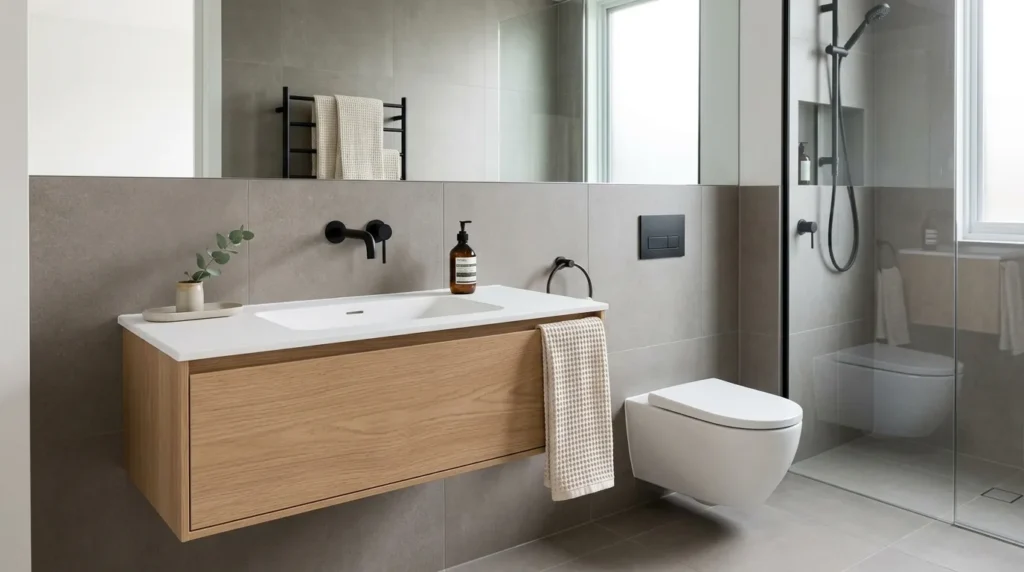
Wall-mounted fixtures are another smart way to reduce the amount of visual and physical bulk in a small bathroom. A wall-mounted faucet can eliminate some countertop clutter around the sink, while a wall-hung toilet can leave more visible floor underneath.
These fixtures also contribute to a more architectural, modern appearance because they create cleaner transitions between surfaces.
The approach is especially helpful when every inch of counter or floor space matters. Instead of adding another object to an already crowded surface, you can integrate useful functions directly into the wall.
How To Style It
If you’re doing a renovation, consider a wall-mounted faucet paired with a streamlined sink and vanity. Make sure the plumbing requirements and wall construction are suitable before choosing this approach.
For a wall-hung toilet, use a concealed tank system where appropriate and make sure installation is handled according to local plumbing requirements.
Keep other fixtures simple so the wall-mounted elements become part of a cohesive design rather than isolated statement pieces.
Repeat the same metal finish across the faucet, shower controls, cabinet hardware, and lighting. Consistency creates a polished modern appearance.
5. Oversized Mirror
Quick Benefits
- Reflects available light
- Creates visual depth
- Makes the vanity area feel larger
- Adds a strong focal point
- Can replace extra wall decoration
Why It Works
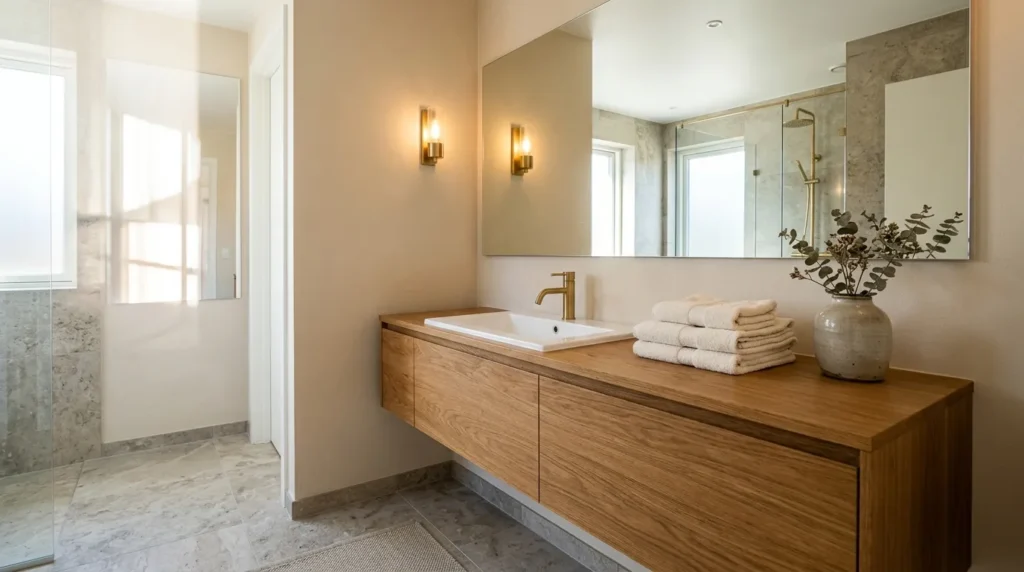
Mirrors are one of the most useful visual tools in a small bathroom. A larger mirror reflects both light and surrounding surfaces, which can make the room feel brighter and more expansive.
An oversized mirror can also reduce the need for additional wall decor. Instead of filling a small wall with multiple frames or accessories, one substantial mirror can become the main feature above the vanity.
The shape matters, too. A rectangular mirror emphasizes horizontal and vertical lines, while an arched or rounded design can soften a bathroom filled with hard surfaces.
How To Style It
For a contemporary bathroom, consider a frameless mirror for a seamless appearance. If the room needs warmth, choose a thin wood or metal frame.
Extend the mirror close to the vanity edges when practical. A wider mirror can visually expand the entire sink zone.
Pair it with sconces mounted on either side or integrated lighting above the mirror. Avoid placing too many decorative pieces around it because the mirror itself should have room to make an impact.
For a softer modern look, choose an arched mirror with warm metal hardware and a wood vanity.
6. Soft Neutral Palette
Quick Benefits
- Makes compact spaces feel calmer
- Reflects light effectively
- Creates a timeless backdrop
- Works with many fixture finishes
- Allows texture to stand out
Why It Works
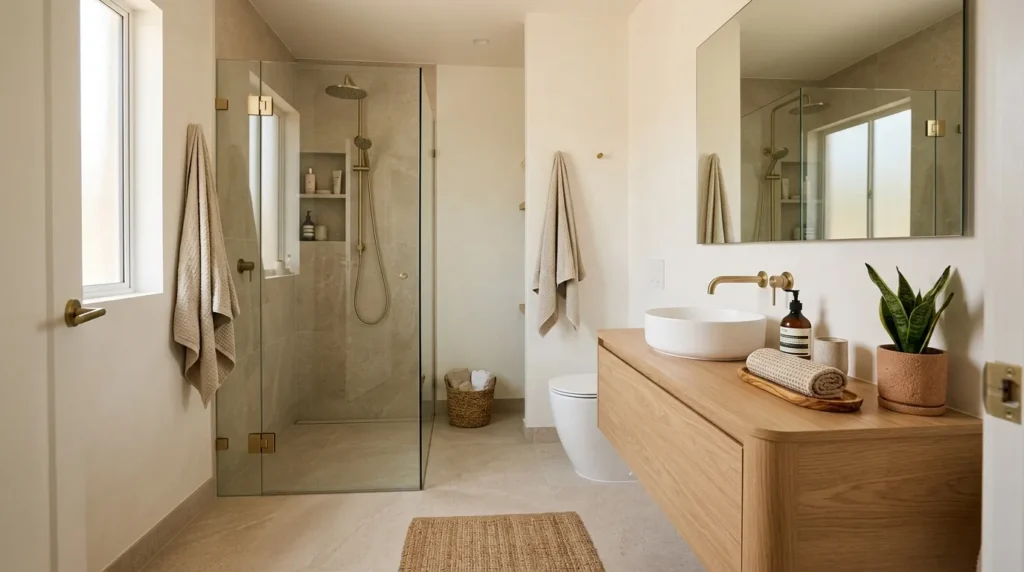
Color has a powerful effect on the perceived size and atmosphere of a bathroom. Soft neutrals such as warm white, cream, beige, light taupe, and pale gray can help create a bright, continuous backdrop.
A neutral bathroom doesn’t have to feel sterile. The secret is introducing variation through texture and material. Warm wood, stone-look surfaces, brushed metal, ribbed glass, and plush towels can provide depth without requiring a busy color palette.
If your bathroom has limited natural light, warm neutrals can also prevent the space from feeling overly cold.
How To Style It
Choose one dominant neutral for the largest surfaces, such as walls and tile. Then add one or two supporting tones through the vanity, towels, accessories, and hardware.
Warm white tile can pair beautifully with light oak cabinetry and brushed brass fixtures. Beige stone-look porcelain can work with matte black accents for a more contemporary contrast.
Use towels and accessories to introduce subtle color if desired. Muted sage, dusty blue, terracotta, and soft charcoal can all work nicely without overwhelming a compact room.
7. Recessed Storage
Quick Benefits
- Uses wall space efficiently
- Keeps counters clear
- Creates a custom appearance
- Works well in showers
- Reduces visual clutter
Why It Works
Storage is often the hardest part of a small bathroom. Freestanding cabinets and countertop organizers consume valuable space, while recessed storage uses areas that might otherwise go unused.
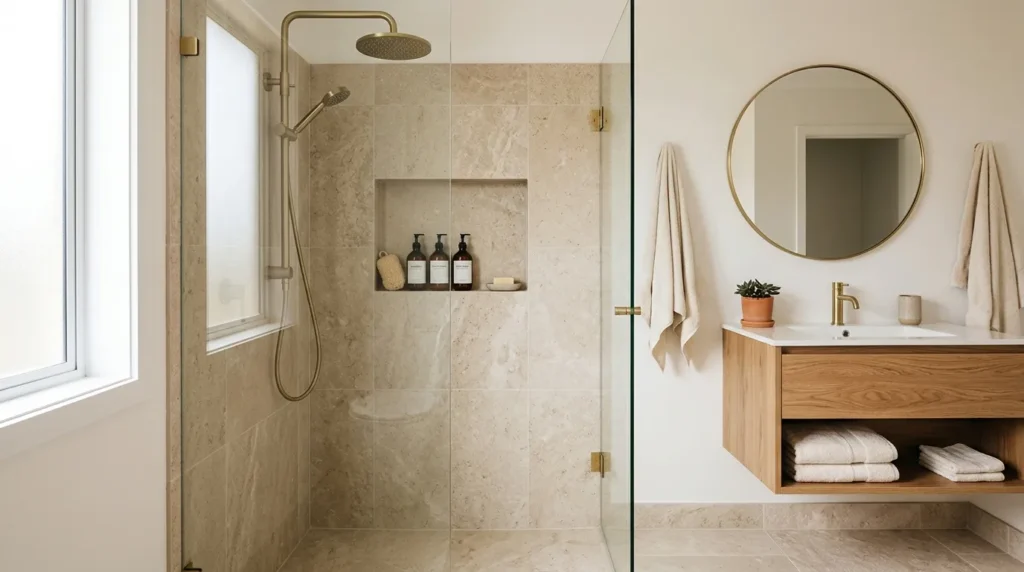
A recessed shower niche is one of the most practical examples. It gives shampoo, soap, and other products a designated home without requiring a bulky caddy.
Outside the shower, recessed medicine cabinets can provide significantly more storage than a standard mirror while maintaining a clean appearance.
The key is planning these features during a renovation because wall depth, plumbing, electrical components, and structural elements can affect where recessed storage can safely be installed.
How To Style It
Keep recessed niches simple and coordinated with the surrounding tile. Using the same tile inside the niche creates a seamless appearance, while a contrasting stone or tile can turn it into a subtle feature.
For a medicine cabinet, choose a model with a clean frame or frameless design that complements the mirror and vanity.
Organize the interior by category rather than stacking random products. Small matching containers can help create a more polished appearance.
If you’re renovating, discuss niche placement with your contractor before installation so the storage lands at a practical height.
8. Vertical Tile Layout
Quick Benefits
- Draws attention upward
- Adds architectural interest
- Makes walls feel taller
- Creates a modern feature
- Works well in narrow rooms
Why It Works
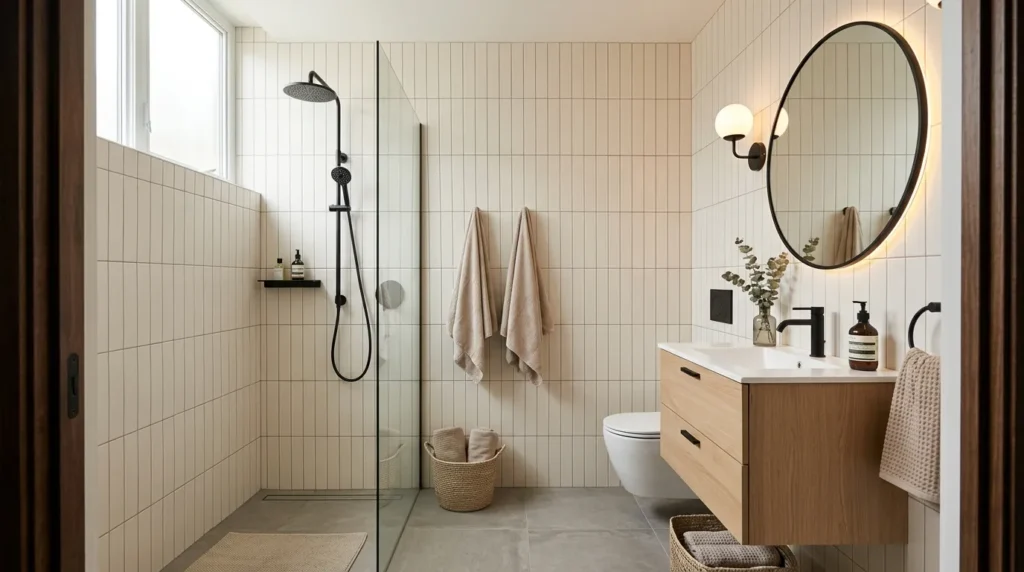
A compact bathroom often has limited horizontal space, so using vertical visual lines can help emphasize height. Vertically oriented rectangular tile can draw the eye upward and make the walls feel more elongated.
This approach is particularly useful in bathrooms with low ceilings or narrow proportions. It also provides a simple way to add visual interest without introducing multiple colors or complicated patterns.
Vertical tile can be subtle or dramatic depending on the material. Narrow stacked tile creates a contemporary look, while larger rectangular pieces offer a quieter effect.
How To Style It
Choose a tile with a simple surface if you want the vertical layout to remain understated. Warm white, pale beige, muted gray, or stone-inspired finishes are versatile options.
Consider using vertical tile in the shower while keeping the rest of the bathroom slightly simpler. This creates a focal zone without overwhelming the room.
If you’re using contrasting grout, remember that stronger lines can become visually prominent. For a calmer appearance, choose grout that closely coordinates with the tile.
Pair vertical tile with a simple mirror and streamlined vanity so the wall remains the main visual feature.
9. Warm Wood Accents
Quick Benefits
- Softens modern finishes
- Adds natural warmth
- Creates material contrast
- Makes neutral bathrooms feel inviting
- Works with many metal finishes
Why It Works
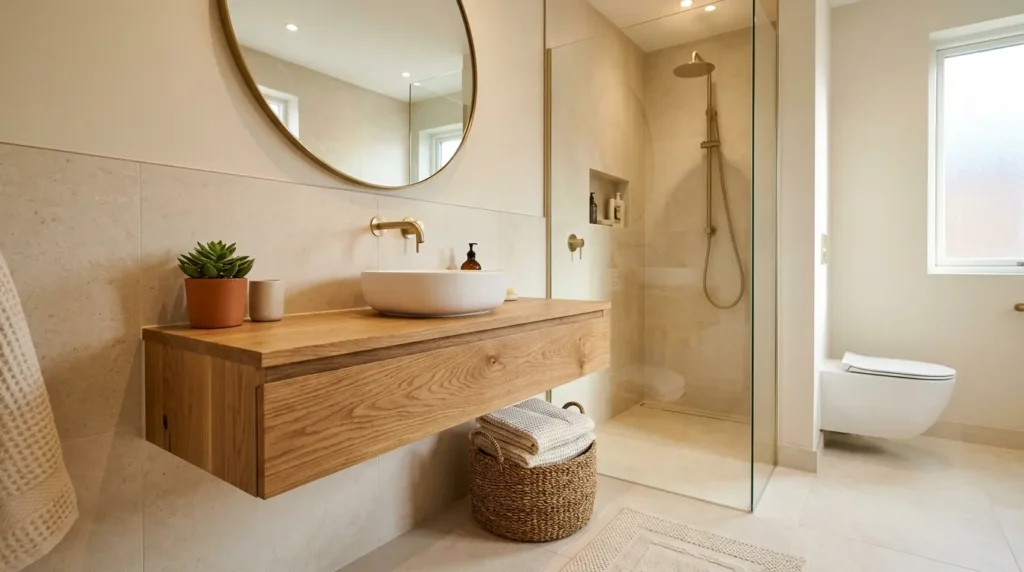
Modern bathrooms can sometimes lean heavily toward hard materials such as porcelain, stone, glass, and metal. Adding warm wood introduces a natural element that balances those surfaces.
A wood vanity is the easiest way to bring this idea into a compact bathroom, but even smaller details can help. A wooden stool, framed mirror, floating shelf, or carefully selected accessory can provide enough warmth.
Light oak and natural wood tones work particularly well with warm neutral bathrooms. If you prefer a moodier design, walnut or medium brown finishes can create a richer contrast.
How To Style It
Choose one main wood element and repeat it subtly. A light oak floating vanity can be paired with a matching framed mirror or small stool.
Keep the wood finish relatively natural rather than heavily glossy. Visible grain adds texture and helps the bathroom feel more organic.
Balance wood with stone-look tile, soft textiles, and simple metal fixtures. Brushed brass creates a warm combination, while matte black offers sharper contemporary contrast.
Because bathrooms are humid environments, choose materials and finishes appropriate for moisture exposure and follow manufacturer care recommendations.
10. Curved Details
Quick Benefits
- Softens hard bathroom lines
- Adds modern character
- Makes the room feel more welcoming
- Creates a subtle focal point
- Works with many design styles
Why It Works
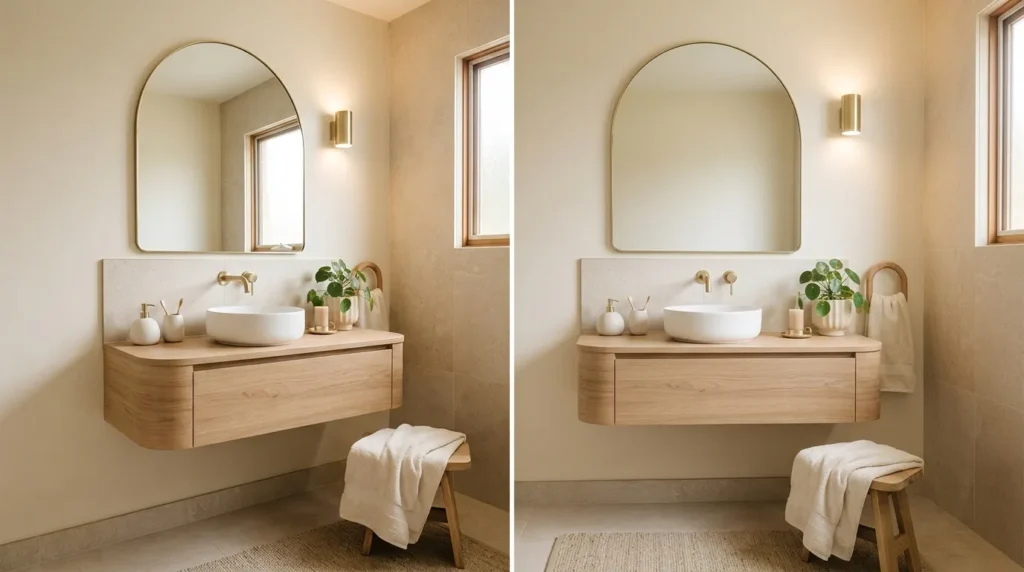
Bathrooms naturally contain many straight lines: rectangular tile, vanities, mirrors, shower doors, and cabinetry. Introducing a curved element can create visual relief and make the room feel less rigid.
A rounded mirror, curved vanity, arched shower opening, or softly shaped sink can become a focal point without requiring a bold color or elaborate pattern.
Curves can also make a small bathroom feel more comfortable visually because they break up repetitive horizontal and vertical lines.
How To Style It
The easiest option is often a rounded or arched mirror above a simple vanity. This creates a focal point while leaving the rest of the bathroom relatively restrained.
For a stronger statement, choose a vanity with softly curved corners or a sculptural vessel sink.
Keep other elements simple so the curved feature remains noticeable. Repeat subtle curves through accessories such as a rounded tray or circular wall light if desired.
Pair curved forms with warm materials and soft neutrals for an inviting modern look, or combine them with black hardware and crisp white surfaces for a more dramatic contemporary style.
11. Layered Lighting
Quick Benefits
- Improves visibility
- Makes the bathroom feel brighter
- Creates a polished atmosphere
- Supports grooming tasks
- Adds visual depth
Why It Works
Good bathroom lighting needs to do more than simply make the room bright. You need enough illumination for grooming and cleaning while also creating an atmosphere that feels comfortable.
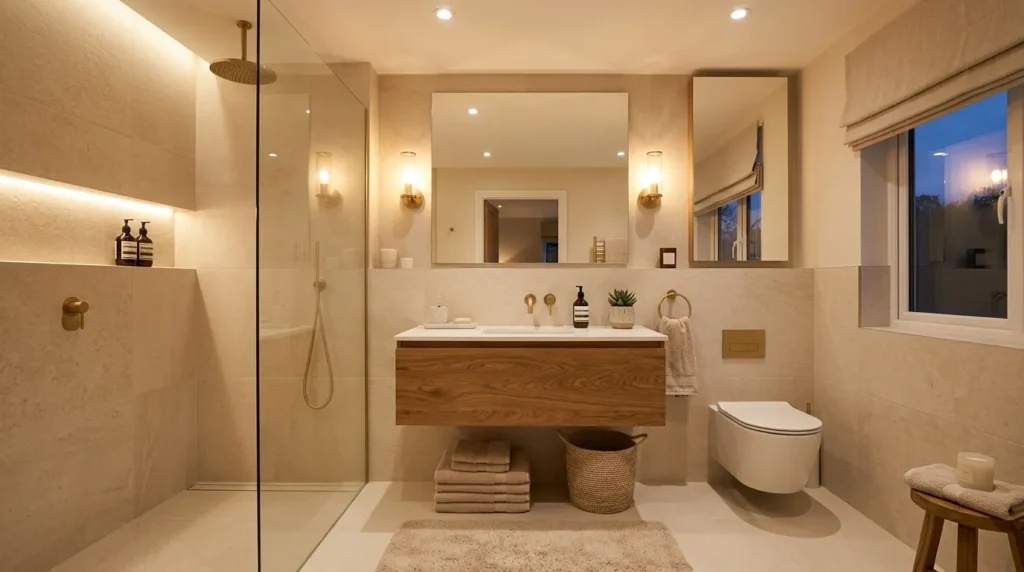
Layered lighting combines ambient illumination with task and accent lighting. A ceiling fixture can provide overall brightness, while vanity lighting helps eliminate harsh shadows around the face.
In a small bathroom, carefully positioned lighting can also make surfaces feel more dimensional. Light reflecting from a large mirror, glossy tile, or pale countertop can distribute brightness throughout the room.
How To Style It
Begin with general overhead lighting appropriate for the room. Then add vanity sconces or integrated mirror lighting for grooming.
If you have a shower niche or architectural feature, subtle accent lighting can highlight it without overpowering the room.
Choose fixtures that coordinate with your faucet and cabinet hardware. Warm, comfortable light is generally more flattering and relaxing than extremely cool lighting.
Use dimming capability where practical. This allows you to create a brighter environment when getting ready and a softer atmosphere during evening routines.
How to Make a Small Bathroom Feel Bigger
The most effective approach is to reduce visual interruptions. Use a consistent flooring material where appropriate, choose a shower enclosure that doesn’t create a heavy visual barrier, and avoid filling every wall with storage or decoration.
Large mirrors, lighter surfaces, wall-mounted fixtures, and thoughtful lighting can all contribute to a more open appearance.
Scale matters, too. A compact vanity may be more appropriate than a large double-sink unit if it leaves you with a comfortable walkway. Similarly, a streamlined toilet and narrow storage cabinet can make the room easier to navigate.
Don’t overlook the door. If the existing door swings into the bathroom and takes up valuable floor area, discuss whether a pocket door or another suitable configuration could improve the layout. Any structural or plumbing changes should be planned with a qualified professional.
Small Bathroom Storage Tips
Storage should be planned around what you actually use. Everyday toiletries should be easy to reach, while backup products and less frequently used items can live in cabinets or drawers.
A recessed medicine cabinet can combine mirror space and storage. A shower niche can keep bathing products organized. Floating vanities can provide drawers without visually filling the floor.
Use drawer organizers for small items such as cosmetics, grooming tools, and accessories. Matching containers can also help keep open shelves visually calm.
If you have a little unused vertical space, consider a narrow wall-mounted cabinet rather than adding a floor-standing unit.
Most importantly, don’t let organization become decoration. The bathroom will feel more spacious when products have designated homes and countertops remain relatively clear.
Modern Small Bathroom Materials
Material selection can have a major impact on how compact bathrooms look and feel.
Porcelain: Durable, versatile, and available in many stone and concrete-inspired finishes.
Natural stone: Beautiful and distinctive, although it generally requires more care and appropriate sealing.
Wood-look finishes: Add warmth without requiring untreated natural wood in moisture-prone areas.
Glass: Keeps shower areas visually open and allows tile to remain visible.
Brushed metal: Provides subtle sophistication and tends to feel softer than highly polished finishes.
Matte surfaces: Can create a contemporary appearance while reducing visual glare.
The best combination depends on your budget, maintenance preferences, household needs, and existing architecture.
Common Small Bathroom Mistakes
A few choices can unintentionally make a compact bathroom feel even smaller.
Oversized vanity: It may provide storage but leave the room difficult to navigate.
Too many tile patterns: Multiple competing surfaces can create visual noise.
Poor lighting: Dark corners can make the bathroom feel enclosed.
Heavy shower enclosure: Thick frames can create a strong visual boundary.
Cluttered countertops: Everyday products quickly overwhelm limited surface area.
Too many finishes: Mixing several metals, woods, tile styles, and colors can make a tiny room feel chaotic.
Ignoring ventilation: A beautiful bathroom still needs appropriate moisture management and ventilation for long-term performance.
Think about the whole room rather than selecting each feature independently. A small bathroom usually benefits from fewer, more coordinated decisions.
FAQ
How can I make a small bathroom look modern?
Focus on clean-lined fixtures, a limited material palette, simple hardware, good lighting, and uncluttered surfaces. Floating vanities, frameless glass, large mirrors, and large-format tile can create a streamlined contemporary appearance. Warm wood and soft neutral tones can prevent the design from feeling too stark.
What colors make a small bathroom look bigger?
Light neutrals such as warm white, cream, beige, pale gray, and soft taupe can help create a brighter and more continuous visual backdrop. You can still use darker colors as accents through hardware, mirrors, accessories, or a small feature wall.
Are floating vanities good for small bathrooms?
Yes. Floating vanities can make the floor appear more open and are particularly useful in compact layouts. They also provide convenient storage while maintaining a streamlined appearance. Choose a depth and width that leave enough room for comfortable movement around the bathroom.
What type of tile is best for a small bathroom?
Large-format tile can reduce the number of visible grout lines and create a cleaner appearance. Neutral stone-look porcelain is a versatile option, but smaller tiles can also work beautifully when used intentionally. Choose tile based on the room’s proportions, maintenance needs, slip resistance, and overall design.
How do you add storage to a small bathroom?
Use vertical and recessed storage whenever possible. Floating cabinets, recessed medicine cabinets, shower niches, narrow wall-mounted shelves, and vanity drawers can all provide storage without consuming much floor space. Keep everyday products organized and reserve less accessible areas for backups and seasonal items.
Is a frameless shower better for a small bathroom?
A frameless glass enclosure can make a compact bathroom feel more visually open because it creates fewer boundaries between the shower and the rest of the room. It is particularly effective when the same tile continues into the shower. Proper installation and waterproofing are essential.
What lighting is best for a small bathroom?
A combination of ambient and task lighting usually works best. Use general ceiling illumination along with vanity lighting positioned to reduce shadows. If possible, include dimmable fixtures and choose light sources that provide comfortable, accurate illumination for grooming.
Conclusion
A small bathroom can feel remarkably sophisticated when the design is built around proportion, visual continuity, and smart storage. You don’t need to fill the room with expensive finishes or dramatic features. Often, a few thoughtful choices can create the biggest improvement.
Start with the layout. Make sure the vanity, toilet, shower, and door allow comfortable movement. Then work on the visual elements: a large mirror, light or warm neutral surfaces, streamlined fixtures, and carefully chosen tile.
From there, introduce personality through warm wood, curved details, attractive hardware, soft towels, and thoughtful lighting. Keep storage intentional so everyday products don’t take over the countertop.
If you’re planning a renovation, prioritize the changes that are difficult to make later, such as plumbing, recessed storage, lighting, and shower configuration. Decorative details can always evolve over time.
The most successful compact bathrooms balance beauty with everyday practicality. Choose finishes you enjoy looking at, materials that suit your maintenance preferences, and fixtures that make the room easier to use.
Start with the biggest problem your bathroom has today, solve that first, and build the rest of the design around it. Even a very compact bathroom can become a bright, modern, comfortable space that feels polished without feeling crowded.