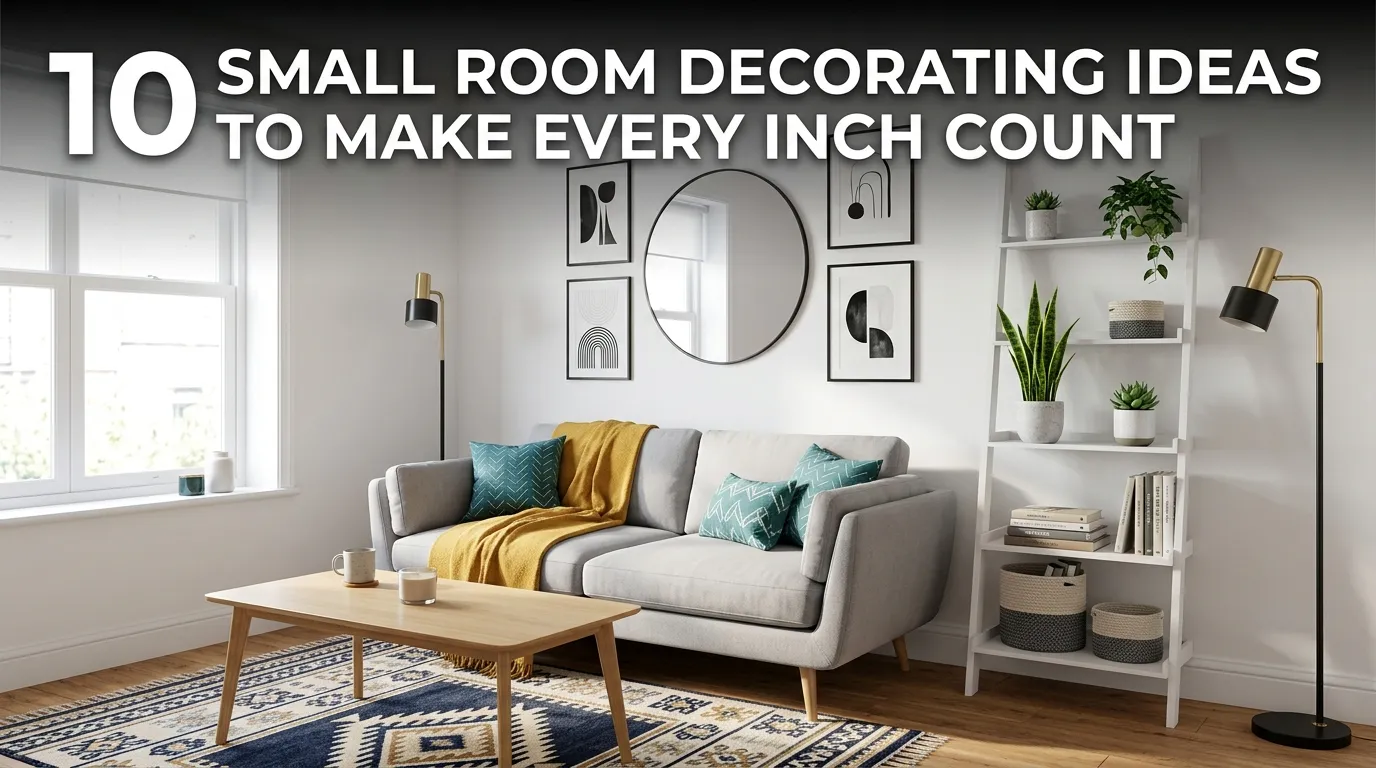
10 Small Room Decorating Ideas to Make Every Inch Count
Decorating a small room can be surprisingly rewarding. When space is limited, every furniture choice, color, texture, and decorative detail has a bigger visual impact. The goal isn’t simply to squeeze more things into the room. It’s to create a space that feels comfortable, organized, bright, and reflective of your personal style without making it feel crowded.
Whether you’re decorating a small bedroom, home office, guest room, studio apartment, or multipurpose space, thoughtful planning can make a noticeable difference. A room with limited square footage can still have beautiful furniture, artwork, cozy textiles, storage, and personality. The trick is knowing where to simplify and where to make a statement.
I’ve noticed that small rooms often look best when they have a clear visual direction. Instead of choosing several competing colors and furniture styles, establish a simple palette and repeat a few materials throughout the room. This creates continuity, which can make the space feel more cohesive.
Vertical space is another opportunity that’s easy to overlook. Walls can hold shelves, artwork, mirrors, lighting, and storage, allowing the floor to remain more open. Furniture that performs more than one job can also be incredibly useful, especially when you’re working with a tight footprint.
The following ideas focus on realistic decorating strategies rather than simply making a room look bigger. You’ll find ways to improve storage, introduce warmth, create focal points, and make the available space work harder.
Whether you’re furnishing a rental or refreshing a room in your home, these small-space ideas can help you create a room that feels intentional rather than restricted.
Table of Contents
1. Light Layered Palette
Use soft colors and varied textures to create an airy, welcoming foundation.
2. Multifunctional Furniture
Choose pieces that perform multiple jobs without overwhelming the room.
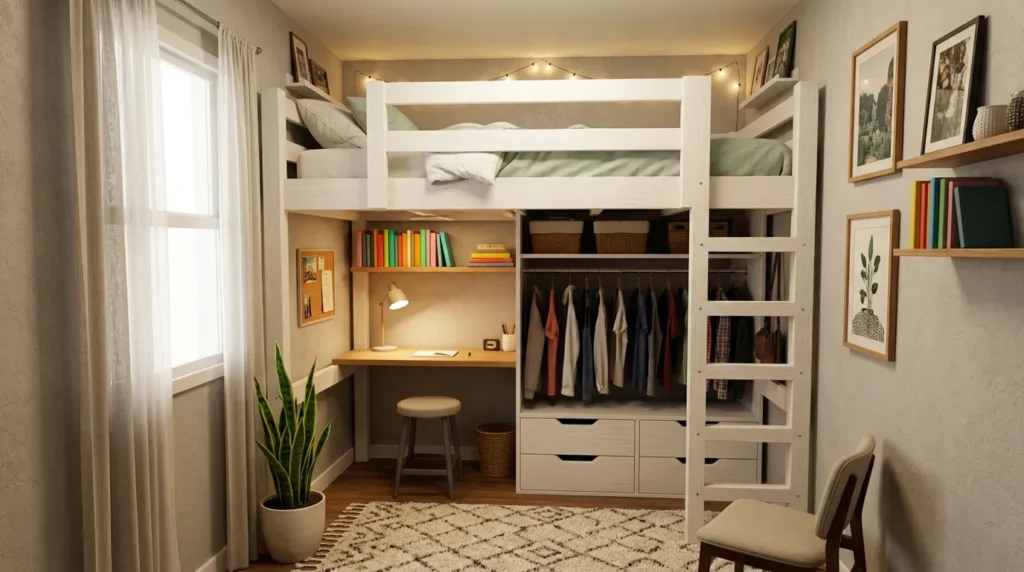
3. Vertical Storage
Use wall height to organize belongings while preserving floor space.
4. Oversized Mirror
Reflect light and create a stronger sense of openness.
5. Floating Furniture
Keep portions of the floor visible for a lighter visual effect.
6. Cozy Window Nook
Turn an overlooked corner into a comfortable functional zone.
7. Layered Lighting
Use several light sources to make the room feel warm and dimensional.
8. Underbed Storage
Take advantage of hidden space beneath larger furniture.
9. Statement Wall
Give the room personality without filling it with accessories.
10. Open Floor Plan
Prioritize clear pathways and purposeful furniture placement.
1. Light Layered Palette
Quick Benefits
- Creates an airy atmosphere
- Makes the room feel cohesive
- Reflects available light
- Works with many styles
- Provides a calm foundation
Why It Works
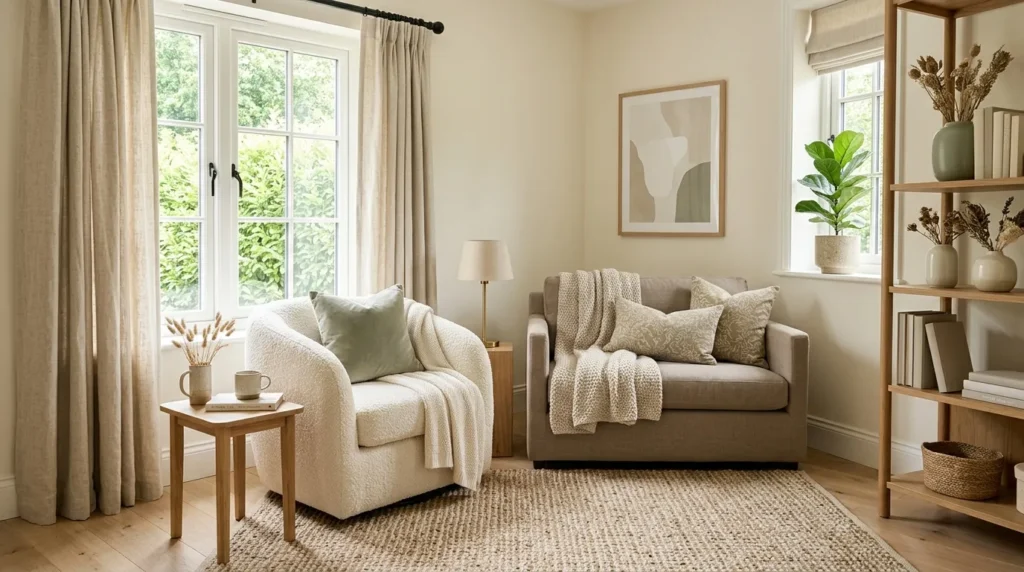
A restrained color palette can help a small room feel visually organized. Light colors reflect more available light, while repeating similar tones prevents the eye from stopping at too many visual boundaries. But an entirely white room isn’t necessary. Cream, warm beige, soft gray, pale taupe, muted sage, and dusty blue can all create a bright foundation while adding personality. The key is layering rather than relying on one flat color. When walls, furniture, textiles, and accessories share related tones, the room tends to feel more connected and less visually fragmented.
How To Style It
Start with a warm neutral wall color.
Choose bedding, upholstery, or curtains within the same color family.
Add texture through linen, cotton, boucle, wool, rattan, or woven materials.
Introduce one muted accent color through pillows or artwork.
Keep larger furniture pieces relatively neutral so the room remains visually calm.
2. Multifunctional Furniture
Quick Benefits
- Saves valuable floor space
- Reduces furniture clutter
- Adds practical storage
- Works in bedrooms and studios
- Makes the room more flexible
Why It Works
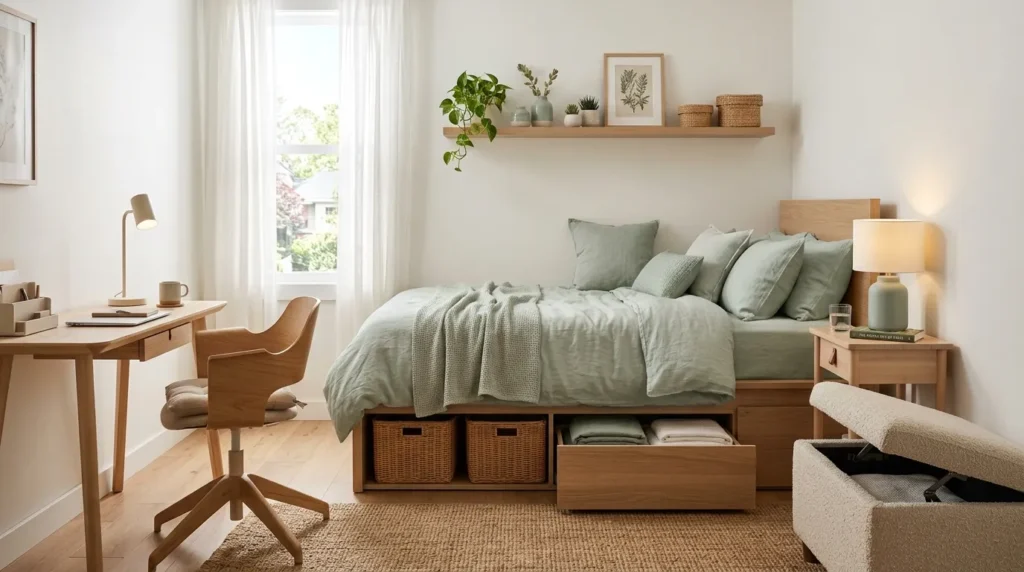
Furniture that serves multiple purposes is especially valuable in a small room. Instead of having a separate storage cabinet, desk, seating area, and side table, choose pieces that combine functions whenever possible. A storage ottoman can provide seating and hidden storage, while a desk can double as a vanity or workspace. This approach allows you to keep the room functional without filling every available corner.
How To Style It
Choose furniture based on your actual daily needs.
Consider a storage bed, nesting tables, storage ottoman, or compact desk.
Avoid buying multifunctional furniture simply because it sounds useful.
Choose pieces with clean silhouettes.
Keep the largest furniture item against an appropriate wall to preserve circulation.
3. Vertical Storage
Quick Benefits
- Frees floor space
- Adds practical organization
- Uses overlooked walls
- Creates visual height
- Works well in rentals
Why It Works
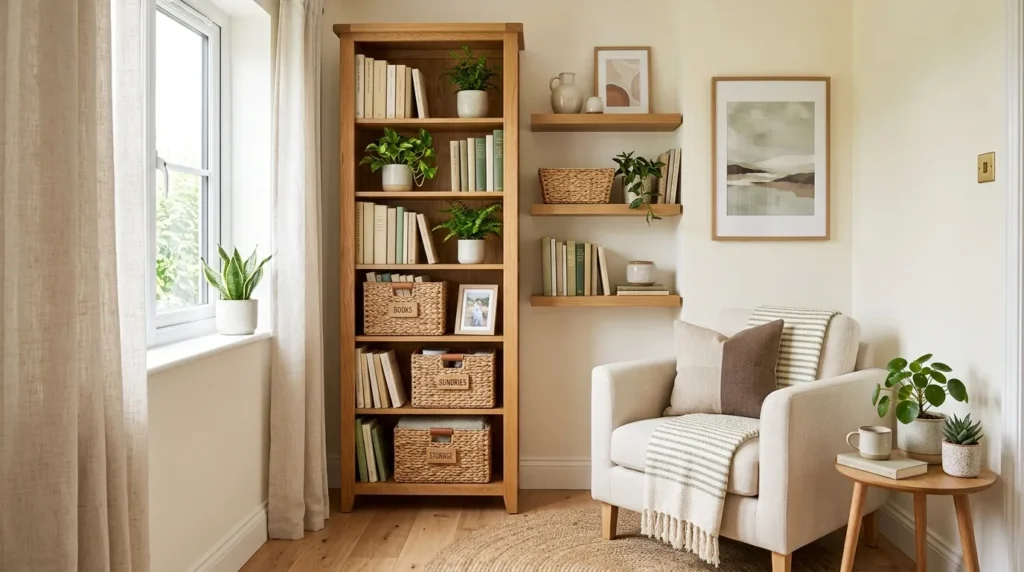
When floor space is limited, walls become valuable real estate. Tall bookcases, floating shelves, pegboards, wall-mounted cabinets, and vertical organizers can provide significant storage without taking up the same footprint as wide furniture. Drawing the eye upward can also emphasize the height of the room and make the layout feel more intentional.
How To Style It
Use a tall narrow bookcase instead of a wide low unit.
Install floating shelves where appropriate.
Store everyday items within easy reach.
Use baskets and matching containers to control visual clutter.
Leave some open shelf space so the wall doesn’t become overcrowded.
4. Oversized Mirror
Quick Benefits
- Reflects natural light
- Creates visual depth
- Adds decorative impact
- Makes walls feel larger
- Works with many styles
Why It Works
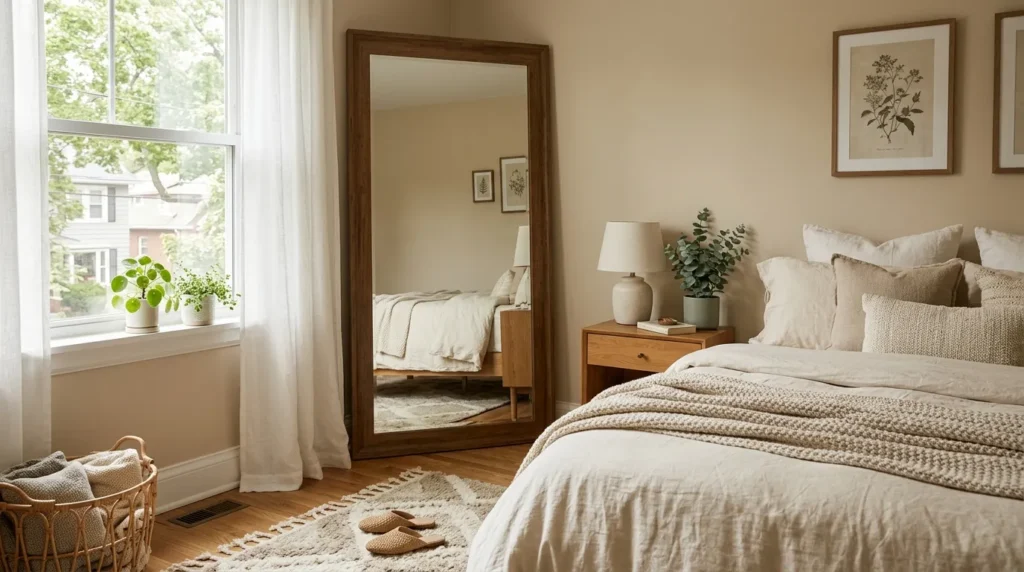
Mirrors are one of the most useful decorative tools for compact rooms because they reflect both light and surrounding space. A large mirror can create a sense of depth where a blank wall might otherwise feel limiting. Positioning matters, though. A mirror is most effective when it reflects something attractive, such as a window, artwork, light fixture, or carefully styled portion of the room.
How To Style It
Choose one large mirror rather than several small ones.
Place it opposite or near a natural light source when practical.
Use a simple frame for a modern room.
Choose wood or antique-style framing for warmer interiors.
Avoid positioning mirrors where they reflect clutter.
5. Floating Furniture
Quick Benefits
- Keeps the floor visually open
- Creates a lighter appearance
- Makes cleaning easier
- Works well in modern rooms
- Improves visual flow
Why It Works
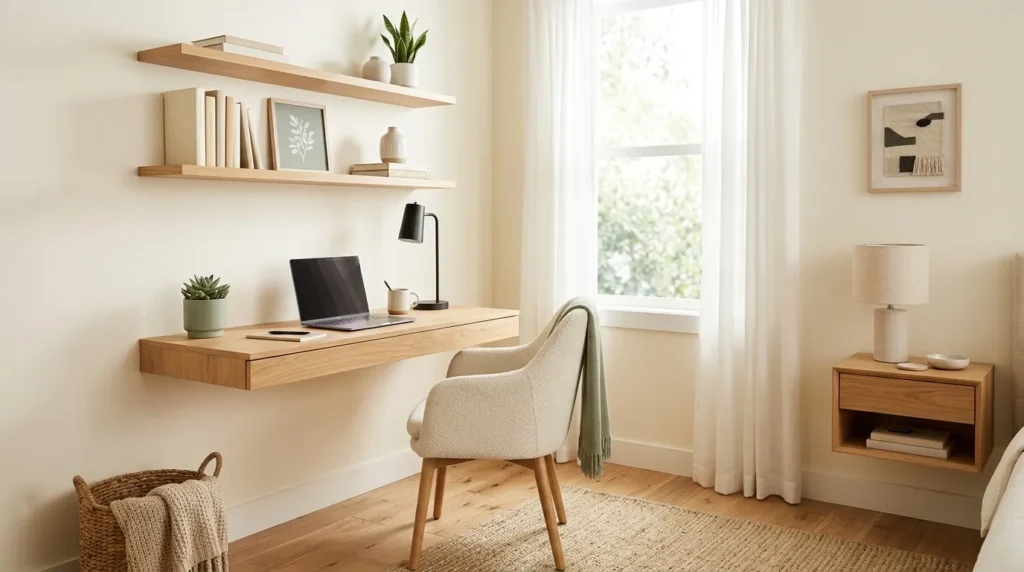
Furniture that appears to float can make a room feel less heavy. Wall-mounted nightstands, floating desks, shelves, and consoles allow more of the floor to remain visible. This doesn’t necessarily create additional square footage, but the increased visibility can make the room feel less crowded. It can also make cleaning underneath furniture easier.
How To Style It
Consider a floating desk in a small office or bedroom.
Use wall-mounted nightstands beside a bed.
Choose a wall-mounted media console in a compact living area.
Keep the surrounding wall visually simple.
Pair floating pieces with warm wood or textured accessories to prevent the room from feeling sterile.
6. Cozy Window Nook
Quick Benefits
- Uses an overlooked area
- Creates a relaxing retreat
- Adds personality
- Makes natural light useful
- Can serve multiple purposes
Why It Works
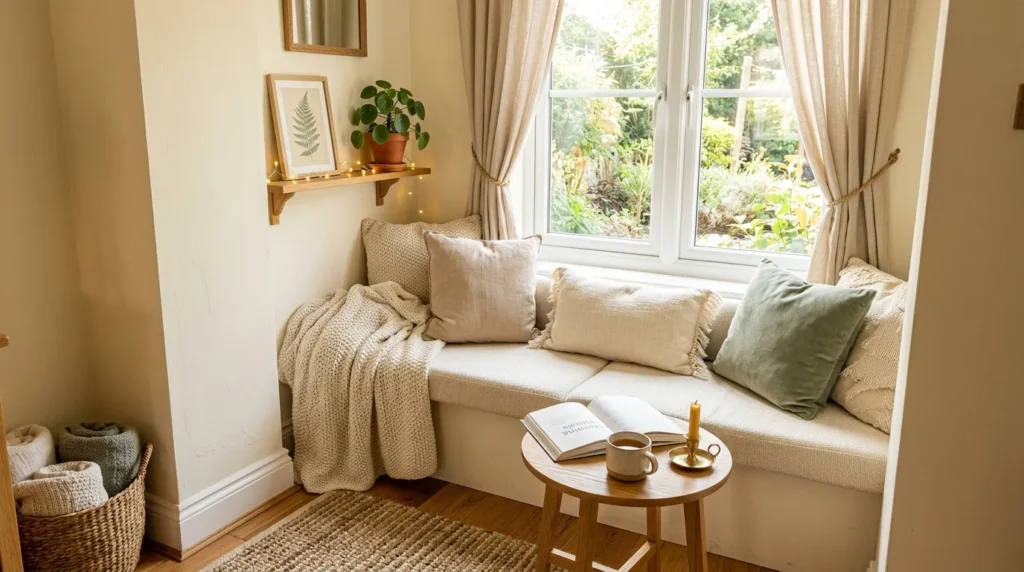
A window area can become one of the most inviting parts of a small room. Instead of treating it as empty space, use it for reading, relaxing, working, or simply enjoying natural light. Even a narrow bench with cushions can transform an unused section into a functional destination.
How To Style It
Use a compact bench or appropriately sized chair.
Add a washable cushion and one or two pillows.
Install simple curtains that don’t visually overwhelm the window.
Add a small side table if space allows.
Keep the area relatively uncluttered so the natural light remains a feature.
7. Layered Lighting
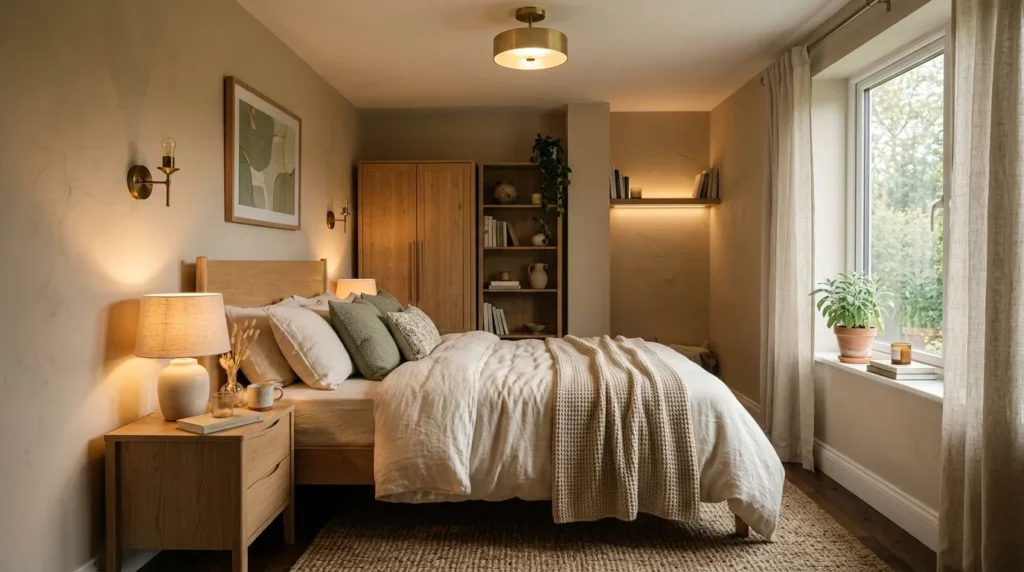
Quick Benefits
- Creates depth
- Makes the room feel warmer
- Improves functionality
- Highlights decorative details
- Reduces dependence on overhead lighting
Why It Works
Lighting can dramatically influence the atmosphere of a small room. A single ceiling fixture may illuminate the space, but it doesn’t necessarily create warmth or dimension. Combining overhead lighting with bedside lamps, wall sconces, floor lamps, or task lighting creates layers that make the room feel more thoughtfully designed.
How To Style It
Use one main light source for general illumination.
Add a table lamp or wall sconce near seating or the bed.
Use task lighting at a desk.
Choose warm-toned bulbs where appropriate for relaxing areas.
Keep cords organized and select fixtures suitable for the room’s electrical setup.
8. Underbed Storage
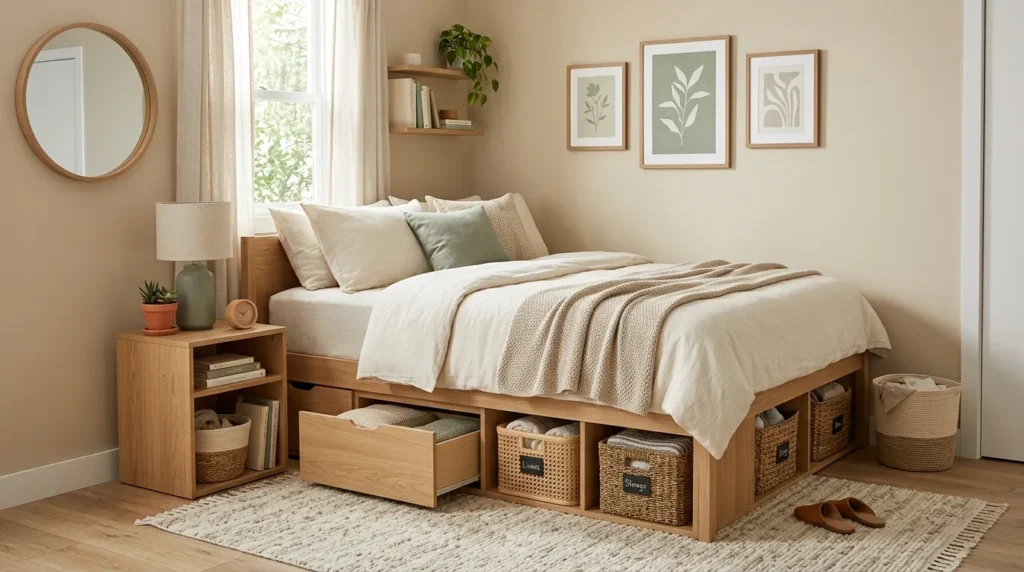
Quick Benefits
- Uses hidden space
- Keeps belongings organized
- Reduces visible clutter
- Works in bedrooms
- Avoids extra cabinets
Why It Works
The area underneath a bed is often one of the most useful storage zones in a small bedroom. Instead of allowing it to become a place where miscellaneous items disappear, use organized containers or built-in drawers. This keeps seasonal clothing, bedding, shoes, and other less frequently used belongings accessible without taking up additional floor space.
How To Style It
Use matching storage boxes or low-profile rolling containers.
Label containers when storing seasonal belongings.
Choose a bed with built-in drawers if you’re purchasing new furniture.
Avoid overfilling the space.
Keep frequently used items in the easiest-to-reach containers.
9. Statement Wall
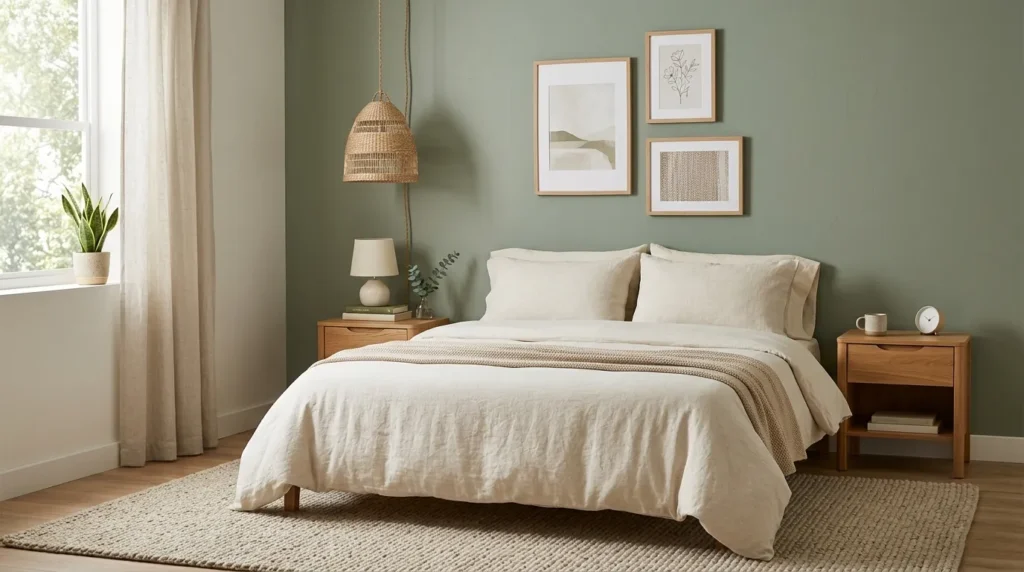
Quick Benefits
- Adds personality
- Creates a focal point
- Reduces the need for accessories
- Draws attention vertically
- Works with many styles
Why It Works
A small room doesn’t have to be visually plain. A statement wall can provide personality without requiring numerous decorative objects. Paint, removable wallpaper, wood paneling, artwork, or a carefully arranged gallery can create a focal point. The rest of the room can remain relatively simple, allowing the feature wall to do most of the decorative work.
How To Style It
Choose the wall that naturally attracts attention.
Use a deeper or warmer color if you want contrast.
Consider removable wallpaper for rental-friendly decorating.
Keep nearby furniture relatively simple.
Repeat one or two colors from the statement wall elsewhere in the room.
10. Open Floor Plan
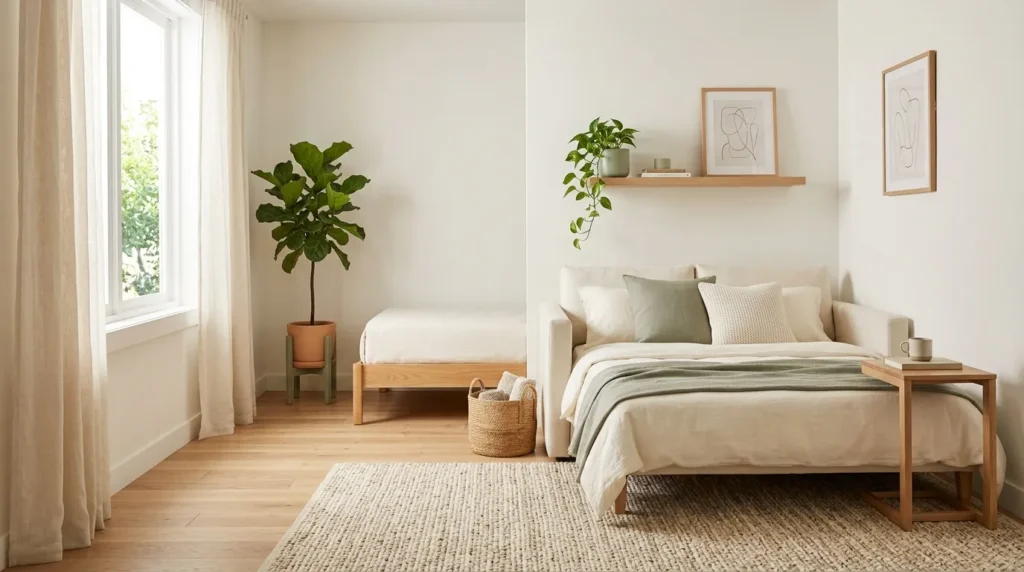
Quick Benefits
- Improves movement
- Makes furniture feel intentional
- Reduces visual clutter
- Creates better functionality
- Makes cleaning easier
Why It Works
One of the most effective small-room strategies is simply leaving enough open space to move comfortably. A room can feel cramped even when it doesn’t contain much furniture if pieces interrupt the natural walking path. Before adding another decorative item, consider whether the room would benefit more from additional breathing room. A clear pathway can make a small space feel significantly more comfortable.
How To Style It
Start by identifying the main entrance and walking route.
Position the largest furniture pieces first.
Keep pathways clear.
Avoid placing small tables where they interfere with movement.
Use a few larger decorative elements instead of many tiny objects.
How Do You Make a Small Room Look Bigger?
The easiest approach is to combine several visual strategies rather than relying on one trick. Use a cohesive light-to-medium color palette, keep pathways clear, take advantage of vertical storage, and use mirrors to reflect light and depth.
Furniture scale also matters. Pieces should be comfortable and functional without being unnecessarily oversized. Keeping some visible floor area around furniture can make the room feel less crowded.
How Do You Decorate a Small Room Without Making It Look Cluttered?
Start by deciding what the room needs to accomplish. Once the primary functions are clear, choose furniture that supports those activities and avoid unnecessary pieces.
Use closed storage for items you don’t want on display, then reserve open shelves and surfaces for a few decorative objects that genuinely contribute to the room.
A consistent color palette is also helpful because it makes different pieces visually relate to one another.
Small Room Decorating Mistakes to Avoid
Some decorating choices can make a compact room feel more crowded than it needs to be.
Avoid:
- Buying furniture before measuring
- Blocking windows with oversized pieces
- Filling every wall with decor
- Using too many competing colors
- Ignoring vertical storage
- Creating narrow walking paths
- Keeping unnecessary items on open surfaces
- Choosing furniture solely because it is small rather than functional
A smaller room benefits from intentional choices. You don’t have to eliminate everything you love; you simply need to give each piece enough space to be appreciated.
Frequently Asked Questions
What colors make a small room feel bigger?
Light neutrals such as warm white, cream, beige, pale gray, and soft taupe can make a small room feel brighter and more open. Muted colors can also work beautifully when they are repeated throughout the room. The most important factor is creating a cohesive palette rather than using many unrelated shades.
What furniture is best for a small room?
Choose furniture that fits the room proportionally and serves a clear purpose. Multifunctional pieces, storage beds, narrow desks, floating shelves, nesting tables, and compact seating can be especially useful. Always measure both the furniture and the available walking space before purchasing.
How can I add storage without making a room look crowded?
Use vertical and hidden storage whenever possible. Tall bookcases, floating shelves, underbed containers, storage ottomans, and wall-mounted cabinets can increase capacity while preserving floor space. Keep frequently used items accessible and use closed storage to hide visual clutter.
Do mirrors really make a small room look bigger?
Mirrors can create the perception of additional depth by reflecting light and parts of the room. Their placement matters. A large mirror positioned to reflect a window or attractive architectural feature can have a stronger visual impact than a mirror facing a cluttered area.
How do I decorate a small bedroom on a budget?
Start with inexpensive changes that have a noticeable visual effect. Rearranging furniture, adding new bedding, using removable wall decor, introducing plants, updating lighting, and organizing storage can refresh a room without requiring a complete renovation.
How do I make a small room feel cozy instead of cramped?
Use texture, warm lighting, and a restrained color palette. Add soft bedding, curtains, rugs, cushions, and natural materials while keeping the floor and walking paths relatively open. Cozy doesn’t require more objects; it often comes from choosing the right textures and lighting.
Should small rooms have large furniture?
Small rooms can sometimes benefit from one appropriately scaled larger piece, but oversized furniture can quickly restrict movement. Measure carefully and prioritize proportion. A comfortable bed or sofa may be necessary, while secondary pieces should generally have a lighter footprint.
Conclusion
Decorating a small room is really an exercise in thoughtful editing. Instead of trying to make the room hold everything, focus on what you actually need and how you want the space to feel.
A light, cohesive color palette can establish an airy foundation, while mirrors and layered lighting add depth. Vertical storage keeps belongings organized without consuming valuable floor space, and multifunctional furniture allows one piece to accomplish several jobs.
Don’t overlook the smaller opportunities either. An unused window corner can become a reading nook, the space beneath a bed can store seasonal items, and a single statement wall can provide personality without requiring dozens of accessories.
Most importantly, leave room to move. An uncluttered pathway can make a bigger difference than another decorative purchase. Before adding something new, ask whether it improves the room’s function, comfort, or overall visual balance.
Start with the furniture you already have, remove anything that isn’t serving a purpose, and then add pieces gradually. With a little planning, even a compact room can feel comfortable, stylish, organized, and distinctly your own.