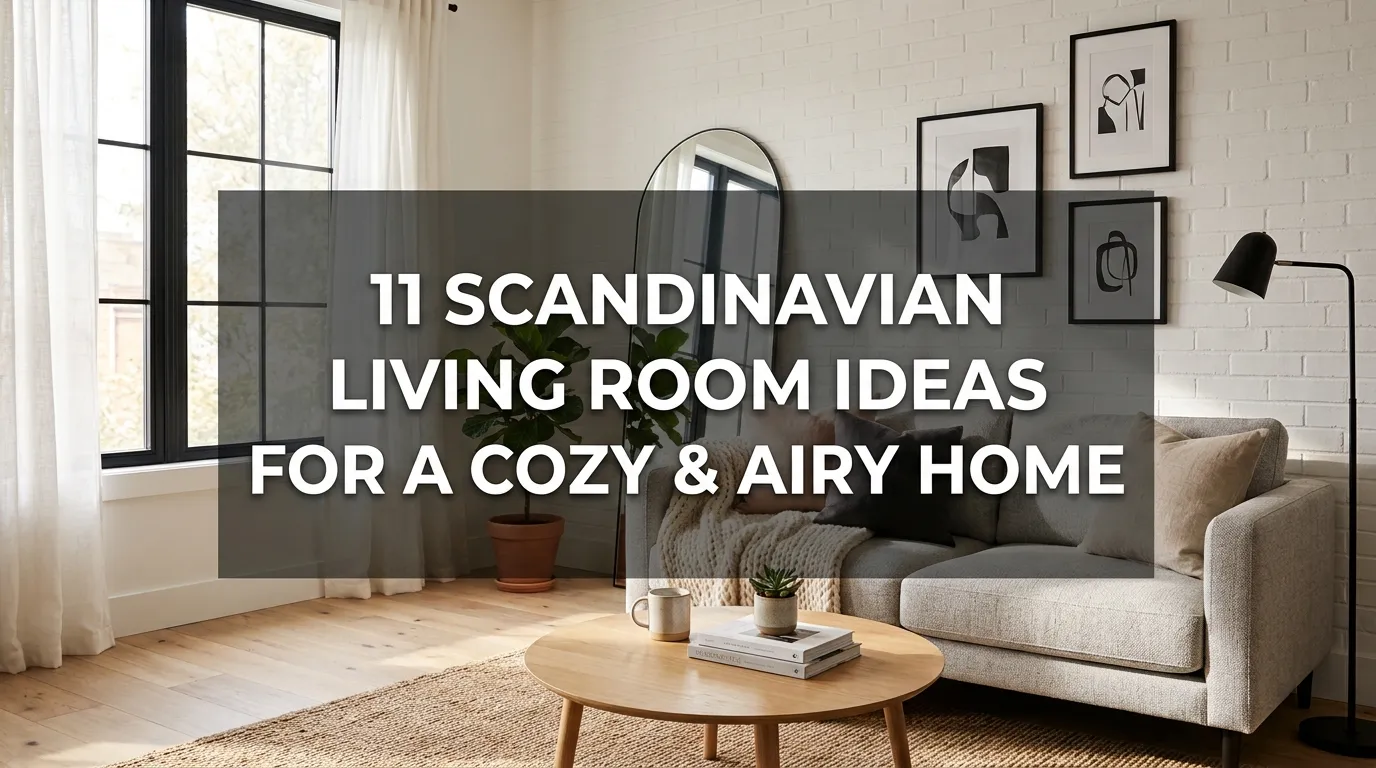
11 Scandinavian Living Room Ideas for a Cozy & Airy Home
Scandinavian living rooms have a way of feeling effortlessly beautiful. They’re bright, comfortable, uncluttered, and warm without looking overly decorated. The style is often associated with pale colors and simple furniture, but there’s much more to it than that.
The best Scandinavian-inspired rooms balance function and comfort. Natural materials, practical furniture, soft textiles, warm lighting, and thoughtful negative space all work together to create an atmosphere that feels calm and lived-in.
If you’re decorating a small apartment, refreshing a family room, or simply drawn to Nordic interiors, you don’t need to completely redesign your home. A few intentional changes can create the look.
I’ve noticed that Scandinavian rooms feel especially welcoming when the palette stays restrained but the textures vary. Think creamy walls with pale oak, a soft wool-style rug, linen curtains, woven baskets, and plush cushions. The colors remain quiet, while the materials give the room character.
Another important detail is lighting. Scandinavian design embraces natural daylight, but it also recognizes the importance of creating warmth once the sun goes down. Floor lamps, table lamps, candles, and soft-glowing fixtures can make a neutral room feel incredibly inviting.
The ideas below focus on practical ways to bring that balance into your own living room. You can use them individually or combine several to create a cohesive Nordic-inspired space that feels stylish without becoming overly formal.
Table of Contents
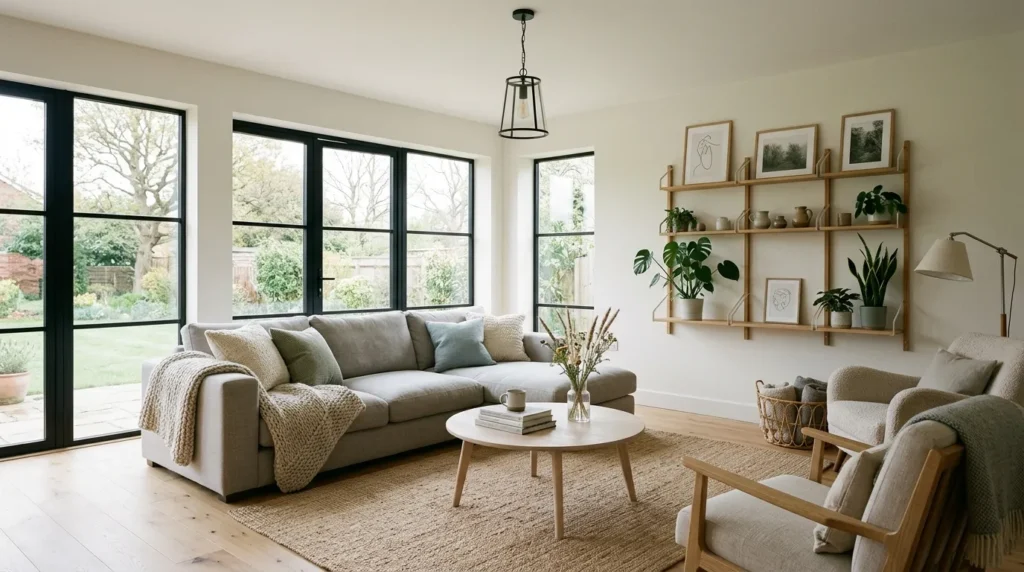
1. Pale Neutral Palette
Create an airy foundation with soft Nordic-inspired colors.
2. Light Wood Furniture
Add warmth with natural oak and other pale wood finishes.
3. Cozy Layered Textiles
Bring softness and comfort through rugs, cushions, and throws.
4. Functional Furniture
Choose pieces that are beautiful while serving a practical purpose.
5. Soft Natural Lighting
Create a warm atmosphere with multiple gentle light sources.
6. Minimalist Styling
Keep surfaces simple while allowing meaningful pieces to stand out.
7. Organic Greenery
Introduce natural shapes and subtle color through plants.
8. Scandinavian Gallery Wall
Add personality without overwhelming the calm interior.
9. Woven Natural Accents
Bring texture and craftsmanship into the room.
10. Cozy Reading Corner
Turn an unused area into a comfortable retreat.
11. Warm Hygge Layers
Combine simplicity and comfort for an inviting final look.
1. Pale Neutral Palette
Quick Benefits
- Makes rooms feel brighter
- Creates a calm atmosphere
- Works with natural materials
- Makes small spaces feel open
- Provides a versatile decorating foundation
Why It Works
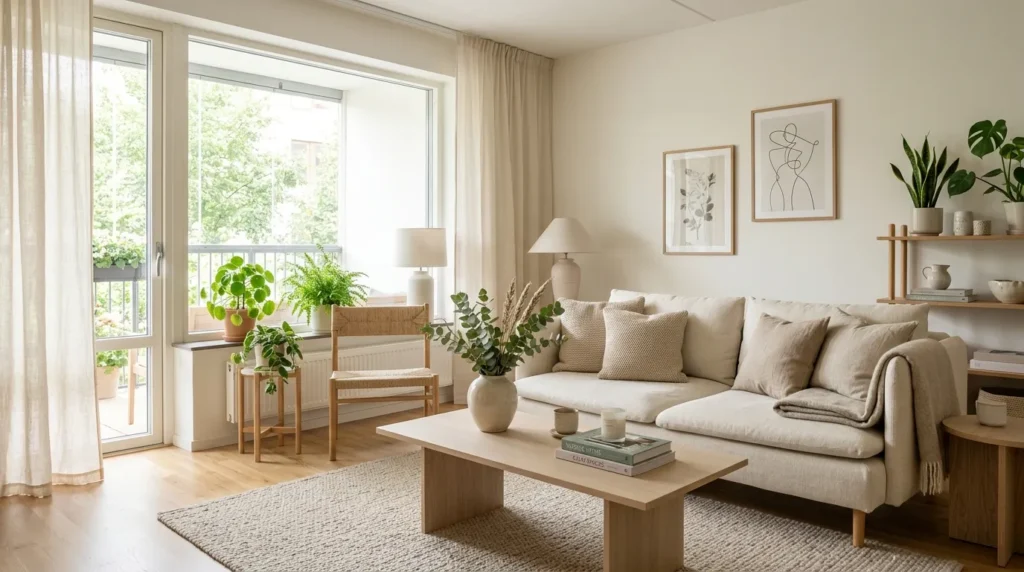
A soft neutral palette is one of the easiest ways to establish a Scandinavian feeling.
Rather than using stark white everywhere, consider warmer shades such as ivory, cream, pale beige, soft gray, and muted taupe. These colors reflect natural light while maintaining enough warmth to keep the room comfortable.
The beauty of a restrained palette is that individual furniture pieces don’t have to match perfectly. Related tones naturally work together.
In my experience, Scandinavian interiors look most interesting when the colors remain simple but the textures change from one surface to another.
How To Style It
Start with warm white or soft cream walls.
Choose a neutral sofa in ivory, beige, or light gray.
Layer in slightly darker shades through the rug and cushions.
Use pale wood to add warmth.
If you want stronger contrast, introduce small amounts of charcoal or black through lighting, picture frames, or furniture legs.
2. Light Wood Furniture
Quick Benefits
- Adds natural warmth
- Complements pale colors
- Creates organic texture
- Feels timeless
- Works in modern and traditional homes
Why It Works
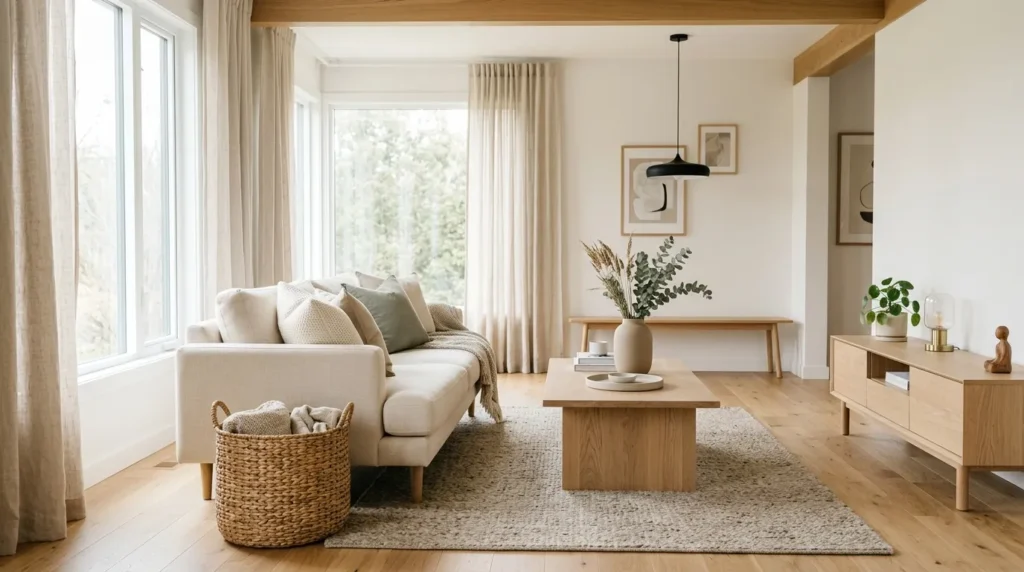
Natural wood is central to the welcoming quality of Scandinavian interiors.
Pale oak, ash, birch, and similar finishes can add warmth without making the room feel visually heavy.
Wood also creates a beautiful contrast against soft upholstery and pale walls.
Instead of filling the room with matching wood furniture, use several pieces in related finishes. This creates cohesion while preserving a relaxed, collected feeling.
How To Style It
Try a pale oak coffee table, sideboard, shelving unit, or accent chair.
Pair wood furniture with cream upholstery and textured fabrics.
Avoid using too many dramatically different wood colors in the same small room.
For a little contrast, introduce a small amount of black metal through lighting or furniture legs.
3. Cozy Layered Textiles
Quick Benefits
- Adds warmth
- Makes neutral rooms more interesting
- Improves comfort
- Softens hard surfaces
- Creates a relaxed atmosphere
Why It Works
Scandinavian interiors may look simple, but they aren’t meant to feel bare.
Textiles provide much of the softness.
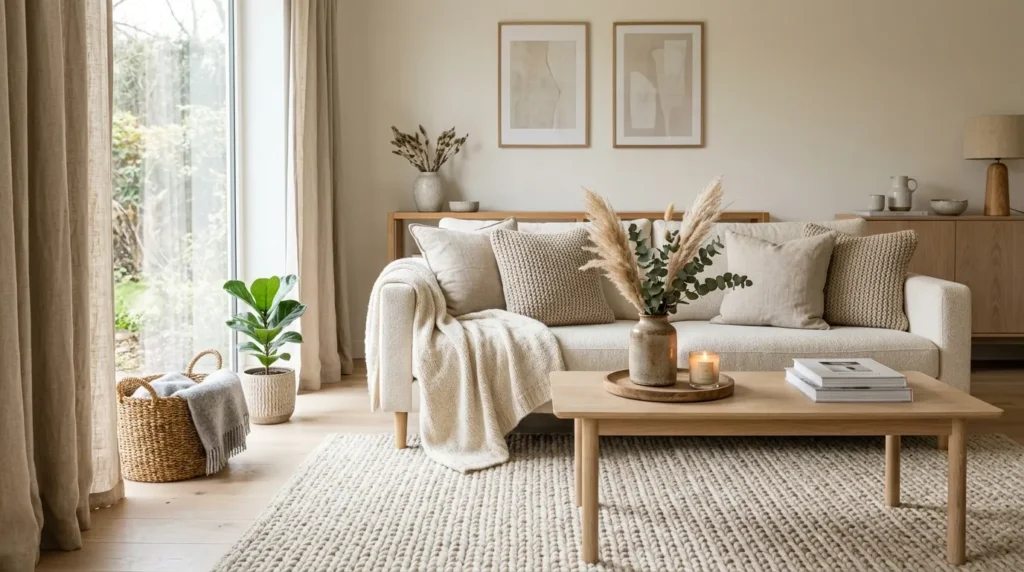
A large woven rug, linen curtains, wool-style throw, cotton cushions, and textured upholstery can turn a simple neutral room into a comfortable retreat.
The trick is using several textures within a restrained color palette.
How To Style It
Start with a substantial neutral rug.
Add cushions in cream, oatmeal, light gray, or muted beige.
Drape a soft throw over the sofa.
Choose linen or linen-look curtains for an airy appearance.
Combine smooth materials with visibly textured ones to create depth without introducing excessive patterns.
4. Functional Furniture
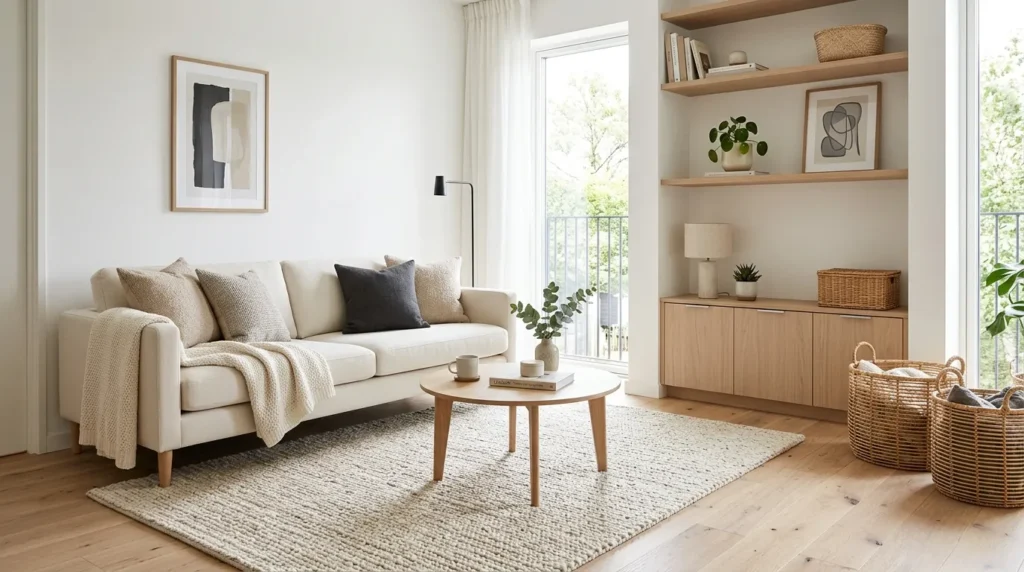
Quick Benefits
- Keeps the room practical
- Reduces unnecessary clutter
- Improves circulation
- Supports everyday living
- Fits the Scandinavian design philosophy
Why It Works
Scandinavian design is strongly connected to practical living.
Furniture should look beautiful, but it should also serve a purpose.
A streamlined storage cabinet can hide everyday clutter. A comfortable sofa can become the room’s main gathering point. A compact side table can provide a surface for books and lighting without consuming unnecessary floor space.
This approach is particularly useful in smaller American homes and apartments where every square foot matters.
How To Style It
Prioritize comfortable seating and useful storage.
Choose furniture with clean silhouettes and practical proportions.
Look for cabinets with concealed storage when you want the room to appear uncluttered.
Avoid buying furniture simply to fill empty areas.
Let the room have some breathing space.
5. Soft Natural Lighting
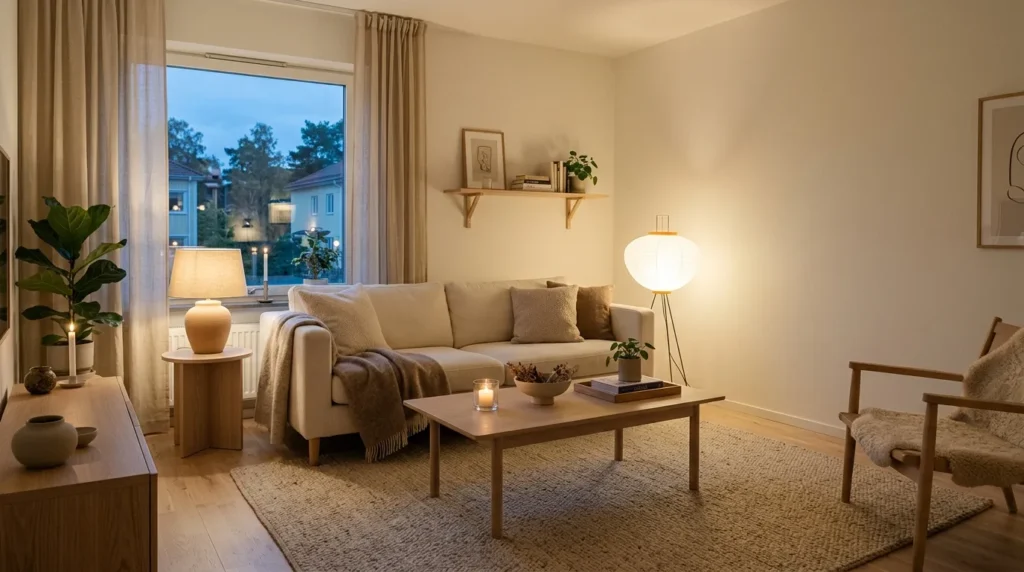
Quick Benefits
- Creates a cozy mood
- Enhances neutral colors
- Makes evenings more inviting
- Adds decorative interest
- Reduces reliance on harsh overhead lighting
Why It Works
Lighting can completely change the feeling of a Scandinavian living room.
Natural daylight is important during the day, but layered artificial lighting creates warmth once the sun goes down.
Rather than depending on a single ceiling fixture, Scandinavian-inspired rooms often benefit from several smaller sources positioned throughout the space.
How To Style It
Combine a floor lamp with one or two table lamps.
Choose warm-toned bulbs suitable for your fixtures.
Add a simple pendant light if the room needs overhead illumination.
Place lighting near reading chairs, sofas, shelving, or corners that become dark at night.
Candles can add atmosphere when used safely.
6. Minimalist Styling
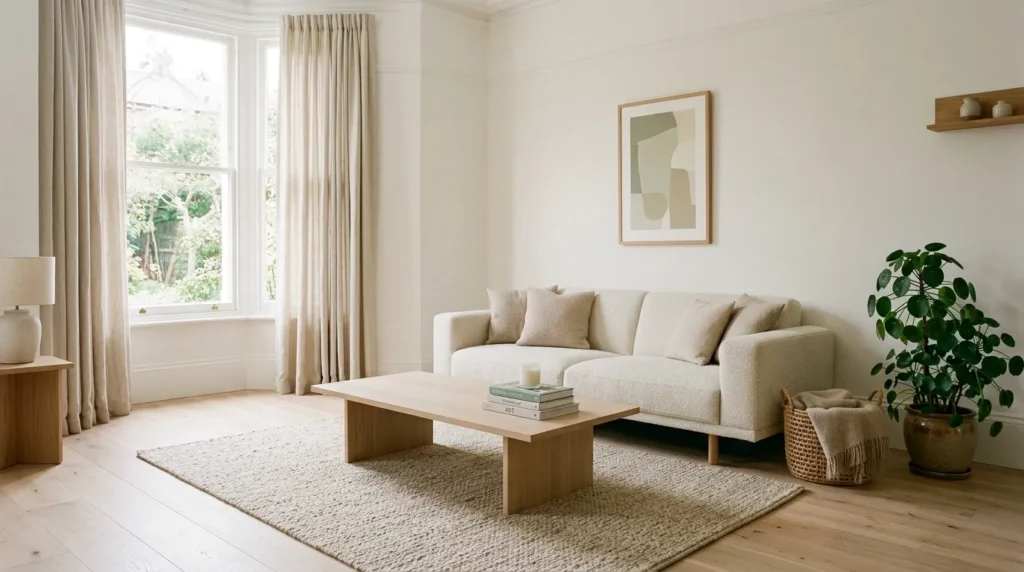
Quick Benefits
- Reduces visual clutter
- Makes furniture stand out
- Creates a calm atmosphere
- Simplifies cleaning
- Works well in small rooms
Why It Works
Minimalism in Scandinavian interiors isn’t about removing everything.
It’s about being selective.
Instead of decorating every surface, choose objects that are useful, beautiful, or personally meaningful.
This creates a room where the eye can rest.
A simple ceramic vase, stack of books, small lamp, or piece of artwork can have more impact when it isn’t surrounded by dozens of competing objects.
How To Style It
Keep coffee tables relatively clear.
Group a few objects together instead of spreading them across every surface.
Use trays to organize smaller pieces.
Store everyday clutter in baskets or cabinets.
Leave some shelves partially empty.
That negative space is part of the design.
7. Organic Greenery
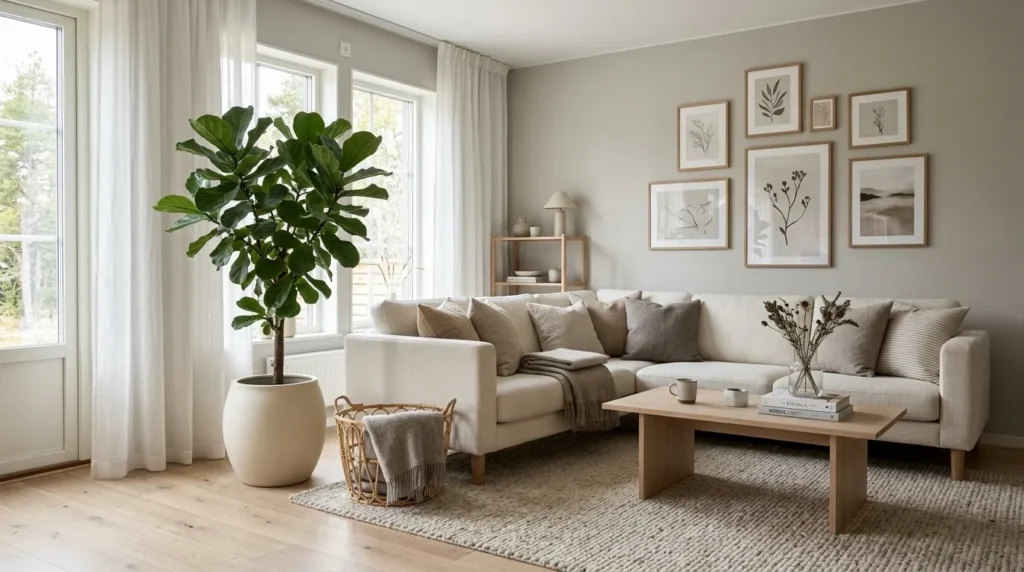
Quick Benefits
- Adds natural color
- Softens clean furniture lines
- Introduces organic shapes
- Improves visual variety
- Works beautifully with pale interiors
Why It Works
Plants bring a sense of life into a restrained interior.
Their irregular leaves contrast beautifully with straight-lined Scandinavian furniture.
You don’t need a jungle of houseplants.
One larger plant in an empty corner or a few carefully placed smaller plants can provide enough greenery to balance the neutral palette.
How To Style It
Choose plants based on the light available in your living room.
Place a tall plant beside a sofa or cabinet.
Use simple ceramic, stone, or woven planters.
If the room is already busy, one substantial plant can have more impact than many small ones.
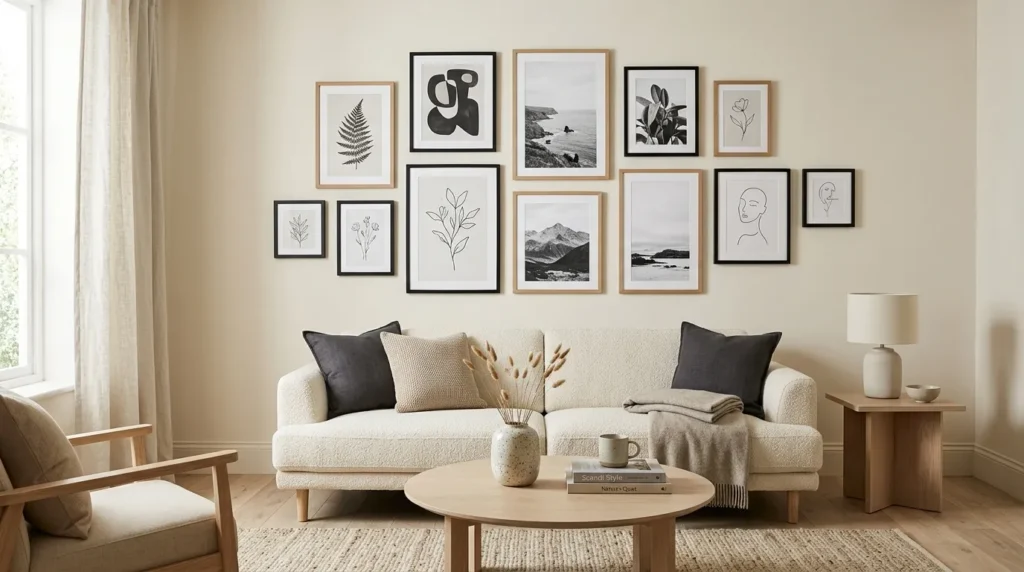
8. Scandinavian Gallery Wall
Quick Benefits
- Adds personality
- Creates a focal point
- Works with neutral rooms
- Allows personal expression
- Can be changed easily
Why It Works
A gallery wall can add personality to a Scandinavian room without disrupting its calm character.
The key is keeping some visual consistency.
Black, white, natural wood, or thin neutral frames can create a cohesive appearance.
The artwork itself doesn’t have to be identical. Simple landscapes, abstract shapes, botanical prints, photography, and line drawings can work beautifully together.
How To Style It
Choose a limited frame palette.
Arrange the artwork before hanging it so you can experiment with spacing.
Keep the overall composition balanced.
Avoid filling every inch of the wall.
For a softer look, combine artwork with natural wood frames and muted colors.
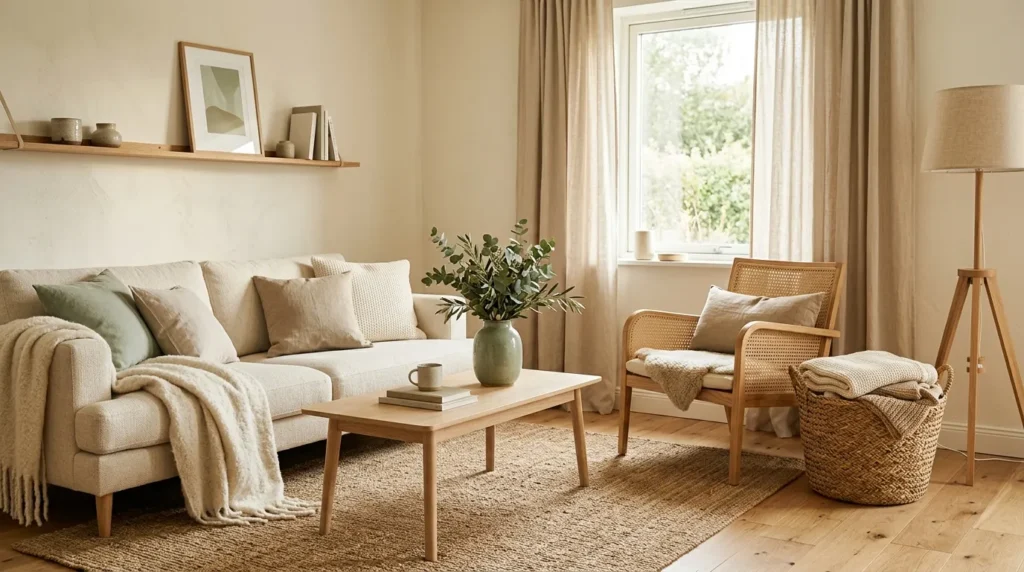
9. Woven Natural Accents
Quick Benefits
- Adds texture
- Creates warmth
- Introduces craftsmanship
- Complements wood furniture
- Softens minimalist interiors
Why It Works
Woven materials add visual interest without requiring strong color.
Baskets, woven trays, rattan accents, jute rugs, and cane details can complement pale wood and neutral upholstery beautifully.
These materials also reinforce the connection to natural textures that makes Scandinavian interiors feel so comfortable.
How To Style It
Use a large woven basket beside the sofa for blankets.
Add a smaller basket to open shelving.
Choose woven lampshades when they complement the overall design.
Keep the number of woven pieces controlled so the room doesn’t begin to feel themed.
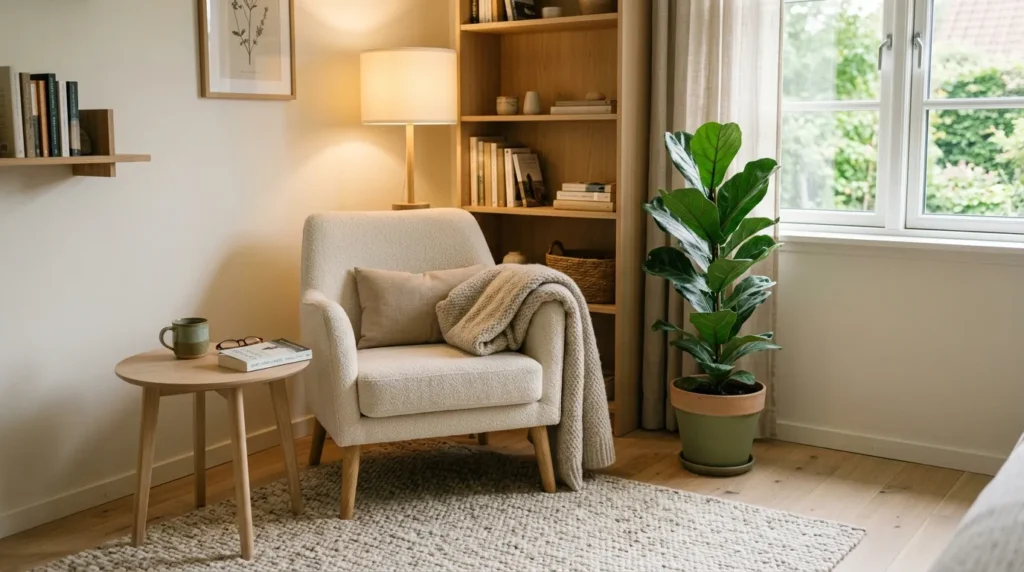
10. Cozy Reading Corner
Quick Benefits
- Uses unused corners
- Creates a relaxing retreat
- Adds functionality
- Provides extra seating
- Makes the room feel personal
Why It Works
A Scandinavian living room should support slow, comfortable moments.
A reading corner is a simple way to make the space feel more intentional.
You don’t need a huge area. A comfortable chair, small table, soft lamp, and nearby basket can create a useful little retreat.
This is especially effective near a window where natural light can make the area inviting during the day.
How To Style It
Choose a comfortable upholstered or wooden chair.
Add a small side table for a book or drink.
Use a floor or table lamp for evening reading.
Place a small rug beneath the chair to visually define the corner.
Finish with a soft throw or cushion.
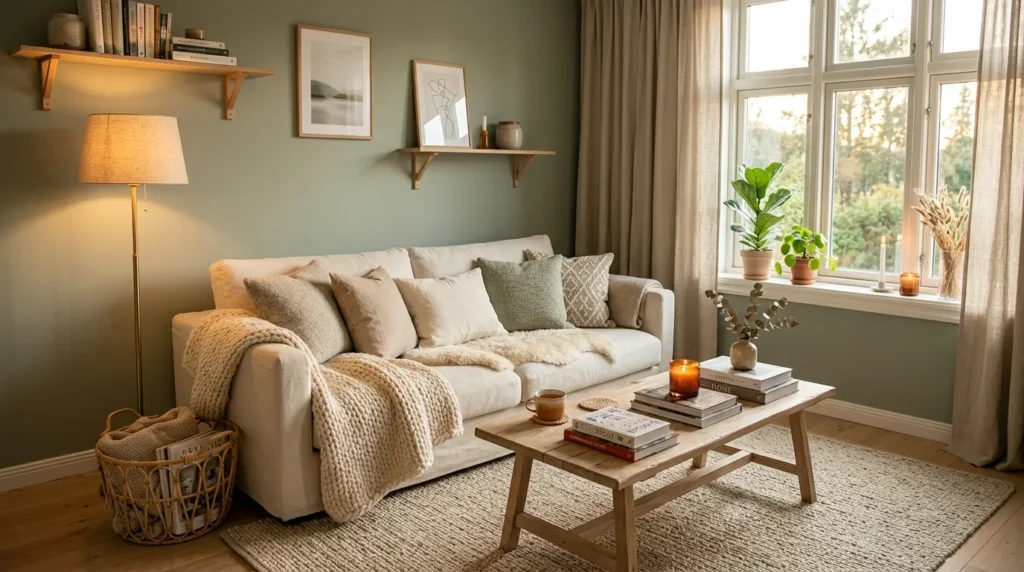
11. Warm Hygge Layers
Quick Benefits
- Makes minimalism feel comfortable
- Creates an inviting atmosphere
- Adds personality
- Works throughout the year
- Encourages relaxation
Why It Works
The final ingredient is comfort.
Scandinavian design is often associated with the concept of hygge—the feeling of coziness and simple enjoyment.
You don’t need to turn the room into a heavily decorated retreat.
Instead, focus on small sensory details: soft lighting, comfortable seating, warm textiles, natural materials, favorite books, and a few personal objects.
How To Style It
Layer a soft throw over the sofa.
Add cushions in slightly different textures.
Use warm lighting after sunset.
Keep a basket nearby for extra blankets.
Place books and meaningful objects where they can naturally become part of the room.
The goal is a space that looks beautiful but still feels ready to be lived in.
How to Get the Scandinavian Look
A Scandinavian living room generally works best when you build the design in layers.
Start with the architectural foundation.
Choose a light, warm wall color and keep the larger surfaces relatively quiet.
Next, select functional furniture with simple silhouettes.
Then introduce pale wood and natural materials.
After that, layer textiles to create softness.
Finally, add artwork, plants, lighting, and personal accessories.
Don’t try to make every element perfectly coordinated. Scandinavian interiors often feel more authentic when there is a little variation between materials and shapes.
The overall impression should be light, practical, natural, and comfortable.
Scandinavian Living Room Color Ideas
Cream + Pale Oak
Warm and timeless.
White + Light Gray
Clean and airy.
Beige + Natural Wood
Soft and organic.
Greige + Walnut
More sophisticated and grounded.
Cream + Sage Green
Fresh and natural.
White + Charcoal
Crisp with subtle contrast.
A useful approach is to keep roughly three main color families throughout the room and use texture to create additional visual depth.
Scandinavian Furniture Tips
When choosing furniture, prioritize:
- Simple silhouettes
- Comfortable upholstery
- Natural wood
- Practical storage
- Light visual proportions
- Durable everyday materials
- Comfortable circulation
Avoid filling the room simply because you have empty floor space.
Scandinavian design benefits from negative space.
A little empty space around a chair, table, or cabinet can make the entire room feel calmer.
FAQ
What makes a living room Scandinavian?
Scandinavian living rooms typically combine simple functional furniture, light colors, natural materials, soft textiles, practical storage, and warm lighting. The style emphasizes comfort and simplicity rather than excessive decoration.
What colors are used in Scandinavian living rooms?
Common colors include warm white, cream, beige, pale gray, taupe, soft brown, muted green, and natural wood tones. Small amounts of black or charcoal can provide contrast.
How can I make a Scandinavian living room cozy?
Use layered textiles, warm lighting, natural wood, comfortable furniture, greenery, candles, and personal accessories. Keeping the color palette restrained while varying textures is particularly effective.
Does Scandinavian design have to be minimalist?
No. Scandinavian interiors are generally uncluttered, but they can still feel warm and personal. The goal is intentional simplicity rather than removing everything decorative.
What type of wood works best for Scandinavian decor?
Light woods such as oak, ash, and birch are particularly common choices. Walnut can also work when used thoughtfully, especially if you want a slightly richer and more sophisticated appearance.
Can Scandinavian style work in a small living room?
Absolutely. The emphasis on functional furniture, light colors, vertical storage, and uncluttered layouts makes the style especially suitable for compact spaces.
How do I add color to a Scandinavian living room?
Introduce muted colors through cushions, artwork, plants, rugs, or small decorative pieces. Sage green, dusty blue, muted terracotta, and soft brown can add warmth while preserving the calm Scandinavian aesthetic.
Conclusion
A Scandinavian living room is ultimately about creating a space that feels good to live in.
The style’s clean lines and pale colors are only part of the appeal. Natural wood adds warmth, textiles create softness, greenery introduces life, and layered lighting makes the room inviting after dark.
You don’t need to replace every piece of furniture to achieve the look.
Start by simplifying the color palette, clearing unnecessary clutter, and identifying the materials you want to emphasize. Add one or two natural wood pieces, introduce cozy textiles, and improve the lighting. Then finish with artwork and personal details that make the room feel like yours.
The most successful Scandinavian-inspired spaces don’t feel like showrooms. They feel relaxed, practical, and comfortable.
Start with one or two changes and build gradually. A softer rug, warmer lighting, a pale wood coffee table, or a simple gallery wall may be all it takes to move your living room toward that inviting Nordic aesthetic.