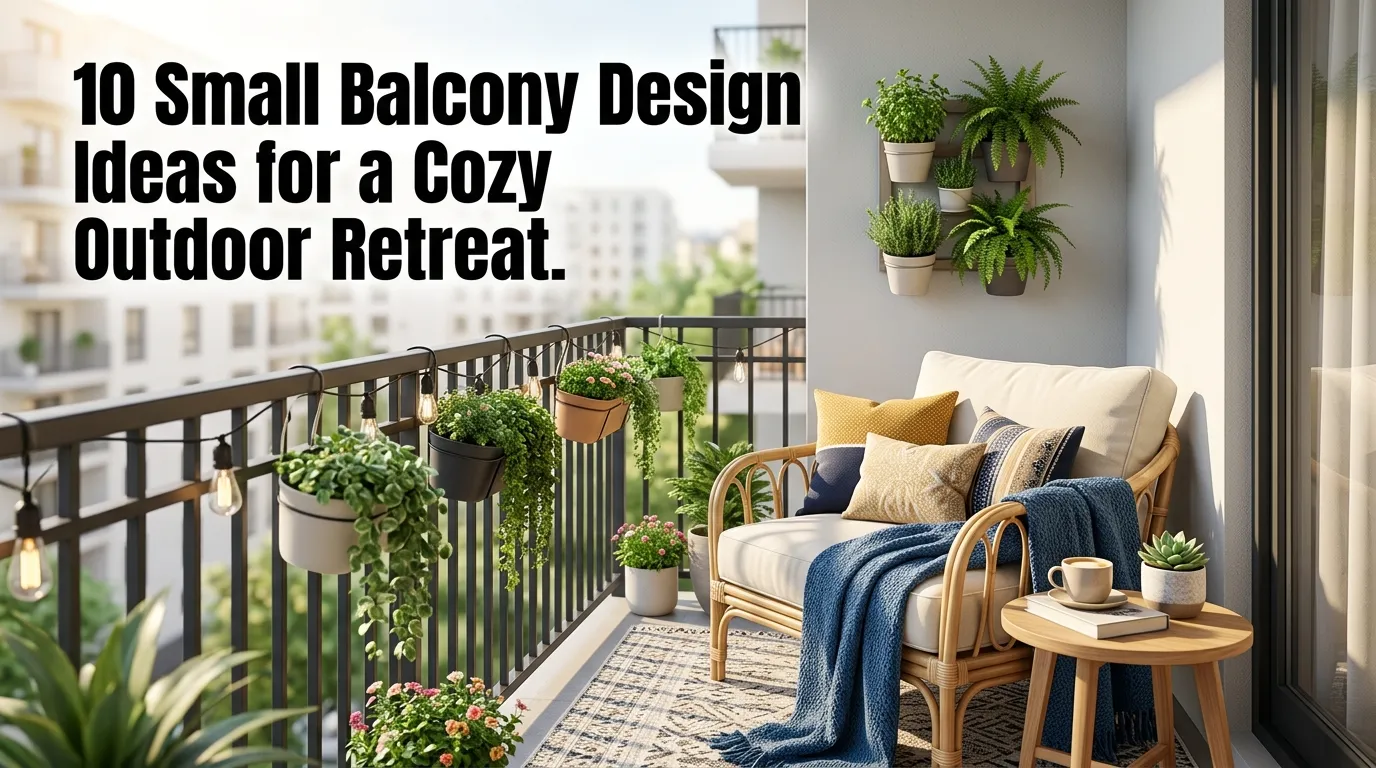
10 Small Balcony Design Ideas for a Cozy Outdoor Retreat
A small balcony can become one of the most enjoyable spaces in your home when you stop treating it like leftover square footage. Even a narrow apartment balcony can provide a place for morning coffee, evening conversations, container gardening, or simply a few quiet minutes outside.
The challenge is that balconies have limited floor space, and every piece of furniture competes for the same small footprint. A bulky table can eliminate your walking area. Too many planters can make the space feel crowded. And without a clear design direction, a balcony can quickly turn into a collection of random outdoor items.
The good news is that you don’t need a large terrace to create a beautiful outdoor room. In my experience, the most successful compact balconies rely on a few carefully chosen pieces: furniture that fits the scale, vertical greenery, comfortable textiles, flexible lighting, and a cohesive color palette.
You can also make the space feel much more personal by deciding how you want to use it first. Do you want a breakfast spot? A tiny garden? A relaxing lounge? A place to entertain one or two friends? Once you know the purpose, choosing furniture and accessories becomes much easier.
These ideas are designed for renters, apartment dwellers, homeowners, and anyone working with limited outdoor square footage. Some focus on furniture and layout, while others show how simple decorative details can make a noticeable difference.
Use one idea or combine several to create a balcony that feels intentional, comfortable, and genuinely useful. With the right arrangement, even a very small outdoor space can become your favorite place to unwind.
Table of Contents
1. Compact Bistro Set
Create a practical dining spot without sacrificing valuable floor space.
2. Vertical Garden Wall
Use walls and railings to add greenery without crowding the floor.
3. Built In Bench
Maximize seating with a streamlined bench designed for small spaces.
4. Cozy Floor Seating
Create a relaxed lounge atmosphere with cushions and low-profile seating.
5. Foldable Furniture
Keep your balcony flexible with pieces that can be folded away when needed.
6. Outdoor Rug Layers
Add comfort, color, and definition with a properly sized outdoor rug.
7. Hanging Planters
Bring greenery upward while preserving valuable walking space.
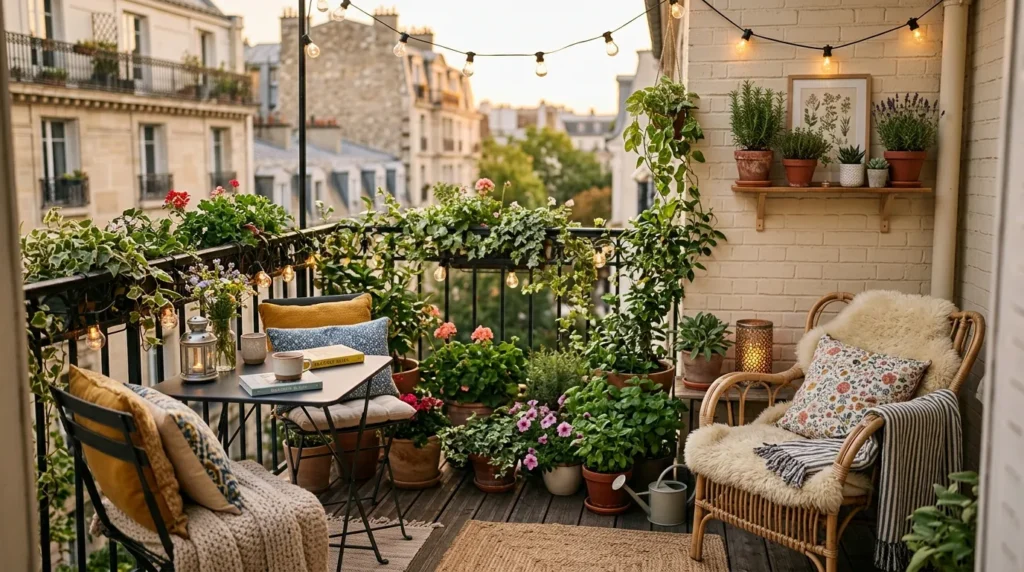
8. Warm String Lights
Create a welcoming evening atmosphere with soft decorative lighting.
9. Privacy Screens
Make the balcony feel more intimate while adding useful visual structure.
10. Minimal Lounge Retreat
Combine comfort, greenery, and simple styling into one cohesive outdoor space.
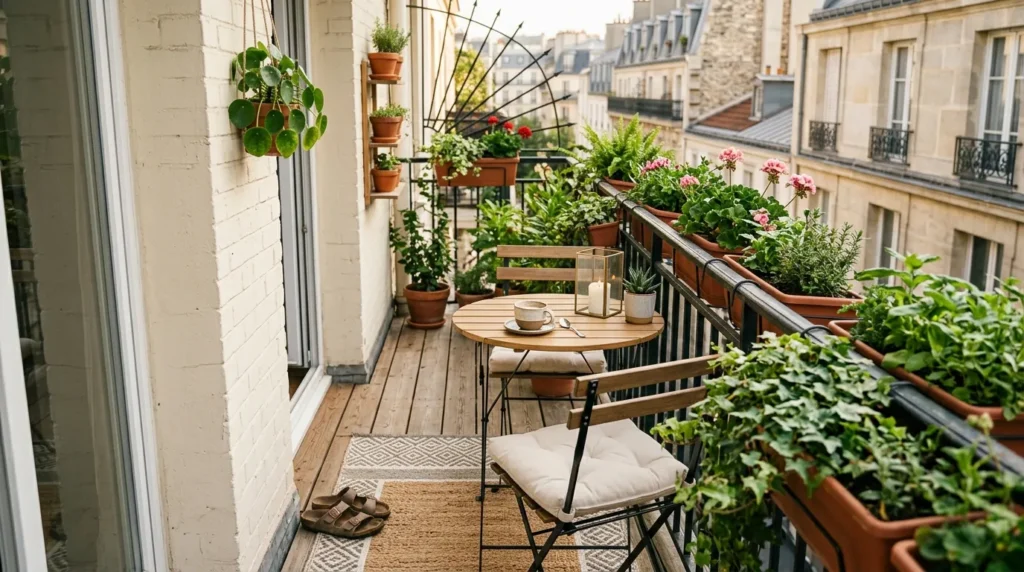
1. Compact Bistro Set
Quick Benefits
- Provides useful seating and dining space
- Fits narrow balconies
- Creates an instant outdoor destination
- Works well for morning coffee
- Easy to move or rearrange
Why It Works
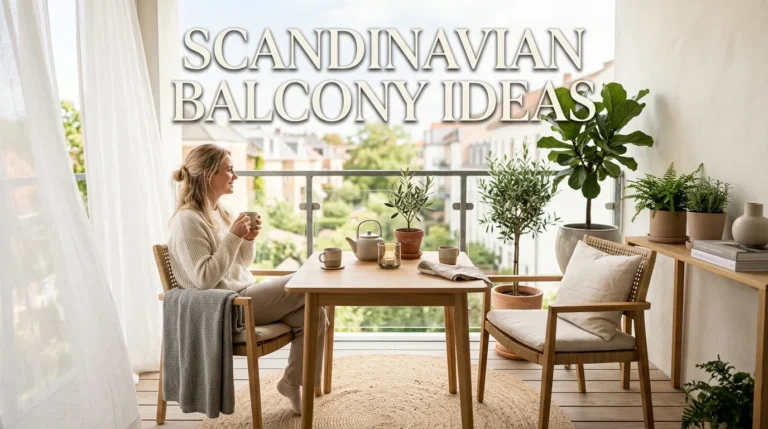
A small balcony doesn’t necessarily need a full outdoor dining set. A compact bistro table and two appropriately scaled chairs can provide everything you need for coffee, breakfast, reading, or a casual evening drink.
The key is choosing furniture based on the balcony’s actual dimensions rather than the size of a typical patio set. Round tables can be especially helpful because they soften corners and make movement around the furniture easier.
In my experience, a simple bistro arrangement also gives a balcony a clear purpose. Instead of becoming storage for miscellaneous items, it becomes an intentional outdoor dining or relaxation zone.
How To Style It
Choose a table that leaves a comfortable walkway around the main seating area. Foldable metal, wood, or weather-resistant composite designs can all work well.
Pair the table with two lightweight chairs in a complementary finish. Add thin outdoor cushions if you want more comfort without adding bulky upholstery.
Keep the tabletop simple with a small potted herb, ceramic planter, or lantern. Avoid filling the table with accessories because you’ll want enough space to actually use it.
For a warm modern look, combine natural wood with cream cushions and terracotta planters. For a more contemporary balcony, try black furniture with muted green plants and neutral textiles.
2. Vertical Garden Wall
Quick Benefits
- Adds greenery without using much floor space
- Creates a strong focal point
- Provides privacy
- Works well for renters
- Makes a balcony feel more connected to nature
Why It Works
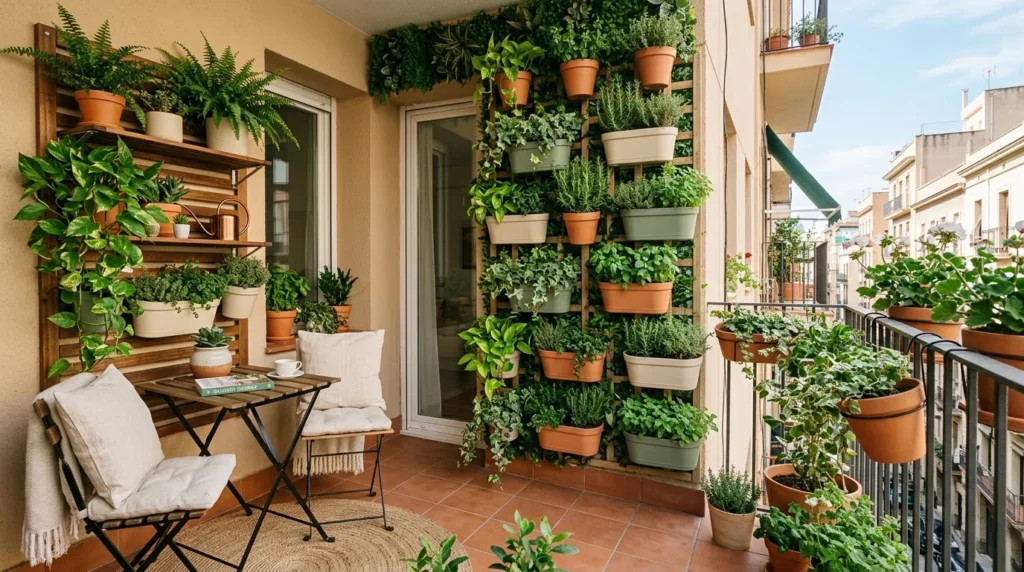
When floor space is limited, vertical gardening allows you to use the walls and railings instead. A collection of wall-mounted planters, vertical trellises, hanging containers, or narrow plant shelves can create the feeling of a lush garden without taking over the balcony.
This approach is particularly useful when you want greenery but still need enough room for seating. Instead of spreading plants across the floor, you build upward.
Vertical greenery can also soften hard architectural surfaces such as concrete walls, metal railings, and exterior siding. The result is a more welcoming environment that feels intentionally designed rather than simply furnished.
How To Style It
Choose plants based on the balcony’s sunlight, wind exposure, temperature, and local growing conditions. Use a mixture of trailing, upright, and leafy plants to create visual variation.
A narrow vertical trellis can support climbing plants while also adding structure. Wall-mounted planters can hold herbs or seasonal flowers.
Keep the containers coordinated. Matching terracotta pots, neutral planters, or simple black containers create a more cohesive appearance than a collection of unrelated colors.
Leave enough space between plants for healthy growth and maintenance. A vertical garden should feel abundant without becoming difficult to care for.
3. Built In Bench
Quick Benefits
- Maximizes seating
- Uses awkward wall space efficiently
- Creates hidden storage opportunities
- Can accommodate multiple people
- Gives the balcony a custom appearance
Why It Works
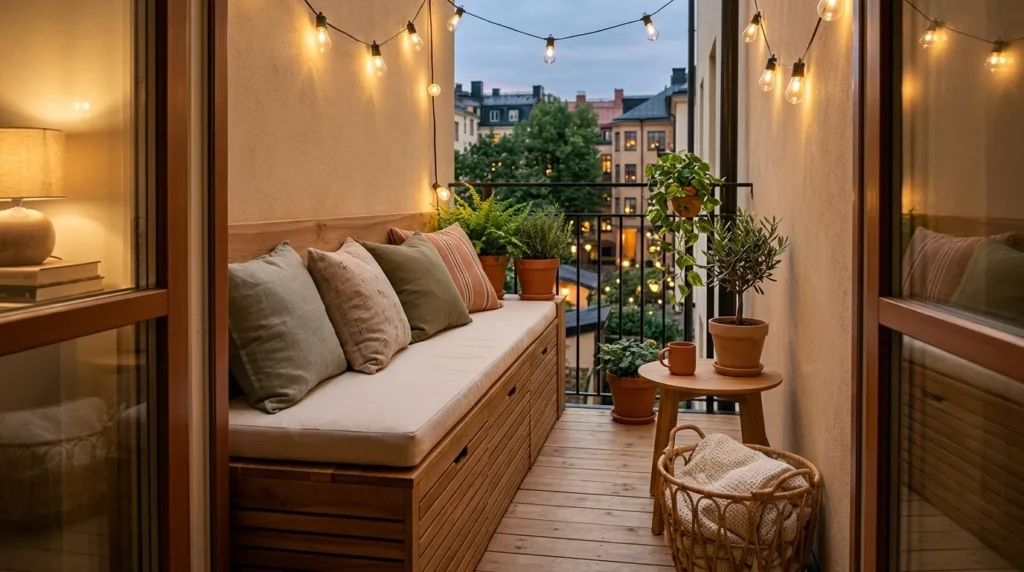
A bench positioned along the back or side wall can provide more seating than individual chairs while occupying less visual space. This is particularly effective on narrow balconies where furniture needs to stay close to the edges.
A built-in or semi-permanent bench can also include storage beneath the seat. That creates a convenient place for cushions, gardening supplies, or outdoor accessories without requiring another storage cabinet.
The linear shape works naturally with rectangular balconies because it keeps the center area open.
How To Style It
Use weather-resistant cushions designed for outdoor conditions. A long seat cushion in a neutral color can establish the foundation, while a few smaller outdoor pillows add personality.
If the balcony is rented, look for freestanding storage benches rather than permanent construction. Choose a design that fits tightly against the wall without blocking doors or drainage areas.
Add a slim side table at one end for drinks or books. Vertical planters behind the bench can create a cozy backdrop without using additional floor space.
Natural wood, cream textiles, woven accents, and greenery create a relaxed outdoor look that feels comfortable without becoming overly decorative.
4. Cozy Floor Seating
Quick Benefits
- Uses very little furniture
- Creates a relaxed atmosphere
- Works well on extremely small balconies
- Easy to rearrange
- Can feel casual and inviting
Why It Works
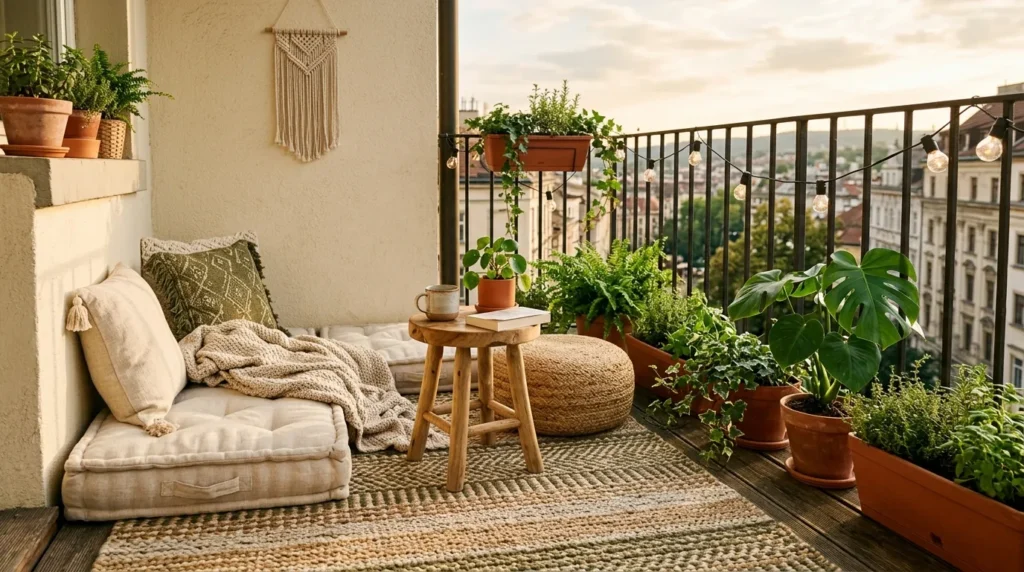
Traditional outdoor chairs aren’t always the best solution for a very compact balcony. Floor cushions, low lounge seats, and compact poufs can provide a comfortable place to sit while keeping the visual profile low.
Lower furniture can also make the balcony feel more open because it doesn’t block as much of the surrounding view. This is especially appealing when your balcony overlooks a garden, city skyline, or open landscape.
The concept works particularly well for casual spaces where you want to read, sip coffee, or relax rather than formally dine.
How To Style It
Start with a durable outdoor rug to create a defined seating area. Add two or three weather-resistant floor cushions in coordinating neutral tones.
A low wooden stool can function as a tiny table for drinks or books. Add a woven basket nearby for storing cushions when they’re not in use.
Choose outdoor fabrics that are designed for sun and moisture exposure. If your balcony is exposed to harsh weather, bring soft furnishings indoors when necessary to extend their lifespan.
Keep the color palette relaxed with combinations such as beige and olive, cream and terracotta, or charcoal and natural wood.
5. Foldable Furniture
Quick Benefits
- Creates flexible floor space
- Easy to store
- Ideal for renters
- Supports multiple balcony uses
- Works well in narrow layouts
Why It Works
Small balconies often need to serve different purposes. You may want a place to eat breakfast in the morning, room for plants during the afternoon, and open floor space when you’re entertaining.
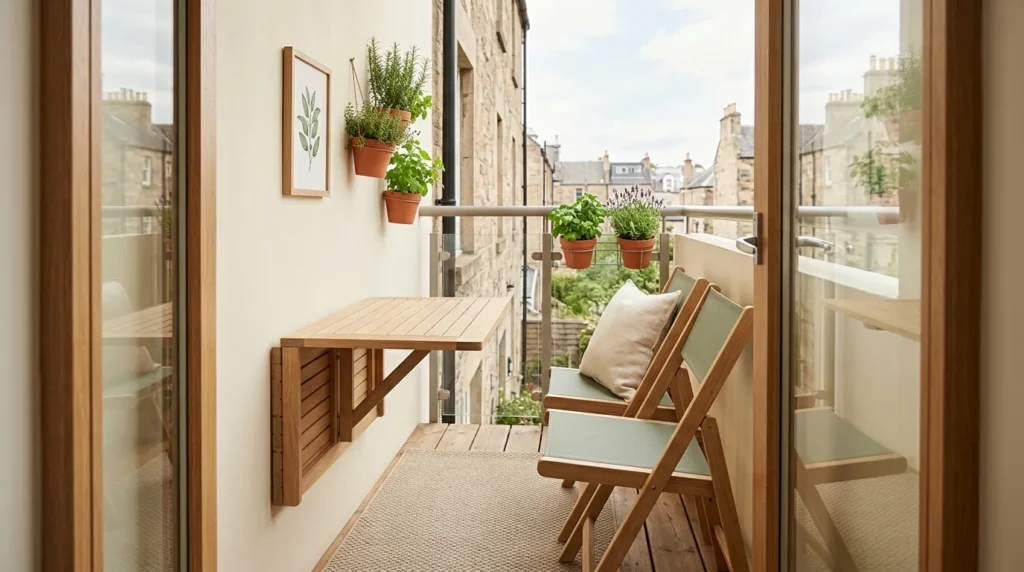
Foldable furniture gives you that flexibility. A drop-leaf table can function as a dining surface when needed and fold against the wall afterward. Folding chairs can be stored indoors or hung on a wall when they’re not being used.
This is particularly useful for apartment balconies where permanent furniture can quickly make the space feel crowded.
How To Style It
Choose one primary folding piece rather than filling the balcony with collapsible furniture. A wall-mounted drop-leaf table can work beautifully along a narrow wall.
Pair it with two folding chairs that can be tucked away easily. Add a slim wall shelf for small plants, candles, or outdoor accessories.
When the furniture is folded, keep the balcony visually tidy. This allows the floor to become an open area for gardening, yoga, or simply enjoying the view.
Look for weather-resistant materials and check manufacturer recommendations for outdoor exposure and storage.
6. Outdoor Rug Layers
Quick Benefits
- Defines the seating area
- Adds color and texture
- Makes hard flooring feel warmer
- Helps furniture feel connected
- Creates a finished appearance
Why It Works
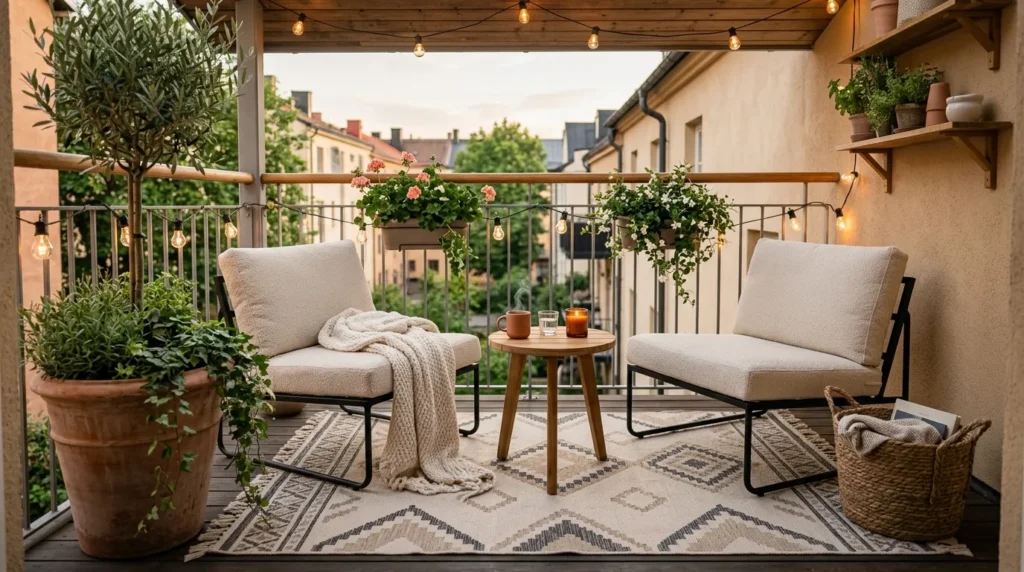
A rug can make a small balcony feel much more like an outdoor room. It visually anchors furniture and creates a defined zone for seating or dining.
Without a rug, individual pieces can sometimes look disconnected against concrete, tile, or wood decking. A properly sized outdoor rug pulls those elements together.
Rugs also introduce texture and color without requiring additional furniture. This makes them especially useful when you’re working with a very limited footprint.
How To Style It
Choose an outdoor rug sized to fit beneath the main furniture rather than covering the entire balcony. For a narrow balcony, a runner-style rug may be more appropriate.
Neutral patterns are versatile, but a subtle geometric design can add modern personality. For a boho-inspired space, consider muted tribal-style patterns or natural fiber-inspired textures.
Coordinate the rug with cushions and planters rather than matching everything exactly.
Make sure the rug is appropriate for outdoor conditions and allow adequate drainage beneath it. Keep the surface clean and follow the manufacturer’s care instructions.
7. Hanging Planters
Quick Benefits
- Saves floor space
- Adds vertical greenery
- Softens railings and walls
- Creates visual depth
- Works in tiny spaces
Why It Works
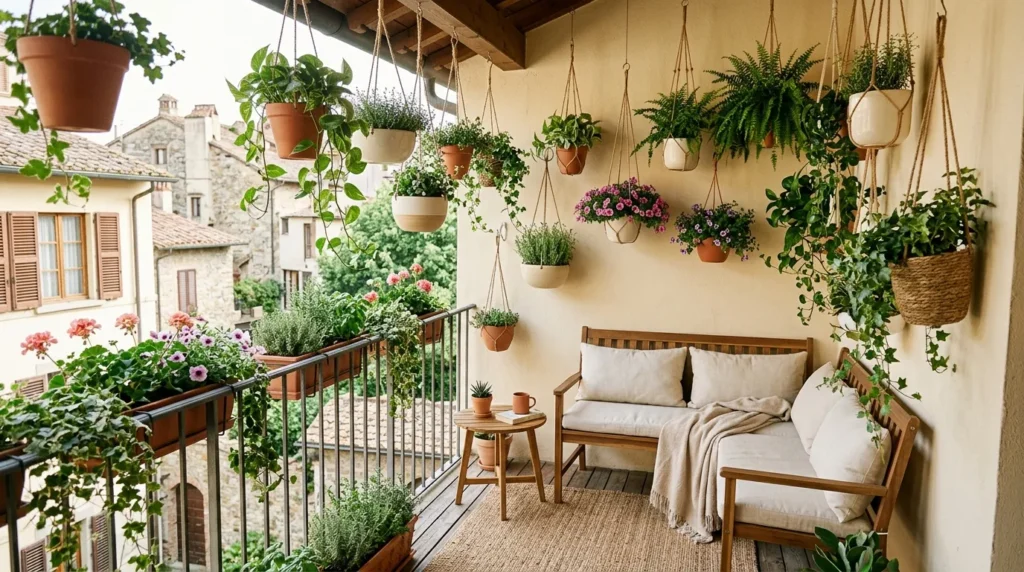
Hanging planters allow you to enjoy greenery without giving up valuable floor area. They can be attached to suitable walls, suspended from approved structures, or designed specifically for balcony railings.
Trailing plants are particularly effective because they create movement and soften hard edges. A few well-placed planters can make a small balcony feel much more lush without requiring dozens of floor pots.
The best arrangements use height intentionally. Hanging plants at different levels can create a layered garden effect while keeping the center of the balcony open.
How To Style It
Use a small number of coordinated planters rather than mixing too many shapes and materials. Neutral ceramic, terracotta, woven, or matte black containers can all work well.
Choose plants based on light and climate conditions. Trailing varieties can soften railings, while compact herbs can make a sunny balcony practical as well as beautiful.
Make sure hanging planters are securely installed and suitable for the structure they’re attached to. Never overload railings or use mounting systems that aren’t designed for the weight.
Keep the floor underneath the planters clear so the greenery remains the focal point.
8. Warm String Lights
Quick Benefits
- Creates instant ambiance
- Works in tiny spaces
- Adds visual warmth
- Makes evenings more inviting
- Requires minimal floor space
Why It Works
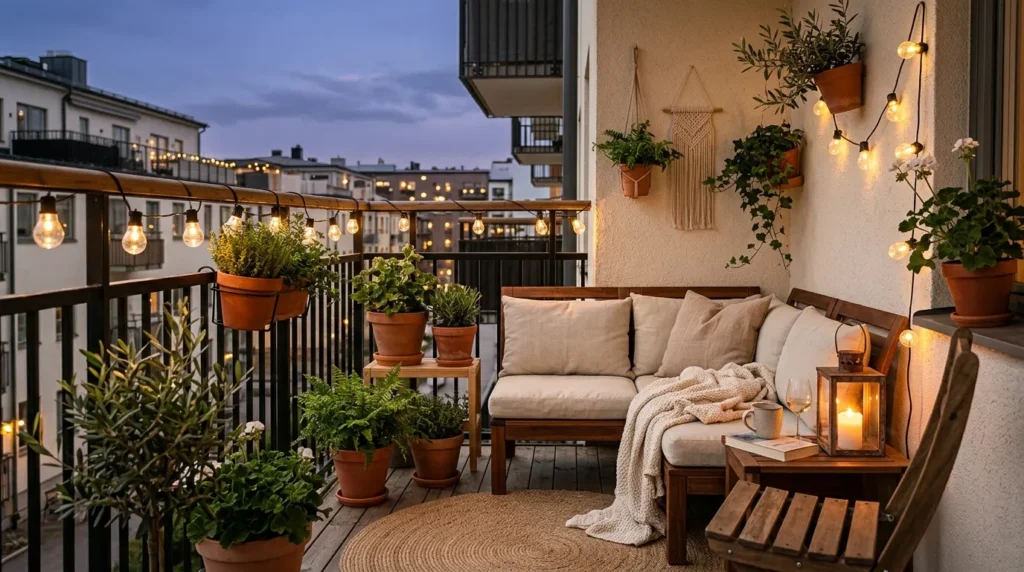
Lighting can completely transform a balcony after sunset. String lights provide a soft glow while taking up almost no floor area, making them especially valuable in compact outdoor spaces.
They also help define the balcony as a separate room rather than simply an extension of the building. When combined with comfortable seating and a few plants, even a tiny balcony can feel intimate and welcoming.
The key is avoiding excessive brightness. The goal is atmosphere rather than replacing the balcony’s main lighting system.
How To Style It
Run outdoor-rated string lights along an appropriate wall, railing, ceiling, or approved structure. Keep the line relatively simple rather than creating a dense web.
Warm white bulbs generally create a cozy atmosphere. Combine them with a small lantern or battery-operated outdoor light if additional illumination is needed.
Pair the lighting with natural materials such as wood, woven planters, linen-look cushions, and terracotta.
Always use lighting products specifically rated for the intended outdoor environment and follow installation and electrical safety instructions.
9. Privacy Screens
Quick Benefits
- Creates a more intimate setting
- Adds visual structure
- Can block distracting views
- Supports vertical gardening
- Makes the balcony feel like a room
Why It Works
Privacy is often one of the biggest challenges on apartment balconies. Nearby buildings, neighboring balconies, and busy streets can make it difficult to relax outdoors.
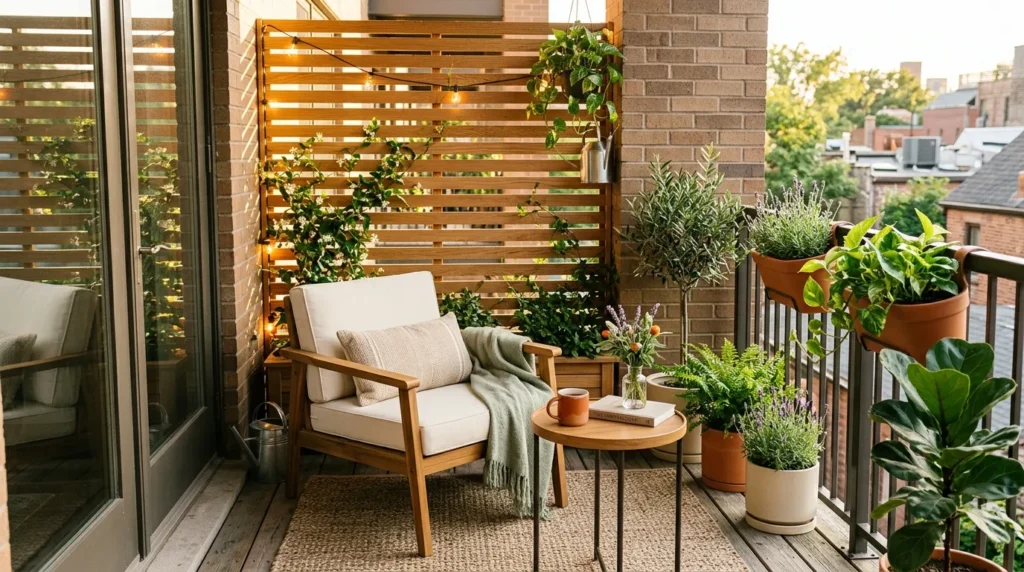
A privacy screen can create a visual boundary without requiring a solid permanent wall. Slatted wood, outdoor fabric panels, bamboo-style screens, trellises, and tall container plants can all provide different levels of privacy.
The right choice depends on your building rules, weather exposure, and how much privacy you need.
How To Style It
For a warm modern balcony, use a slatted wood-look screen with climbing greenery. For renters, a removable outdoor fabric panel or freestanding screen may be more practical.
You can also combine a trellis with potted climbing plants to create a softer living wall effect.
Keep the screen visually connected to the rest of the balcony. Repeat its material or color through furniture, planters, or accessories.
Before installing anything permanently, check building, rental, and safety requirements. Make sure screens do not obstruct exits, drainage, ventilation, or required access areas.
10. Minimal Lounge Retreat
Quick Benefits
- Creates a complete outdoor room
- Combines comfort and style
- Works with limited furniture
- Encourages relaxation
- Easy to personalize
Why It Works
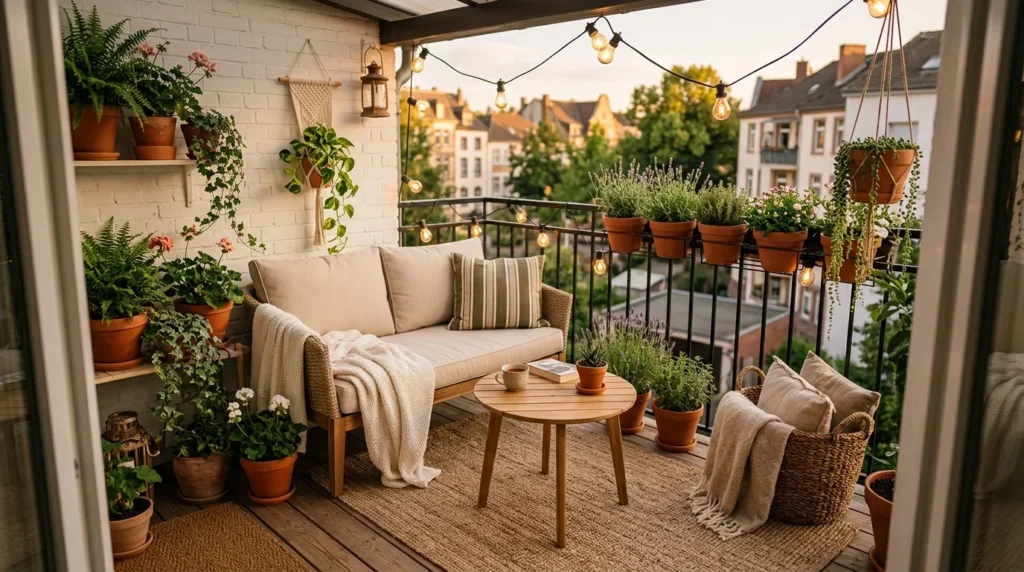
Sometimes the best small-balcony design is simply a carefully edited combination of the right elements. A comfortable chair or loveseat, compact table, rug, greenery, and warm lighting can create everything you need for a relaxing outdoor retreat.
The secret is choosing a clear purpose and resisting the urge to add more. A small balcony can feel luxurious when each piece has enough space around it.
A cohesive palette also helps. When furniture, textiles, planters, and lighting share a related color story, the space feels more expansive and intentional.
How To Style It
Start with one main seating piece. Depending on the layout, this could be a compact loveseat, lounge chair, storage bench, or pair of small chairs.
Add a small table that fits the scale of the seating. Then introduce one rug, a few plants, and soft outdoor cushions.
Use warm neutrals such as cream, beige, natural wood, muted green, and terracotta for a relaxed look. If you prefer a contemporary style, charcoal and black can be used as accents.
Finish with warm string lights or a small lantern. Keep the floor mostly open so the balcony remains easy to move through and visually calm.
How to Plan a Small Balcony Layout
Before purchasing anything, measure the balcony from wall to wall and note the location of doors, railings, drains, electrical outlets, and any fixed structures.
Start with the largest functional element, usually the seating. Position it against a wall or along the longest edge whenever possible to preserve a central walkway.
Then add a small table or storage piece. Avoid blocking doors or placing furniture where it could interfere with drainage.
Vertical space should be your next priority. Wall-mounted planters, hanging baskets, trellises, and narrow shelves can add function without consuming valuable floor area.
Finally, add textiles and decorative lighting. These elements should enhance the space without making movement difficult.
A good small-balcony layout should feel easy to enter, sit in, clean, and maintain.
Small Balcony Ideas for Renters
Renters can create beautiful balconies without making permanent structural changes. Look for freestanding furniture, removable privacy screens, railing planters designed specifically for balconies, and portable lighting.
Foldable furniture is especially useful because it can move with you. Outdoor rugs can cover unattractive flooring, while cushions and planters add personality without altering the building.
If you want more privacy, consider a freestanding screen or tall potted plants rather than drilling into walls.
Always check your lease and building rules before attaching anything to railings, walls, ceilings, or exterior structures. Safety requirements can vary significantly between properties.
The best renter-friendly balcony designs are flexible. If you can easily pack up the furniture and accessories, you’re more likely to be able to take the design with you when you move.
Small Balcony Color Ideas
A cohesive color palette can make a compact balcony feel more spacious.
Cream + Natural Wood: Warm, relaxed, and timeless.
Beige + Olive Green: Perfect for a natural garden-inspired retreat.
Terracotta + Cream: Adds Mediterranean warmth.
Charcoal + Sage: A sophisticated modern combination.
White + Black + Green: Crisp, contemporary, and easy to maintain visually.
Choose one main neutral, one natural material, and one accent color. Repeating those tones across furniture, cushions, planters, and lighting creates cohesion without requiring everything to match.
Common Small Balcony Mistakes
A few common choices can make a small balcony less comfortable than it needs to be.
Oversized furniture: A large outdoor sofa may leave no room to move.
Too many plants: Greenery is beautiful, but excessive pots can become difficult to maintain.
Ignoring storage: Cushions and gardening tools need a designated home.
Blocking the door: Always preserve a clear entrance and exit path.
Using indoor-only materials: Outdoor conditions can quickly damage furniture and textiles that aren’t designed for exposure.
Overdecorating: A small balcony usually looks better with fewer, larger visual elements than dozens of tiny accessories.
Ignoring building rules: Always check requirements before attaching screens, lights, planters, or other structures.
The goal is to make the balcony feel like an extension of your home rather than a crowded storage area.
FAQ
How do you make a small balcony look nice?
Start by choosing one clear purpose, such as dining, gardening, or relaxing. Then select appropriately scaled furniture, add a cohesive color palette, and use vertical space for plants or storage. Outdoor rugs, cushions, and warm lighting can make the balcony feel finished without requiring much additional floor space.
What furniture is best for a small balcony?
Compact bistro sets, folding chairs, slim benches, small lounge chairs, and wall-mounted or drop-leaf tables are excellent choices. Look for furniture that fits the balcony’s dimensions while leaving a comfortable walkway. Multifunctional pieces such as storage benches can provide extra value without taking up additional floor area.
How can I make a small balcony feel bigger?
Keep the floor as open as possible, choose furniture with a small footprint, and use vertical greenery instead of numerous floor planters. A properly sized outdoor rug can define the space, while a consistent color palette reduces visual clutter. Mirrors can sometimes add depth, provided they’re suitable and safely installed for the outdoor setting.
How do I add privacy to a small balcony?
Try a freestanding privacy screen, outdoor fabric panel, suitable balcony railing planter, trellis, or tall container plants. The best solution depends on your building’s rules and weather conditions. Avoid attaching anything permanently without checking permission and make sure any screen or planter is securely installed.
Can I decorate a small balcony on a budget?
Absolutely. Start with affordable high-impact elements such as outdoor cushions, a small rug, string lights, and a few coordinated planters. Secondhand furniture can also be a good option if it is suitable for outdoor conditions. Focus on creating a cohesive palette rather than buying many accessories.
What plants are best for a small balcony?
The right plants depend on sunlight, wind, temperature, and your local climate. Compact herbs, trailing plants, seasonal flowers, and suitable container shrubs can all work. Choose varieties that match the conditions rather than selecting plants based only on appearance, and use vertical or hanging planters when floor space is limited.
How do I make my balcony cozy at night?
Add warm outdoor-rated string lights, a lantern, comfortable cushions, an outdoor rug, and weather-appropriate textiles. Keep lighting soft rather than overly bright. A small side table and a few plants can complete the atmosphere. Bring soft furnishings indoors when needed to protect them from harsh weather.
Conclusion
A small balcony can become a beautiful extension of your home when you approach it with the same intention you would use for an indoor room. Instead of trying to squeeze in everything you might want, focus on the experience you want to create.
If you love morning coffee, start with a compact bistro set. If greenery makes you happy, build upward with hanging planters and a vertical garden. If relaxation is the priority, choose one comfortable lounge seat and build the rest of the design around it.
Scale is more important than quantity. A few well-chosen pieces can make a tiny balcony feel more luxurious than a crowded collection of outdoor furniture.
Keep walkways clear, use vertical space, choose outdoor-appropriate materials, and repeat a small number of colors and textures for a cohesive appearance. Warm lighting can then bring the entire design together after sunset.
You don’t need a huge terrace to create an outdoor retreat. Start with one functional piece, add comfort and greenery, and let the design grow naturally. With thoughtful planning, even the smallest balcony can become a cozy, stylish place you’ll genuinely want to use.