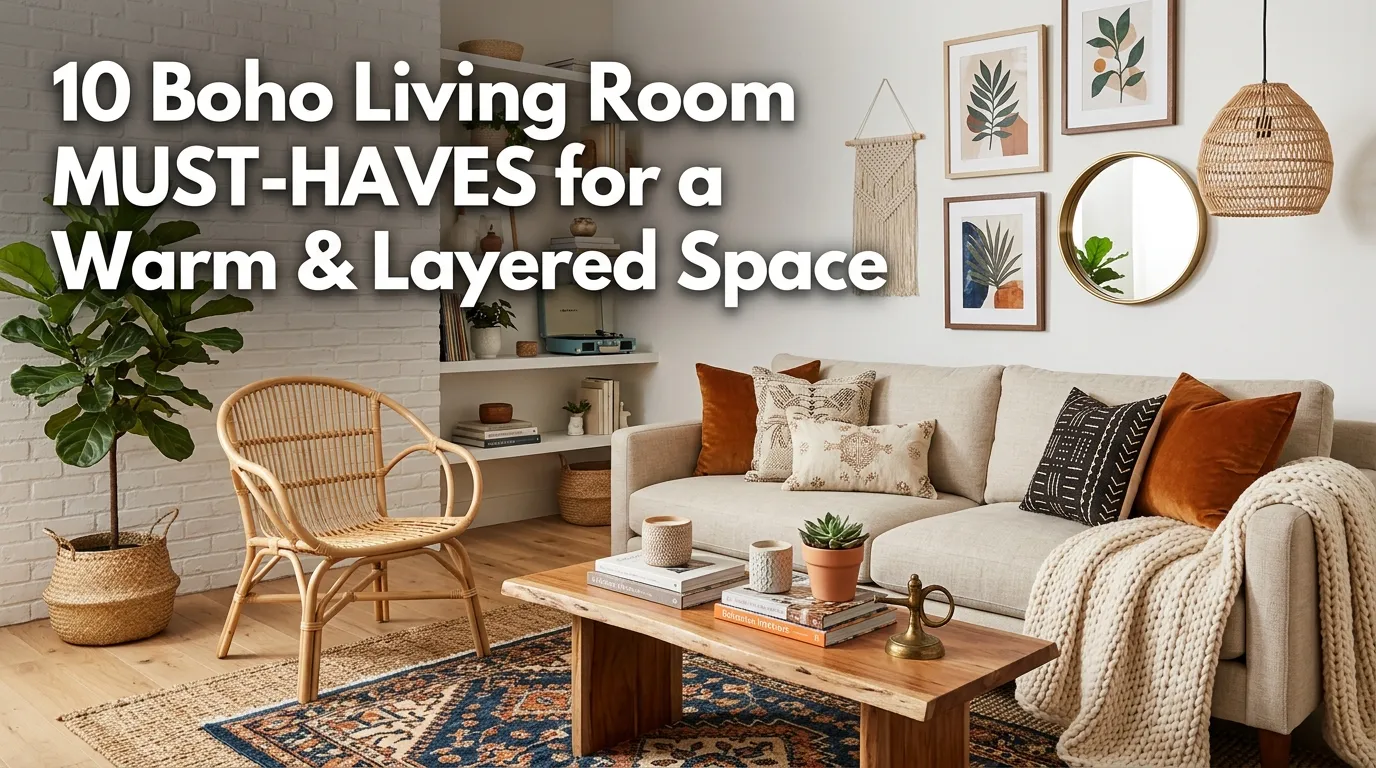
10 Boho Living Room Must-Haves for a Warm & Layered Space
A boho living room should feel collected rather than perfectly matched. The beauty of this style comes from mixing natural materials, relaxed textiles, earthy colors, plants, vintage-inspired pieces, and objects that make the room feel personal.
You don’t need to turn your living room into a maximalist space to capture the look. In fact, some of the most inviting boho interiors rely on a relatively simple foundation and then build character through layers. A neutral sofa might become the starting point for woven pillows, a patterned rug, a rattan accent chair, a collection of plants, and a few handmade-looking accessories.
I’ve noticed that the best boho rooms also feel comfortable first and decorative second. Furniture should encourage lounging, rugs should feel good underfoot, and storage should keep everyday clutter under control. The decorative details then add personality without making the room difficult to live in.
If you’re decorating a small apartment, refreshing a family living room, or simply looking for ways to make your space feel warmer and more relaxed, boho style is wonderfully flexible. You can lean earthy and minimalist, colorful and eclectic, modern and organic, or vintage and collected.
The following must-haves focus on the elements that give a boho living room its recognizable warmth while still keeping the space functional. Mix several together rather than trying to use everything at once. Your goal is a room that looks like it evolved naturally over time—not one that came home from a single furniture showroom.
Table of Contents
1. Textured Area Rug
Ground the room with pattern, softness, and plenty of tactile character.
2. Rattan Furniture
Introduce natural woven materials that instantly reinforce a relaxed boho mood.
3. Layered Pillows
Build comfort and personality by mixing colors, patterns, and fabrics.
4. Indoor Plants
Bring organic shapes and fresh greenery into the living room.
5. Natural Wood
Add warmth and an earthy foundation through wood furniture and accents.
6. Woven Baskets
Combine practical storage with beautiful natural texture.
7. Earthy Color Palette
Create a cohesive atmosphere with warm, nature-inspired shades.
8. Vintage Accents
Give the room character with collected and vintage-inspired pieces.
9. Macramé Details
Add handmade-looking texture without overwhelming the walls.
10. Cozy Ambient Lighting
Finish the room with warm, layered illumination that enhances every texture.
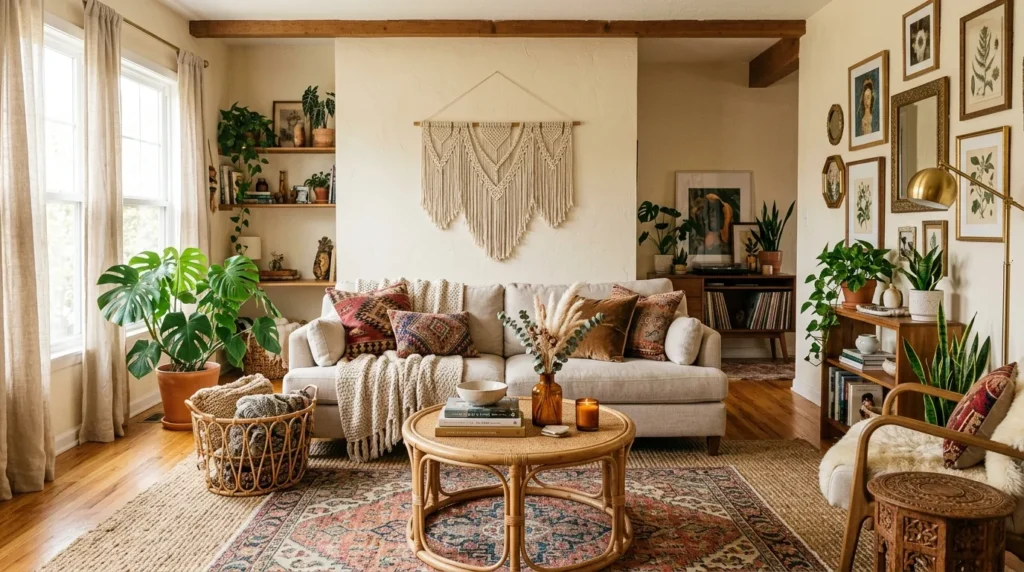
1. Textured Area Rug
Quick Benefits
- Defines the seating area
- Adds softness underfoot
- Introduces pattern and color
- Creates a layered foundation
- Helps furniture feel connected
Why It Works
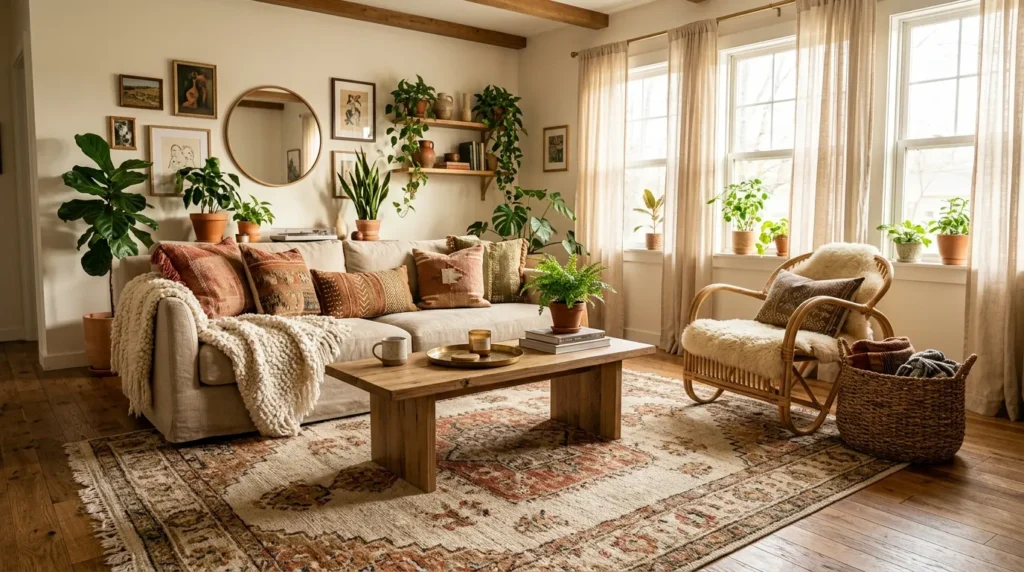
A beautiful rug can become the visual foundation of a boho living room. Because bohemian interiors are often built around layers, the floor is an important place to begin. A textured or patterned rug adds immediate warmth while giving the sofa, chairs, coffee table, and accessories something to visually relate to.
Vintage-inspired Persian patterns, faded geometric designs, Moroccan-style motifs, and natural woven textures can all work beautifully. The goal isn’t necessarily to choose the boldest rug available. A subtly distressed pattern can actually make the room feel more relaxed and collected.
In my experience, rugs are also one of the easiest ways to make a relatively simple room feel intentionally decorated.
How To Style It
Choose a rug large enough to anchor the primary seating arrangement. Ideally, at least the front legs of the sofa and accent chairs should sit on the rug so the furniture doesn’t appear disconnected.
For a relaxed boho look, consider a faded pattern in rust, cream, camel, olive, or muted blue. If your furniture is already colorful, choose a more restrained neutral design.
Layering a smaller patterned rug over a larger natural-fiber rug can create additional depth when the room has enough space.
Add a coffee table, floor cushions, or poufs over the rug to reinforce the casual atmosphere.
2. Rattan Furniture
Quick Benefits
- Adds natural texture
- Creates visual warmth
- Feels lightweight
- Complements greenery
- Works with modern or vintage pieces
Why It Works
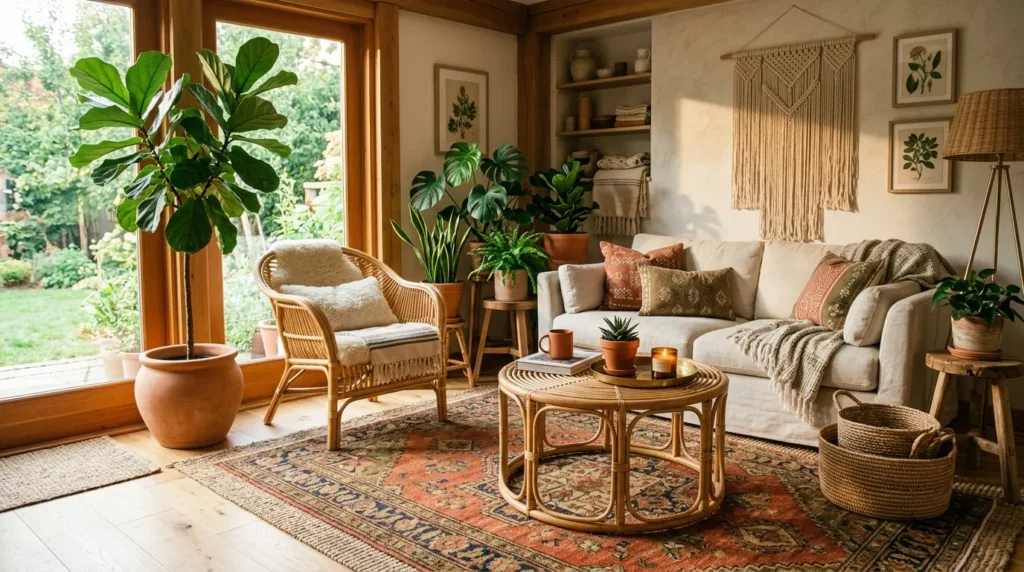
Rattan is practically synonymous with relaxed bohemian interiors because of its organic texture and naturally warm appearance. Unlike heavier furniture materials, woven pieces can also feel visually lighter, which is helpful when you’re layering several decorative elements.
A rattan accent chair, cabinet, coffee table, or side table can introduce enough texture to make a room feel more interesting without requiring a dramatic color change.
Rattan also pairs naturally with plants, linen, cotton, wool, wood, and terracotta. That makes it easy to incorporate into an existing living room rather than starting from scratch.
How To Style It
You don’t need a room full of rattan furniture. One or two pieces can be enough.
Try a rattan lounge chair beside a neutral sofa, or use a woven cabinet as a media console. A rattan coffee table can work particularly well when surrounded by softer upholstered seating.
Balance woven furniture with solid materials. For example, pair a cane cabinet with a substantial sofa and a ceramic table lamp.
Keep the surrounding palette warm and earthy, but don’t worry about matching every natural material perfectly. Slight variation usually makes the room feel more collected.
3. Layered Pillows
Quick Benefits
- Makes seating more comfortable
- Adds color and pattern
- Creates visual depth
- Allows easy seasonal changes
- Supports an eclectic aesthetic
Why It Works
Boho decorating is all about relaxed layering, and pillows are one of the easiest places to experiment.
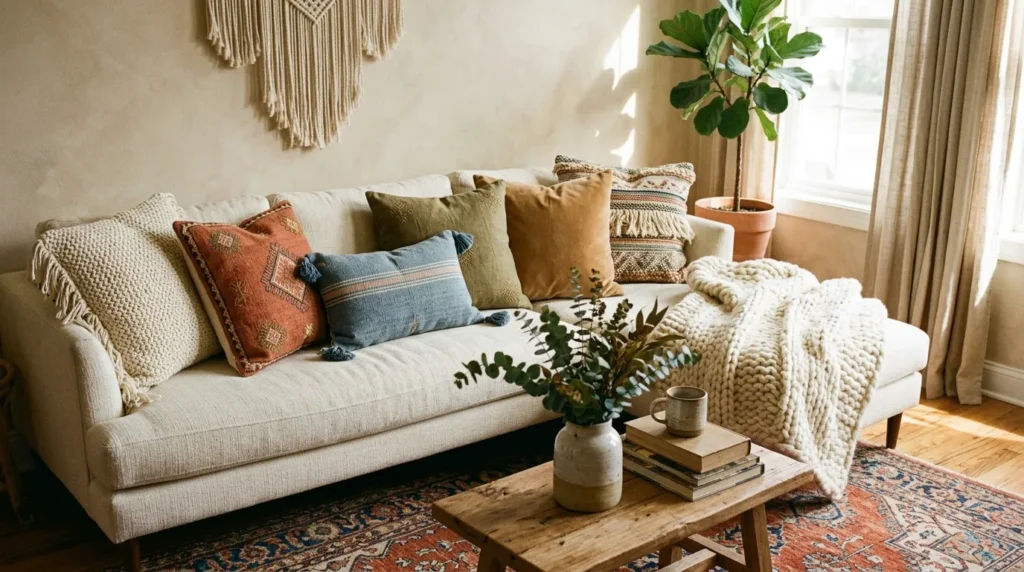
Instead of purchasing an identical set, combine pillows with different textures, patterns, shapes, and sizes. Kilim-inspired patterns, embroidered covers, tassels, fringe, mudcloth-inspired designs, and woven fabrics can all contribute to the look.
The key is finding a visual connection between the different pieces. They don’t have to match, but repeating a few colors prevents the arrangement from feeling random.
How To Style It
Begin with two larger neutral pillows at the back. Add medium-sized patterned cushions in earthy colors, followed by one or two smaller textured pieces.
Try combinations such as rust and cream, olive and beige, camel and charcoal, or terracotta and muted blue.
Don’t place every pillow upright in a perfectly symmetrical arrangement. A slightly relaxed composition feels more natural.
For easy updates, use removable covers. You can change colors and patterns seasonally without replacing the inserts.
4. Indoor Plants
Quick Benefits
- Adds organic color
- Softens furniture lines
- Creates visual movement
- Complements natural materials
- Enhances the relaxed atmosphere
Why It Works
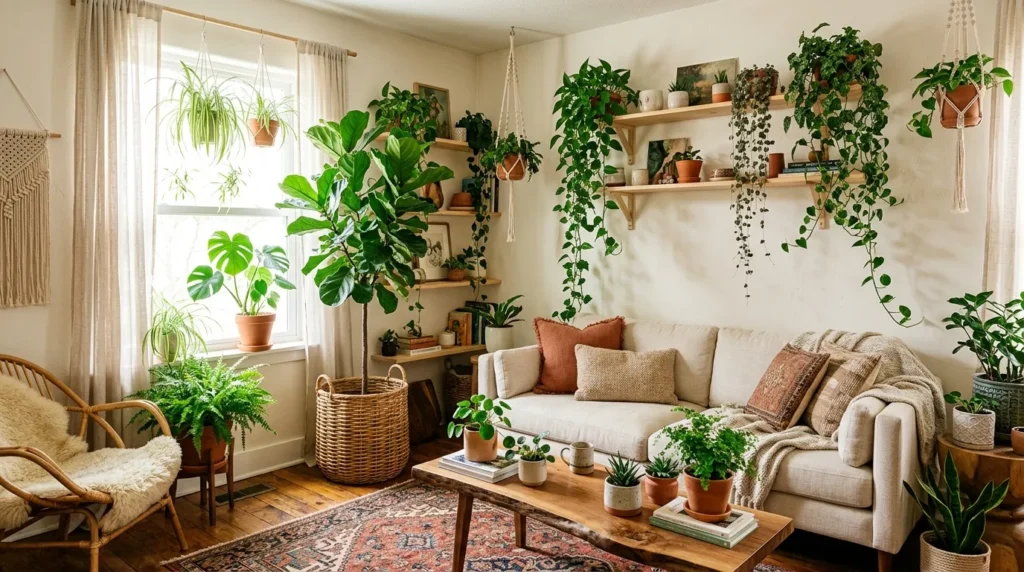
Plants bring an important organic element to a boho living room. Their irregular shapes and natural variations provide a welcome contrast to rectangular sofas, shelving, and tables.
Large floor plants can fill empty corners, trailing varieties can soften shelves, and smaller plants can bring life to coffee tables or sideboards.
Plants also work particularly well with the materials commonly found in boho spaces: terracotta, rattan, jute, wood, ceramic, and woven textiles.
How To Style It
Use plants at different heights to create layers. Place a tall plant beside a sofa or in an empty corner, then use smaller varieties on shelves and tables.
Choose planters that complement the room. Terracotta provides earthy warmth, woven baskets create texture, and simple ceramic pots give a cleaner appearance.
Most importantly, choose plants according to the light available in your living room. A beautiful plant in the wrong location won’t thrive.
If you’re new to indoor gardening, begin with a few varieties that suit your home’s conditions rather than trying to create a jungle immediately.
5. Natural Wood
Quick Benefits
- Adds warmth
- Creates an organic foundation
- Works with multiple boho styles
- Balances colorful textiles
- Ages beautifully
Why It Works
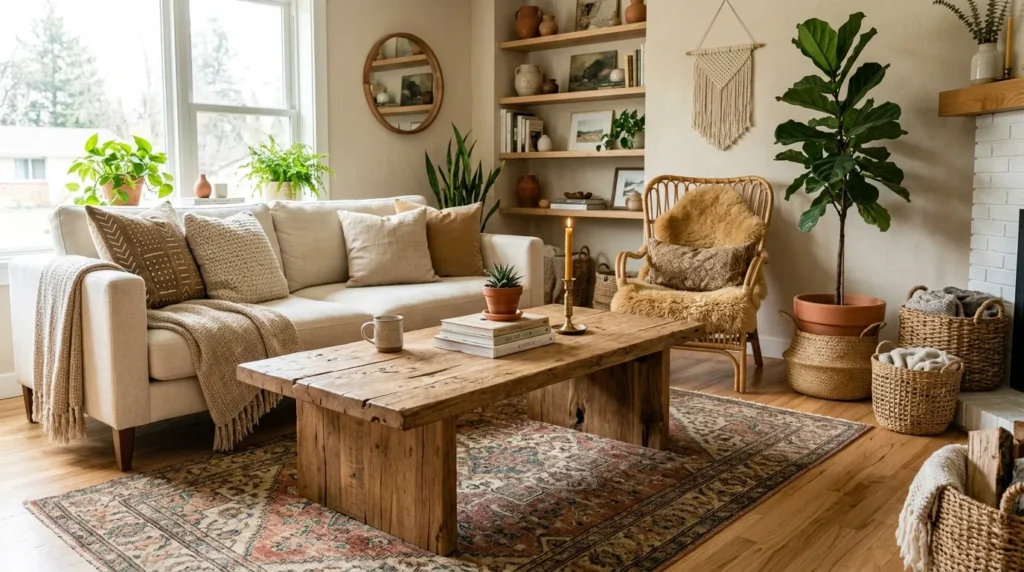
Natural wood gives a boho living room a grounded quality. It can be rustic, refined, vintage, or contemporary depending on the finish and furniture shape.
Wood also helps balance the softer and more decorative elements in the room. A substantial wooden coffee table can anchor a collection of colorful pillows, plants, and textiles without competing with them.
You don’t need every piece to have the same wood tone. Slight differences can make the room feel more collected.
How To Style It
Consider using natural wood for the coffee table, shelving, media console, or side tables.
Light oak and pine create a brighter Scandinavian-boho feel. Medium wood tones add warmth, while walnut can create a more sophisticated atmosphere.
Pair wood with woven baskets, linen upholstery, textured rugs, and ceramic accessories.
If you already have several wood pieces, avoid adding too many competing finishes. Choose related tones or use painted and upholstered furniture to break things up.
6. Woven Baskets
Quick Benefits
- Provides practical storage
- Adds texture
- Reduces visible clutter
- Works as decorative accents
- Complements natural materials
Why It Works
A beautiful boho living room should still function for everyday life. Blankets, toys, magazines, remotes, and other household items need somewhere to go.
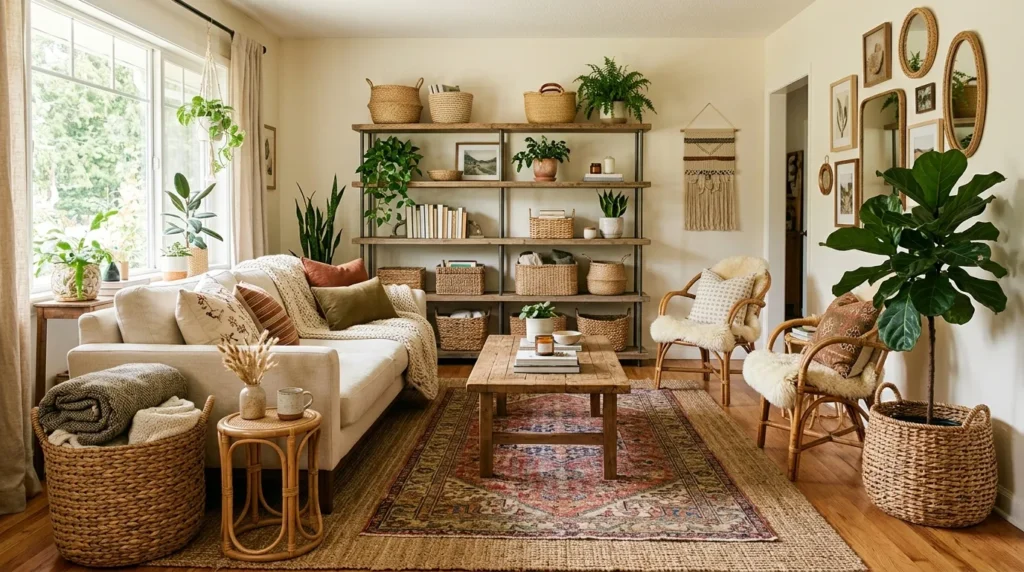
Woven baskets solve that problem while contributing to the design. Their texture works beautifully with rattan furniture, natural wood, plants, and patterned textiles.
They’re particularly useful because they can be moved easily when the room needs to change.
How To Style It
Place a large basket beside the sofa for throws and extra pillows. Use smaller baskets on open shelving for less attractive everyday items.
Natural seagrass, jute, rattan, and woven cotton can all work well.
Choose a few basket shapes rather than filling the entire room with them. A large basket near the seating area and a smaller basket on a shelf may be enough.
Use baskets to hide functional items while keeping them accessible.
7. Earthy Color Palette
Quick Benefits
- Creates visual warmth
- Makes mixing patterns easier
- Complements natural materials
- Feels relaxed and grounded
- Works with many decorating styles
Why It Works
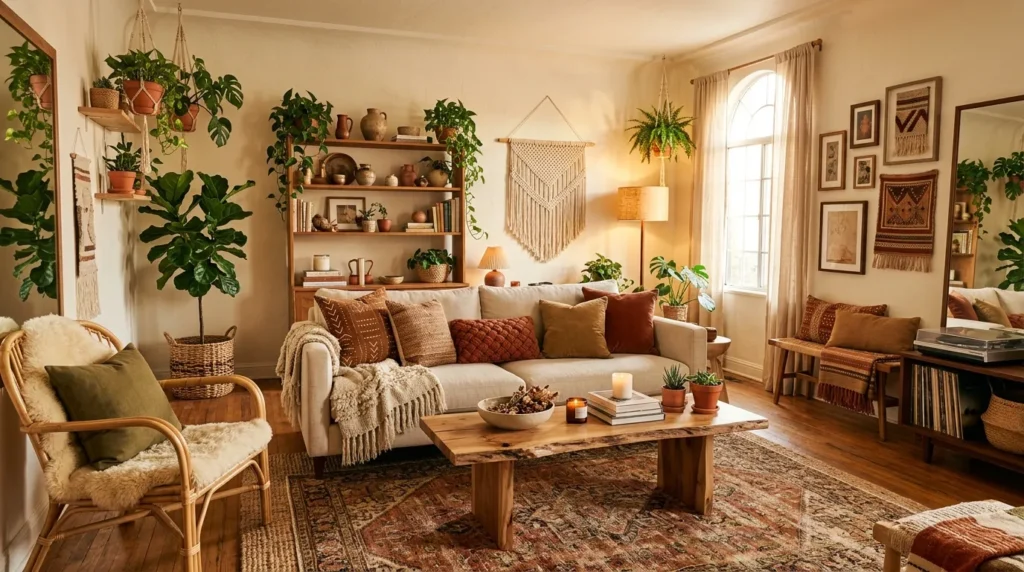
Color is what gives many boho living rooms their distinctive warmth. Instead of relying exclusively on bright colors, consider earthy shades inspired by nature.
Terracotta, rust, sand, camel, olive, cream, warm brown, dusty rose, and muted blue can all work together beautifully.
A neutral foundation gives you room to add stronger accents without making the entire space feel overwhelming.
How To Style It
Start with one dominant neutral such as cream, beige, or warm white. Then choose two or three accent colors.
For example, cream upholstery can be paired with rust pillows, olive greenery, and natural wood.
If you prefer a more colorful room, use patterned textiles to introduce several related shades. Repeat those colors in artwork and smaller accessories.
Avoid introducing too many completely unrelated colors. Boho can be eclectic, but a cohesive underlying palette keeps the room visually comfortable.
8. Vintage Accents
Quick Benefits
- Adds character
- Creates a collected appearance
- Makes the room feel personal
- Prevents a showroom effect
- Supports eclectic styling
Why It Works
The charm of boho interiors often comes from the feeling that pieces were gathered over time. Vintage accents help create that impression.
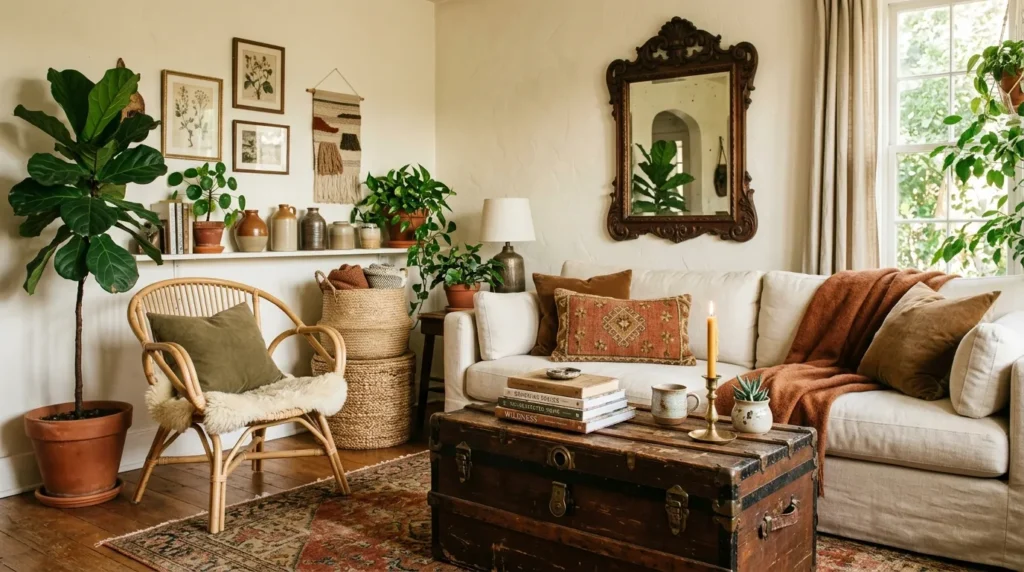
An antique-looking mirror, old wooden stool, vintage trunk, secondhand artwork, or traditional ceramic vessel can give a room a sense of history.
You don’t need authentic antiques for every item. Vintage-inspired pieces can create a similar visual effect while fitting more easily into a modern home.
How To Style It
Choose one standout vintage element rather than filling every surface with old-looking objects.
A vintage trunk can become a coffee table. An old-style mirror can hang above a console. A carved wooden stool can function as a side table.
Mix vintage pieces with modern furniture to keep the room from feeling like a period set.
Look for imperfections and variations that give pieces personality. A slightly worn finish often feels more authentic in a relaxed boho space than something that looks overly polished.
9. Macramé Details
Quick Benefits
- Adds handmade texture
- Creates a soft wall feature
- Works in small spaces
- Complements natural materials
- Introduces visual interest without heavy furniture
Why It Works
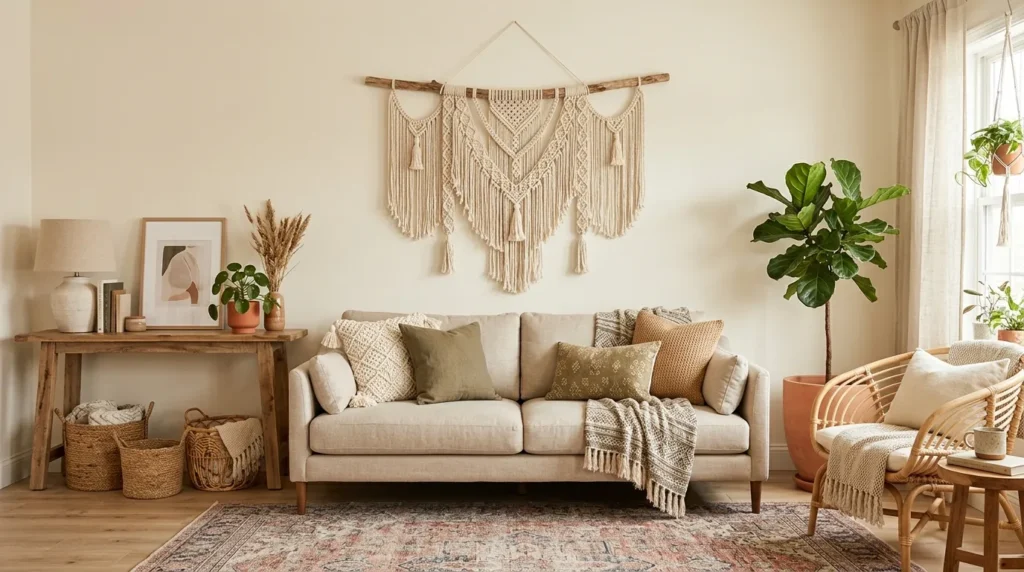
Macramé brings a distinctly handcrafted quality to boho interiors. Its woven knots and fringe create texture without requiring bold color.
It’s especially useful when a living room has large blank walls that need something softer than traditional framed artwork.
The important thing is moderation. A single substantial macramé piece can create a beautiful focal point, while covering every wall with macramé may make the room feel overly themed.
How To Style It
Hang a medium or large macramé wall piece above a console, sofa, or reading nook.
Choose natural cream or ivory fibers for a classic boho look. If your room is already very neutral, a slightly darker woven piece can add contrast.
Pair it with wood, plants, rattan, and ceramic pieces.
Keep the surrounding wall relatively simple so the texture remains visible. You can also combine macramé with framed artwork for a collected gallery wall.
10. Cozy Ambient Lighting
Quick Benefits
- Creates evening warmth
- Highlights textures
- Makes the room feel intimate
- Adds decorative interest
- Complements earthy materials
Why It Works
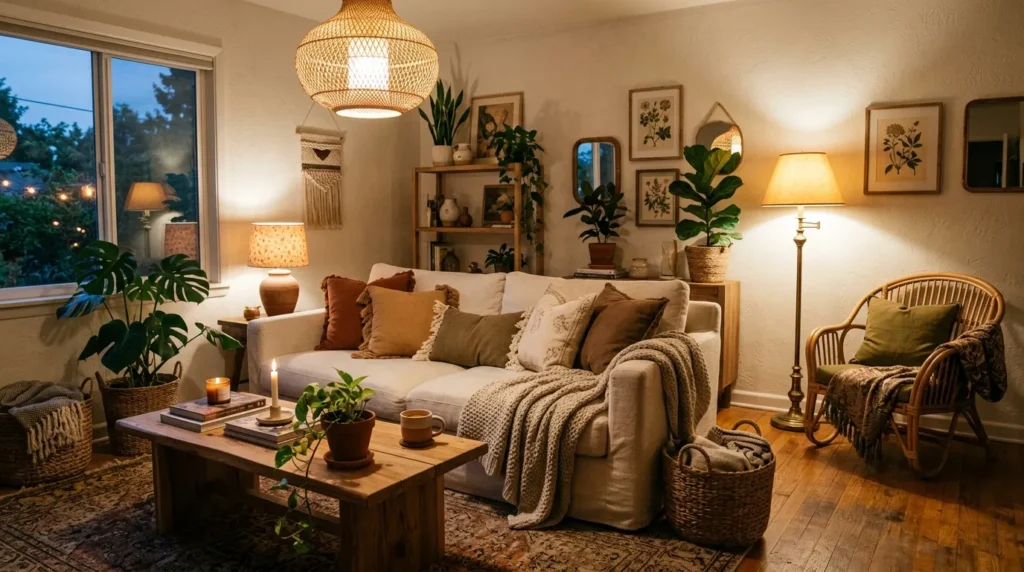
Lighting is what brings a boho living room together after sunset. All those beautiful textures and natural materials can look completely different when illuminated with warm, layered light.
Instead of relying entirely on one ceiling fixture, create multiple light sources around the room. This produces smaller pools of light and makes the space feel more intimate.
Lamps also give you another opportunity to introduce texture through ceramic bases, woven shades, wood, or aged metal.
How To Style It
Place a floor lamp beside the sofa or reading chair and add a table lamp to a side table or console.
A woven pendant can introduce overhead texture, while small accent lights can highlight plants or artwork.
Choose warm, comfortable lighting for evening use and make sure fixtures and bulbs are appropriate for their intended locations.
Finish the space with candle-style lighting or suitable decorative lanterns if desired, following normal fire and placement safety practices.
How to Mix Boho Style Without Making It Look Cluttered
Boho style can be layered, but layering doesn’t mean filling every surface.
Start with a few larger pieces and establish a clear visual foundation. A neutral sofa, textured rug, natural wood table, and one substantial plant can create the beginning of the look.
Then add smaller details gradually.
When combining patterns, repeat at least one or two colors between different pieces. This creates visual connections even when the patterns themselves are different.
Also vary scale. Pair a large floor plant with small tabletop accessories, a substantial rug with smaller pillows, and a large artwork piece with understated decorative objects.
Finally, leave some empty space. Negative space gives the eye a place to rest and prevents your eclectic decor from feeling chaotic.
Boho Living Room Color Combinations
If you’re building a color palette from scratch, these combinations are easy starting points:
Cream + Terracotta + Natural Wood
Warm, earthy, and timeless.
Beige + Olive + Rust
Organic and relaxed.
Ivory + Camel + Charcoal
A more sophisticated neutral boho look.
Warm White + Dusty Blue + Brown
Soft with a slightly coastal influence.
Taupe + Terracotta + Sage
Earthy and modern.
Use the dominant neutral on your largest surfaces, then introduce accent colors through pillows, rugs, artwork, plants, and accessories.
Boho Living Room Ideas for Small Spaces
A small living room can absolutely embrace boho style. The trick is to prioritize pieces that add function without creating visual heaviness.
Choose a compact sofa or apartment-sized sectional and pair it with a smaller coffee table. Poufs can provide flexible seating while taking up less visual space than additional chairs.
Use vertical space for plants and artwork. Wall-mounted shelves can display books and accessories without consuming valuable floor area.
A large rug can actually help a small room feel more cohesive by visually connecting the furniture.
Keep the color palette relatively restrained and let texture provide the visual interest.
FAQ
What should every boho living room have?
A textured rug, natural materials, comfortable seating, greenery, layered textiles, and warm lighting are strong foundations for a boho living room. You can then add woven baskets, vintage accents, artwork, and decorative objects based on your personal style. The goal is a relaxed, collected room rather than a perfectly matched set.
How do I make my living room look boho?
Start with natural materials such as wood and rattan, then introduce a patterned rug, textured pillows, greenery, woven accessories, and earthy colors. Vintage or handmade-looking pieces can add personality. You don’t need to use every boho element at once; a few well-chosen layers can create the aesthetic.
What colors are best for boho living rooms?
Earth-inspired colors work particularly well, including cream, beige, terracotta, rust, camel, olive, warm brown, muted blue, and dusty rose. Use a neutral shade as your foundation and add two or three complementary accents through textiles, artwork, rugs, and accessories.
Can boho style be minimalist?
Yes. Minimalist boho interiors focus on fewer, more intentional pieces while maintaining natural textures and earthy warmth. Choose simple furniture, one beautiful rug, a few plants, natural wood, and carefully selected accessories. Keep surfaces relatively clear and let materials provide the visual interest.
How do I make a modern living room more boho?
Keep your modern sofa and main furniture, then introduce boho elements through a vintage-inspired rug, rattan accent chair, woven baskets, plants, textured pillows, and warm wood. This creates a modern-boho look without requiring a complete redesign.
How many pillows should a boho sofa have?
There isn’t a fixed number, but a layered arrangement generally looks better than a perfectly symmetrical one. Start with a few larger pillows, add two or three patterned or textured cushions, and finish with one smaller accent piece if needed. Leave enough seating space for comfortable everyday use.
What type of rug works best with boho decor?
Vintage-inspired, Persian-style, Moroccan-inspired, geometric, and natural-fiber rugs can all complement boho interiors. Look for rugs containing earthy colors and visible texture. The most important consideration is scale: the rug should be large enough to visually anchor the main seating arrangement.
Conclusion
A boho living room should feel warm, relaxed, personal, and collected. You don’t need dozens of decorative objects or a dramatic color palette to create that atmosphere.
Start with the essentials: a comfortable seating arrangement, a beautiful textured rug, natural wood, and plenty of greenery. From there, layer in rattan, woven baskets, pillows, vintage accents, and earthy colors.
Think about texture as much as color. A simple cream sofa can feel completely different when surrounded by woven materials, chunky textiles, natural wood, and plants.
Most importantly, let your personality guide the room. Display books you enjoy, artwork that means something to you, and objects you’ve collected over time. Those details are what transform boho decor from a recognizable style into a home that actually feels like yours.
You can begin with just two or three changes. Add a rug, bring in a plant, replace a few pillow covers, or introduce a warm lamp. Then build gradually until the room feels comfortable rather than decorated for decoration’s sake.
The best boho spaces aren’t perfect—and that’s exactly what makes them so inviting.