

11 Cozy Bedroom Ideas for a Warm and Relaxing Retreat
A cozy bedroom should make you want to slow down the moment you walk through the door. It doesn’t need to be oversized, expensive, or filled with decorations. Often, the rooms that feel the most inviting are built around simple layers: soft bedding, warm lighting, calming colors, natural textures, and a few personal details.
The bedroom is also one of the easiest spaces to make cozier because relatively small changes can have a noticeable effect. Switching to layered bedding, adding curtains, placing a rug beside the bed, or replacing a harsh overhead light with warm bedside lamps can completely change the atmosphere.
In my experience, the biggest mistake people make is thinking cozy means adding more of everything. Too many pillows, accessories, dark colors, or bulky furniture can actually make a bedroom feel cramped. Instead, focus on creating a comfortable visual rhythm and leaving enough breathing room around the pieces you use every day.
Whether your style is modern, farmhouse, Scandinavian, boho, traditional, or simply relaxed and neutral, the ideas below can be adapted to suit your space. You can also use them in a small apartment bedroom or a larger primary bedroom without needing to redesign the entire room.
Think of this list as a collection of layers. Start with the elements that matter most to comfort, then add texture, warmth, and personality until the room feels like your own private retreat.
Table of Contents
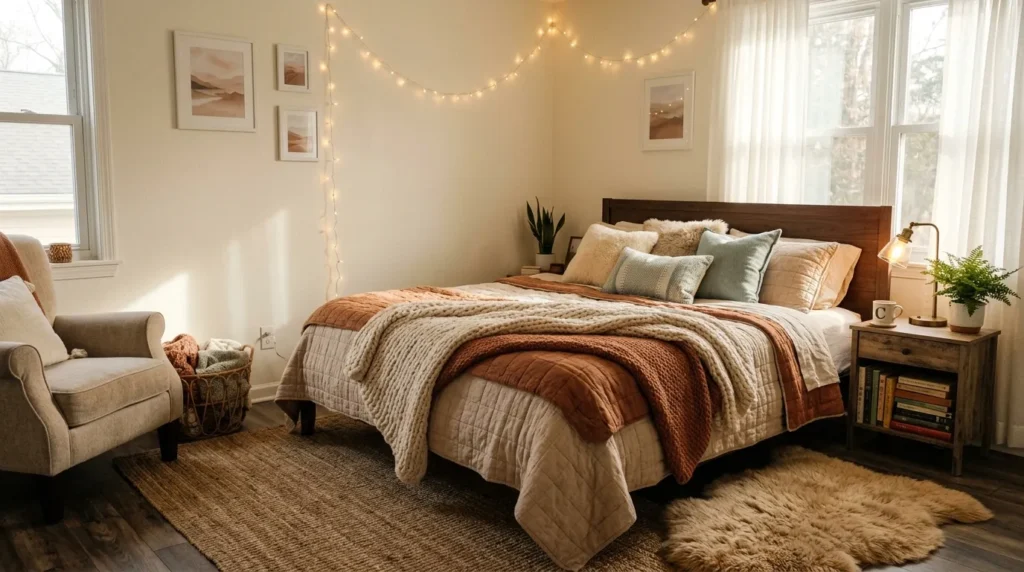
1. Layered Bedding
Create a soft, inviting bed with multiple complementary textures.
2. Warm Bedside Lighting
Replace harsh illumination with gentle pools of warm light.
3. Soft Neutral Palette
Build a calming bedroom around warm, understated colors.
4. Textured Area Rug
Add softness underfoot while visually grounding the bed.
5. Natural Wood Accents
Bring warmth and organic character into the bedroom.
6. Floor-Length Curtains
Soften windows and create a more finished atmosphere.
7. Upholstered Headboard
Give the bed a comfortable, substantial focal point.
8. Cozy Throw Blankets
Add an easy layer of warmth and casual texture.
9. Bedroom Greenery
Introduce natural shapes and subtle color with plants.
10. Personal Nightstand Styling
Combine practical essentials with a few meaningful accents.
11. Relaxed Reading Corner
Turn an unused bedroom corner into a peaceful retreat.
1. Layered Bedding
Quick Benefits
- Makes the bed look instantly inviting
- Adds warmth and softness
- Creates visual depth
- Allows easy seasonal changes
- Works with almost any decorating style
Why It Works
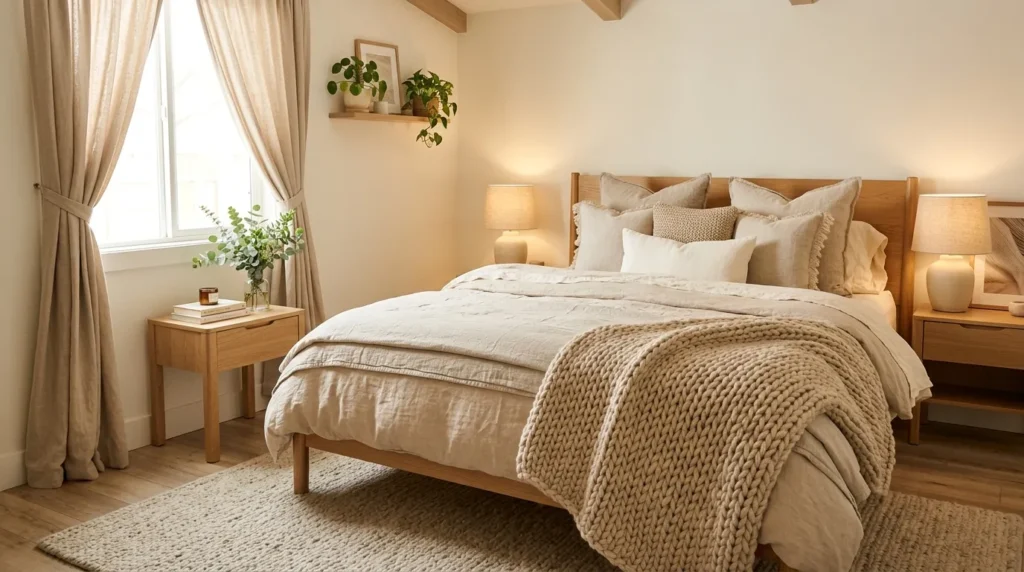
The bed is usually the largest visual element in a bedroom, so bedding has an enormous influence on how the entire space feels. A single flat comforter can look neat, but several thoughtfully layered pieces create a much softer and more inviting appearance.
The secret is variation. Combining cotton, linen, quilted fabric, chunky knits, and other tactile materials gives the eye subtle differences to explore. You don’t need an enormous number of pillows or blankets. A few well-chosen layers are usually more effective than an overloaded bed.
A mistake many homeowners make is choosing every bedding piece from exactly the same material. A little contrast makes the arrangement feel more relaxed and naturally collected.
How To Style It
Start with comfortable sheets and a duvet or quilt in a neutral shade. Add a folded blanket across the lower third of the bed for another layer of texture.
Place two sleeping pillows behind larger decorative shams, then add one or two smaller accent pillows. If you prefer a more minimal appearance, skip the decorative pillows and focus on beautiful bedding instead.
For fall and winter, incorporate a chunky knit or heavier woven throw. In spring and summer, swap it for lightweight cotton or linen.
Keep the palette connected to the rest of the room so the bed feels integrated rather than visually separate.
2. Warm Bedside Lighting
Quick Benefits
- Creates a relaxing evening atmosphere
- Makes the bedroom feel warmer
- Provides useful reading light
- Reduces dependence on overhead fixtures
- Adds decorative character
Why It Works
Lighting can make or break the mood of a bedroom. Even beautifully decorated spaces can feel surprisingly uncomfortable when illuminated by one bright ceiling fixture.
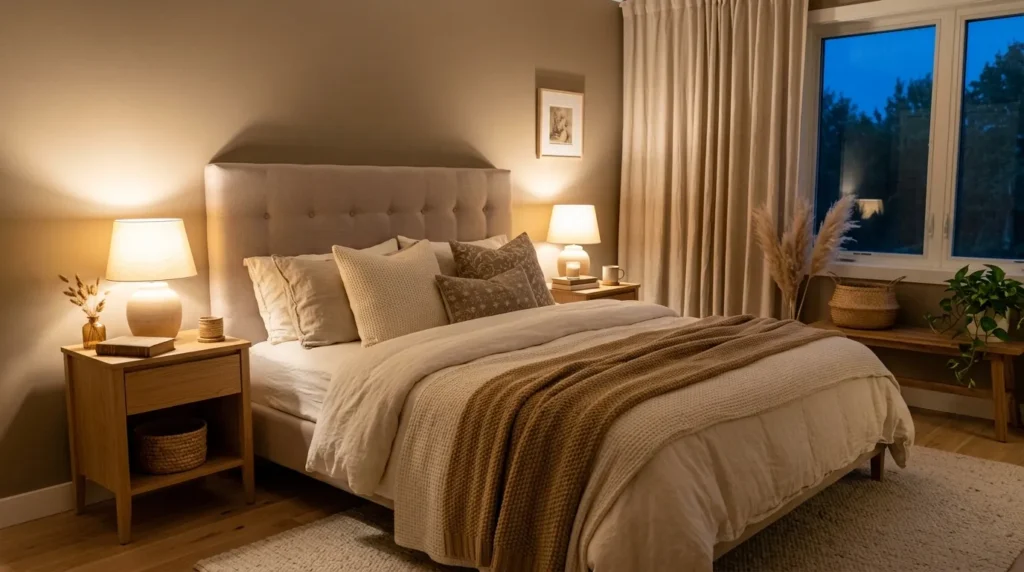
Bedside lamps create smaller pools of light that make the room feel more intimate. They also add symmetry and visual balance when positioned on matching or complementary nightstands.
Warm lighting works particularly well with cream bedding, natural wood, woven textures, and earthy colors. In the evening, these materials absorb and reflect the softer illumination in a way that makes the room feel considerably more relaxed.
How To Style It
Place a lamp on each side of the bed when space allows. Matching lamps create a classic appearance, while two different but visually related lamps can give the room a more collected feel.
Ceramic, linen, wood, glass, and woven shades can all work beautifully.
Choose a lamp that provides enough illumination for reading without overpowering the room. Dimmable options are especially useful because you can adjust the brightness throughout the evening.
Keep cords organized and make sure lamps are positioned safely away from bedding and other materials.
3. Soft Neutral Palette
Quick Benefits
- Creates a calming backdrop
- Makes small rooms feel visually lighter
- Works with many design styles
- Allows texture to stand out
- Makes seasonal updates easier
Why It Works
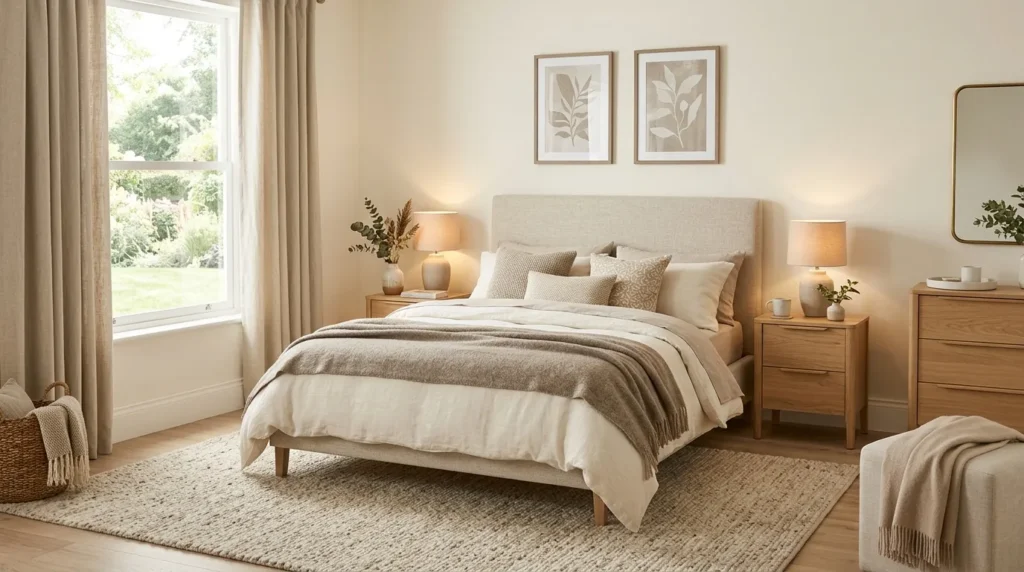
Warm neutrals can create one of the most relaxing bedroom environments. Cream, ivory, beige, oatmeal, taupe, warm gray, and soft brown provide a gentle backdrop without demanding attention.
However, neutral doesn’t have to mean completely monochromatic. The most interesting neutral bedrooms usually combine several related tones.
For example, warm white walls can be paired with oatmeal bedding, beige curtains, light oak furniture, and taupe cushions. The colors remain subtle, but the variation prevents the room from looking flat.
If you’re working with a naturally dark bedroom, lighter warm neutrals can also help maintain an airy feeling.
How To Style It
Choose one dominant neutral for the walls or largest surfaces. Then introduce two or three complementary shades through bedding, curtains, rugs, and accessories.
Natural wood can add warmth, while small touches of muted sage, dusty rose, terracotta, or charcoal can provide contrast.
Avoid making everything the exact same shade. Differences in tone and texture are what give a neutral bedroom dimension.
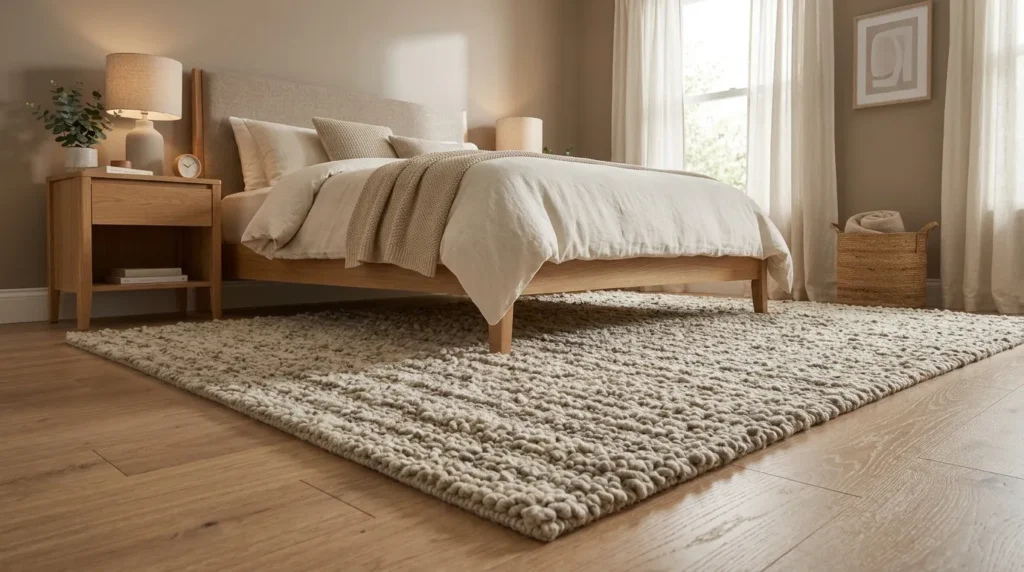
4. Textured Area Rug
Quick Benefits
- Adds softness beside the bed
- Makes mornings more comfortable
- Grounds the furniture
- Introduces pattern or texture
- Makes the room feel finished
Why It Works
Few things are less inviting than stepping directly onto a cold, hard floor on a winter morning. A soft rug provides immediate comfort while also helping visually anchor the bed.
Rugs can be especially useful in bedrooms with wood, laminate, or tile floors because they introduce a layer of softness that balances those harder surfaces.
Texture is often more important than a dramatic pattern. A plush neutral rug can create a beautiful cozy foundation without competing with the bedding.
How To Style It
Choose a rug large enough to extend beyond the sides and foot of the bed when possible. If a large area rug isn’t practical, use runners or smaller rugs on each side.
For a calming bedroom, consider cream, beige, taupe, muted gray, or subtle earth tones.
A vintage-inspired pattern can work beautifully if the rest of the room is relatively simple.
Place a suitable rug pad underneath to help prevent slipping and improve comfort.
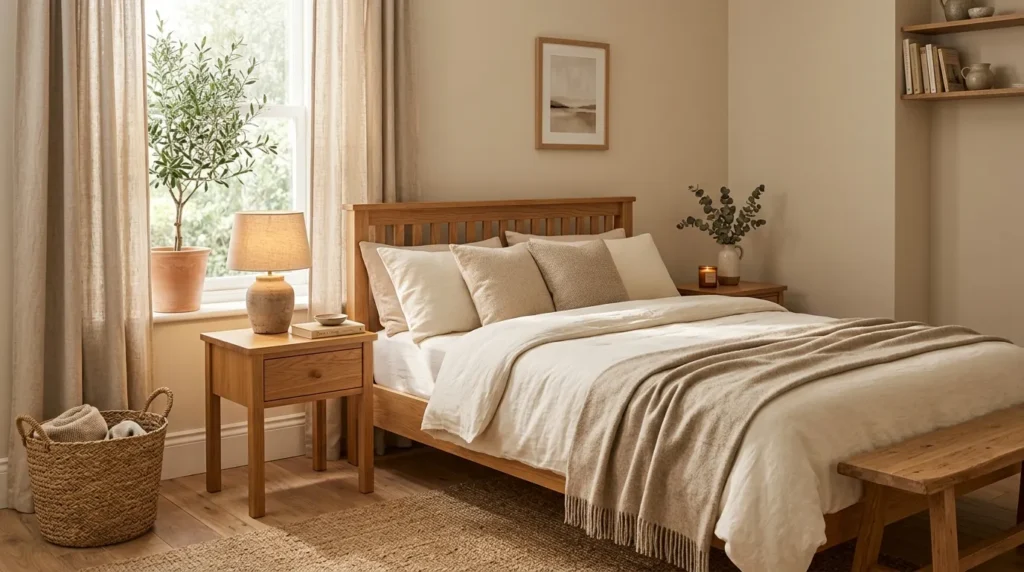
5. Natural Wood Accents
Quick Benefits
- Adds warmth
- Introduces organic texture
- Balances soft textiles
- Creates timeless appeal
- Works with modern and traditional interiors
Why It Works
Bedrooms can quickly become dominated by soft fabrics, so natural wood provides useful visual contrast.
A wood bed frame, nightstand, bench, dresser, or floating shelf introduces warmth without making the room feel overly decorated. The natural variation in wood grain also creates subtle texture.
Lighter woods such as oak can keep a bedroom bright and Scandinavian-inspired, while walnut and darker finishes can create a richer, more intimate atmosphere.
How To Style It
Choose one or two major wood pieces and repeat the material through smaller details.
For example, pair a wood nightstand with a wooden picture frame or small stool. You don’t need every wood finish to match exactly.
If your bedding is mostly cream and beige, medium or darker wood can provide attractive contrast.
Balance wood with soft fabrics, greenery, and simple ceramics so the room feels warm rather than heavy.
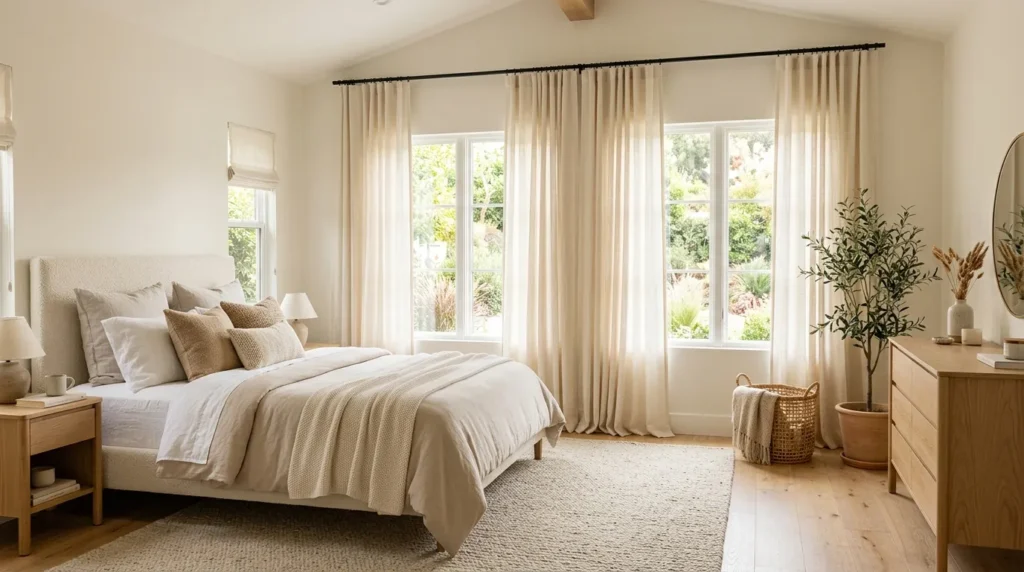
6. Floor-Length Curtains
Quick Benefits
- Softens windows
- Adds fabric and texture
- Creates the appearance of height
- Improves privacy
- Makes the bedroom feel finished
Why It Works
Window treatments are sometimes overlooked when decorating bedrooms, but they can dramatically influence the atmosphere.
Bare windows can leave a bedroom feeling visually hard, while soft curtains introduce another layer of fabric. Floor-length curtains can also emphasize the vertical proportions of the room and make the space feel more polished.
For a cozy bedroom, curtains in linen-look, cotton, velvet, or another soft fabric can work particularly well.
How To Style It
Whenever the architecture allows, mount the curtain hardware higher than the window frame to create a taller visual line.
Choose warm ivory, beige, oatmeal, or another shade that complements your bedding.
Let the curtains reach toward the floor rather than stopping halfway down the wall.
For bedrooms requiring more privacy or light control, consider lined curtains or a combination of curtains and shades.
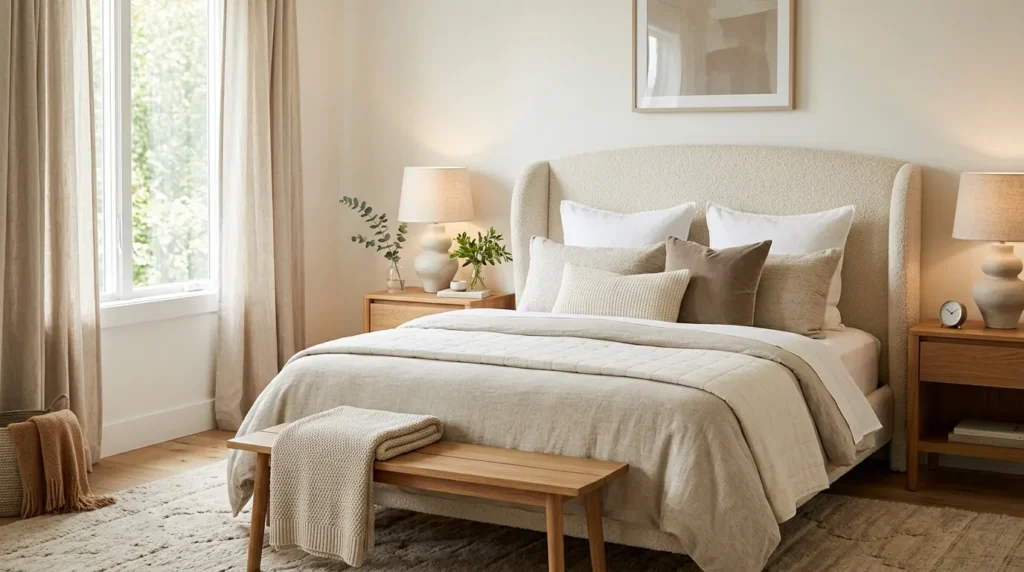
7. Upholstered Headboard
Quick Benefits
- Creates a comfortable focal point
- Adds softness behind the bed
- Makes the bedroom feel more luxurious
- Helps balance hard furniture
- Works with modern and classic styles
Why It Works
An upholstered headboard instantly adds softness to the largest piece of furniture in the room.
It also creates a comfortable backdrop for reading or relaxing in bed. Fabrics such as linen, boucle, cotton, or velvet can each produce a different effect, from casual and organic to sophisticated and luxurious.
A substantial headboard can also make a simple bed frame feel more intentional without requiring additional wall decoration.
How To Style It
For a relaxed look, choose a softly upholstered headboard in cream, oatmeal, beige, or muted gray.
A curved headboard can soften a room filled with straight lines, while a simple rectangular design works beautifully in modern and Scandinavian spaces.
Keep bedding slightly lighter or darker than the headboard rather than making every element identical.
Add one piece of artwork or a simple wall feature above the bed only if the headboard leaves enough visual space.
8. Cozy Throw Blankets
Quick Benefits
- Adds instant softness
- Provides extra warmth
- Creates visual layering
- Makes the bed feel inviting
- Can be changed seasonally
Why It Works
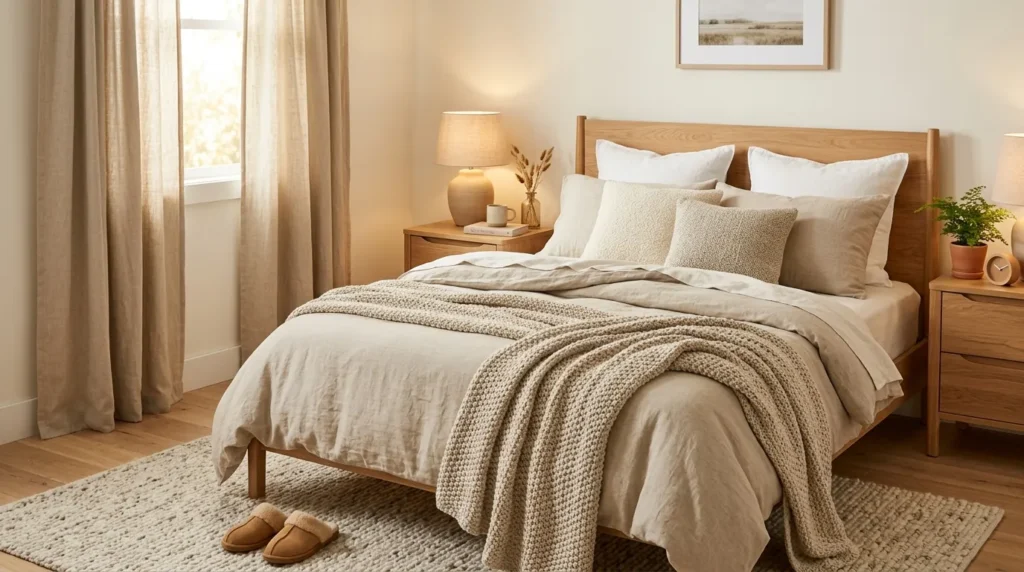
A throw blanket is a small addition with a surprisingly large visual impact.
When casually folded or draped across the lower portion of the bed, it breaks up a large expanse of bedding and introduces another texture. It also serves a practical purpose on cooler evenings.
Chunky knit blankets create a distinctly wintery atmosphere, while lightweight woven or cotton throws work beautifully year-round.
How To Style It
Fold a blanket loosely across the foot of the bed or drape one corner casually over the side.
Choose a color that complements your bedding without matching it exactly.
Cream bedding can be paired with camel, taupe, oatmeal, muted olive, dusty rose, or soft brown.
Avoid using too many competing patterns. If your duvet already has a strong print, choose a relatively simple textured throw.
9. Bedroom Greenery
Quick Benefits
- Adds natural color
- Softens hard edges
- Introduces organic shapes
- Works with neutral rooms
- Adds personality
Why It Works
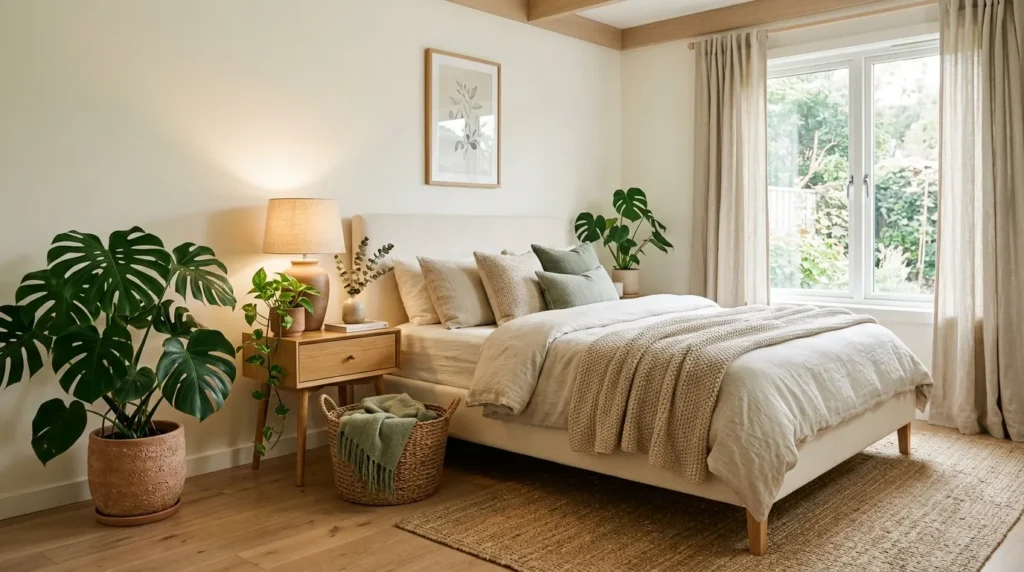
Plants bring a gentle sense of nature into the bedroom. Their irregular leaves and organic shapes create contrast against the straight lines of beds, dressers, nightstands, and shelving.
Greenery can also provide just enough color to keep a neutral bedroom from feeling too uniform.
You don’t need dozens of plants. One larger floor plant or a few smaller varieties can be enough.
How To Style It
Choose plants based on the actual lighting and conditions in your bedroom.
Place a larger plant in an unused corner, or use a small plant on a dresser or nightstand where it won’t interfere with everyday use.
Neutral ceramic planters work well for minimalist bedrooms, while terracotta or woven baskets can reinforce earthy and boho styles.
Avoid overcrowding the room. A few thoughtfully positioned plants generally look more intentional than greenery on every surface.
10. Personal Nightstand Styling
Quick Benefits
- Makes the bedroom feel personal
- Keeps essentials accessible
- Creates a finished appearance
- Adds visual interest
- Helps reduce clutter
Why It Works
Nightstands are small, but they have a major role in how a bedroom functions. They should provide enough space for everyday essentials while still contributing to the overall design.
A completely empty nightstand can feel sterile, while an overloaded one becomes inconvenient.
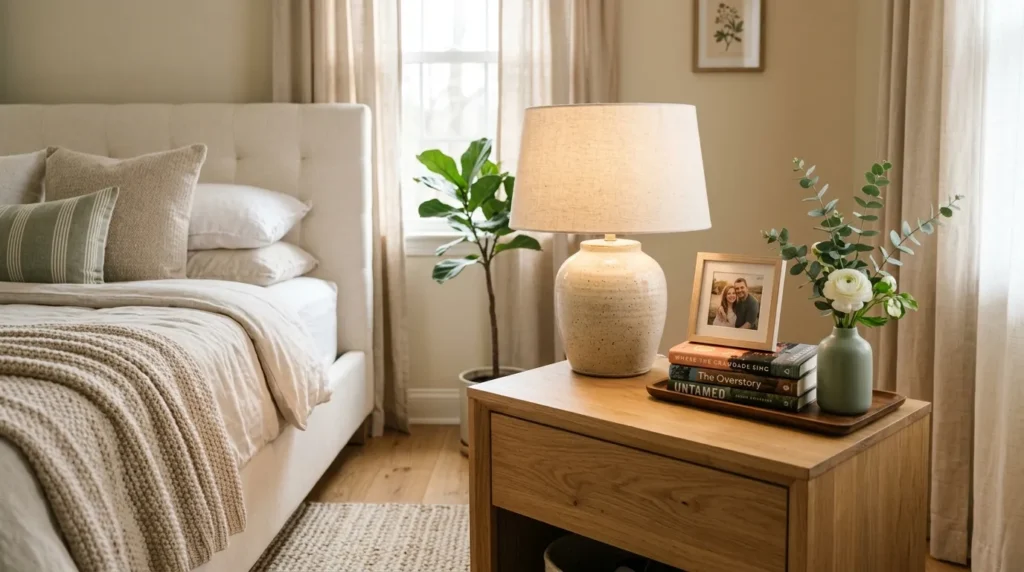
The best arrangements usually combine practical and decorative pieces: a lamp, book, small tray, framed photograph, candle, or simple vase.
How To Style It
Start with the essentials. Your lamp should be easy to reach, and there should be enough open space for a phone, book, or glass of water.
Use a small tray to contain loose objects.
Add one decorative element, such as a ceramic vase or framed photograph.
If your nightstand has drawers, use them for items that don’t need to remain visible.
Keep the arrangement slightly asymmetrical if you want a relaxed look, or use matching nightstands and lamps for a more traditional appearance.
11. Relaxed Reading Corner
Quick Benefits
- Makes use of an empty corner
- Creates a dedicated quiet space
- Adds personality
- Encourages relaxation
- Makes larger bedrooms feel more complete
Why It Works
A reading corner can make a bedroom feel like a genuine retreat rather than simply a room containing a bed.
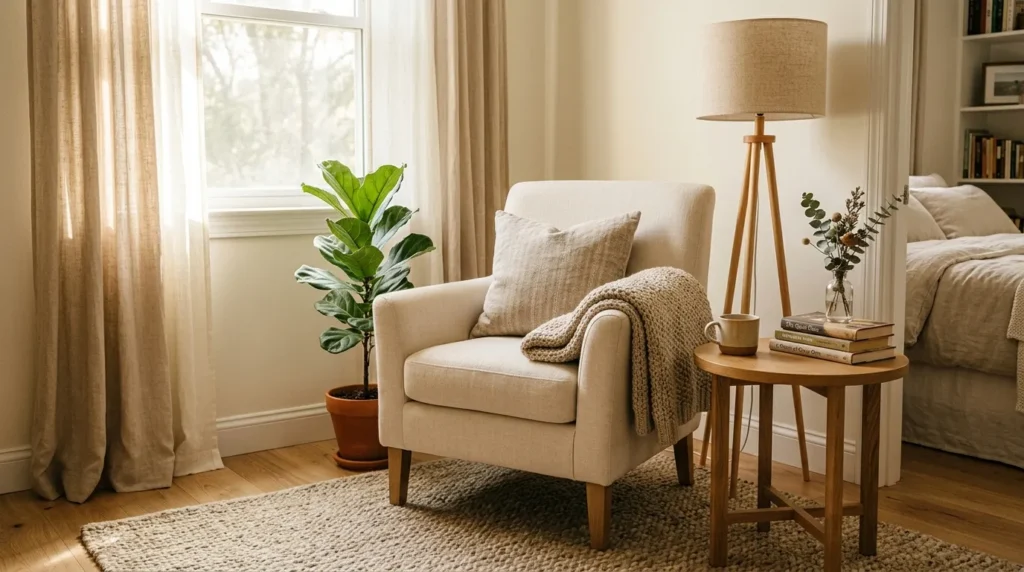
It doesn’t require a large amount of space. A comfortable chair, small side table, floor lamp, and soft rug can transform an otherwise unused corner.
This area can also become a place for morning coffee, journaling, reading, or simply sitting quietly before bed.
How To Style It
Choose a comfortable chair that fits the scale of the room. An upholstered armchair works well for traditional spaces, while a boucle chair can give a modern room a softer feel.
Place a small side table nearby for books and drinks.
Add a floor lamp for evening use and a small rug underneath to visually define the area.
Keep the styling simple. One throw, a cushion, a small plant, and a stack of books can be enough to make the corner feel finished.
How to Make a Bedroom Cozy Without Making It Cluttered
Cozy decorating is about layers, not excess.
Start by removing anything that doesn’t serve a purpose or contribute to the room’s appearance. Once the surfaces are relatively clear, add warmth through textiles, lighting, and natural materials.
Instead of placing decorations on every available surface, create a few intentional focal points.
For example, your bed can be the primary focal point, while a reading chair or dresser provides a secondary area of interest.
Use baskets and closed storage to keep everyday items organized. Leave enough open space around furniture for comfortable movement.
The result should feel soft and inviting without becoming visually overwhelming.
Cozy Bedroom Color Combinations
If you’re unsure which colors to use, try one of these combinations:
Cream + Oatmeal + Light Oak
Bright, warm, and effortlessly calm.
Beige + Sage Green + Natural Wood
Earthy and relaxing.
Warm White + Taupe + Walnut
Sophisticated with a slightly deeper mood.
Ivory + Dusty Rose + Camel
Soft and romantic without feeling overly feminine.
Cream + Terracotta + Olive
Earthy and inviting.
Use the lightest color on the largest surfaces, then build depth through slightly darker textiles and wood tones.
Cozy Bedroom Ideas for Small Spaces
A small bedroom doesn’t need to feel cramped to be cozy. In fact, the limited footprint can make it easier to create an intimate atmosphere.
Choose furniture that fits the room rather than oversized pieces that leave little walking space. A bed with built-in drawers or an appropriately scaled nightstand can provide useful storage without adding unnecessary furniture.
Use vertical space when possible. Wall-mounted shelves, tall curtains, and vertical artwork can draw the eye upward.
Keep the palette relatively light if the room has limited natural light, then introduce warmth through texture.
A large mirror can also help reflect available light, provided it is positioned safely and intentionally.
How to Make a Bedroom Feel Cozy at Night
The bedroom should feel different in the evening than it does during the day.
Start by reducing your reliance on the main overhead fixture. Turn on bedside lamps, a floor lamp, or other suitable accent lighting instead.
Close curtains or shades to create a more enclosed atmosphere.
Then focus on tactile elements. Straighten the bedding, fold a throw at the foot of the bed, and keep the room relatively uncluttered.
Warm, comfortable lighting combined with soft bedding and natural textures can create a much more relaxing evening environment.
FAQ
What makes a bedroom feel cozy?
The combination of soft bedding, warm lighting, comfortable furniture, layered textures, calming colors, and natural materials usually creates a cozy bedroom. Personal details also matter because they make the room feel lived-in rather than staged. You don’t need every element at once; even two or three thoughtful changes can noticeably improve the atmosphere.
How can I make my bedroom cozy on a budget?
Start with inexpensive changes such as adding a throw blanket, changing pillow covers, rearranging furniture, introducing a small rug, or adding a warm bedside lamp. Shop your home before buying new decor. Moving artwork, plants, baskets, and accessories between rooms can create a fresh look without requiring a complete makeover.
What colors are best for a cozy bedroom?
Warm neutrals such as cream, beige, oatmeal, taupe, warm gray, camel, and soft brown are excellent choices. Muted sage, terracotta, dusty rose, or olive can be added as accents. A combination of several warm tones usually creates more depth than decorating the entire bedroom in one color.
How can I make a small bedroom feel cozy?
Choose appropriately scaled furniture and keep walkways clear. Layer soft bedding, use warm lighting, add curtains, and introduce one or two natural textures. A light, cohesive color palette can help the room feel open, while rugs and textiles provide the warmth that makes it inviting.
Should a cozy bedroom be dark?
Not necessarily. A cozy bedroom can be bright and airy or dark and moody. If you prefer a lighter room, use warm whites, cream, beige, and natural wood with layered textures. If you prefer a moodier atmosphere, deeper shades such as charcoal, olive, brown, or navy can work beautifully when balanced with suitable lighting and lighter textiles.
How many pillows should go on a cozy bed?
There is no universal number. A practical arrangement might include two sleeping pillows, two decorative shams, and one or two smaller accent pillows. If you dislike removing pillows every night, keep the arrangement simple. Comfort and usability should always come before creating a perfectly styled bed.
How do I make my bedroom feel luxurious and cozy?
Focus on quality-looking layers rather than adding more objects. Choose substantial bedding, soft curtains, comfortable upholstery, warm lighting, a well-sized rug, and a few carefully selected accessories. Natural wood, brass accents, textured fabrics, and a restrained neutral palette can create a sophisticated atmosphere without making the room feel formal.
Conclusion
The most inviting bedrooms aren’t necessarily the most expensive or elaborately decorated. They are the rooms that make everyday comfort a priority.
Start with the bed because it naturally becomes the visual and functional centerpiece. Layer breathable bedding with a quilt or blanket, add a few comfortable pillows, and introduce a texture that makes you want to settle in.
Then look at the lighting. A warm bedside lamp can change the atmosphere more dramatically than another decorative accessory. Add curtains, a soft rug, natural wood, and a little greenery to create additional layers.
Don’t overlook the personal details, either. A favorite book, framed photograph, handmade ceramic, or small collection can make the room feel distinctly yours.
If you’re working with a limited budget, choose just two changes to begin with. Perhaps add a rug and upgrade the lighting, or refresh the bedding and curtains. Live with those changes before deciding what comes next.
A cozy bedroom doesn’t have to be complicated. It simply needs to feel comfortable, calm, and welcoming enough that you genuinely look forward to spending time there.