10 Boho Decor Ideas for a Warm and Relaxed Home
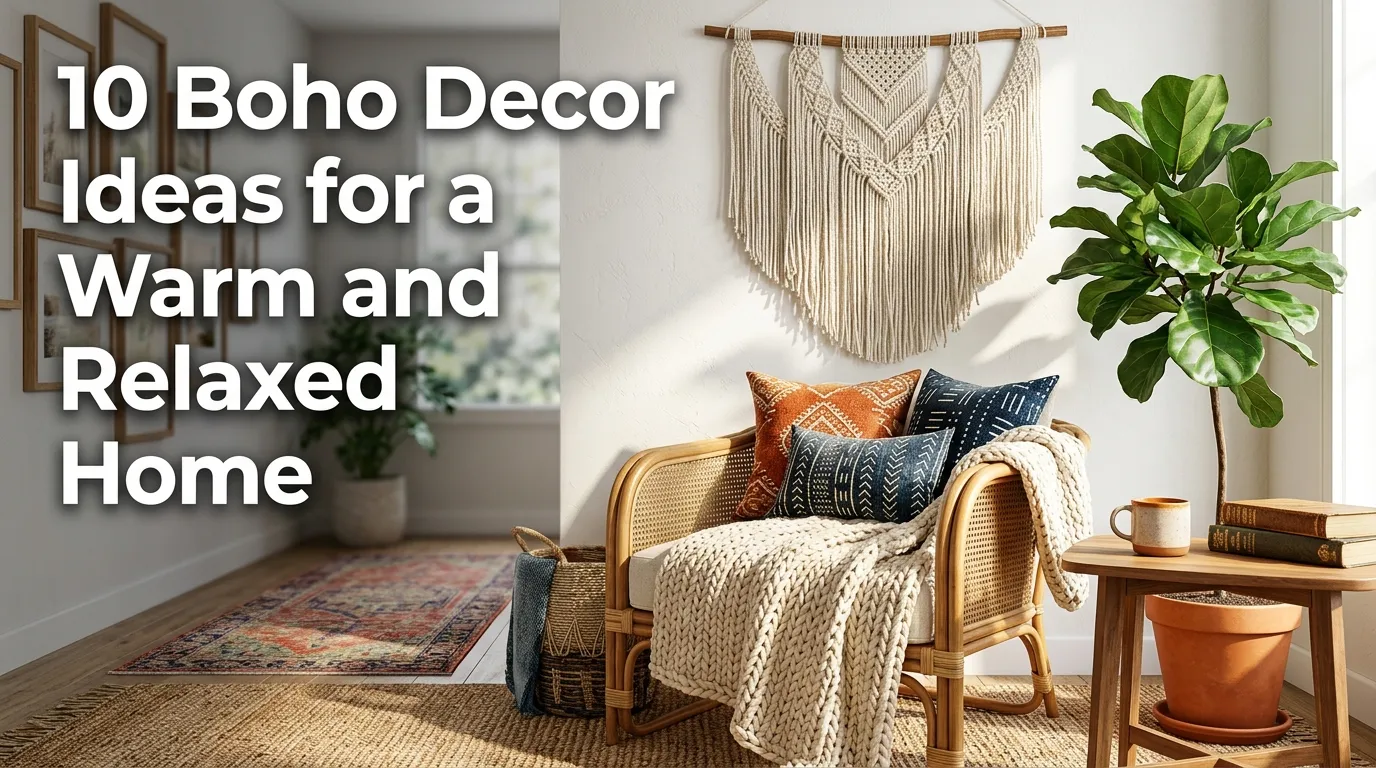
Boho decor has a way of making a home feel relaxed, personal, and beautifully collected. Instead of relying on perfectly matched furniture or a strict decorating formula, bohemian style embraces layers of texture, natural materials, earthy colors, plants, patterns, and pieces that feel meaningful.
That relaxed quality is one reason boho interiors continue to work so well for modern homes. You can create the look in a large living room, a small apartment, a bedroom, an entryway, or even a home office without completely changing your furniture.
The secret is balance. Bohemian decorating can become visually overwhelming when every surface is covered and every pattern competes for attention. A more sophisticated approach is to begin with a neutral foundation and gradually introduce texture, greenery, warm wood, woven materials, and a few expressive accents.
In my experience, the most inviting boho rooms don’t look like they were decorated in one afternoon. They feel collected over time. A woven basket might sit beside a vintage-inspired table, while a modern sofa is softened with textured pillows and a handmade-looking throw.
Natural materials are particularly useful because they make the style feel grounded. Rattan, bamboo, jute, wood, linen, cotton, terracotta, and ceramic pieces can all work together without requiring exact color matching.
Whether you love earthy neutrals, colorful eclectic interiors, modern boho spaces, or a softer minimalist interpretation, these ideas can help you create a home that feels comfortable rather than overly styled.
The goal isn’t to copy a particular room. It’s to understand the decorating principles behind the look and adapt them to your own space, lifestyle, and budget.
Table of Contents
1. Layered Neutral Textures
Build a relaxed foundation using linen, cotton, woven fabrics, and soft neutral textiles.
2. Natural Rattan Furniture
Add warmth and organic character with rattan chairs, tables, and accent pieces.
3. Earthy Color Palette
Combine warm neutrals with terracotta, rust, olive, camel, and muted natural shades.
4. Indoor Greenery
Use plants to bring freshness, movement, and natural contrast into your rooms.
5. Vintage Wood Accents
Mix natural and aged wood pieces for a collected, lived-in appearance.
6. Handwoven Wall Decor
Use macramé, baskets, woven art, and textile pieces to add dimension to walls.
7. Patterned Textiles
Layer rugs, pillows, blankets, and curtains with carefully coordinated patterns.
8. Terracotta Accessories
Introduce earthy ceramic pieces for warmth, color, and handcrafted character.
9. Cozy Floor Seating
Create relaxed areas with poufs, floor cushions, low tables, and casual seating.
10. Collected Boho Styling
Bring everything together with meaningful accessories and intentional visual layering.
1. Layered Neutral Textures
Quick Benefits
- Creates immediate warmth
- Makes rooms feel comfortable
- Works with many color schemes
- Adds depth without clutter
- Easy to update seasonally
Why It Works
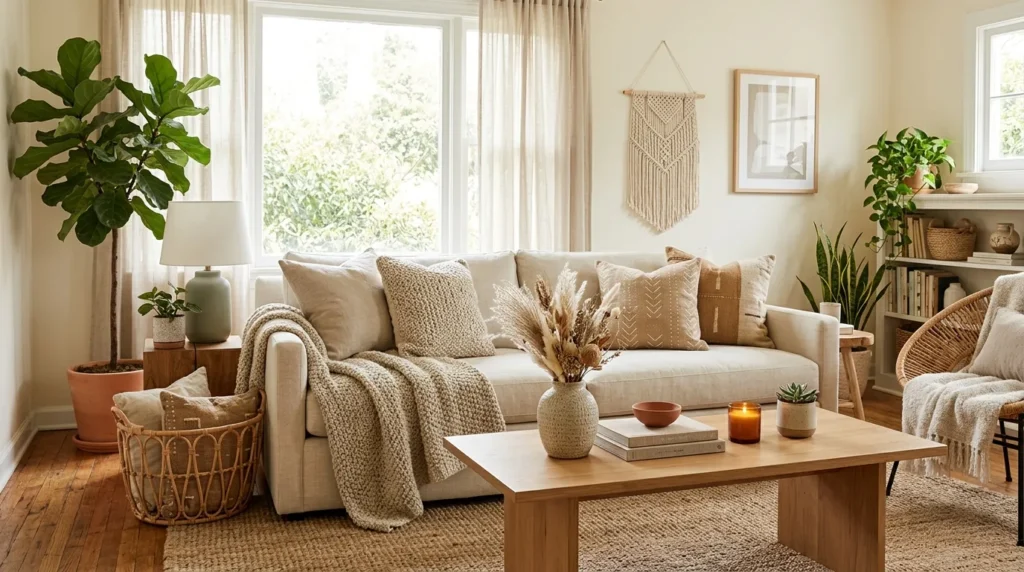
Texture is one of the foundations of successful bohemian decorating. When a room uses several neutral colors, differences in texture prevent the space from feeling flat. Linen, cotton, wool, jute, boucle, woven fibers, and chunky knits each contribute a slightly different visual and tactile quality. This approach also allows you to keep the overall palette calm while still creating plenty of interest. Rather than adding more colors whenever a room feels plain, try adding texture first.
How To Style It
Start with a neutral sofa, bed, or accent chair.
Layer cream and beige pillows in different fabrics.
Add a woven throw or textured blanket.
Use a jute rug underneath furniture.
Bring in baskets, linen curtains, and tactile ceramics.
Keep the palette relatively restrained so the different materials become the main feature.
2. Natural Rattan Furniture
Quick Benefits
- Adds organic texture
- Creates a relaxed atmosphere
- Works in small spaces
- Complements plants
- Fits multiple decorating styles
Why It Works
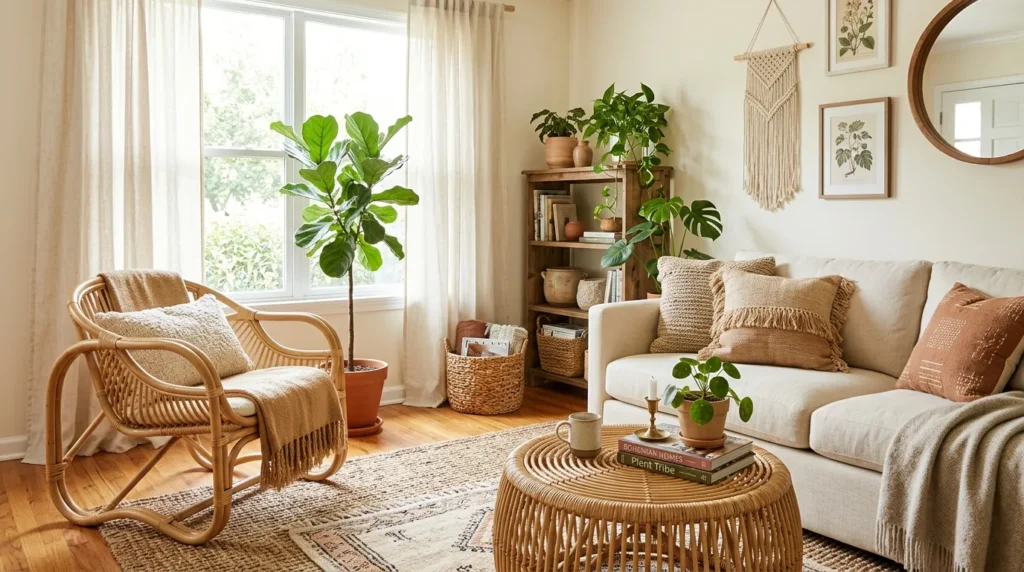
Rattan instantly introduces an organic quality that feels at home in bohemian interiors. Its woven structure creates visual detail without the heaviness of solid furniture. A rattan chair, coffee table, headboard, or cabinet can become an accent piece while still coordinating naturally with wood, linen, plants, and neutral textiles.
How To Style It
Choose one or two rattan statement pieces.
Try a woven accent chair in a living room.
Use a rattan nightstand or headboard in a bedroom.
Add woven baskets for storage.
Balance rattan with upholstered furniture and solid wood so the room doesn’t become overly repetitive.
3. Earthy Color Palette
Quick Benefits
- Creates warmth
- Complements natural materials
- Makes rooms feel grounded
- Works with neutral foundations
- Easy to personalize
Why It Works
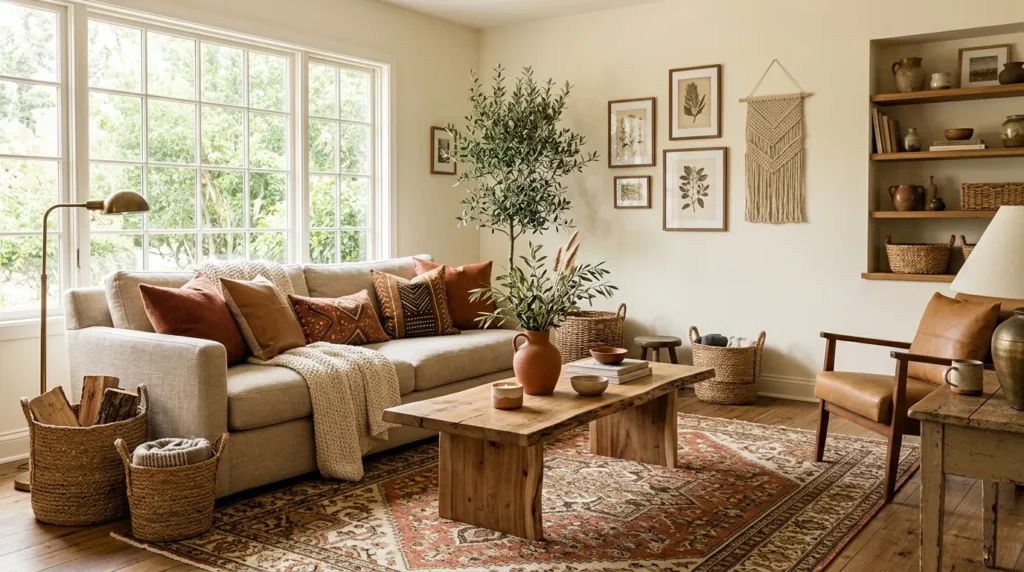
Boho decorating doesn’t have to mean bright colors everywhere. An earthy palette can feel sophisticated while still capturing the relaxed spirit of the style. Warm white, beige, camel, brown, terracotta, rust, olive, and muted mustard all work beautifully together. The key is choosing a dominant neutral and using stronger colors as accents.
How To Style It
Start with warm ivory or beige walls and larger furniture.
Add camel or brown through leather, wood, or textiles.
Introduce terracotta through ceramics.
Use olive green through plants or cushions.
Add rust sparingly through artwork, rugs, or pillows.
Repeating each accent color in a few locations helps the room feel cohesive.
4. Indoor Greenery
Quick Benefits
- Adds natural color
- Fills empty corners
- Creates visual movement
- Complements earthy palettes
- Strengthens the organic aesthetic
Why It Works
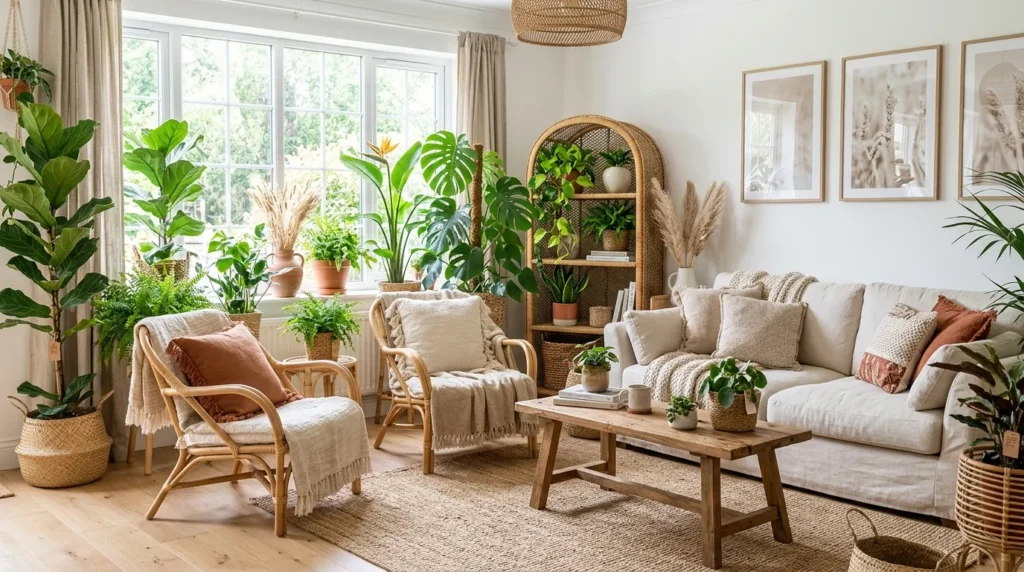
Plants bring an unmistakable sense of life into boho interiors. Their irregular shapes also provide a welcome contrast to furniture with straight lines. A large plant can fill an empty corner, while smaller plants can bring life to bookshelves, consoles, and side tables. The greenery works particularly well against warm neutrals and natural wood.
How To Style It
Place a tall plant near a window or empty corner.
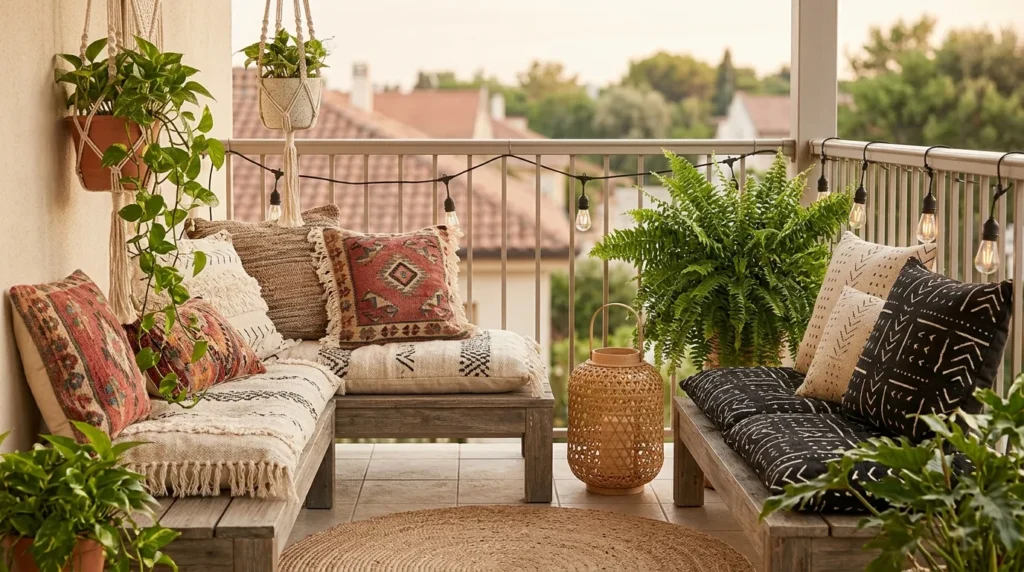
Use hanging planters to take advantage of vertical space.
Group smaller plants on a shelf.
Choose baskets or terracotta pots as containers.
Mix different leaf shapes and plant heights rather than using identical pots throughout the room.
5. Vintage Wood Accents
Quick Benefits
- Adds character
- Creates a collected feeling
- Works with modern furniture
- Provides natural warmth
- Makes spaces feel less showroom-like
Why It Works
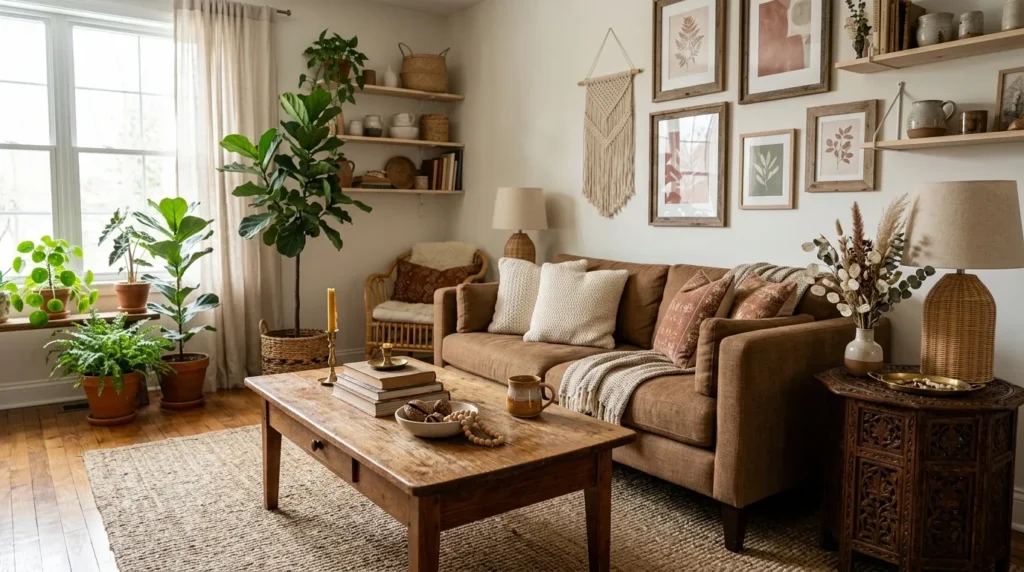
Boho interiors are at their best when they feel collected rather than coordinated from one furniture collection. Vintage-inspired wood introduces history and visual character. Slightly imperfect surfaces, visible grain, carved details, and aged finishes can make a room feel more personal.
How To Style It
Add a vintage-style wood coffee table.
Use an aged stool as a plant stand.
Display artwork in natural wood frames.
Choose a carved cabinet or console as a statement piece.
Balance darker wood with cream textiles and lighter woven materials.
6. Handwoven Wall Decor
Quick Benefits
- Makes use of vertical space
- Adds texture
- Creates focal points
- Works well in rentals
- Reinforces boho character
Why It Works
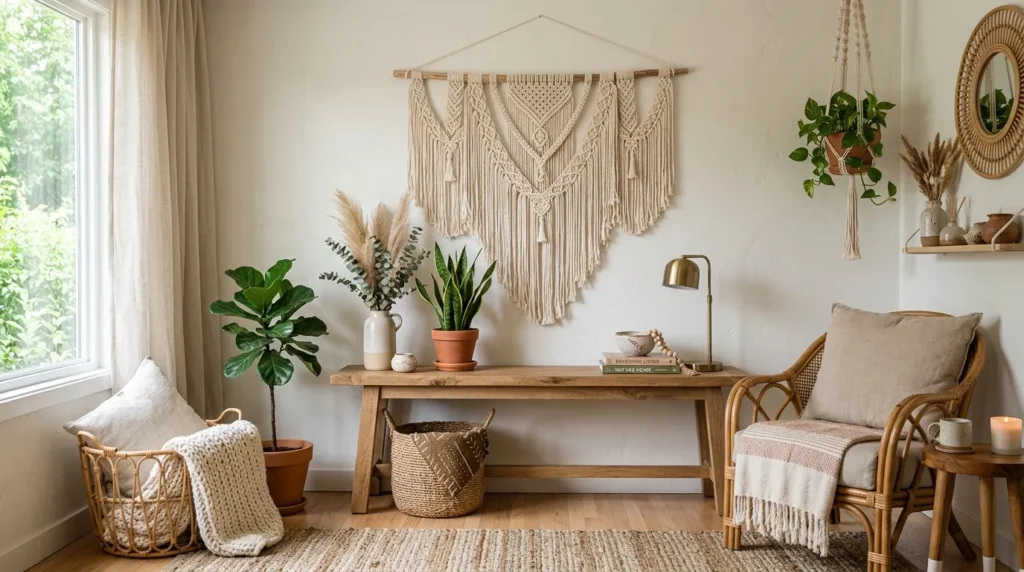
Walls are often overlooked when decorating, yet they provide an excellent opportunity to introduce texture without taking up floor space. Macramé, woven baskets, textile art, and natural fiber wall hangings bring softness and dimension to otherwise plain walls.
How To Style It
Hang one large woven piece above a sofa or bed.
Create a small grouping of baskets in different sizes.
Use neutral cream, tan, and natural fibers.
Keep the surrounding wall relatively simple.
For renters, use appropriate removable hanging solutions and follow lease restrictions.
7. Patterned Textiles
Quick Benefits
- Adds personality
- Creates visual depth
- Easy to change
- Supports eclectic styling
- Makes furniture more inviting
Why It Works
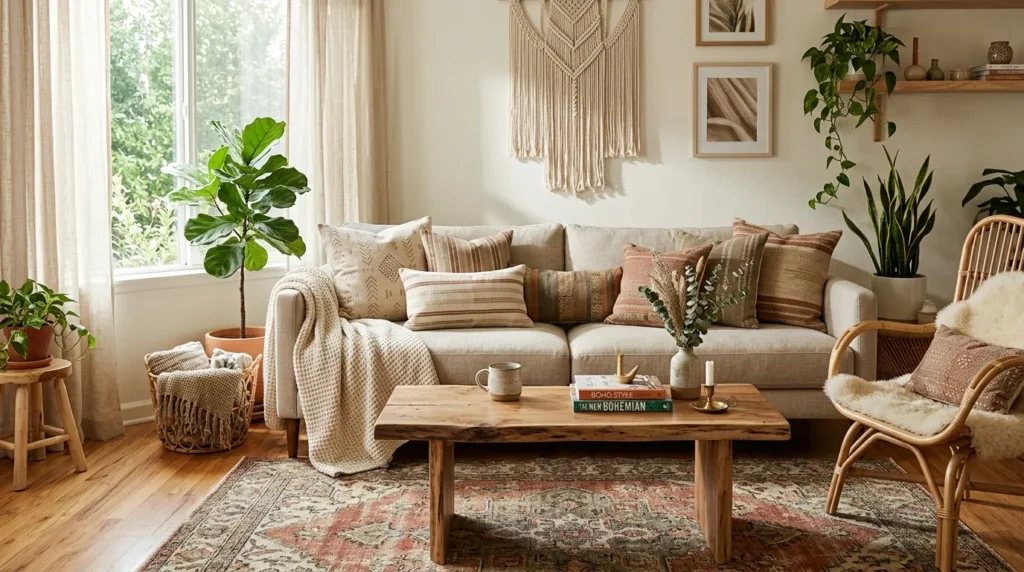
Patterns give boho interiors their expressive quality. You don’t need every textile to match. In fact, slight variation usually makes the space more interesting. The trick is connecting different patterns through a shared color palette.
How To Style It
Choose one dominant pattern.
Add smaller geometric or striped patterns.
Mix patterned pillows with solid textured cushions.
Layer a vintage-style rug beneath neutral furniture.
Use curtains or blankets to repeat one accent color from the rug.
8. Terracotta Accessories
Quick Benefits
- Adds earthy warmth
- Works with greenery
- Creates visual contrast
- Feels handcrafted
- Easy to incorporate
Why It Works
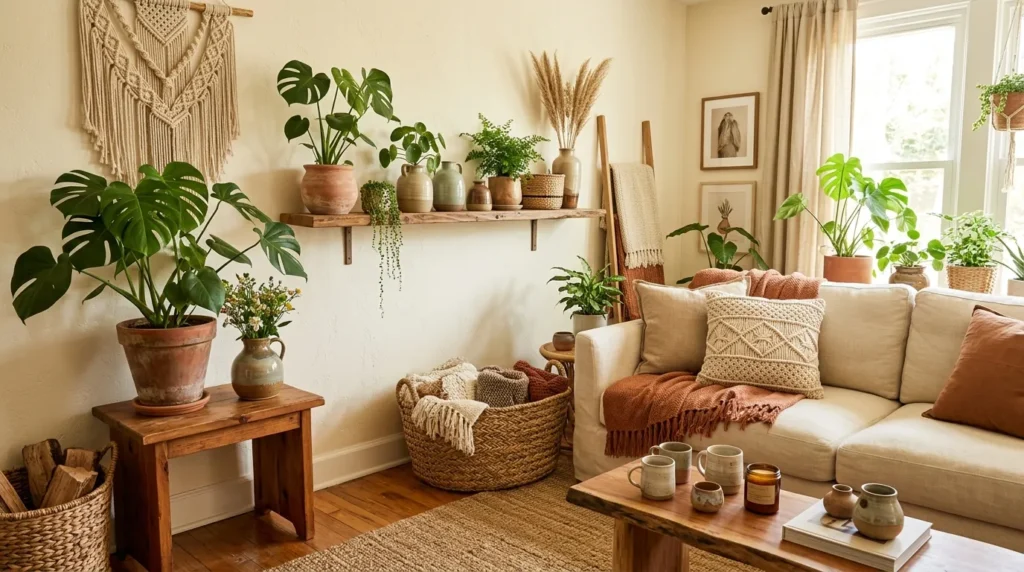
Terracotta has a naturally warm, imperfect appearance that complements the materials commonly used in boho decorating. Its orange-brown tone works particularly well with cream, beige, brown, olive, and natural wood. Small ceramic accessories can introduce the color without requiring a major change.
How To Style It
Use terracotta planters for greenery.
Add a few handmade-looking vases.
Place a terracotta bowl on a coffee table.
Mix glazed and unglazed ceramics.
Avoid using terracotta on every surface. A few strategically placed pieces create stronger visual impact.
9. Cozy Floor Seating
Quick Benefits
- Creates a relaxed atmosphere
- Works in compact spaces
- Adds flexibility
- Encourages casual entertaining
- Fits authentic boho style
Why It Works
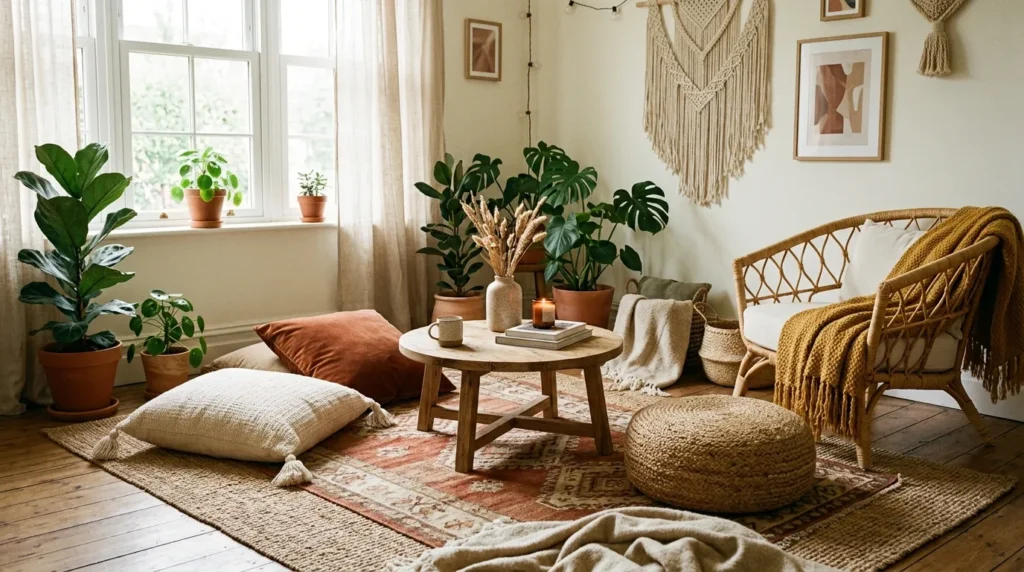
Low seating creates an informal atmosphere that feels different from a traditional furniture arrangement. Poufs, floor cushions, low stools, and ottomans can also provide flexible seating without taking up as much visual space as additional full-size chairs.
How To Style It
Place a woven pouf near the coffee table.
Layer two large floor cushions on a textured rug.
Use a low wood table for drinks and books.
Choose washable or durable textiles for frequently used seating.
Keep the arrangement open enough for people to move comfortably through the room.
10. Collected Boho Styling
Quick Benefits
- Makes the home feel personal
- Prevents overly coordinated decor
- Encourages meaningful pieces
- Creates visual depth
- Works across different rooms
Why It Works
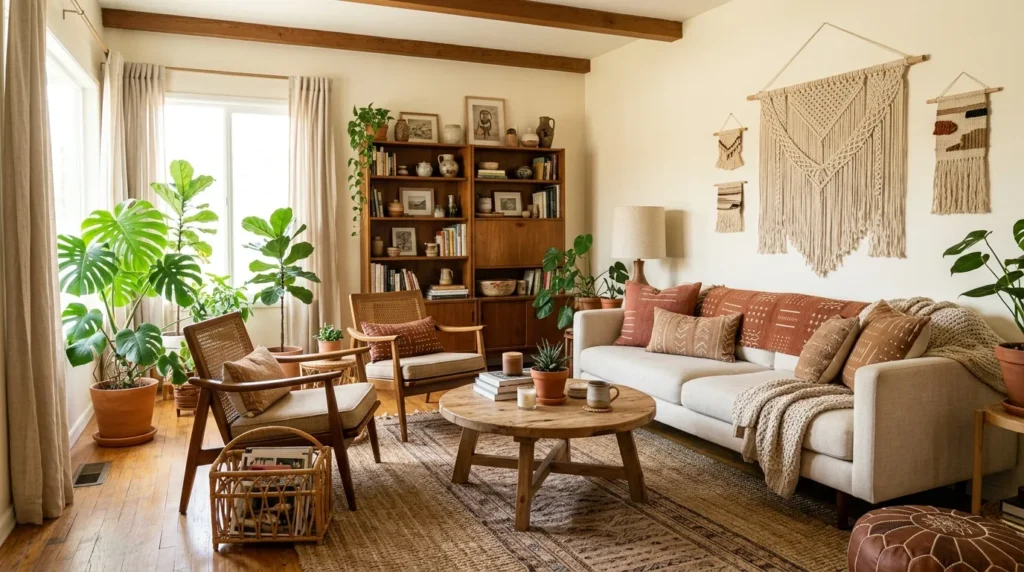
The most memorable boho spaces often feel collected rather than decorated according to a checklist. Combining newer pieces with vintage-inspired accessories, travel-inspired objects, handmade-looking ceramics, books, plants, and artwork can give a home a sense of personality. The goal is not to display everything you own but to choose pieces that contribute to the room.
How To Style It
Begin with the largest furniture pieces.
Add practical textiles.
Introduce plants and natural materials.
Choose a few meaningful accessories.
Vary heights when styling shelves and surfaces.
Leave some empty space so individual objects can stand out.
How to Make Boho Decor Look Sophisticated
Boho style can be relaxed without becoming messy.
The easiest way to create a more refined look is to establish a consistent foundation. Warm ivory, beige, natural wood, and brown make excellent starting points.
Then introduce only a few stronger colors.
Instead of using five different accent shades, choose two or three and repeat them throughout the room.
Texture should do much of the decorating work.
A linen cushion, woven rug, rattan chair, wood table, ceramic vase, and leafy plant can create plenty of visual interest even when the colors remain relatively neutral.
What Materials Work Best for Boho Decor?
Natural and tactile materials are particularly useful.
Consider:
- Rattan
- Wicker
- Bamboo
- Jute
- Seagrass
- Natural wood
- Linen
- Cotton
- Wool
- Terracotta
- Ceramic
- Stone
Combining materials is more important than using every material. Choose several that complement one another and repeat them naturally throughout the room.
How to Mix Boho Decor With Modern Furniture
You don’t need a completely bohemian home to enjoy the style.
A clean-lined modern sofa can be softened with woven pillows, a vintage-inspired rug, a rattan chair, and several plants.
Likewise, a modern bedroom can gain boho warmth through a wood nightstand, linen bedding, woven baskets, and earthy artwork.
The contrast between clean modern shapes and organic textures can actually make the room feel more sophisticated.
Frequently Asked Questions
What is boho decor?
Boho decor is a relaxed decorating style characterized by natural materials, layered textiles, earthy or eclectic colors, plants, patterns, handmade-looking accessories, and a collected atmosphere. Rather than requiring perfectly matched furniture, it encourages mixing textures, styles, and meaningful pieces.
How do I make my home look boho?
Start with natural textures and warm neutral colors. Add rattan, woven baskets, plants, wood furniture, textured pillows, rugs, and a few expressive accessories. You don’t need to change everything at once. Layering these elements gradually can create a more authentic, relaxed appearance.
What colors are popular in boho decor?
Common boho colors include cream, beige, tan, brown, terracotta, rust, olive, mustard, muted pink, and warm white. Modern boho interiors often use a neutral foundation with earthy accent colors rather than highly saturated shades.
Can boho decor work in a small apartment?
Yes. Boho style can work particularly well in small apartments because baskets provide attractive storage, plants add personality without requiring much furniture, and textiles can create warmth without taking up floor space. Choose multifunctional pieces and keep pathways open.
How do I avoid making boho decor look cluttered?
Use a limited color palette, group smaller accessories together, and leave some surfaces and wall areas empty. Choose a few statement pieces rather than displaying everything. Practical storage baskets can also hide everyday clutter while maintaining the overall aesthetic.
Is boho decor still popular?
Boho-inspired decorating remains versatile because its emphasis on natural materials, comfort, plants, and personalization works with many current interior styles. Modern interpretations often combine bohemian textures with cleaner furniture shapes and calmer neutral palettes.
Conclusion
Boho decor is less about following strict rules and more about creating a home that feels warm, comfortable, and personal. Natural materials, layered textiles, plants, earthy colors, vintage-inspired pieces, and handcrafted-looking accessories provide the foundation.
If you’re starting from scratch, begin with the larger elements. Choose a neutral foundation, add a textured rug, and introduce natural wood or rattan. Then layer in greenery, pillows, throws, artwork, ceramics, and accessories.
You don’t need to buy everything at once.
In fact, allowing the room to evolve can make the finished result feel much more authentic. Look for pieces that you genuinely enjoy and that serve a purpose in your home.
If your existing furniture is modern, don’t replace it simply to create a boho look. Instead, soften clean lines with natural textures, earthy colors, plants, and vintage-inspired accessories.
The most successful boho spaces strike a balance between abundance and simplicity. There should be enough texture and personality to make the room interesting, but enough breathing room for the eye to rest.
Start with one corner, one wall, or one seating area. Add a few carefully chosen layers and build from there until the space feels comfortable, inviting, and unmistakably yours.