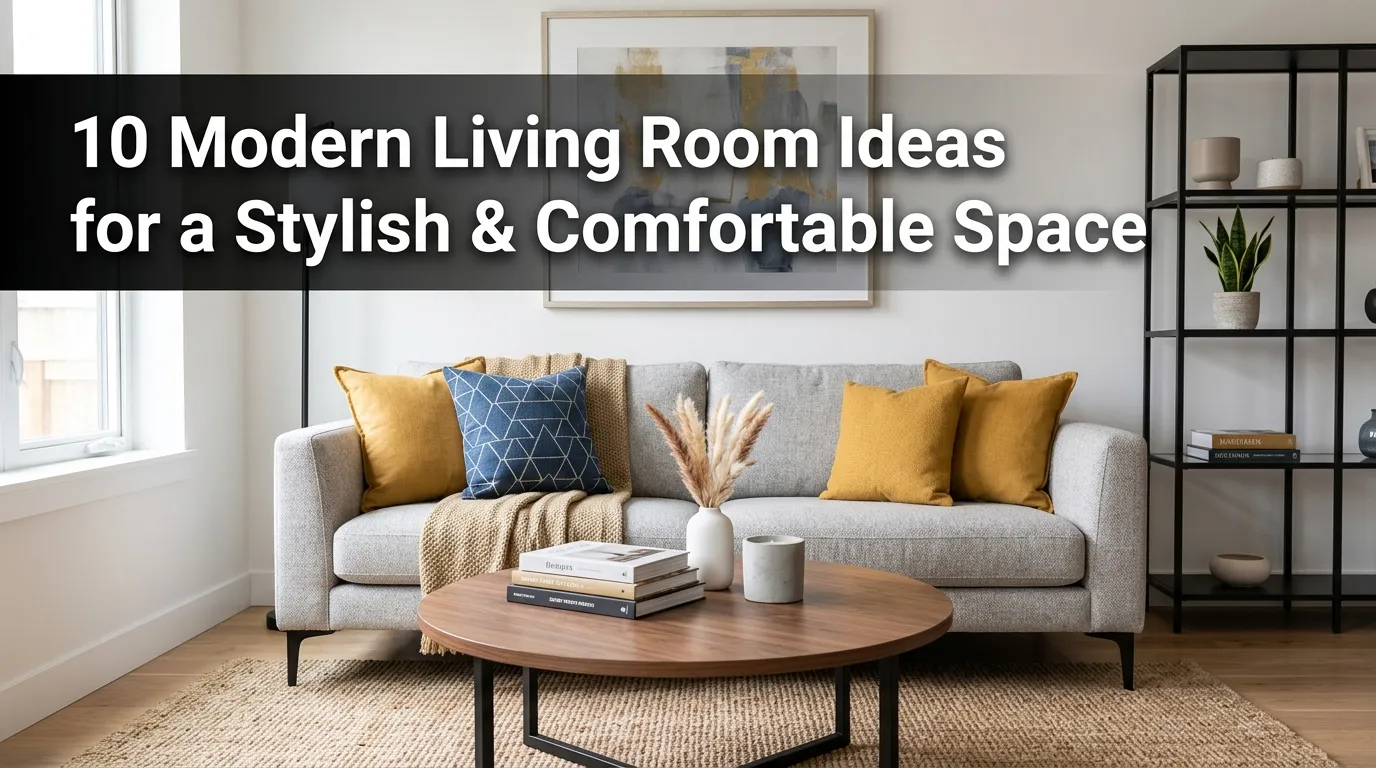
10 Modern Living Room Ideas for a Stylish & Comfortable Space
A modern living room doesn’t have to feel stark, overly minimalist, or difficult to live in. The most inviting contemporary spaces combine clean lines with comfortable seating, warm materials, layered lighting, and just enough personality to make the room feel like home.
The secret is balance. Modern furniture provides structure, while softer elements—such as textured rugs, linen curtains, plush cushions, natural wood, and warm lighting—keep the space from feeling cold.
I’ve noticed that a successful modern living room usually has a clear visual foundation. Instead of adding decor piece by piece without a plan, start with the sofa, rug, and larger furniture. Then build layers around them using a limited color palette and a few carefully selected materials.
You also don’t need an expensive renovation to achieve the look. Changing the lighting, adding a large rug, introducing natural textures, or replacing several small accessories with one substantial piece of artwork can make a surprisingly noticeable difference.
Whether you have a spacious open-concept family room or a compact apartment living room, the principles are similar: prioritize comfortable circulation, choose furniture that fits the scale of the room, and create contrast through materials rather than excessive color.
These ideas cover several ways to bring a modern aesthetic into your living space while keeping it practical enough for everyday life. From warm neutral palettes to sculptural furniture and layered lighting, each approach can be adapted to your home’s size and personality.
Table of Contents
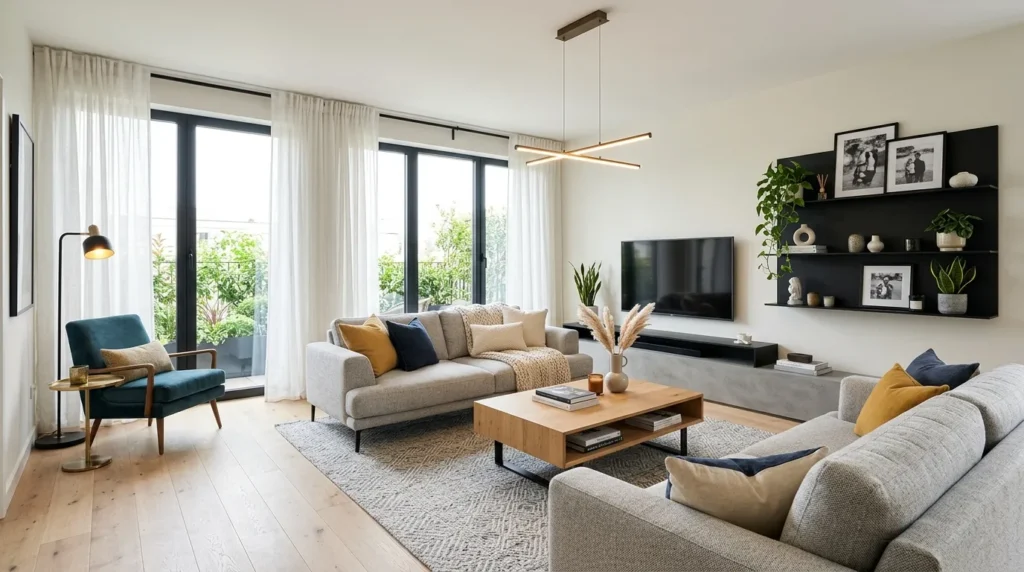
1. Warm Neutral Palette
Create a sophisticated foundation with soft, welcoming colors.
2. Curved Modern Furniture
Soften clean lines with comfortable rounded silhouettes.
3. Natural Wood Accents
Bring warmth and organic texture into the room.
4. Statement Area Rug
Anchor the seating arrangement with a substantial textured rug.
5. Sculptural Lighting
Use lighting as both function and visual art.
6. Minimalist Media Wall
Create a streamlined focal point around the television.
7. Layered Textures
Add depth without overwhelming the modern aesthetic.
8. Oversized Artwork
Give the room a strong visual focal point.
9. Indoor Greenery
Introduce natural color and organic shapes.
10. Modern Cozy Layers
Combine contemporary structure with everyday comfort.
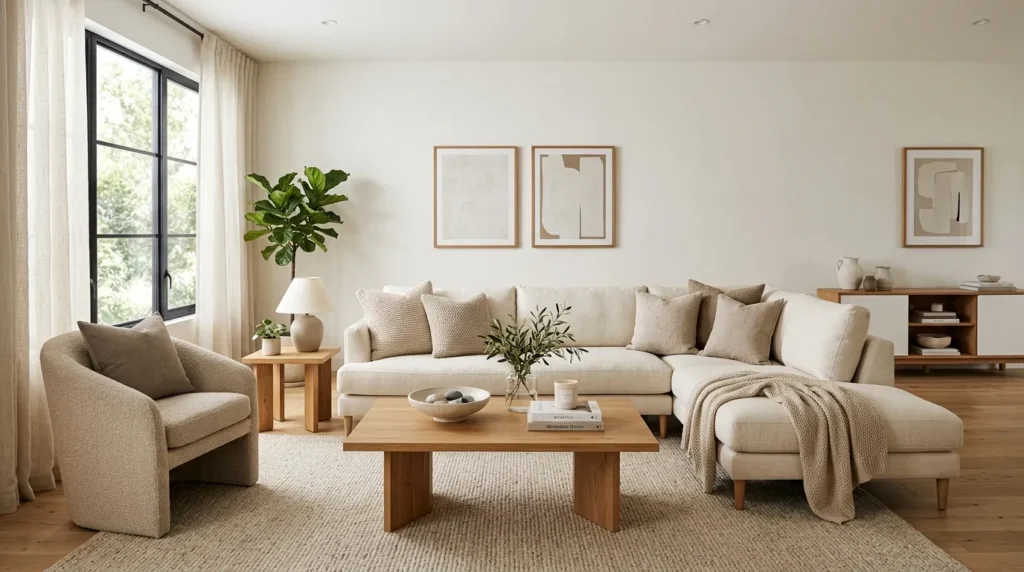
1. Warm Neutral Palette
Quick Benefits
- Creates a timeless foundation
- Makes modern furniture feel warmer
- Works with many accent colors
- Keeps the room visually calm
- Makes decorating easier
Why It Works
Warm neutrals are one of the easiest ways to make modern design feel inviting.
Instead of relying on bright white and cool gray, consider cream, ivory, beige, taupe, oatmeal, and warm brown. These shades create subtle variation while maintaining the restrained appearance associated with contemporary interiors.
A neutral palette also gives you flexibility. You can change accent pillows, artwork, or seasonal accessories without having to redesign the entire room.
In my experience, the most interesting neutral rooms rarely use just one beige. Different shades and textures create the depth that strong colors might otherwise provide.
How To Style It
Begin with a warm white or soft neutral wall color.
Choose a cream, beige, or taupe sofa as the primary anchor.
Add a slightly darker rug and natural wood furniture for contrast.
Introduce small amounts of black or aged brass through lighting and accessories.
Keep the palette connected rather than perfectly matched.
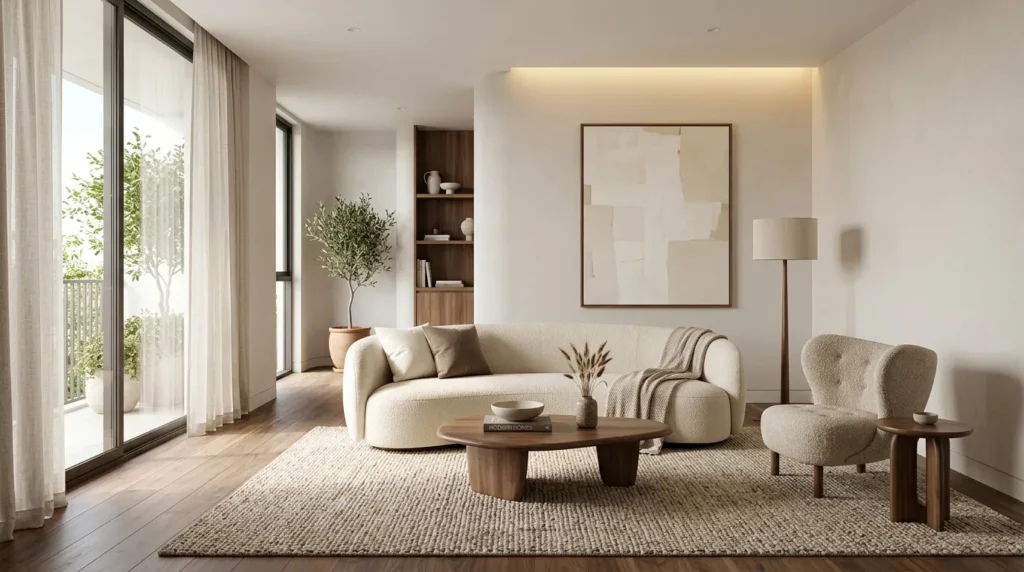
2. Curved Modern Furniture
Quick Benefits
- Softens contemporary spaces
- Creates visual movement
- Makes seating feel inviting
- Works with minimalist interiors
- Adds sculptural interest
Why It Works
Modern interiors often feature straight architectural lines, rectangular furniture, and structured surfaces.
Introducing curves creates contrast.
A rounded sofa, curved accent chair, oval coffee table, or arched floor lamp can soften the room without taking away its contemporary character.
Curved furniture also creates a more relaxed visual flow, particularly in seating areas where you want the room to feel comfortable and conversational.
How To Style It
Choose one major curved piece rather than making every object rounded.
A curved sofa can become the focal point of the room.
Pair it with a simple rectangular rug to create contrast.
Alternatively, use an oval coffee table with a straight sofa.
Keep the surrounding accessories relatively restrained so the sculptural furniture remains noticeable.
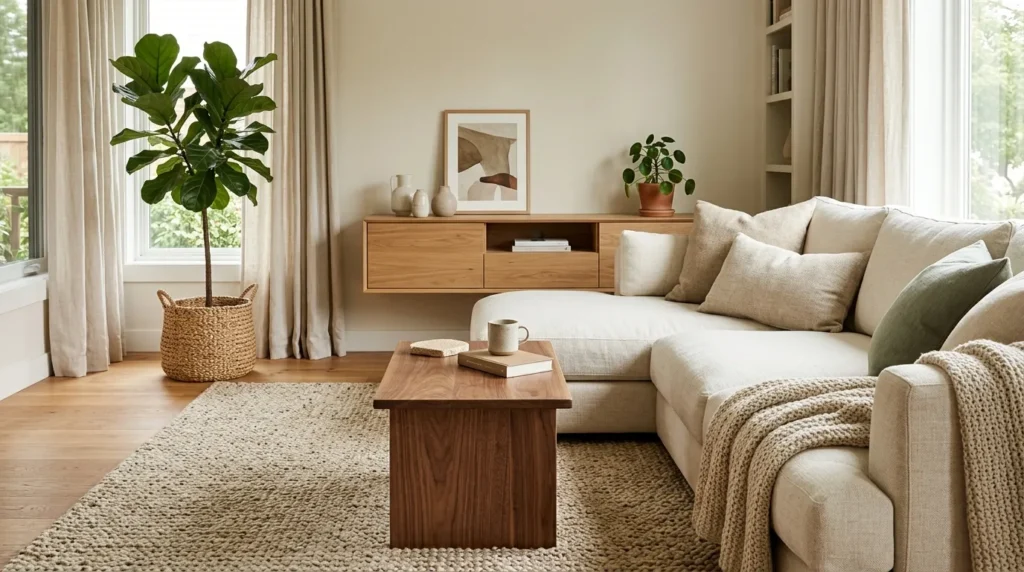
3. Natural Wood Accents
Quick Benefits
- Adds warmth
- Introduces organic texture
- Balances modern materials
- Works with neutral palettes
- Creates timeless appeal
Why It Works
Natural wood prevents contemporary rooms from feeling overly polished or sterile.
Oak, walnut, ash, and other wood finishes introduce grain, warmth, and subtle variation.
This works particularly well alongside upholstery, glass, stone, and metal.
You don’t need a completely wood-filled room. A few carefully selected pieces can provide enough warmth to change the atmosphere.
How To Style It
Use wood through a coffee table, media console, side table, shelving, or accent chair.
Choose one dominant wood tone and repeat it a few times.
Light oak works beautifully with cream and beige.
Walnut creates a richer, more dramatic appearance.
Combine wood with woven baskets or linen to reinforce the natural feeling.
4. Statement Area Rug
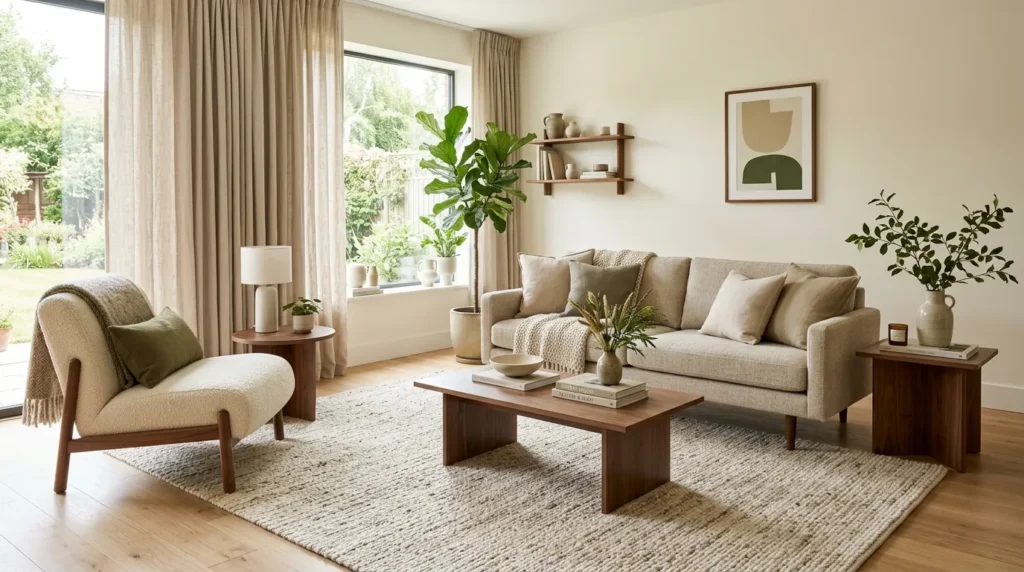
Quick Benefits
- Defines the seating area
- Adds softness
- Creates visual cohesion
- Makes furniture feel connected
- Introduces subtle pattern or texture
Why It Works
A rug can make separate furniture pieces feel like one intentional seating arrangement.
Without a sufficiently sized rug, a sofa, chairs, and coffee table can appear disconnected.
A larger rug creates a visual foundation and adds comfort underfoot.
For modern living rooms, subtle geometric patterns, tonal designs, and textured solids are particularly versatile.
How To Style It
Choose a rug large enough for at least the front legs of the main seating pieces to sit on it when possible.
For open-plan spaces, use the rug to define the living area.
Keep the pattern restrained if your furniture already has strong shapes.
A textured cream or beige rug works beautifully with neutral modern furniture.
5. Sculptural Lighting
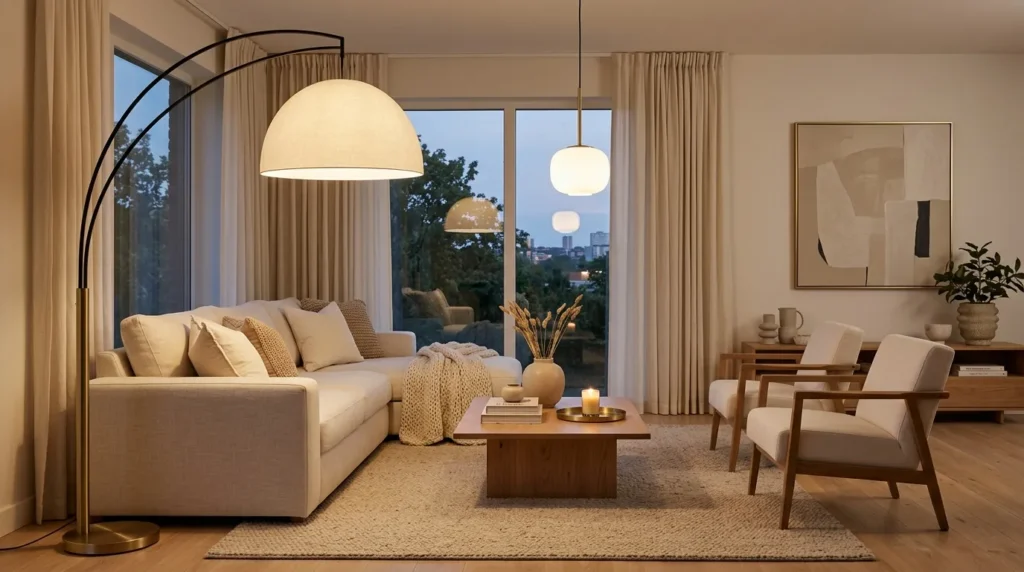
Quick Benefits
- Adds personality
- Creates atmosphere
- Provides useful illumination
- Works as decor
- Highlights architectural features
Why It Works
Modern lighting can be more than a practical necessity.
A sculptural pendant, oversized floor lamp, or distinctive table lamp can act almost like artwork.
Lighting also changes the atmosphere dramatically after sunset.
Instead of relying on one overhead fixture, multiple sources create a more layered and comfortable environment.
How To Style It
Combine overhead lighting with floor lamps, table lamps, or wall sconces.
Choose fixtures with interesting silhouettes but relatively simple finishes.
Matte black, warm brass, brushed metal, ceramic, and natural materials can all complement modern interiors.
Use dimmable lighting where appropriate so you can adjust the atmosphere throughout the day.
6. Minimalist Media Wall
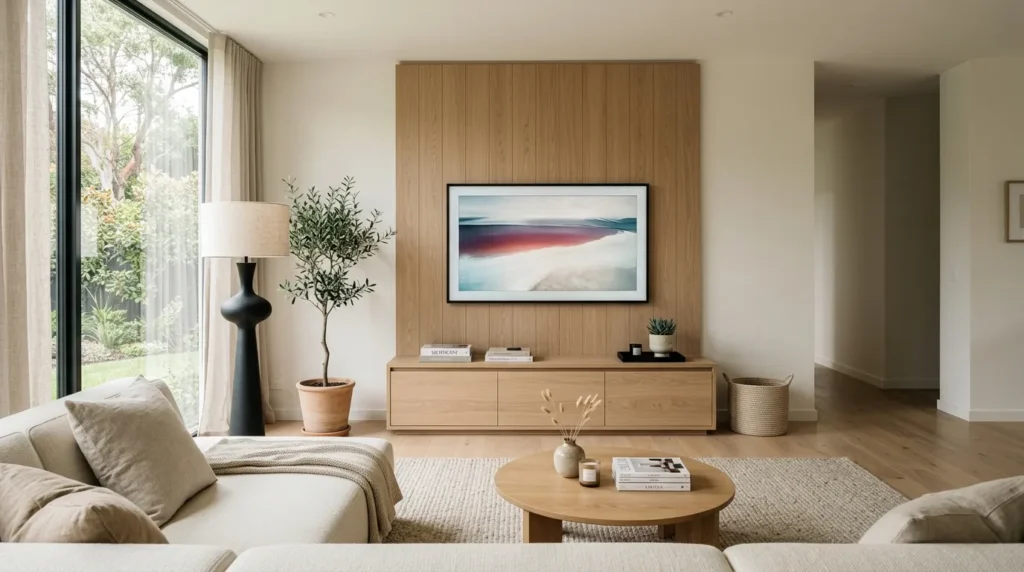
Quick Benefits
- Creates a clean focal point
- Reduces visual clutter
- Organizes electronics
- Works in contemporary rooms
- Makes the television feel integrated
Why It Works
Televisions can easily become the most visually dominant object in a living room.
A streamlined media wall can make the screen feel more intentional.
Simple cabinetry, floating consoles, vertical wood slats, or a restrained gallery arrangement can create structure around the television without overwhelming it.
The goal isn’t necessarily to hide the television completely. It’s to integrate it into the room’s design.
How To Style It
Choose a low-profile console or wall-mounted cabinet.
Use concealed storage for remotes, cables, gaming accessories, and other electronics.
Repeat materials from elsewhere in the room, such as oak or walnut.
Keep decorative objects around the screen minimal.
If using wood slats or paneling, balance the visual weight with lighter surrounding walls.
7. Layered Textures
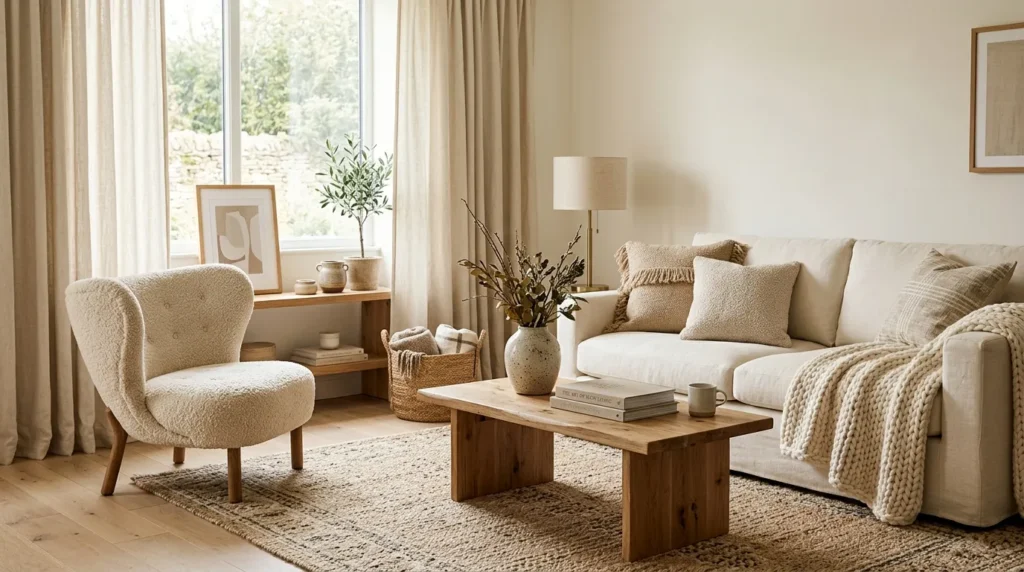
Quick Benefits
- Adds depth
- Makes neutrals more interesting
- Creates comfort
- Prevents a flat appearance
- Works without bold colors
Why It Works
Texture is especially important when a room uses a restrained color palette.
Imagine a cream boucle chair beside a smooth oak table, a woven rug, linen curtains, a soft cotton sofa, and a ceramic vase.
The colors may be simple, but the different surfaces create visual richness.
This is one of the easiest ways to make a modern room feel comfortable without introducing excessive patterns or decorative objects.
How To Style It
Aim for several different textures rather than many different colors.
Combine linen, wool-style textiles, boucle, wood, ceramic, glass, and woven fibers.
Use pillows and throws to add softness.
Let the furniture remain relatively streamlined while the textiles provide warmth.
8. Oversized Artwork
Quick Benefits
- Creates an instant focal point
- Reduces visual clutter
- Adds personality
- Makes walls feel intentional
- Works well with minimalist furniture
Why It Works
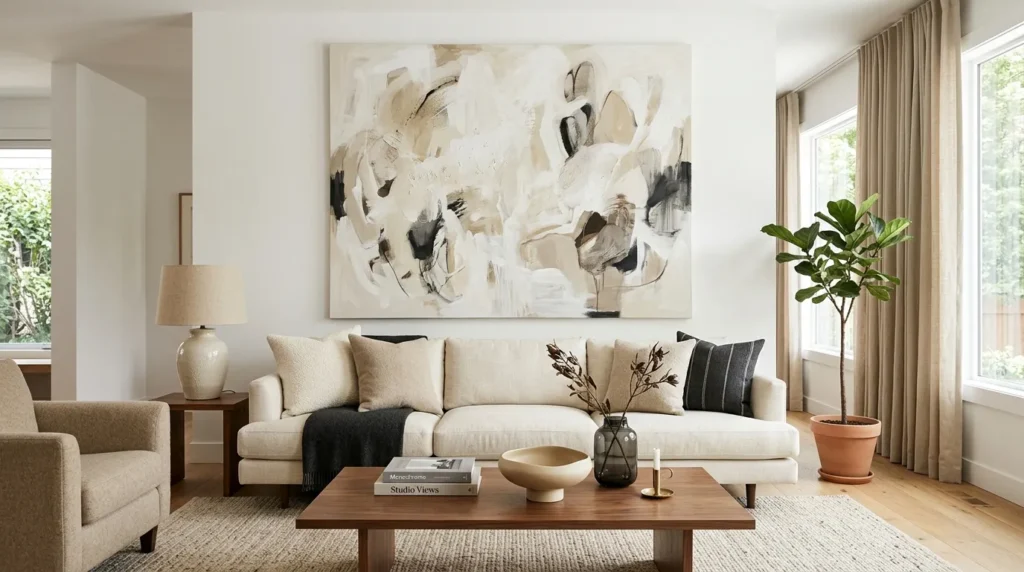
One large artwork piece can often have more impact than a collection of many small decorations.
Oversized art gives the room a visual anchor while maintaining the clean appearance associated with modern design.
Abstract artwork, photography, line drawings, landscapes, and textured pieces can all work depending on your style.
How To Style It
Place one substantial artwork piece above the sofa or on the main focal wall.
Choose colors that relate to your existing palette.
For a neutral room, artwork with cream, beige, charcoal, brown, or muted green can create cohesion.
Give the artwork enough surrounding space so it doesn’t compete with nearby objects.
9. Indoor Greenery
Quick Benefits
- Adds natural color
- Softens modern lines
- Introduces organic shapes
- Creates visual freshness
- Works with neutral interiors
Why It Works
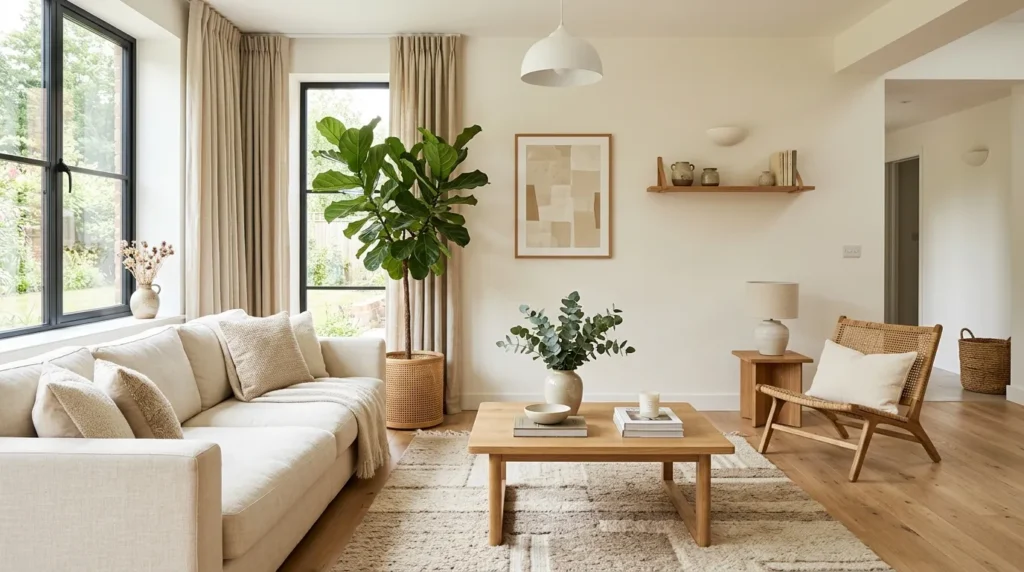
Plants bring irregular shapes and natural movement into a room filled with structured furniture.
A tall plant can fill an empty corner.
A small plant can soften a shelf.
A branch arrangement can create an architectural silhouette.
Greenery is especially effective in modern rooms because it provides contrast without requiring another strong decorative color.
How To Style It
Choose plants based on the actual light conditions in your room.
Use one substantial floor plant instead of several tiny plants if the room is already visually busy.
Pair greenery with simple ceramic or woven planters.
Repeat natural materials through wood or rattan to make the plants feel connected to the rest of the decor.
10. Modern Cozy Layers
Quick Benefits
- Combines style and comfort
- Creates a welcoming atmosphere
- Works year-round
- Makes modern furniture feel livable
- Easy to personalize
Why It Works
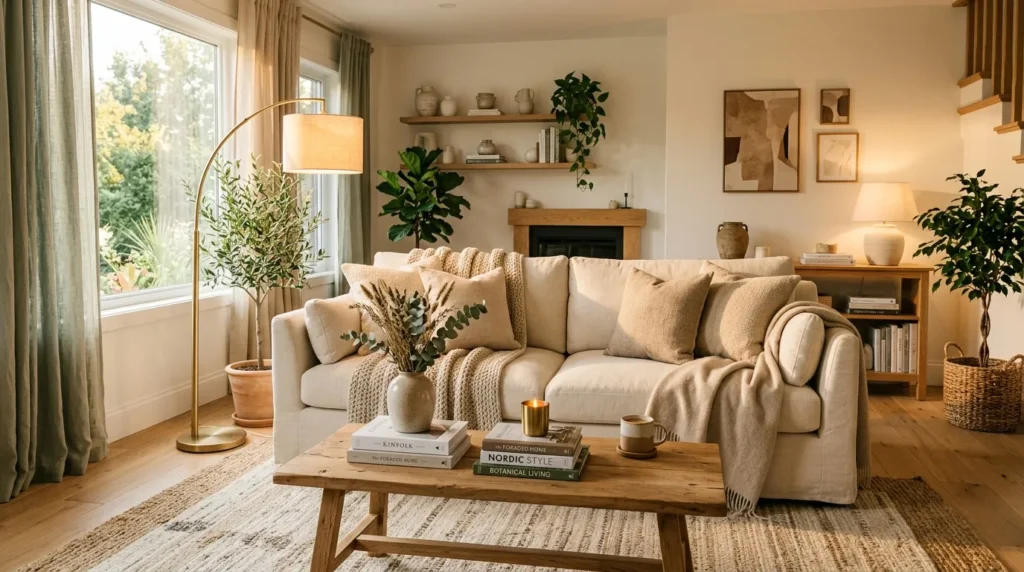
The best modern living rooms don’t look untouched.
They feel comfortable enough for everyday life.
Soft throws, cushions, textured rugs, warm lighting, books, natural materials, and personal objects can make contemporary furniture feel much more approachable.
This is where modern design becomes truly livable.
The trick is layering intentionally rather than adding accessories simply to fill empty surfaces.
How To Style It
Start with a comfortable sofa and substantial rug.
Add two or three pillows in complementary textures.
Drape a throw casually over one arm or the back of a chair.
Use a coffee table with enough space for everyday items without becoming cluttered.
Finish with a few personal objects, books, artwork, and greenery.
How to Make a Modern Living Room Feel Cozy
Modern design becomes much more comfortable when you balance hard surfaces with soft materials.
If you have a glass coffee table, add a textured rug underneath.
If the sofa has a structured silhouette, introduce rounded cushions or a soft throw.
If the walls and furniture are neutral, bring in natural wood and greenery.
Lighting is equally important.
During the day, make the most of natural light with lightweight window treatments. In the evening, use several warm light sources instead of relying exclusively on an overhead fixture.
The result should feel layered rather than decorated all at once.
Best Colors for a Modern Living Room
Warm White
Bright without feeling stark.
Cream
Soft and welcoming.
Beige
Versatile and timeless.
Taupe
Adds subtle depth.
Greige
Balances warm and cool tones.
Warm Brown
Creates grounding contrast.
Sage Green
Adds a natural accent.
Charcoal
Provides modern definition.
You don’t need to use all of these colors. A strong modern palette often consists of two or three main neutrals with one carefully selected accent.
Modern Living Room Furniture Tips
Choose furniture based on the room’s actual dimensions rather than simply buying pieces you like individually.
A large sectional can look beautiful in a spacious family room but overwhelm a compact apartment.
Likewise, several tiny chairs may make a large room feel disconnected.
Measure before purchasing and consider the complete arrangement.
Think about:
- Walking paths
- Television viewing
- Conversation areas
- Door openings
- Window access
- Storage
- Lighting placement
Furniture should support the way you actually use the room.
FAQ
What makes a living room look modern?
Clean-lined furniture, a restrained color palette, thoughtful lighting, natural materials, minimal clutter, and a balance of hard and soft textures can create a modern living room. Modern design doesn’t require an entirely minimalist space.
What colors are best for a modern living room?
Warm white, cream, beige, taupe, greige, soft brown, charcoal, and muted green are versatile choices. Combining several related neutrals often creates more depth than using one color throughout the room.
How do I make a modern living room feel cozy?
Add textured rugs, comfortable upholstery, linen curtains, soft cushions, throws, natural wood, warm lighting, and greenery. These elements soften the clean lines and harder materials commonly found in modern interiors.
Should modern living room furniture match?
Furniture doesn’t have to come from the same collection. Coordinating colors, materials, and proportions can create a cohesive appearance while allowing individual pieces to have their own character.
How can I make a small living room look modern?
Choose appropriately scaled furniture, maintain clear pathways, use a cohesive palette, incorporate multifunctional storage, and avoid excessive decorative clutter. A large rug and well-planned lighting can also make the room feel more intentional.
What type of coffee table works best in a modern living room?
The best shape depends on your furniture arrangement. Rectangular tables work well with long sofas, while round or oval tables can soften rooms dominated by straight lines. Choose a size that leaves comfortable circulation around it.
How many decorative items should a modern living room have?
There is no fixed number. Focus on intentional styling rather than filling every surface. A few substantial pieces—such as artwork, books, ceramics, and greenery—can often create more impact than many small accessories.
Conclusion
A modern living room should feel just as good as it looks.
Clean lines, simple colors, and contemporary furniture create a strong foundation, but warmth comes from the layers you add afterward. Natural wood, textured rugs, comfortable cushions, soft curtains, greenery, artwork, and warm lighting can transform a room from visually polished to genuinely inviting.
You don’t need to redesign the entire space to achieve the look.
Start with the biggest element that isn’t working. Perhaps the seating arrangement feels disconnected, the room needs better lighting, or the color palette feels too cool. Solve that issue first, then gradually introduce complementary materials and textures.
Remember that modern doesn’t mean empty.
A few books, a favorite artwork piece, a beautiful lamp, or a plant can give the room personality while maintaining a clean aesthetic.
The best result is a living room that feels intentional without feeling overly styled—a space where contemporary design and everyday comfort naturally coexist.
Start with the foundation, layer thoughtfully, and let your own personality determine the final details.