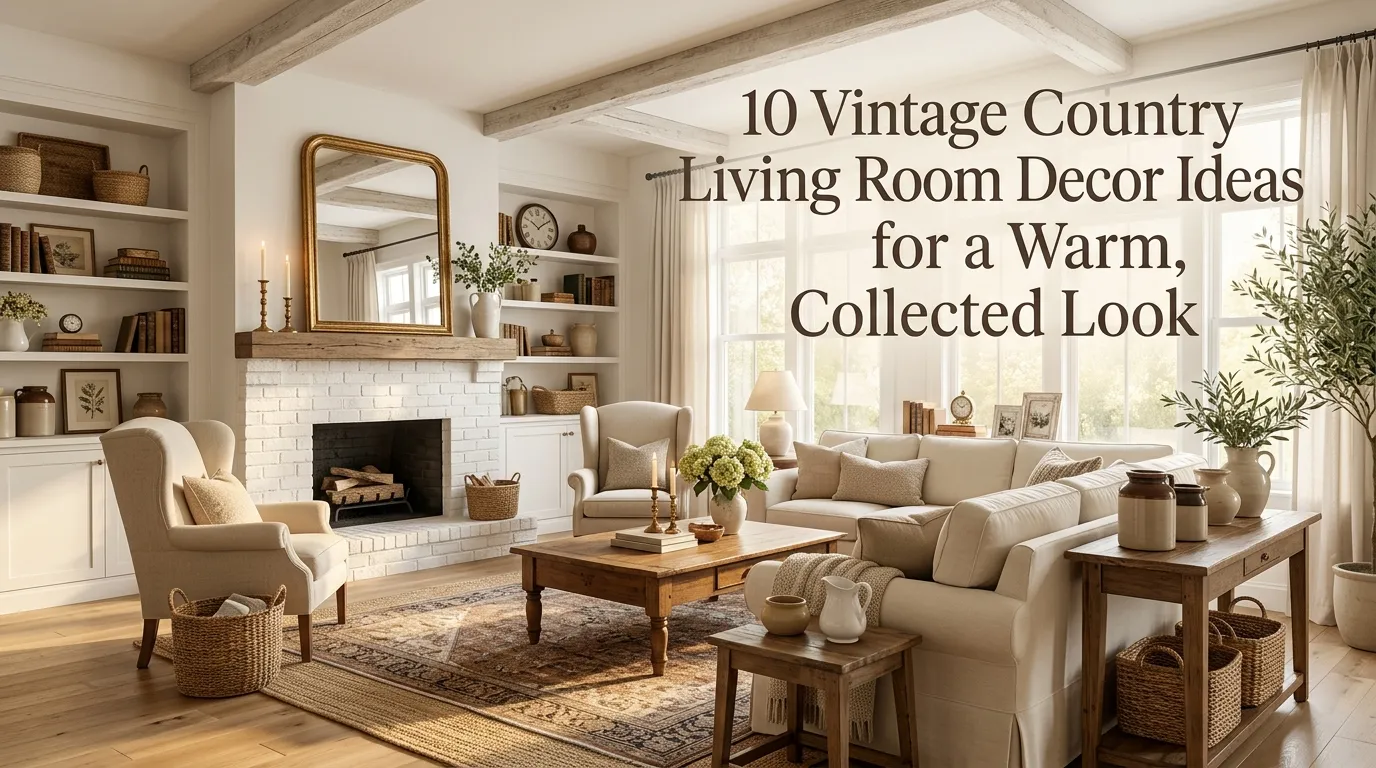
10 Vintage Country Living Room Decor Ideas for a Warm, Collected Look
There’s a particular kind of living room that feels instantly comforting the second you walk in — not because of a big renovation or an expensive furniture set, but because of the small things. A chipped crock filled with dried wheat. A cluster of mismatched brass candlesticks. A worn embroidered pillow that looks like it’s been someone’s favorite for years. In my experience, it’s almost always the decor, not the furniture, that gives a vintage country living room its soul.
If you already have a sofa and a rug you’re happy with but the room still feels a little flat or unfinished, decor is usually the missing piece. Vintage country style leans on humble, well-loved objects — things that were made to be used, not just displayed — layered together in a way that feels gathered over time rather than purchased in a single trip. It’s the difference between a room that looks styled for a photo and one that looks genuinely lived in.
A mistake many homeowners make is trying to buy this look as a matching set. One thing that works especially well instead is collecting decor slowly, mixing a few real vintage finds with newer pieces that have a similar aged quality. That’s how these rooms end up feeling personal instead of generic, and it’s exactly what makes them so satisfying to photograph and save on Pinterest.
Below are ten decor ideas I’ve seen transform plain shelves, mantels, and coffee tables into the kind of vignettes people stop and look at twice. Each one comes with practical advice on where to find these pieces, how to style them, and why they work so well together. None of these require major renovations or big budgets — just a good eye and a little patience while you collect the right pieces.
Let’s get into the details.
Table of Contents
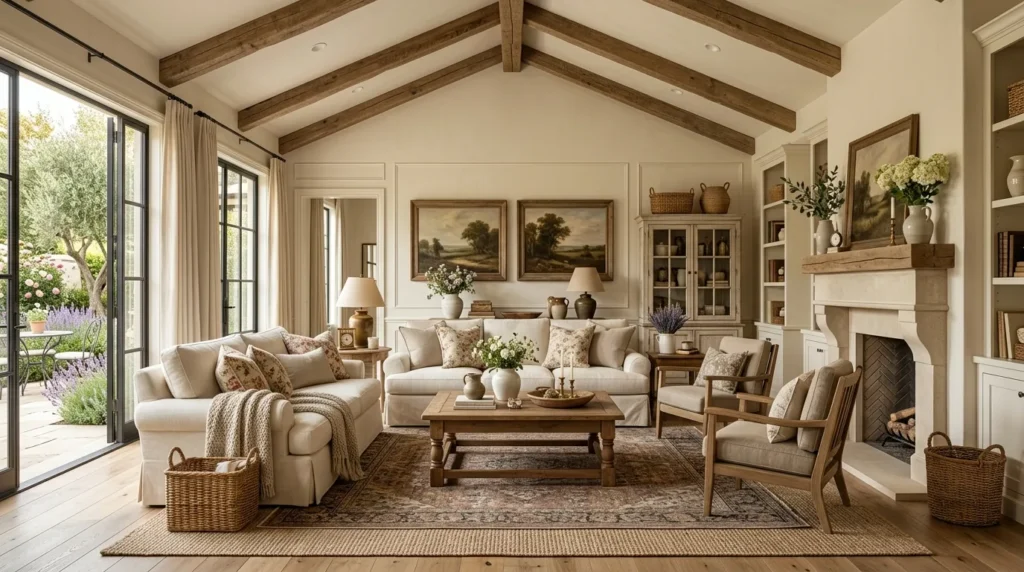
- Vintage Botanical Prints — Bringing in aged, hand-illustrated art for quiet wall interest.
- Aged Brass Candlesticks — Adding warm metallic character to mantels and tables.
- Woven Market Baskets — Using natural texture for both storage and display.
- Old Crockery Collections — Styling antique stoneware as charming, practical decor.
- Dried Wheat Bundles — Layering in natural, rustic texture without fresh flowers.
- Vintage Clock Displays — Anchoring a mantel or shelf with old-world timekeeping charm.
- Embroidered Linen Pillows — Softening seating with handmade textile detail.
- Milk Glass Vases — Introducing soft, opaque texture through antique glass.
- Antique Picture Frames — Layering family history and character on walls or shelves.
- Wicker Plant Stands — Elevating greenery with natural, woven texture.
1. Vintage Botanical Prints
Quick Benefits
- Adds quiet, sophisticated wall interest without bold color
- Works well in gallery walls or as a single statement piece
- Pairs naturally with aged wood frames
- Reinforces the natural, garden-inspired spirit of country style
- Widely available secondhand and often very affordable
Why It Works
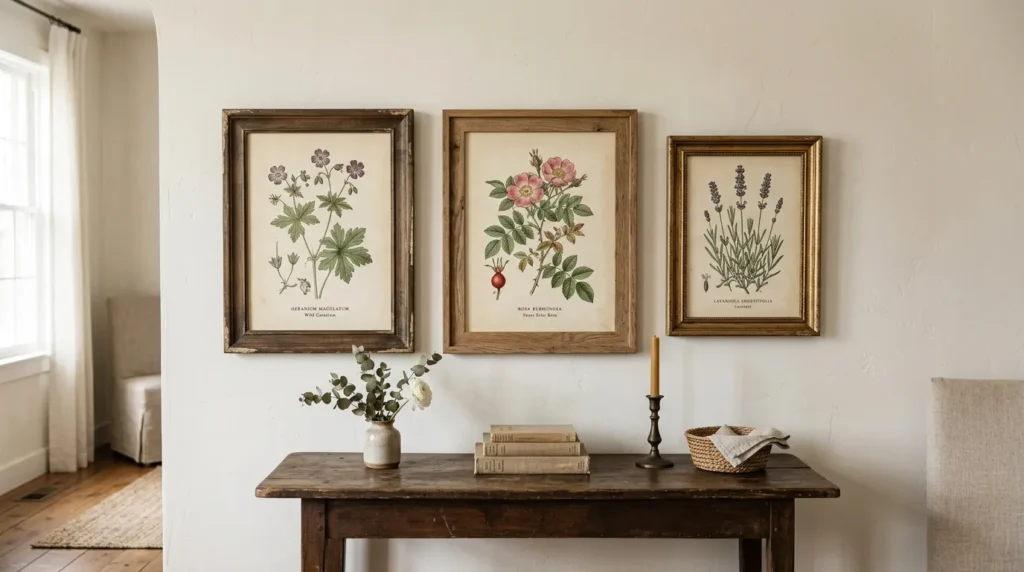
In my experience, botanical prints do something a lot of modern wall art can’t — they add detail and interest to a room without introducing bold color or busy pattern. Old seed catalog illustrations, pressed flower prints, or antique field guide plates all carry a soft, muted color palette that fits naturally into a vintage country room. I’ve noticed that even a single well-placed botanical print above a console or between two windows can make a wall feel finished in a way that a blank space simply doesn’t.
How To Style It
Look for antique or reproduction botanical prints — pressed herbs, wildflowers, or fruit illustrations work especially well — and frame them in simple, slightly weathered wood or aged gold frames. A cluster of three to five small prints in mismatched but complementary frames makes a lovely gallery arrangement above a sofa or mantel. If you prefer a single statement piece, choose a larger print and let it anchor a plain wall on its own. Avoid pairing botanical prints with overly modern black frames, which can feel jarring against the softer, aged tone of the rest of the room.
2. Aged Brass Candlesticks
Quick Benefits
- Adds warm, reflective metal tone to any surface
- Brings instant old-world elegance at a low cost
- Easy to find secondhand in a range of heights and styles
- Works beautifully in mismatched groupings
- Provides soft ambient light in the evening
Why It Works
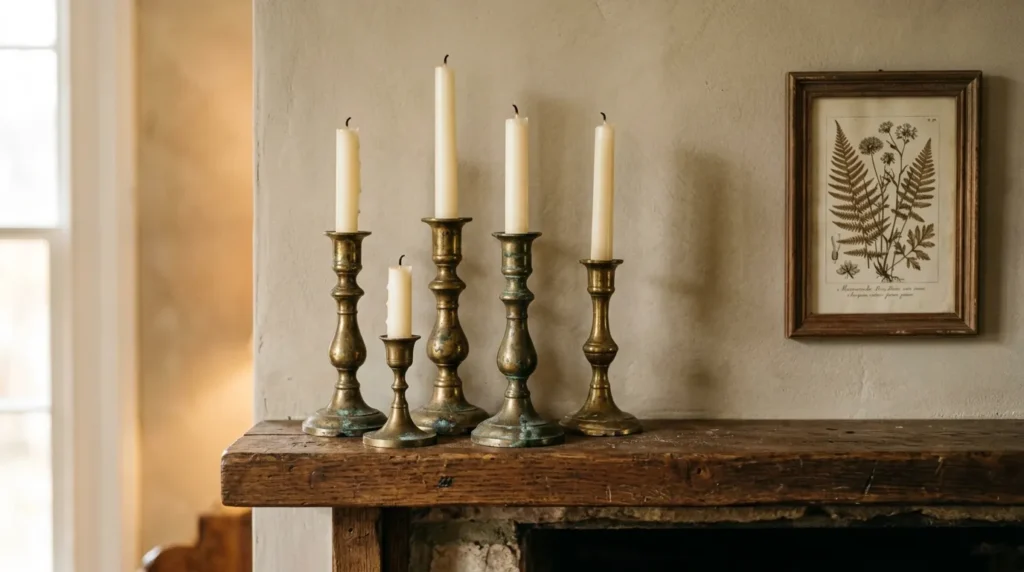
One thing that works especially well in a vintage country room is a small cluster of aged brass candlesticks, ideally a little tarnished rather than polished to a mirror shine. That slightly dulled patina is part of the appeal — it signals age in a way that new brass, however nice, simply can’t replicate right out of the box. I’ve seen this idea transform spaces because brass has a warmth that pairs beautifully with both wood tones and soft neutral fabrics, and it photographs wonderfully with natural or candlelight.
How To Style It
Group three or four candlesticks of varying heights together on a mantel or coffee table rather than spacing single candlesticks evenly apart, which tends to look more staged. Mix in a few taper candles in soft cream or ivory rather than bright white for a warmer glow. If you’d rather not deal with real candles, flameless taper candles now come in realistic wax-drip styles that work just as well for evening ambiance. Let the brass show its natural tarnish rather than polishing it regularly — that slightly aged glow is exactly what makes it feel collected rather than store-bought.
3. Woven Market Baskets
Quick Benefits
- Adds natural texture and warmth to any corner
- Doubles as practical storage for blankets or firewood
- Works well stacked, hung, or used individually
- Complements both wood and metal decor
- Affordable and easy to source secondhand
Why It Works
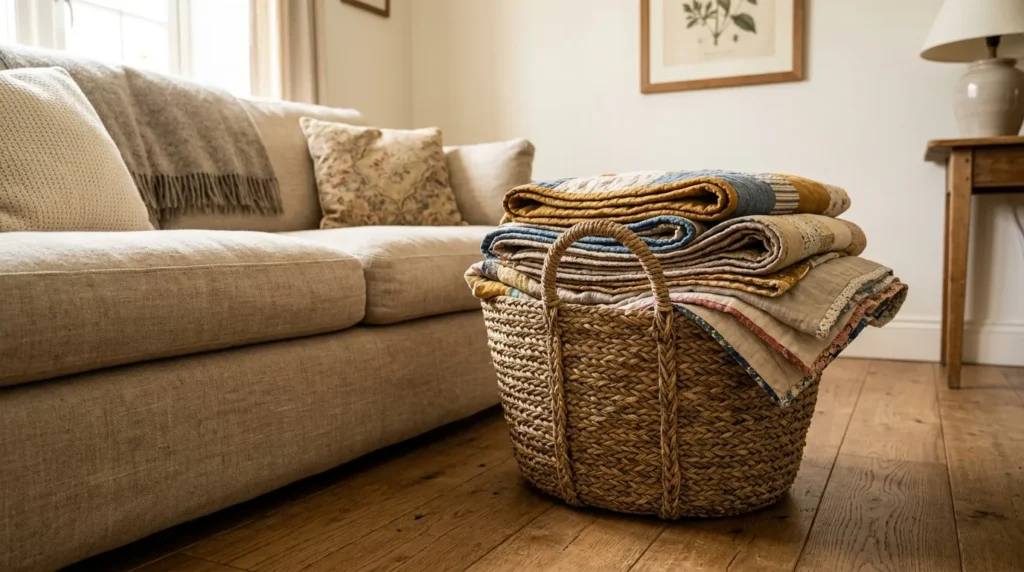
A mistake many homeowners make is treating baskets as purely functional storage tucked out of sight, but in a vintage country living room, a good woven basket is decor in its own right. In my experience, market-style baskets — the kind originally used for gathering produce or firewood — bring in a natural, hand-woven texture that softens a room full of harder surfaces like wood furniture and cast iron accents. Their slightly irregular shape and warm tan color also add visual texture without introducing any new pattern or color to manage.
How To Style It
Use a large woven basket beside the sofa to hold folded quilts or throw blankets within easy reach. A smaller basket on a coffee table can corral remotes, coasters, or reading material in a way that still looks intentional. For a decorative touch, hang two or three baskets of varying sizes on a wall in a loose cluster — a look that’s both practical storage-adjacent and genuinely charming. Look for baskets with visible wear and a slightly uneven weave at flea markets or antique shops, since these details read as more authentic than perfectly uniform new baskets.
4. Old Crockery Collections
Quick Benefits
- Adds earthy color and texture to shelves or mantels
- Reinforces the practical, farmhouse-kitchen spirit of the style
- Works beautifully for both display and functional use
- Easy to build slowly as a collection over time
- Pairs naturally with dried greenery and enamelware
Why It Works
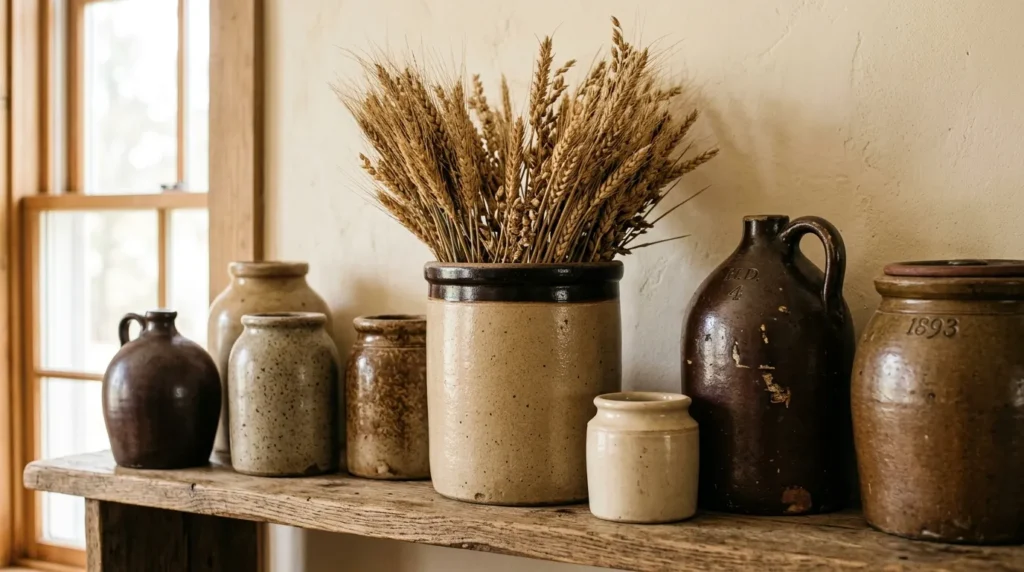
That’s why many designers recommend old stoneware crocks and jugs as a foundational decor element in vintage country rooms — their warm, earthy glazes and slightly imperfect shapes carry the same handmade, practical quality that runs through the whole aesthetic. I’ve noticed that crockery in particular tends to anchor a shelf or mantel display better than smaller decorative objects, since its scale and weight give the eye a natural place to rest before taking in smaller details around it.
How To Style It
A large stoneware crock filled with dried branches or a rolled quilt makes a striking floor-level accent beside a sofa or fireplace. Smaller crocks and jugs grouped on a mantel or open shelf, mixed with varying heights, create an easy collected-over-time display. Look for pieces with visible drips in the glaze, slight color variation, or maker’s stamps, which are marks of genuine age and handcraft. Resist the urge to buy a matching set all at once; real crockery collections are built gradually, and that slight variation in tone and shape is part of what makes the display feel authentic.
5. Dried Wheat Bundles
Quick Benefits
- Adds natural texture without the upkeep of fresh flowers
- Reinforces the agricultural, countryside roots of the style
- Long-lasting and low-maintenance
- Works in vases, tied bundles, or wall-hung arrangements
- Inexpensive and easy to source or DIY
Why It Works
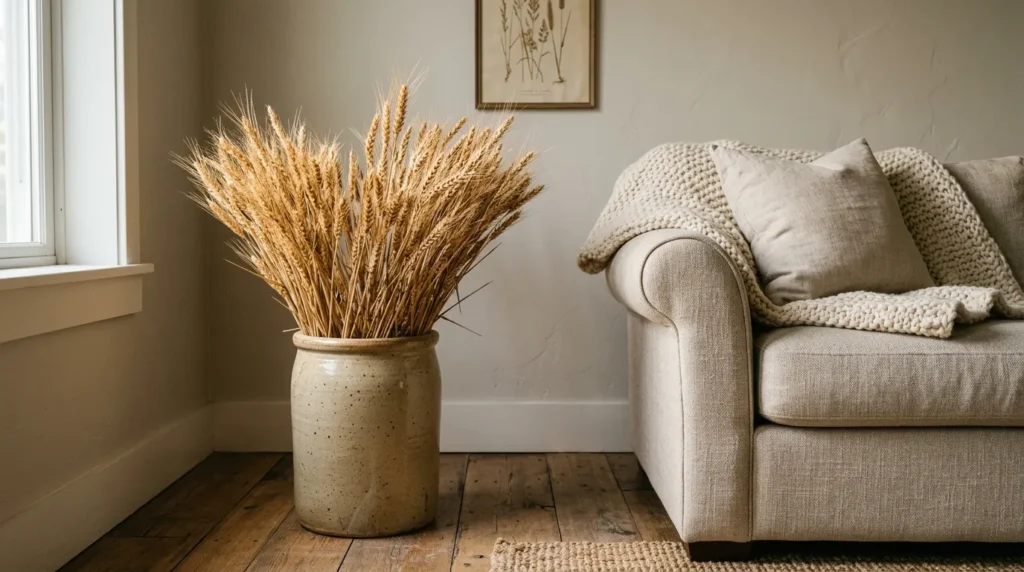
If you’re anything like me, you’ve probably noticed how a simple bundle of dried wheat instantly makes a room feel warmer and more seasonal without any bright color at all. Wheat has deep roots in country and harvest-inspired decor, and its soft golden tone works with virtually every other color in a vintage country palette. Unlike fresh flowers, dried wheat requires no water or upkeep, which makes it a practical choice for anyone who wants natural texture without the maintenance.
How To Style It
Place a generous bundle of dried wheat in a tall stoneware crock or vintage pitcher as a floor accent beside the sofa or fireplace. A smaller bundle tied with jute twine and hung on a door or wall adds texture at eye level. Mix wheat with other dried botanicals — lavender, eucalyptus, or dried baby’s breath — for a slightly fuller, softer arrangement if you prefer more visual weight. Because dried wheat holds up for months without fading much, it’s an easy seasonal decor element to leave out well beyond harvest season, especially in a room that leans into warm, golden tones year-round.
6. Vintage Clock Displays
Quick Benefits
- Adds old-world charm and a functional focal point
- Works beautifully on mantels, shelves, or walls
- Introduces subtle metallic or wood tones
- Reinforces the timeless, unhurried feeling of country style
- Available at a wide range of price points secondhand
Why It Works
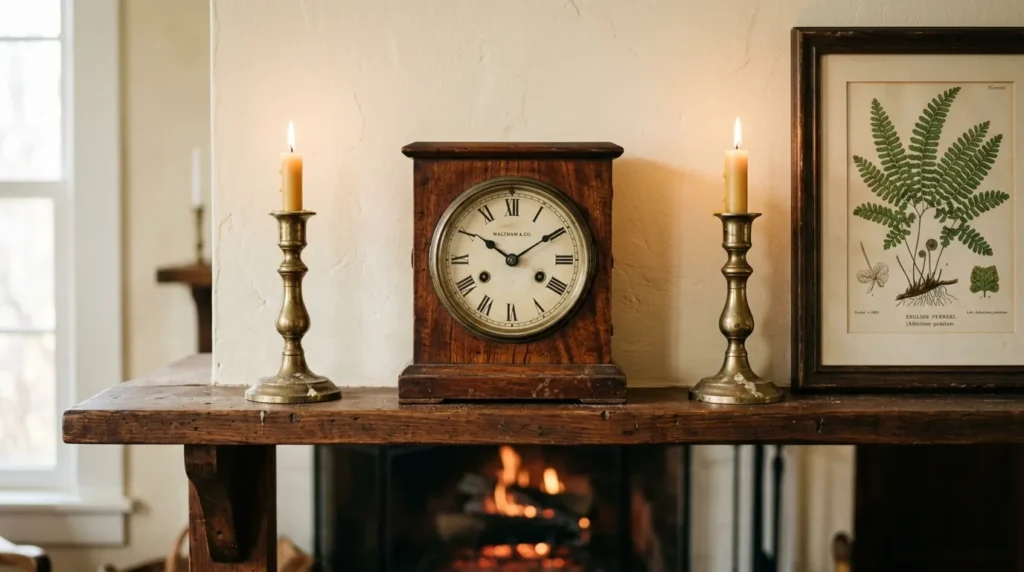
A vintage clock, whether it’s a mantel clock, a wall-mounted schoolhouse clock, or a small tabletop model, brings a quiet sense of history to a room in a way few other objects can. In my experience, a clock with a slightly worn wood case or a softly ticking mechanism adds both visual and sensory warmth — there’s something genuinely calming about a room with the soft tick of an old clock in the background. It also serves as a natural focal point for a mantel display, giving other smaller objects something to be arranged around.
How To Style It
Center a mantel clock on the fireplace mantel, flanked by candlesticks or small botanical prints on either side. A wall-mounted schoolhouse-style clock works well above a console table or in an entryway that opens into the living room. If the clock’s mechanism no longer works, don’t worry — a nonfunctioning antique clock still serves beautifully as a decorative object, and many people prefer it that way to avoid the maintenance of keeping it wound. Look for clocks with visible wood grain, a softly aged face, or Roman numerals for the most authentic vintage country feel.
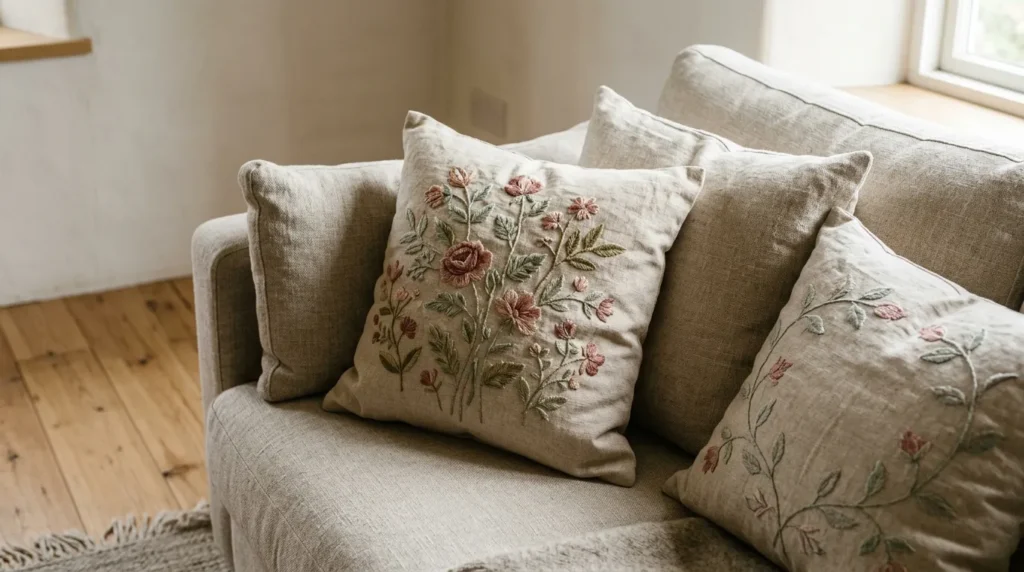
7. Embroidered Linen Pillows
Quick Benefits
- Adds handmade texture and detail to seating
- Introduces soft color without a bold, modern pattern
- Works well mixed with solids, gingham, or ticking stripe
- Reinforces the handcrafted spirit of country decor
- Easy to source secondhand or make as a DIY project
Why It Works
One thing that works especially well on a vintage country sofa is a mix of pillows that includes at least one with visible embroidery — small floral motifs, monogram initials, or simple stitched borders. I’ve seen this idea transform spaces because embroidery adds a layer of handmade detail that machine-printed fabric simply can’t match. It signals the same “someone made this by hand” quality that runs through quilts, crockery, and woven baskets, tying the whole room together conceptually even when the individual pieces come from different eras or sources.
How To Style It
Mix one or two embroidered pillows in with solid linen or cotton pillows on the sofa, rather than using embroidery on every pillow, which can start to feel busy. Vintage embroidered pillowcases can often be found at estate sales and repurposed into pillow covers with a simple envelope closure. Choose embroidery in soft, faded thread colors — dusty rose, sage, faded blue — rather than bright, saturated tones for the most authentic look. If sewing isn’t your thing, a favorite vintage embroidered linen or tea towel can simply be draped over the arm of a chair as a smaller decorative accent instead of being turned into a pillow.
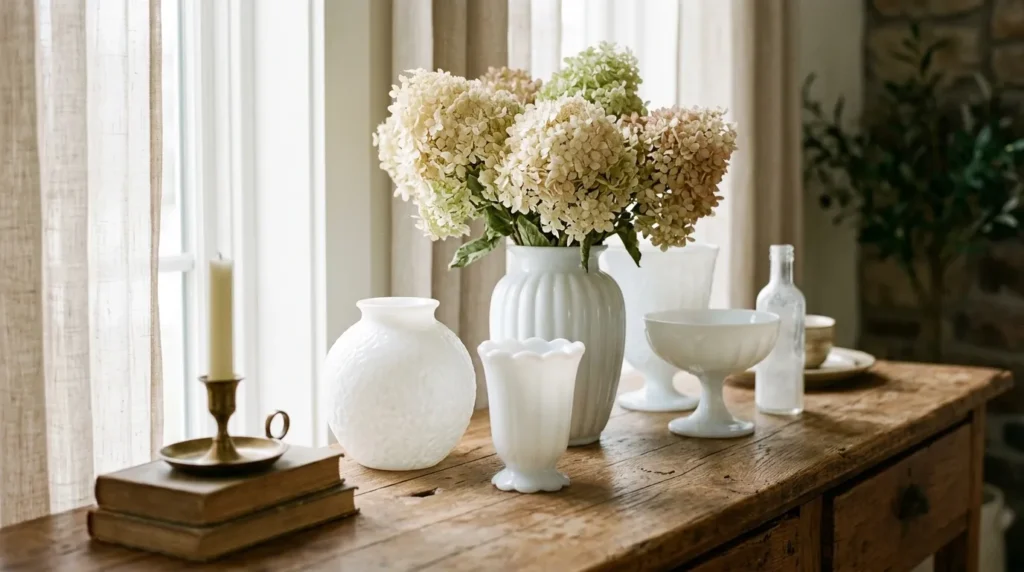
8. Milk Glass Vases
Quick Benefits
- Adds soft, opaque texture without introducing new color
- Works beautifully for both fresh and dried florals
- Pairs naturally with brass, wood, and stoneware
- Widely available secondhand at low cost
- Timeless shape that never feels trend-driven
Why It Works
Milk glass — that opaque white glass often found in vintage vases, compotes, and small dishes — has a soft, slightly imperfect quality that fits perfectly into a vintage country room. In my experience, it works especially well as a neutral vessel for flowers or greenery, since its cloudy white tone doesn’t compete with the muted color palette already established through quilts, gingham, and dried botanicals elsewhere in the room. It also has a slightly formal, heirloom quality that adds a touch of refinement without feeling out of place next to more rustic materials.
How To Style It
A milk glass vase filled with a simple arrangement of garden flowers, dried hydrangea, or greenery makes a lovely centerpiece for a coffee table or console. Smaller milk glass compotes can hold potpourri, dried lavender, or even a small collection of vintage buttons or marbles for a charming tabletop detail. Group two or three milk glass pieces of different shapes together on a shelf for a soft, cohesive vignette. Because milk glass is widely available at thrift stores and antique malls, it’s an easy category to collect gradually, picking up a piece here and there until you have a small, varied grouping.
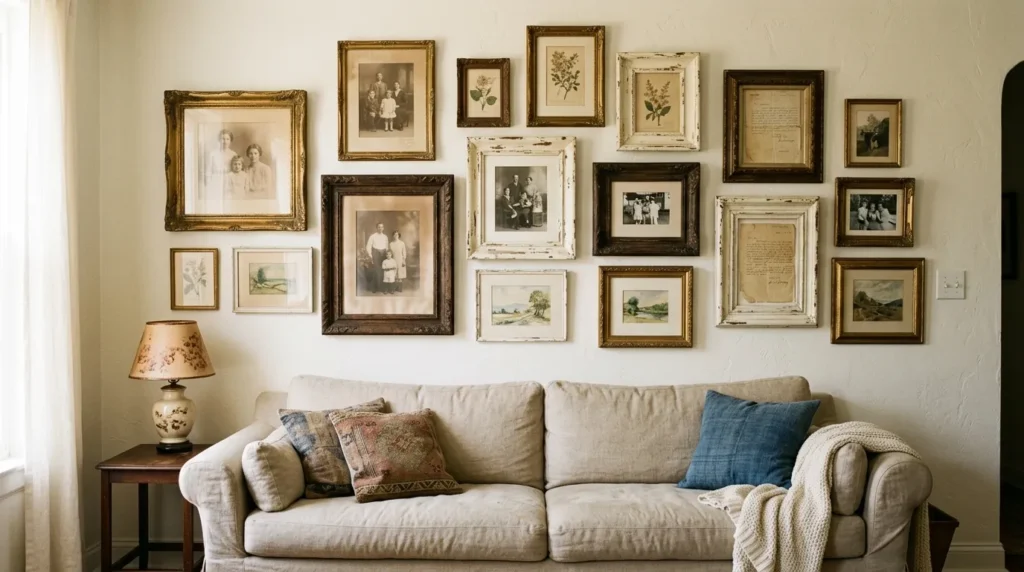
9. Antique Picture Frames
Quick Benefits
- Adds layered, personal character to walls and shelves
- Works for family photos, prints, or mirrors
- Introduces aged wood or gilded texture
- Easy to mix and match for a collected gallery look
- Meaningful way to display heirloom photographs
Why It Works
A mistake many homeowners make is framing everything in matching, modern frames, which can flatten out the personal, collected feeling central to vintage country style. In my experience, a gallery of mismatched antique frames — some gilded, some carved wood, some simple and worn — does far more to create warmth and character than a uniform set ever could. Antique frames also work beautifully for genuinely old family photographs, giving them a display that feels appropriate to their age rather than jarringly modern.
How To Style It
Collect frames gradually from estate sales, antique shops, and flea markets, choosing a variety of finishes that still feel cohesive in tone — aged gold, dark wood, and chippy white paint tend to work well together. Arrange a small gallery wall above a sofa or console, mixing frame sizes and slightly varying the spacing rather than lining everything up in a perfect grid. Empty antique frames can also be leaned against a wall or propped on a mantel as sculptural objects on their own, without anything inside them, for an unexpected decorative touch. If you’re framing family photos, choosing black-and-white or sepia-toned prints tends to feel more cohesive with the vintage frames than bright, modern color photography.
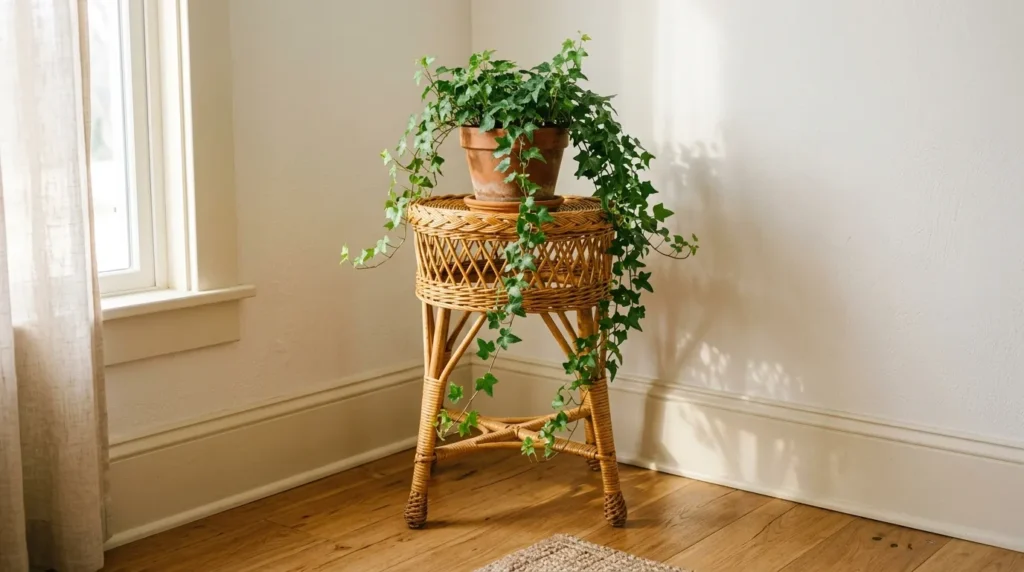
10. Wicker Plant Stands
Quick Benefits
- Elevates greenery for better visual interest
- Adds natural, woven texture at a range of heights
- Works well in corners, beside seating, or near windows
- Complements both wood furniture and iron accents
- Affordable and widely available secondhand
Why It Works
That’s why many designers recommend using a wicker or rattan plant stand rather than setting potted plants directly on the floor — the height and woven texture add another layer of visual interest to the room while giving greenery a more prominent, intentional place in the styling. I’ve noticed that a plant elevated on a stand tends to draw the eye upward in a corner that might otherwise feel empty, and the natural material fits seamlessly alongside the woven baskets, crockery, and wood tones already present in a vintage country room.
How To Style It
Place a wicker plant stand in a corner near a window, topped with a trailing plant like ivy or a philodendron for a soft, natural silhouette. A pair of plant stands at slightly different heights, positioned on either side of a sofa or fireplace, adds symmetry without feeling too formal. Look for stands with a slightly aged, honey-toned wicker rather than bright white or heavily lacquered finishes, which can feel more modern than vintage. If you don’t have a green thumb, a well-made faux fern or trailing ivy on the stand achieves a similar visual effect with none of the upkeep.
Frequently Asked Questions
Where’s the best place to find vintage country decor? Estate sales, flea markets, antique malls, and local thrift stores are the best sources for authentic pieces. Online vintage marketplaces are also useful when you’re searching for something specific, like a particular clock style or crockery pattern.
How do I mix vintage decor without the room feeling cluttered? Group similar items together — candlesticks, crockery, or frames — rather than scattering small decor pieces evenly around the room. Let one or two larger items, like a crock or a clock, anchor each grouping so smaller pieces have a clear place to sit.
Can I use new decor and still achieve this look? Yes. Many retailers offer intentionally aged or distressed reproductions that work well mixed with a few genuine vintage finds. The key is to avoid buying an entire matching set from one store, since real collections build up gradually and unevenly over time.
What colors work best for vintage country decor? Soft, muted tones work best — cream, faded rose, sage green, dusty blue, and warm brass or gold. These colors echo the natural fading and aging process of genuinely old textiles, glass, and metal.
How much decor is too much in a small living room? In smaller spaces, choose a few focal groupings — a mantel display, a coffee table vignette, a gallery wall — rather than adding decor to every surface. This keeps the room feeling curated instead of overwhelming.
Do I need to polish brass and metal decor to keep it looking good? Not necessarily. A soft, natural tarnish on brass or aged metal actually reinforces the vintage look. Light dusting is usually enough; heavy polishing can strip away the patina that makes these pieces feel authentically old.
Is dried botanical decor better than fresh flowers for this style? Both work well, but dried elements like wheat, lavender, or eucalyptus require far less upkeep and tend to suit the muted, aged color palette of vintage country style especially well, particularly in vessels like crockery or milk glass.
Conclusion
The right decor is often what separates a vintage country living room that feels genuinely warm and collected from one that just looks rustic on the surface. From aged brass candlesticks and old crockery to embroidered pillows and antique frames, these ten ideas are all about layering in small, meaningful details rather than making one big statement purchase.
Start with one or two ideas and gradually build a space that reflects your style and supports everyday comfort. Maybe that means picking up a stoneware crock at the next estate sale you visit, or finally framing that old family photo in a secondhand gilded frame. Over time, these small additions are what give a vintage country living room its most important quality: a sense that it was gathered with care, one piece at a time.
Related Articles
- 11 Vintage Country Living Room Ideas
- Cozy Farmhouse Bedroom Ideas
- Small Living Room Layouts
- French Country Decor Essentials
- DIY Reclaimed Wood Projects