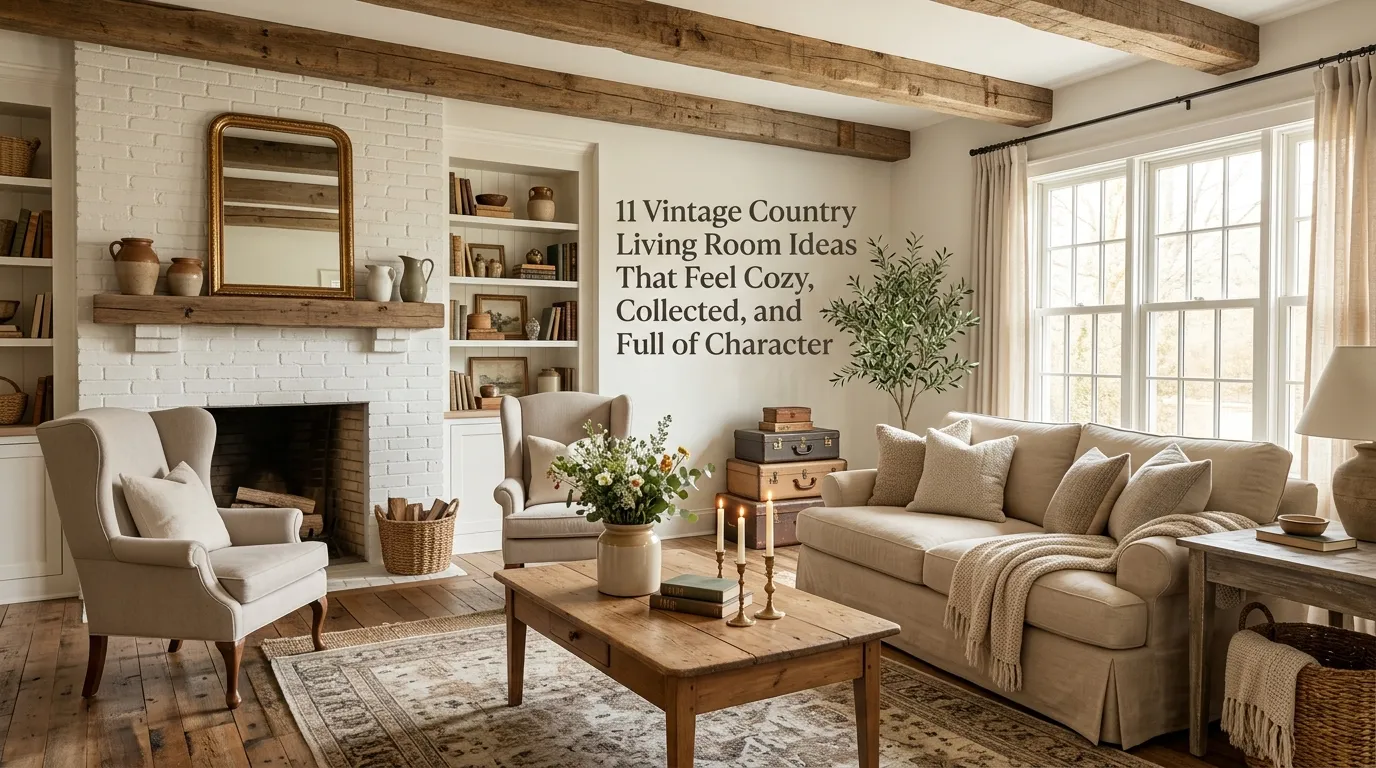
11 Vintage Country Living Room Ideas That Feel Cozy, Collected, and Full of Character
There’s a certain kind of living room that makes you want to slow down the moment you walk in — the kind with a quilt draped over the back of the couch, a rocking chair that’s clearly been sat in for decades, and a mantel full of things that all seem to have a story. That’s vintage country style, and in my experience, it’s one of the hardest looks to fake with brand-new furniture, because so much of its charm comes from age, wear, and the sense that everything was gathered slowly rather than bought all at once.
If you’ve been pinning images of farmhouse living rooms with braided rugs, mason jars, and weathered wood, you already understand the appeal. Vintage country blends practical, humble materials — reclaimed barn wood, cast iron, cotton gingham — with a warmth that feels distinctly American, rooted in the kind of homes where furniture got passed down instead of replaced. It’s cozy without being cluttered, nostalgic without feeling like a museum.
A mistake many homeowners make when chasing this look is buying everything new and “farmhouse-labeled” from a big box store. The problem is that mass-produced vintage-style decor often lacks the texture and imperfection that make the style feel authentic. One thing that works especially well is mixing a few genuinely old or thrifted pieces in with newer furniture, so the room feels layered rather than staged.
That’s exactly what this guide will help you do. Below are eleven ideas I’ve seen transform plain, builder-grade living rooms into spaces that feel warm, personal, and full of quiet history. Each one includes the reasoning behind why it works and specific, practical advice for bringing it into your own space — no matter your budget or your home’s age.
You don’t need a farmhouse property or a barn full of family heirlooms to pull this off. You need the right instinct for texture, pattern, and a willingness to let a few things look a little worn. Let’s walk through it.
Table of Contents
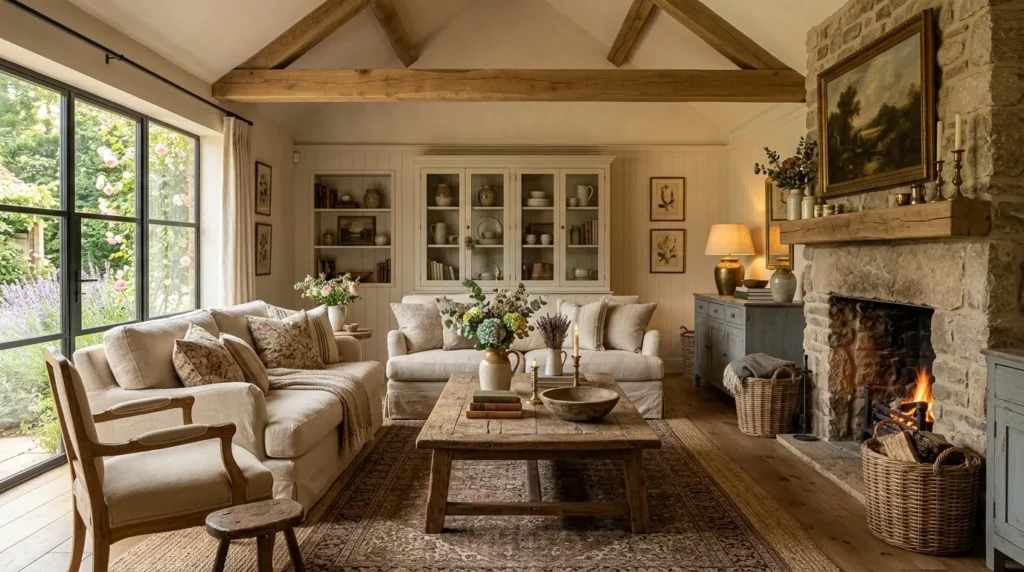
- Faded Quilt Layers — Using aged textiles to bring softness and history to seating.
- Reclaimed Barn Wood — Grounding the room in rustic, time-worn wood surfaces.
- Vintage Enamelware Display — Styling old kitchenware as charming decorative accents.
- Braided Wool Rugs — Adding warmth and pattern underfoot the traditional way.
- Antique Rocking Chair — Anchoring the room with a classic, storytelling seat.
- Gingham Fabric Accents — Bringing in cheerful, checked pattern with restraint.
- Mason Jar Vignettes — Repurposing humble glass jars into charming displays.
- Weathered Farmhouse Shutters — Using salvaged shutters as wall art and texture.
- Cast Iron Details — Introducing sturdy, handcrafted metal character.
- Ticking Stripe Textiles — Layering classic striped fabric for timeless texture.
- Salvaged Window Frames — Turning old windows into rustic focal points.
1. Faded Quilt Layers
Quick Benefits
- Adds instant warmth and softness to any sofa or chair
- Brings in pattern and color without overwhelming the room
- Works as both function (a real throw) and decor
- Honors family heirlooms or thrifted textile finds
- Easy, low-cost way to update a room seasonally
Why It Works
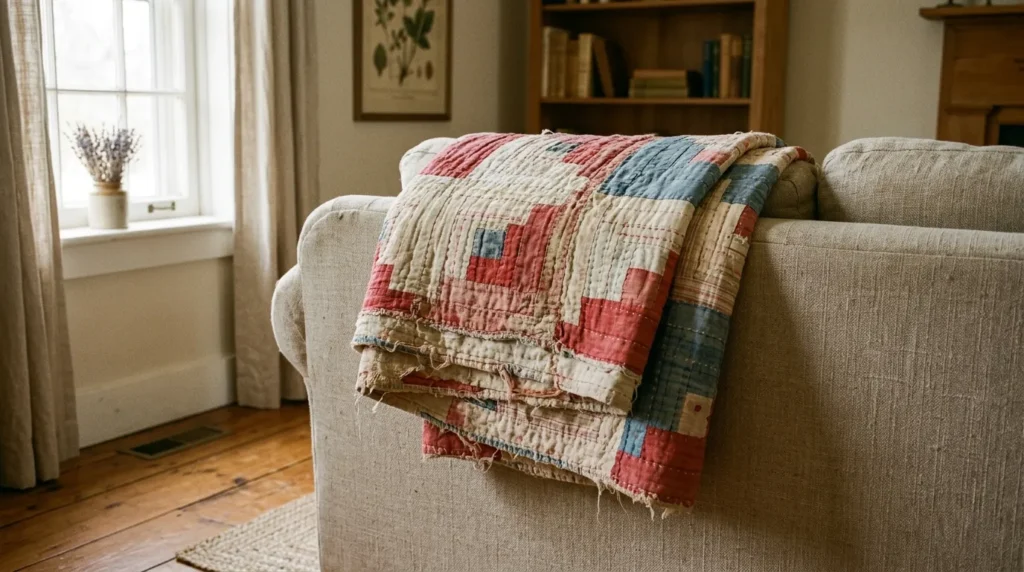
In my experience, nothing signals vintage country style faster than a worn, faded quilt draped casually over the back of a sofa or folded at the foot of an armchair. Quilts carry an inherent sense of history — even a newly made one in a traditional pattern feels nostalgic because of the technique itself, but a genuinely aged quilt with soft, sun-faded colors takes it a step further. I’ve noticed that this single detail does more to soften a room than almost any other accessory, because it introduces handmade texture and a lived-in softness that new manufactured throws just don’t replicate.
How To Style It
Drape a quilt loosely over the arm or back of a sofa rather than folding it too neatly — a slightly rumpled, casual placement reads as more authentic. Look for traditional patterns like log cabin, double wedding ring, or nine-patch in muted, faded colorways at estate sales, antique shops, or online vintage marketplaces. If you have a family quilt that’s too fragile for everyday use, consider displaying it folded over a wooden quilt rack or hung on a simple dowel as wall art instead. Layer a second, smaller quilt or throw in a complementary faded tone on an accent chair to tie the look together without making every seat match exactly.
2. Reclaimed Barn Wood
Quick Benefits
- Brings authentic texture and history into the room
- Works well for accent walls, shelving, or furniture
- Hides imperfections better than smooth, new wood
- Adds warmth without requiring bold color
- Pairs naturally with both rustic and softer accents
Why It Works
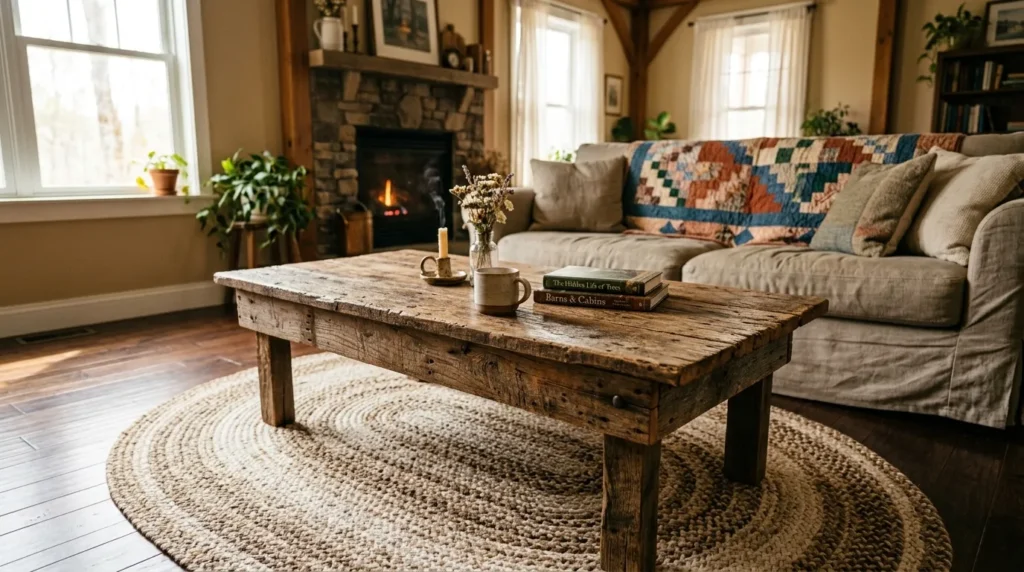
A mistake many homeowners make is trying to achieve a vintage country look with furniture that’s too polished or too matched. Reclaimed barn wood solves this instantly because it comes with its own built-in imperfections — nail holes, weathering, uneven graining — that no amount of styling can fake convincingly. That’s why many designers recommend sourcing at least one or two real reclaimed wood pieces for a room like this, since the material itself does so much of the work in establishing an authentic, collected-over-time feeling.
How To Style It
A reclaimed wood coffee table, media console, or open shelving unit makes an excellent anchor piece for the main seating area. If a full furniture piece isn’t in the budget, a small accent wall behind the sofa using reclaimed or faux-reclaimed wood planks can achieve a similar effect at a lower cost. Look for pieces with visible saw marks, uneven staining, or slightly rounded edges rather than perfectly uniform boards. Pair barn wood with softer textiles nearby — a quilt, a linen or cotton slipcover, a braided rug — so the ruggedness of the wood has something gentle to balance against.
3. Vintage Enamelware Display
Quick Benefits
- Adds charming, functional-feeling decor at low cost
- Easy to find secondhand at thrift stores and flea markets
- Brings in soft color through chipped, aged finishes
- Works on shelves, mantels, or as a centerpiece
- Reinforces the practical, humble spirit of country style
Why It Works
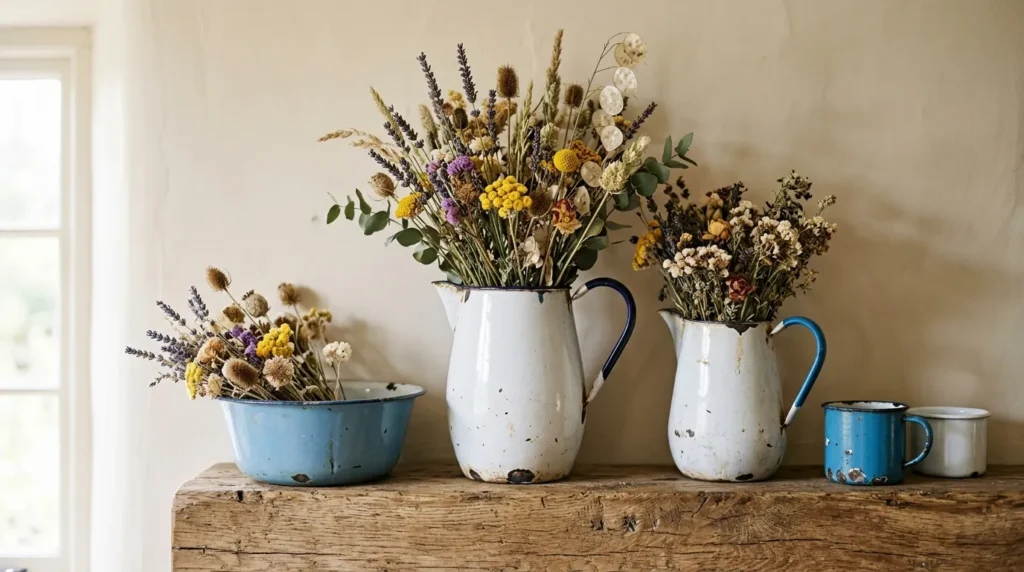
One thing that works especially well in vintage country rooms is styling with pieces that were originally meant to be used, not just displayed. Old enamelware — chipped basins, coffee pots, pitchers, and pans in faded white, cream, or robin’s-egg blue — carries exactly that spirit. I’ve seen this idea transform spaces because it introduces color and texture in a way that feels practical rather than purely decorative, which is central to what makes country style feel genuine rather than staged.
How To Style It
Group two or three pieces of enamelware together on a mantel, open shelf, or windowsill rather than scattering single pieces throughout the room. A large enamel pitcher can hold dried wildflowers or wheat stems for an easy centerpiece on a coffee table or console. Look for pieces with visible chips and wear — these details are part of the appeal, not a flaw to avoid. Mix enamelware finishes and colors slightly (cream, faded blue, soft gray) rather than matching every piece exactly, since real collections built over time rarely match perfectly.
4. Braided Wool Rugs
Quick Benefits
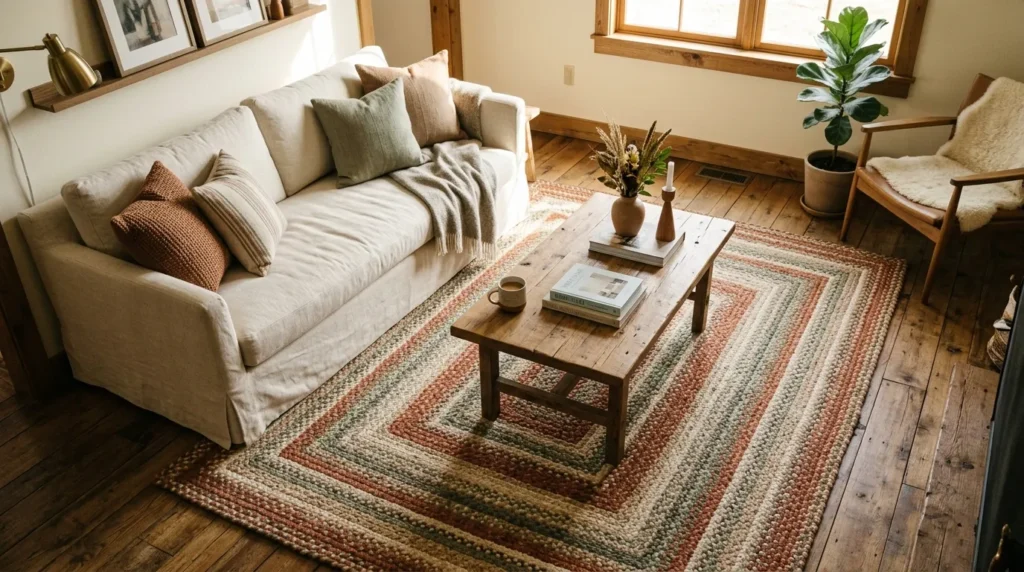
- Adds classic pattern and warmth underfoot
- Durable and practical for high-traffic living rooms
- Complements both wood floors and existing carpet
- Available in a wide range of colors and sizes
- Instantly recognizable vintage American country detail
Why It Works
If you’re anything like me, you probably associate braided rugs with a specific kind of cozy farmhouse living room — and that association exists for good reason. Braided wool rugs have been a staple of American country homes for generations, valued for their durability as much as their charm. In my experience, a braided rug does double duty: it introduces the muted, multi-tone color palette that defines vintage country style, while also standing up to daily wear far better than more delicate vintage textiles.
How To Style It
Choose a braided rug in muted, blended tones — rust, cream, sage, and soft navy work particularly well together — rather than a single bold color. Size the rug so it extends slightly beneath the front legs of your main seating pieces, which helps anchor the furniture arrangement. In larger rooms, layering a smaller braided rug over a neutral jute base rug can add extra texture without overwhelming the space. Vintage braided rugs can often be found at estate sales in excellent condition; if buying new, look for a slightly irregular braid pattern rather than a perfectly uniform machine-made look, which tends to read as more authentic.
5. Antique Rocking Chair
Quick Benefits
- Serves as an instant focal point with real history
- Adds a functional, comfortable seating option
- Introduces curved lines that soften a room full of straight edges
- Works well near a window, fireplace, or reading corner
- Easy to source secondhand at a range of price points
Why It Works
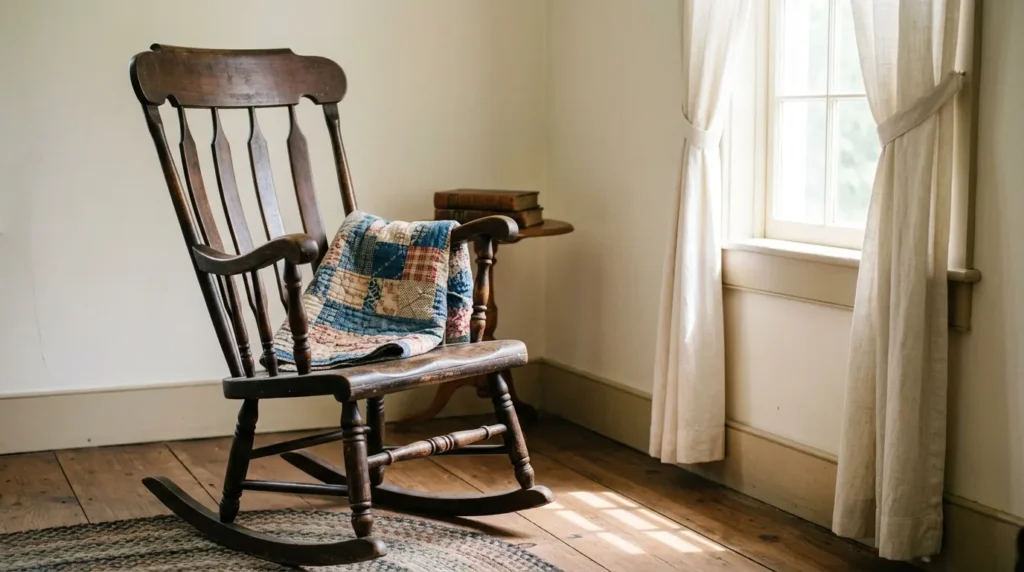
An antique rocking chair is one of those pieces that instantly tells a story, and I’ve noticed that rooms built around one tend to feel warmer and more personal than those without. The gentle curve of a rocker’s arms and runners contrasts beautifully with the straighter lines of most modern furniture, and there’s something about a rocking chair specifically — rather than just any old chair — that evokes the quiet, unhurried pace central to country living. That’s why many designers recommend it as a statement piece rather than tucking it away in a corner.
How To Style It
Position the rocking chair near a window with good natural light, or angled toward the fireplace as a secondary seat. Add a small lap quilt or faded cushion to soften the seat and tie it to other textiles in the room. Original finish and visible wear — worn arms, a slightly darkened seat — are marks of authenticity worth preserving rather than refinishing away. If the original chair is too fragile for regular use, a well-made reproduction with turned spindles and a caned or woven seat can achieve a similar look while remaining sturdy for everyday sitting.
6. Gingham Fabric Accents
Quick Benefits
- Adds cheerful, classic pattern without feeling overly formal
- Works beautifully on pillows, curtains, or a small accent chair
- Pairs naturally with solids, quilts, and ticking stripes
- Available in a wide range of colors to suit any palette
- Timeless pattern that avoids feeling trend-driven
Why It Works
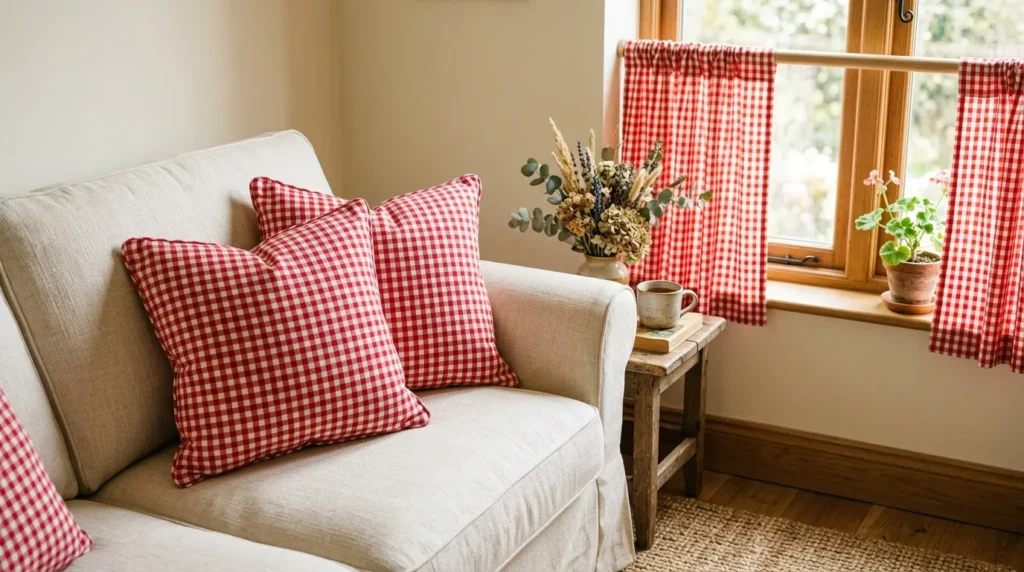
Gingham is one of the most recognizable country textiles, and its small, evenly checked pattern brings a cheerful, homespun quality that larger prints can’t replicate. In my experience, gingham works especially well as an accent rather than a dominant pattern — a little bit goes a long way toward reinforcing the cozy, kitchen-garden charm central to vintage country style, without tipping the room into feeling like a themed set.
How To Style It
A few gingham throw pillows in red, blue, or soft yellow on a neutral or cream sofa introduce the pattern without overwhelming the space. Café-style curtains in a small-scale gingham at a kitchen pass-through or window near the living area extend the look subtly. If you want a bolder statement, a single gingham accent chair paired with solid or quilted textiles elsewhere keeps the room balanced. Stick to smaller-scale gingham checks rather than oversized patterns, which tend to feel more modern or costume-like than authentically vintage.
7. Mason Jar Vignettes
Quick Benefits
- Extremely low-cost way to add charm and texture
- Versatile for flowers, candles, or simple display
- Reinforces the practical, repurposed spirit of country decor
- Easy to update seasonally
- Works on shelves, mantels, or coffee tables
Why It Works
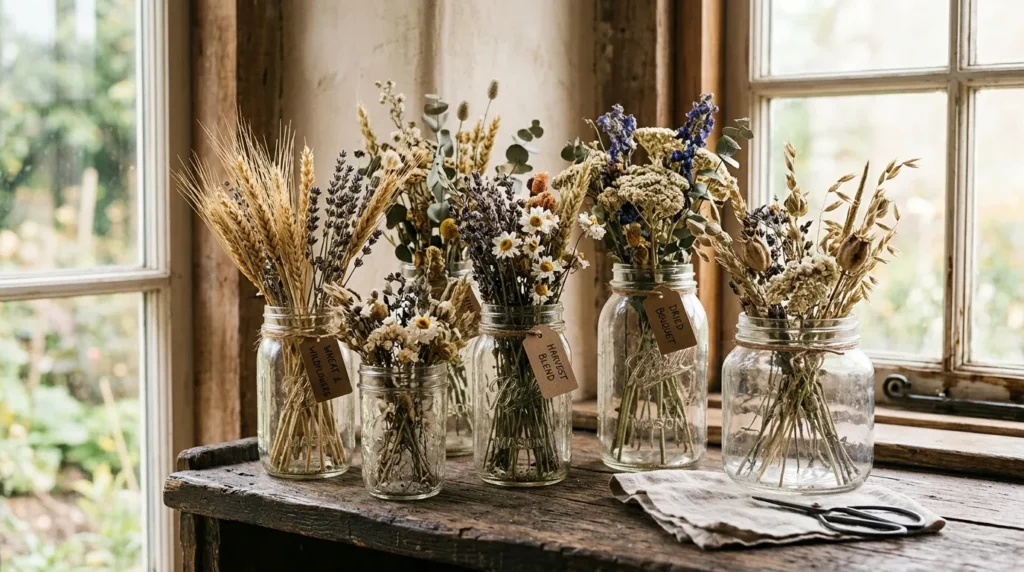
A mistake many homeowners make is overlooking small, humble details in favor of big furniture purchases, but mason jars are a perfect example of how a simple, inexpensive object can do a lot of styling work. Originally used for home canning, mason jars carry that same practical, self-sufficient spirit that defines vintage country living. I’ve seen this idea transform spaces on a shelf or mantel by adding texture and a sense of everyday utility that feels distinctly different from purely decorative glassware.
How To Style It
Group a few mason jars of varying sizes together, filled with dried wildflowers, wheat stems, or even simple greenery from the yard. A single large jar can hold a cluster of dried lavender or eucalyptus as a centerpiece on a coffee table. For evening ambiance, a few jars fitted with candles make an easy, low-cost lighting accent for a mantel or windowsill. Mix in a couple of aged or slightly tinted jars alongside clear ones for visual variety, and avoid overdoing it — three to five jars grouped thoughtfully will always look more intentional than a dozen scattered around the room.
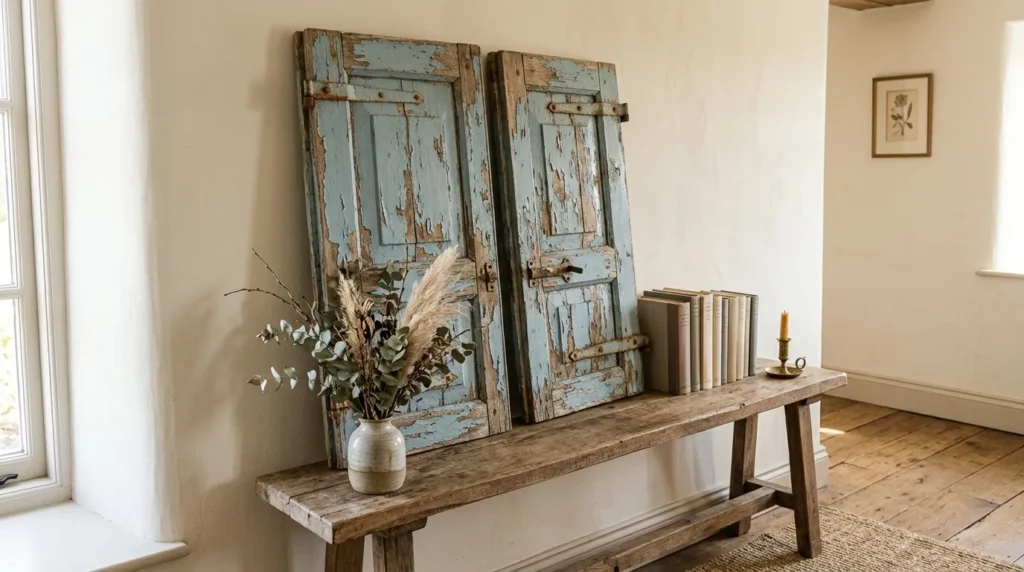
8. Weathered Farmhouse Shutters
Quick Benefits
- Adds architectural interest and texture to bare walls
- Repurposes salvaged materials in a meaningful way
- Works as wall art, room dividers, or display backdrops
- Introduces soft, weathered color without paint
- Conversation-starting piece with obvious character
Why It Works
Old farmhouse shutters, especially ones with peeling paint and visible weathering, bring an architectural quality to a room that flat decor simply can’t. In my experience, salvaged shutters work particularly well in rooms that feel a little too plain or builder-grade, since they introduce both texture and a sense of a building’s history — even if the shutters didn’t originally come from your own home. This kind of repurposed architectural salvage is central to the vintage country aesthetic, which values materials that clearly had a life before they became decor.
How To Style It
Lean a pair of weathered shutters against a bare wall behind a sofa or console table rather than mounting them formally, which keeps the look casual and collected. Alternatively, hang a single shutter panel as an unconventional piece of wall art above a mantel or console. Shutters with soft, chipped paint in classic colors — faded blue, soft green, chalky white — tend to fit the vintage country palette best. If you can’t find genuine salvaged shutters locally, many home and garden stores sell intentionally weathered reproduction shutters that achieve a similar look with less searching.
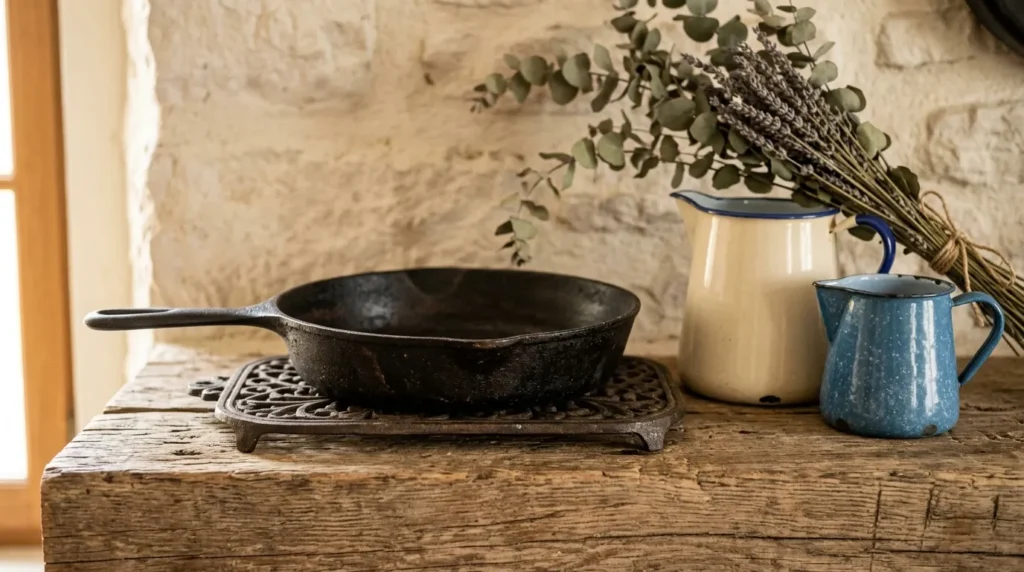
9. Cast Iron Details
Quick Benefits
- Adds sturdy, handcrafted contrast against soft textiles
- Reinforces the practical, working-farmhouse feeling of the style
- Works well for cookware displays, hardware, and small furniture
- Extremely durable and long-lasting
- Available affordably through thrifting and flea markets
Why It Works
That’s why many designers recommend cast iron as a grounding material in vintage country rooms — its heavy, matte black finish provides visual weight that balances out all the soft quilts, faded florals, and pale wood tones elsewhere in the space. Cast iron also carries genuine functional history; old skillets, kettles, and trivets were everyday tools in country kitchens and homes, and displaying them nods to that practical heritage rather than treating decor as purely ornamental.
How To Style It
A vintage cast iron skillet or trivet propped on a mantel or shelf, alongside enamelware and dried greenery, adds an easy grounding detail. Cast iron drawer pulls or hinges on a reclaimed wood console reinforce the material in a more subtle, architectural way. A small cast iron stove or wood-burning insert, if your living room has a working fireplace, is one of the most authentic details you can include, though even a decorative cast iron trivet used as a coaster or plant stand base brings in the same texture on a smaller scale. Keep cast iron pieces to a few well-placed spots rather than spreading them throughout the room, since their visual weight is most effective in moderation.
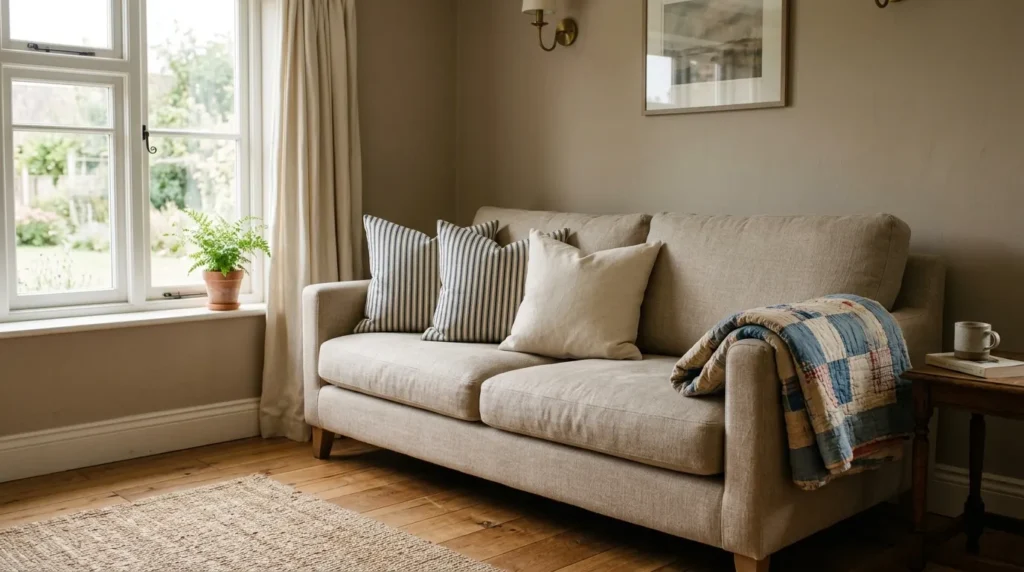
10. Ticking Stripe Textiles
Quick Benefits
- Adds classic, understated pattern that pairs with almost anything
- Works beautifully on pillows, upholstery, or curtains
- Bridges rustic and refined elements in the room
- Timeless pattern with genuine historical roots
- Easy to mix with gingham, florals, or solids
Why It Works
Ticking stripe — that narrow, evenly spaced stripe pattern historically used on mattress covers and work wear — is a quiet workhorse in vintage country design. One thing that works especially well about ticking is its versatility: it’s understated enough to serve as a neutral, pairing easily with gingham, florals, or a faded quilt, while still carrying genuine historical roots that reinforce the collected, authentic feeling central to the style. In my experience, a room that leans too heavily on busier patterns benefits enormously from a few ticking stripe pieces to give the eye a place to rest.
How To Style It
Ticking stripe pillows in classic navy-and-cream or faded red-and-cream work well on a neutral or slipcovered sofa. An armchair upholstered in ticking stripe makes a lovely secondary seat, especially paired with a solid or floral ottoman nearby. Curtains in a soft ticking stripe fabric add texture at the windows without the visual weight of a bolder floral or plaid. When combining ticking with other patterns in the room, let it play a supporting role — a stripe pillow next to a gingham one, or ticking curtains behind a floral chair — rather than competing head-to-head with a similarly scaled pattern.
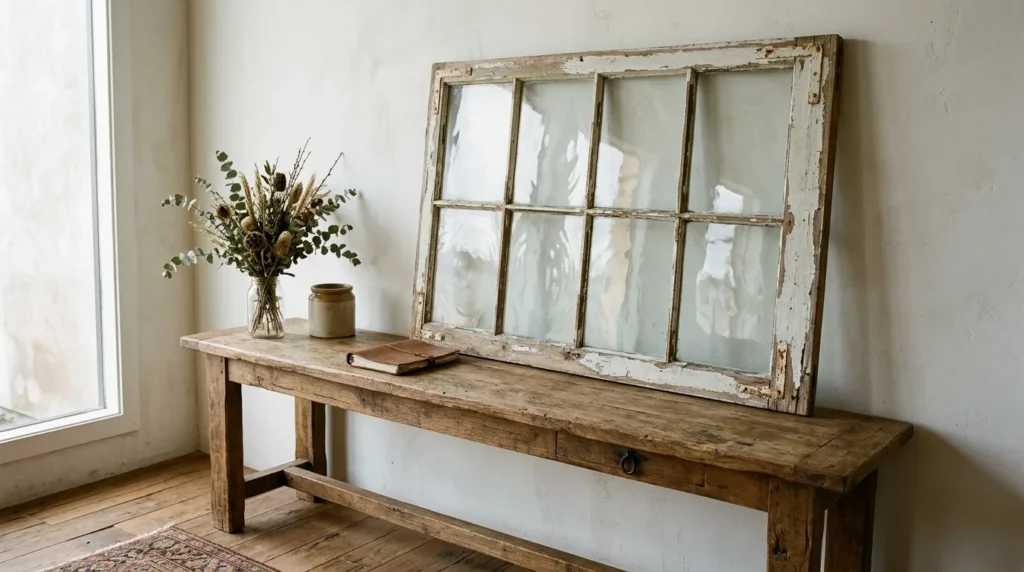
11. Salvaged Window Frames
Quick Benefits
- Turns overlooked architectural salvage into a striking focal point
- Adds depth and dimension to a plain wall
- Works as a mirror backing, art display, or standalone piece
- Introduces aged texture without requiring new construction
- Distinctive, one-of-a-kind character that’s hard to replicate with new decor
Why It Works
A weathered window frame, especially one with peeling paint and original wavy glass, makes a genuinely striking focal point precisely because it was never intended to be decor in the first place. I’ve noticed that this kind of unexpected architectural salvage tends to be a favorite for Pinterest saves, since it offers something visually unique that most new furniture and decor simply can’t replicate. It also reinforces the resourceful, nothing-goes-to-waste spirit that runs through the entire vintage country aesthetic.
How To Style It
Lean a large salvaged window frame against the wall behind a sofa or console as an oversized art piece, or hang a smaller one above a mantel in place of a traditional painting. A window frame with the original glass intact can be backed with a mirror to combine two vintage country favorites in one piece. Multiple small window frames, hung in an irregular grid, create a gallery-style display with more visual texture than traditional framed art. As with shutters, look for frames with soft, aged paint in whites, blues, or greens rather than stripped-and-refinished wood, since the chipped paint is part of what makes the piece feel genuinely old.
Frequently Asked Questions
What’s the difference between vintage country and modern farmhouse style? Modern farmhouse tends to favor crisp black-and-white palettes, shiplap, and cleaner industrial lines. Vintage country is warmer and more nostalgic, built around genuinely aged or thrifted textiles and objects — quilts, enamelware, cast iron — rather than new pieces styled to look rustic.
How do I find authentic vintage pieces for this style? Estate sales, flea markets, antique malls, and online vintage marketplaces are the best sources for genuinely aged furniture and textiles. Look for pieces with visible wear, chips, or fading, since these imperfections are exactly what give the style its authenticity.
Can I achieve this look without inheriting family antiques? Yes. While inherited pieces add sentimental value, thrifted and secondhand finds work just as well. A few genuinely old pieces mixed with newer, well-chosen furniture will read as authentic without requiring family heirlooms.
What colors work best in a vintage country living room? Warm, muted tones work best — cream, faded red, soft blue, sage green, and rust. These colors mirror the naturally faded look of old textiles and painted wood, and they pair well with the neutral wood and metal tones common in the style.
Is this style practical for households with kids or pets? Yes, in many ways it’s more forgiving than sleeker design styles. Braided rugs, slipcovers, and cast iron pieces are all naturally durable, and the style’s embrace of visible wear means everyday scuffs and marks tend to blend in rather than stand out.
How do I keep the room from feeling too cluttered? Group similar objects together (like enamelware or mason jars) rather than scattering small decor items throughout the room, and let one or two statement pieces — a rocking chair, a salvaged window frame — anchor each area rather than competing for attention.
Do I need a farmhouse or older home for this style to work? No. While the style originated in rural farmhouses, the individual elements — quilts, braided rugs, reclaimed wood, vintage textiles — can be layered into almost any home, including newer builds and apartments, to bring in that same warmth and history.
Conclusion
Vintage country living rooms have a quiet, unmistakable warmth that comes from time, wear, and the sense that every object earned its place. From a faded quilt draped over the sofa to a salvaged window frame leaning against the wall, each of these eleven ideas works best when it feels a little imperfect and a little personal, rather than perfectly matched.
You don’t need to bring in every element at once. Start with one or two ideas and gradually build a space that reflects your style and supports everyday comfort — maybe a braided rug this season and an antique rocking chair the next. Over time, those small, thoughtfully chosen additions are what give a vintage country living room its most valuable quality: the feeling that it’s been loved and lived in for far longer than it actually has.
Related Articles
- Cozy Farmhouse Bedroom Ideas
- Small Living Room Layouts
- French Country Decor Essentials
- Rustic Kitchen Styling Tips
- DIY Reclaimed Wood Projects