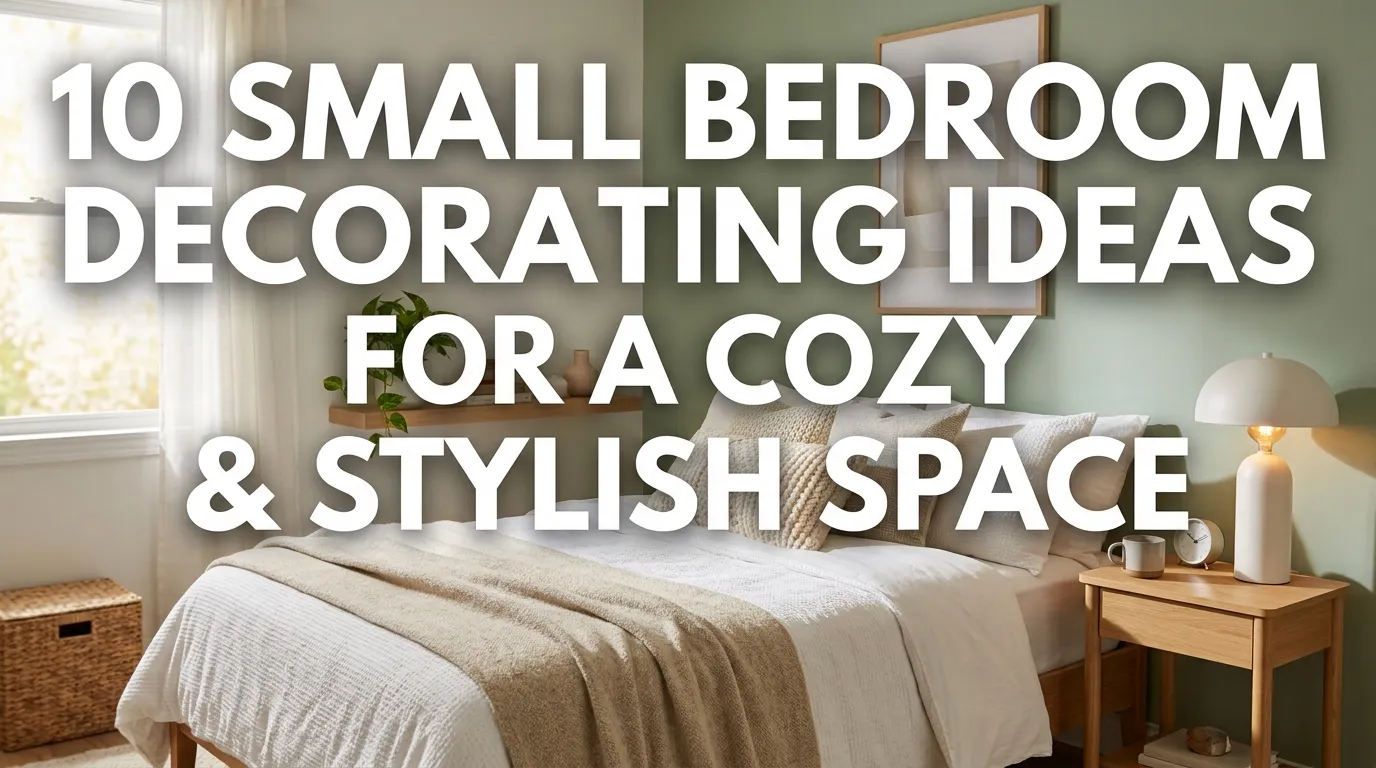
10 Small Bedroom Decorating Ideas for a Cozy Stylish Space
Decorating a small bedroom can feel like a puzzle. You want a comfortable bed, enough storage, attractive lighting, and plenty of personality, but every extra piece of furniture can make the room feel tighter. The good news is that a small bedroom doesn’t have to look crowded or feel limiting.
The most successful small bedrooms usually rely on thoughtful proportions rather than trying to squeeze in everything at once. A slim nightstand can replace a bulky bedside table. Wall-mounted shelves can provide display space without taking up valuable floor area. A large mirror can reflect light, while a light color palette can make the entire room feel more open.
Texture matters just as much as size. Soft bedding, a woven rug, linen-look curtains, wood accents, and layered lighting can make a compact bedroom feel warm and inviting without requiring additional furniture.
I’ve noticed that one of the biggest mistakes people make in small bedrooms is filling every available corner. Leaving a little breathing room around the bed and keeping pathways clear can actually make the room feel larger. Instead of adding more pieces, choose items that perform more than one job.
Whether you’re decorating a small primary bedroom, guest room, apartment bedroom, or teenager’s room, these ideas focus on practical ways to maximize comfort while maintaining a beautiful appearance.
From clever vertical storage to soft neutral colors and space-conscious furniture, these decorating ideas can help you create a bedroom that feels restful, organized, and personal.
Table of Contents
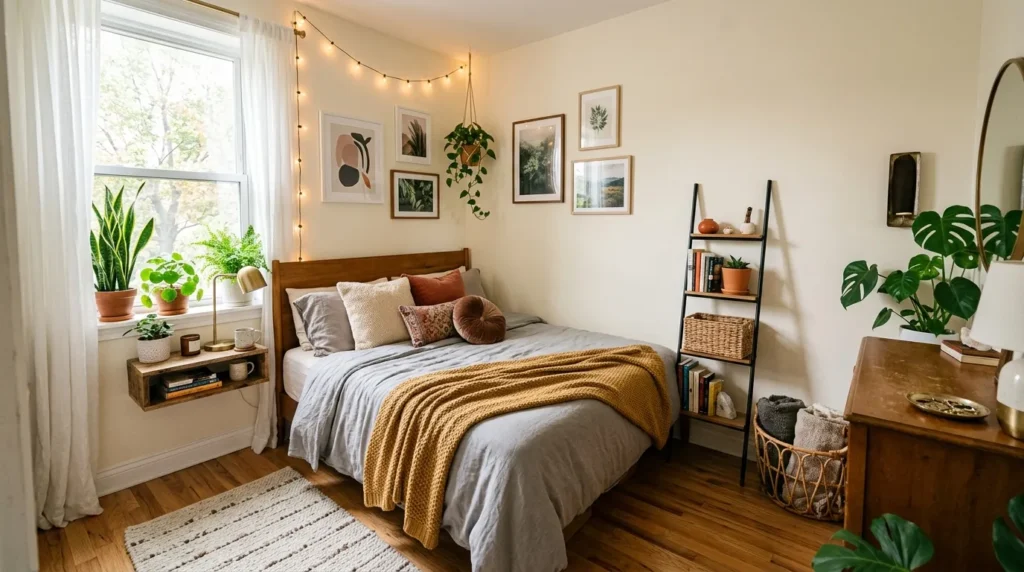
1. Light Neutral Colors
Use soft shades to create an airy and calming foundation.
2. Slim Bedside Tables
Save floor space with compact furniture beside the bed.
3. Vertical Storage Shelves
Take advantage of wall space instead of crowding the floor.
4. Oversized Bedroom Mirror
Reflect light and create the impression of greater depth.
5. Under Bed Storage
Turn unused space beneath the bed into practical organization.
6. Layered Bedding
Add softness and personality without taking up floor space.
7. Wall Mounted Lighting
Free bedside surfaces with stylish space-saving fixtures.
8. Multiuse Bedroom Furniture
Choose pieces that provide more than one useful function.
9. Soft Window Treatments
Keep the room bright while adding warmth and privacy.
10. Minimal Cozy Styling
Create a finished look without overwhelming the room.
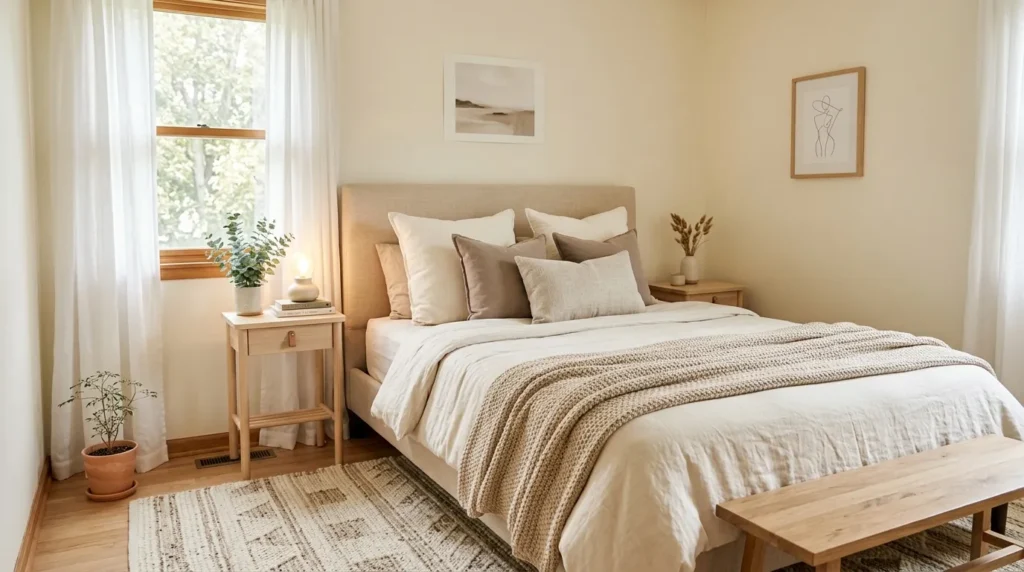
1. Light Neutral Colors
Quick Benefits
- Creates an airy appearance
- Makes the room feel calmer
- Reflects natural light
- Works with many styles
- Makes accessories easier to change
Why It Works
Color has a strong visual impact in a small bedroom. Lighter shades can help walls recede visually and allow available daylight to move around the space. Warm white, ivory, cream, soft beige, pale taupe, and gentle greige are especially versatile because they create a relaxed foundation without feeling sterile. You can still introduce personality through bedding, artwork, wood furniture, or muted accent colors. The goal isn’t to make every surface white. Instead, use a closely related palette that creates continuity and avoids visually chopping the room into separate sections.
How To Style It
Start with warm white, cream, or soft beige walls.
Choose bedding in complementary neutral tones.
Add natural wood for warmth.
Introduce muted sage, dusty rose, terracotta, or brown through small accessories.
Use similar tones for curtains and larger textiles to create a visually connected backdrop.
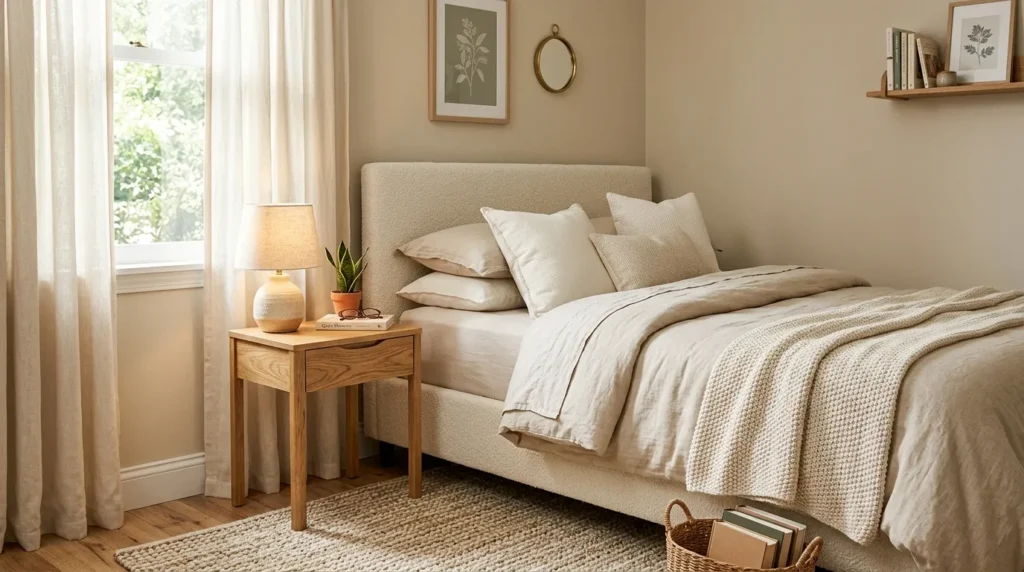
2. Slim Bedside Tables
Quick Benefits
- Saves valuable floor space
- Keeps essentials nearby
- Makes the bed area feel balanced
- Works in narrow bedrooms
- Provides useful storage
Why It Works
Traditional nightstands can take up more space than expected, especially when positioned beside a larger bed. A slim bedside table gives you the same basic function without creating a bulky visual block. Even a narrow table with one drawer or shelf can hold a lamp, phone, book, and a few personal items. Choosing furniture with legs can also help the floor remain visually visible, making the room feel less enclosed.
How To Style It
Measure the available space before buying a nightstand.
Choose a narrow wood, metal, or painted table.
Use one compact lamp or wall-mounted light.
Keep the tabletop mostly clear.
Add one small decorative object, such as a ceramic vase or tiny plant, rather than filling the surface.
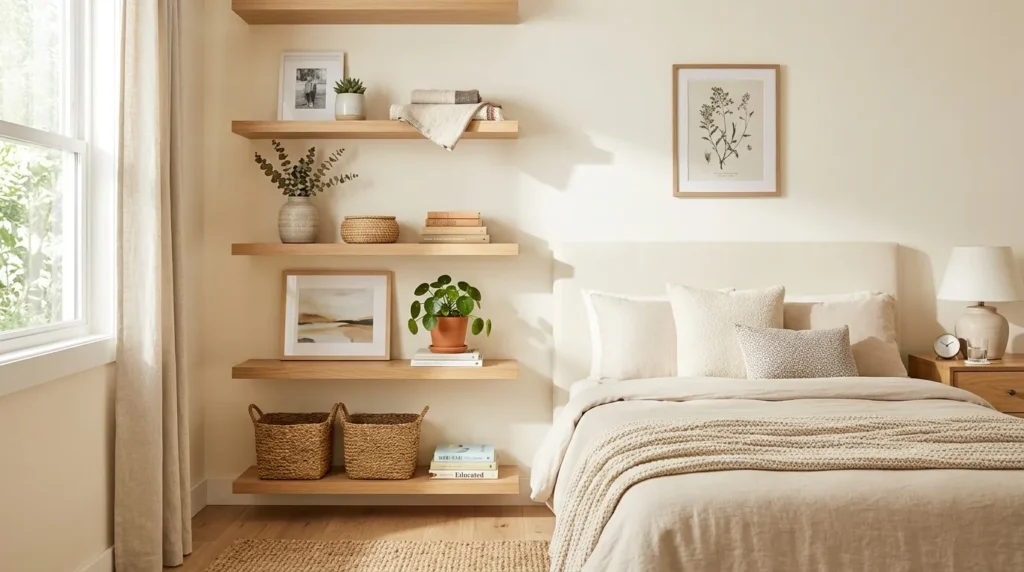
3. Vertical Storage Shelves
Quick Benefits
- Uses wall space
- Reduces floor clutter
- Adds display space
- Works in small rooms
- Creates visual height
Why It Works
When floor space is limited, walls become valuable real estate. Vertical shelving allows you to store books, small baskets, accessories, and decorative objects without taking up the footprint of a traditional cabinet. Tall shelving can also draw the eye upward, emphasizing the height of the room rather than its limited width.
How To Style It
Install floating shelves above a desk or beside the bed where appropriate.
Use narrow vertical shelving for books and baskets.
Keep frequently used items within easy reach.
Mix practical storage with a few decorative objects.
Leave some empty shelf space so the arrangement doesn’t feel overcrowded.
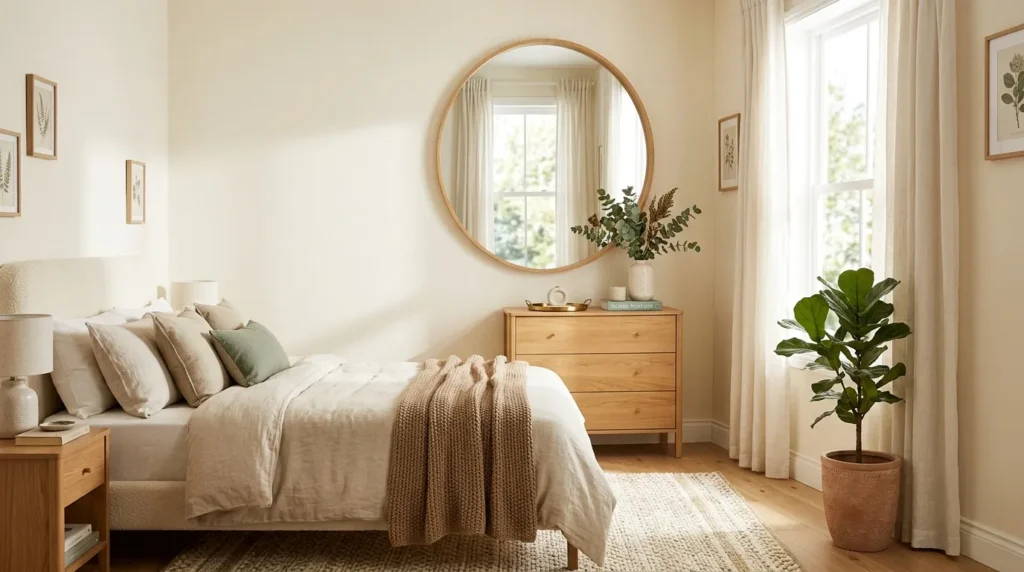
4. Oversized Bedroom Mirror
Quick Benefits
- Reflects natural light
- Adds visual depth
- Creates a focal point
- Makes walls feel less heavy
- Adds decorative style
Why It Works
A strategically placed mirror can make a compact bedroom feel brighter and more open. It doesn’t physically enlarge the room, but the reflection can create additional visual depth. A larger mirror can also become a decorative feature, particularly when its frame complements the room’s furniture and color palette.
How To Style It
Place a tall mirror beside a wardrobe or dresser.
Try a large round mirror above a compact dresser.
Choose a thin frame if you want a lighter appearance.
Position the mirror to reflect a window or bright part of the room when possible.
Secure larger mirrors appropriately for safety.
5. Under Bed Storage
Quick Benefits
- Uses hidden space
- Reduces closet pressure
- Keeps seasonal items organized
- Doesn’t require extra floor area
- Helps maintain a cleaner room
Why It Works
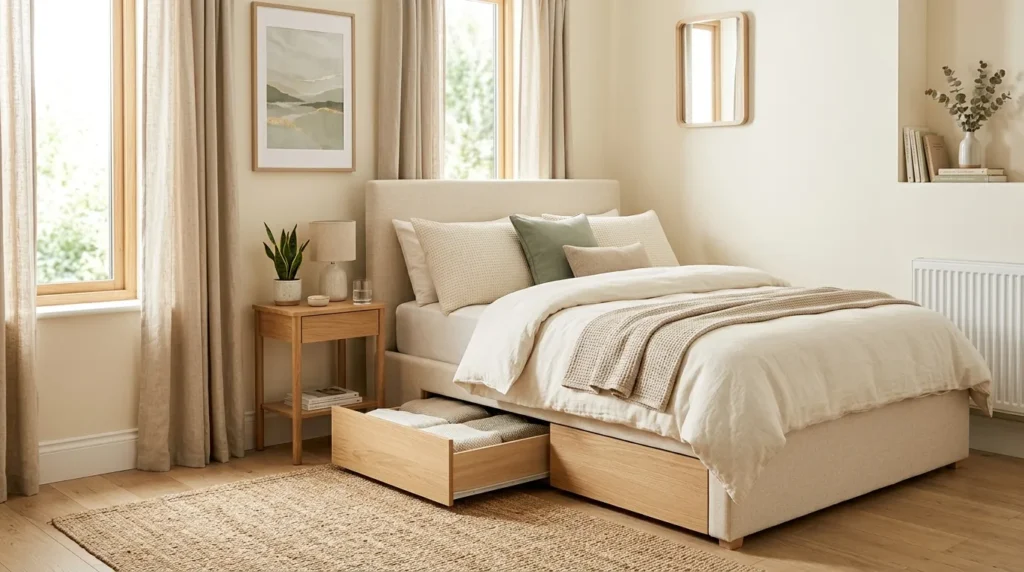
The space beneath the bed is often overlooked, yet it can provide valuable storage in a small bedroom. Instead of allowing that area to become a dust-catching void, use suitable containers or built-in drawers to organize bedding, clothing, shoes, or seasonal items. Keeping these belongings hidden also helps the bedroom maintain a calmer visual appearance.
How To Style It
Choose low-profile storage boxes that fit beneath the bed.
Use labeled containers for seasonal belongings.
Consider a bed frame with integrated drawers.
Keep frequently used items toward the easiest-to-access side.
Avoid overfilling containers because difficult-to-remove storage quickly becomes impractical.
6. Layered Bedding
Quick Benefits
- Adds softness
- Creates visual depth
- Makes the bed inviting
- Doesn’t consume floor space
- Allows easy seasonal changes
Why It Works
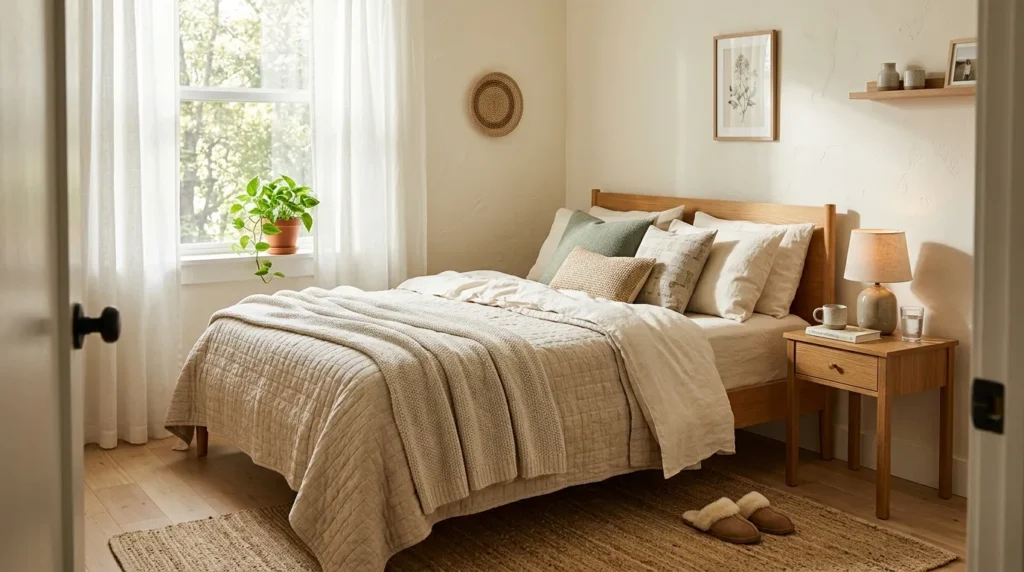
The bed is usually the largest piece of furniture in a small bedroom, so it naturally becomes the room’s visual anchor. Instead of adding decorative furniture, use bedding to create personality. Layered sheets, a duvet or comforter, pillows, and a throw can introduce texture and subtle color while keeping the floor completely open.
How To Style It
Begin with neutral sheets.
Add a duvet or quilt in a complementary shade.
Use two or three layers of pillows rather than an excessive arrangement.
Fold a textured throw at the foot of the bed.
Choose breathable fabrics and washable layers suitable for everyday use.
7. Wall Mounted Lighting
Quick Benefits
- Frees bedside space
- Adds decorative interest
- Provides useful task lighting
- Works in narrow layouts
- Creates a polished appearance
Why It Works
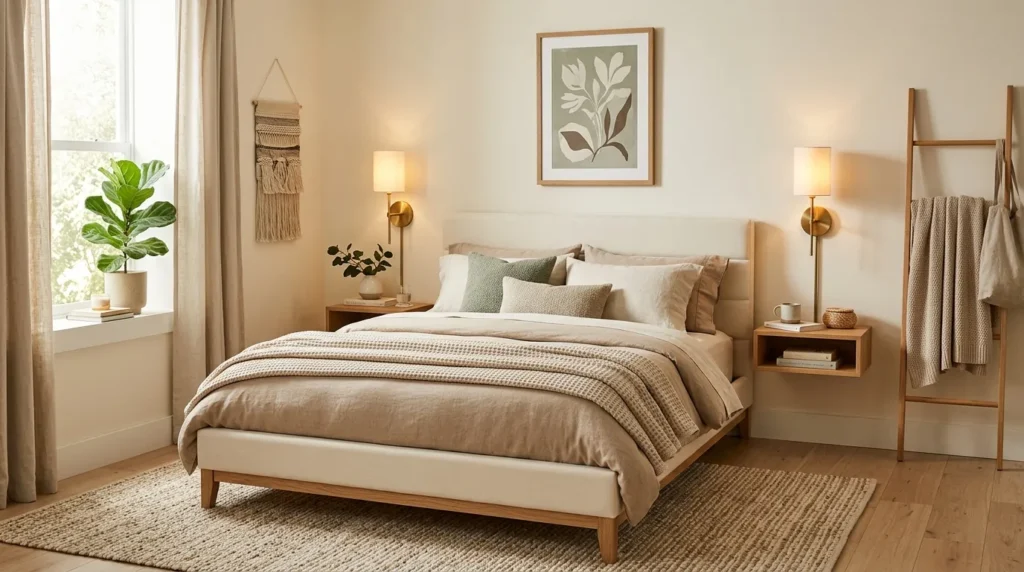
Bedside lamps are useful, but they require valuable tabletop space. Wall-mounted sconces or suitable swing-arm fixtures can provide similar illumination while keeping the nightstand available for essentials. They can also add a more intentional, built-in feeling to a compact bedroom.
How To Style It
Install sconces on either side of the bed when the layout allows.
Choose compact fixtures with a simple silhouette.
Use adjustable designs for reading areas.
Coordinate the finish with other hardware.
For hardwired fixtures, use a qualified professional and follow local electrical requirements.
8. Multiuse Bedroom Furniture
Quick Benefits
- Maximizes functionality
- Reduces furniture count
- Saves floor space
- Supports organization
- Works especially well in apartments
Why It Works
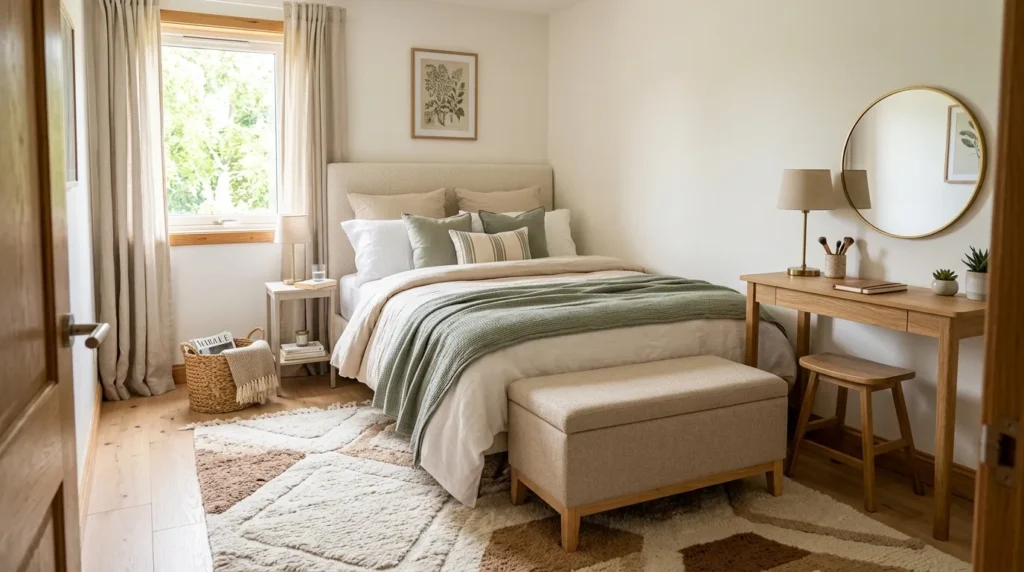
In a small room, furniture that performs multiple jobs can make a significant difference. An ottoman can provide seating and hidden storage. A narrow desk can function as both a workspace and vanity. A bed with drawers can provide storage without requiring another cabinet. The fewer large pieces you need, the more open floor area you can preserve.
How To Style It
Choose an ottoman with internal storage.
Use a narrow console as a desk when appropriate.
Consider a platform bed with built-in drawers.
Select furniture with a relatively compact footprint.
Keep pathways around multifunctional furniture clear and easy to use.
9. Soft Window Treatments
Quick Benefits
- Adds warmth
- Provides privacy
- Softens hard lines
- Allows natural light
- Makes the room feel finished
Why It Works
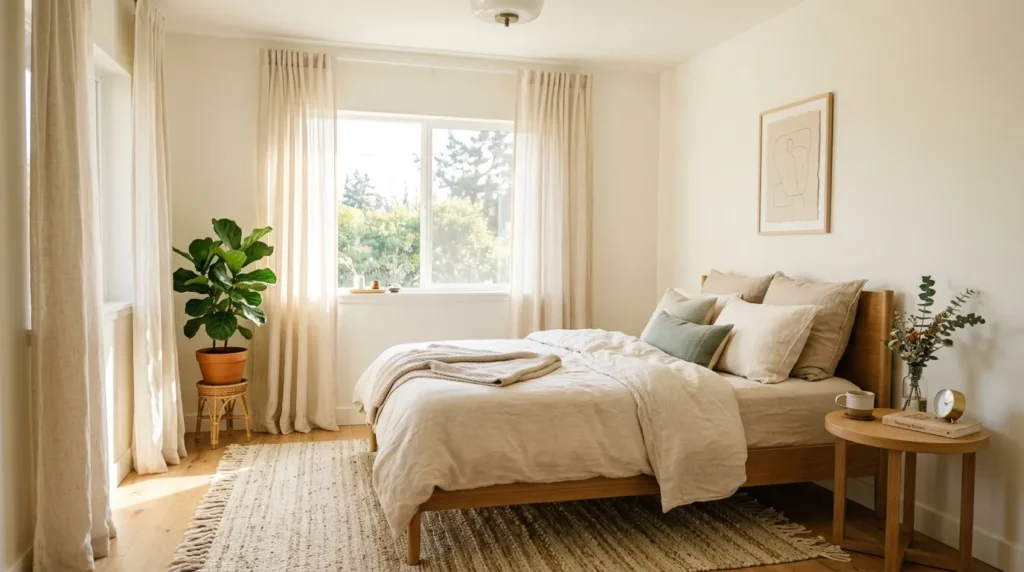
Window treatments can make a small bedroom feel significantly more polished. Heavy curtains can sometimes visually close in a compact room, while lightweight curtains allow daylight to filter through and maintain an airy appearance. Hanging curtains closer to the ceiling and allowing them to extend toward the floor can also emphasize vertical proportions.
How To Style It
Choose lightweight curtains in cream, ivory, beige, or soft neutral tones.
Hang the curtain rod slightly above the window frame when practical.
Allow fabric to fall close to the floor.
Use blinds or shades when additional light control is necessary.
Keep patterns subtle if the room already has several visual elements.
10. Minimal Cozy Styling
Quick Benefits
- Prevents visual clutter
- Makes cleaning easier
- Highlights favorite pieces
- Keeps the room relaxing
- Creates a sophisticated finish
Why It Works
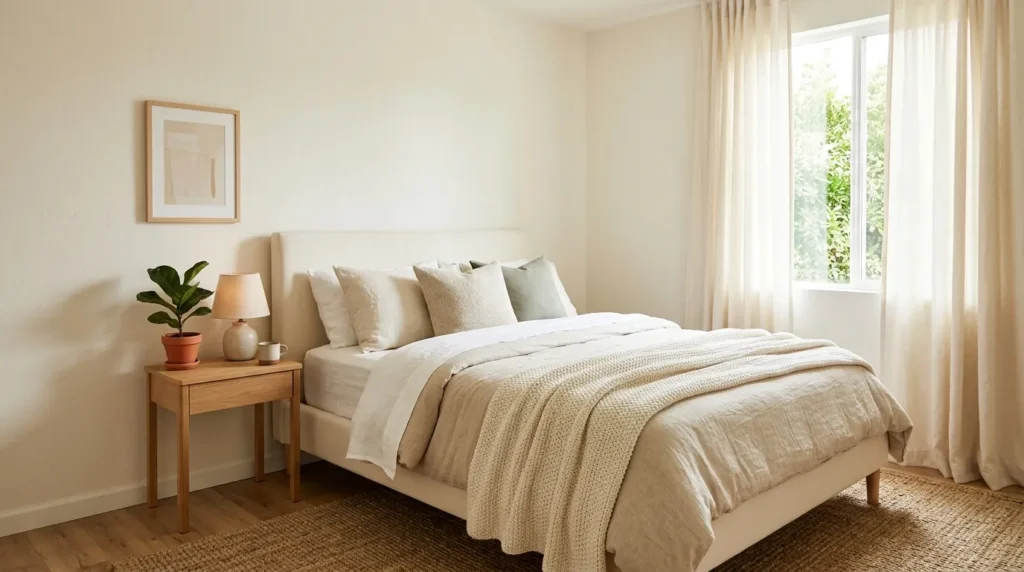
Small bedrooms often look better when decorated with restraint. You don’t need artwork on every wall or accessories on every surface. A few intentional details can create much more impact. A plant, framed print, textured throw, bedside lamp, and carefully selected rug may be all the room needs. Leaving some empty surfaces and visible floor area helps the bedroom feel peaceful rather than crowded.
How To Style It
Choose one main decorative focal point.
Add one or two pieces of artwork.
Use a small plant if the lighting conditions are suitable.
Keep the dresser and nightstand surfaces relatively clear.
Repeat two or three colors throughout the room.
Prioritize comfort and everyday usability over decoration for decoration’s sake.
How to Make a Small Bedroom Look Bigger
The easiest approach is to create visual continuity.
Keep the color palette relatively light and cohesive. Use furniture that is proportional to the room and avoid placing large pieces where they block pathways or windows.
Mirrors can reflect light and add depth, while furniture with visible legs can allow more of the floor to remain visible.
Storage also matters. Clutter can make a small room feel significantly smaller, so use under-bed storage, vertical shelving, baskets, and built-in solutions whenever possible.
Most importantly, don’t try to fill every corner.
A little empty space is not wasted space—it helps the room breathe.
Best Furniture for a Small Bedroom
Look for furniture that is compact, proportional, and useful.
Good options include:
- Platform beds with storage
- Slim nightstands
- Narrow dressers
- Floating shelves
- Wall-mounted lighting
- Storage ottomans
- Compact desks
- Tall wardrobes
- Slim benches
Before buying anything, measure the room and create clear walking paths. A piece that technically fits may still make the bedroom uncomfortable if there isn’t enough clearance around it.
Small Bedroom Color Ideas
A warm neutral palette is an easy starting point, but small bedrooms don’t have to be completely neutral.
Try:
- Warm white and natural wood
- Cream and beige
- Soft gray and ivory
- Sage green and warm white
- Dusty rose and cream
- Taupe and terracotta
- Beige and muted brown
- Soft blue and warm white
Use stronger colors strategically rather than covering every surface. Bedding, artwork, cushions, rugs, and small accessories are easy places to experiment.
Frequently Asked Questions
How can I decorate a very small bedroom?
Prioritize furniture that fits the room’s proportions and use walls for storage wherever possible. Choose a light, cohesive color palette, keep pathways open, use under-bed storage, and add personality through bedding, lighting, artwork, and a few carefully selected accessories.
What colors make a small bedroom look bigger?
Warm white, cream, ivory, beige, soft taupe, and pale gray can help create an airy appearance. Natural daylight also plays an important role. You can add richer colors through smaller decorative pieces without making the room feel visually heavy.
What furniture should I avoid in a small bedroom?
Avoid oversized furniture that leaves little walking space. Very deep dressers, bulky nightstands, large decorative chairs, and unnecessary cabinets can quickly overwhelm a compact bedroom. Measure first and prioritize pieces that provide essential function.
How do I add storage to a small bedroom?
Use the space beneath the bed, vertical shelves, tall wardrobes, floating shelves, storage ottomans, and organizers inside existing closets. Keeping storage contained and organized can also help the room maintain a cleaner visual appearance.
Does a large mirror make a small bedroom look bigger?
A large mirror can create the visual impression of additional depth and reflect natural or artificial light. Positioning it where it reflects a window or bright area can make the room feel more open, although it won’t physically increase the room’s dimensions.
How do I make a small bedroom feel cozy?
Layer soft bedding, add warm lighting, use textured fabrics, introduce a small rug, and choose warm neutral colors. A few personal objects and natural materials such as wood can add character without requiring additional furniture.
How do I decorate a small bedroom on a budget?
Start with changes that have a strong visual impact: rearrange the furniture, declutter, change bedding, add affordable artwork, install simple shelves, introduce a plant, or update the lighting. You don’t need to replace every piece to refresh the room.
Conclusion
A small bedroom can be comfortable, stylish, and surprisingly functional when every design decision is made with purpose.
Start by considering the room’s biggest challenges. If floor space is limited, move storage upward with floating shelves or tall furniture. If the room feels dark, introduce lighter colors, reflective surfaces, and better lighting. If it feels cold, layer bedding, rugs, curtains, and natural materials.
The bed will naturally remain the focal point, so make it inviting with comfortable layers rather than adding unnecessary furniture around it. Slim nightstands, wall-mounted lighting, and multifunctional pieces can give you the functionality you need without overwhelming the room.
Remember that you don’t have to use every idea at once. Choose the solutions that address your actual needs first. A storage bed may be more valuable than a decorative cabinet, while a large mirror may be more useful than another piece of wall art.
In my experience, the most beautiful small bedrooms are the ones that balance practicality with personality. Keep the layout easy to navigate, give favorite pieces room to stand out, and leave enough open space for the room to feel restful.
Start with one small improvement, build from there, and create a bedroom that feels like a calm retreat rather than a room limited by its size.