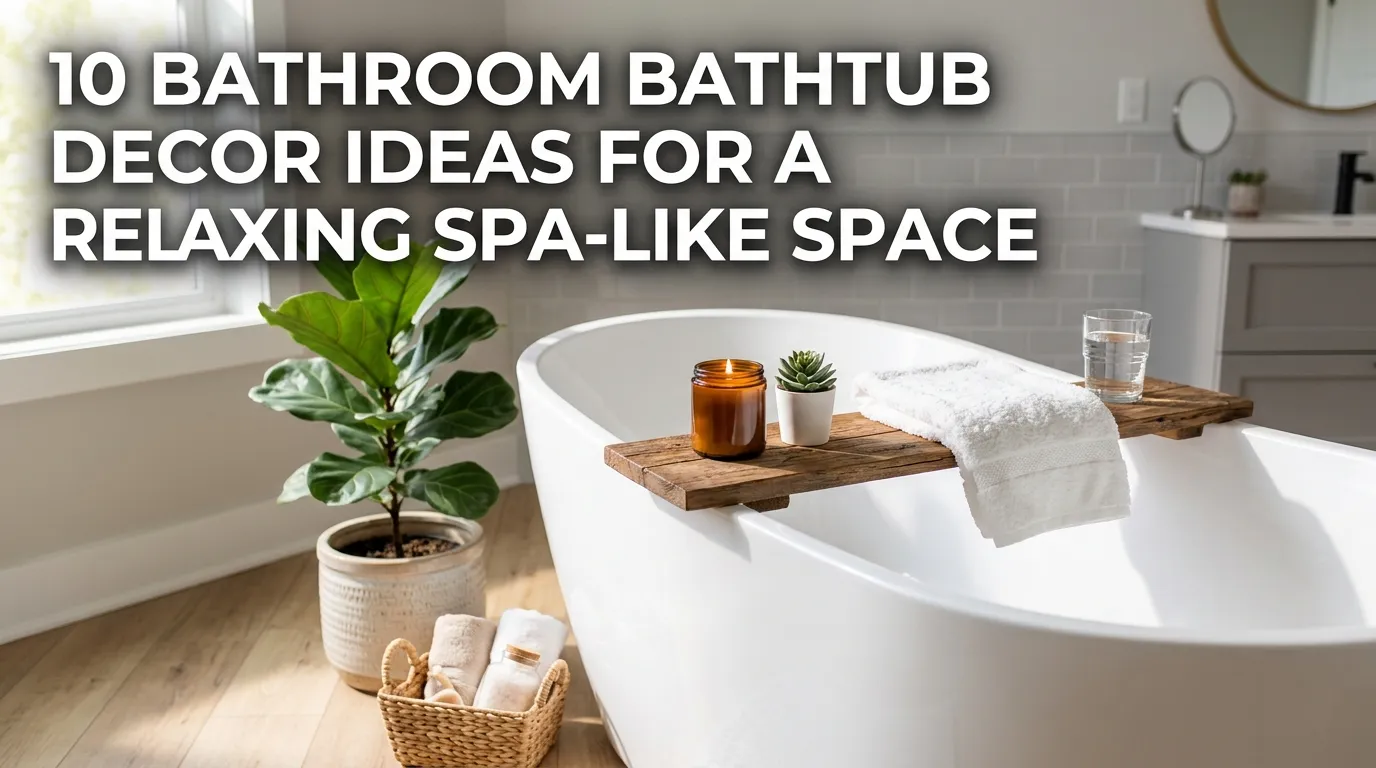
10 Bathroom Bathtub Decor Ideas for a Relaxing Spa-Like Space
A bathtub can be much more than a practical bathroom fixture. With the right decor, it can become the visual centerpiece of the room and create the calm, inviting feeling of a personal spa. Whether you have a spacious primary bathroom with a freestanding tub or a compact bathroom with a built-in bathtub, thoughtful styling can make the area feel warmer, more polished, and more relaxing.
The key is to decorate around the bathtub rather than simply adding accessories to it. Soft textiles, natural materials, greenery, warm lighting, artwork, and carefully chosen storage can all contribute to a beautiful bathroom without making the space feel cluttered.
I’ve noticed that the most successful bathroom designs usually balance decorative details with practical needs. A beautiful bath tray is useful when it has room for a book or towel, while a small stool can hold essentials without becoming visual clutter. Natural wood, stone, woven textures, and soft neutral colors can also introduce warmth to bathrooms that otherwise feel dominated by hard surfaces.
Lighting deserves special attention. Bright overhead lighting may be useful for everyday tasks, but softer illumination can make the bathtub area feel much more inviting in the evening. Candles, suitable lamps, or dimmable fixtures can add atmosphere while keeping the overall design sophisticated.
Whether you’re planning a bathroom makeover or simply want to refresh the area around your existing tub, these ideas focus on realistic ways to create a comfortable and visually appealing bathing space.
From elegant bath trays and greenery to wall art and natural textures, each idea can be adapted to different bathroom sizes and decorating styles.
Table of Contents
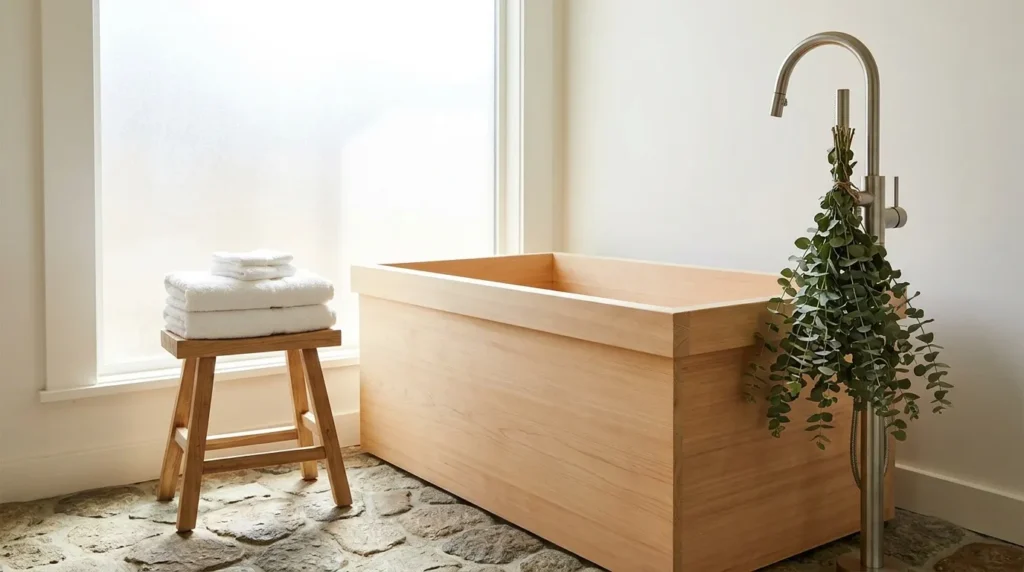
1. Wooden Bath Tray
Add practical warmth and a spa-inspired touch across the bathtub.
2. Greenery Around Tub
Bring natural color and organic texture into the bathroom.
3. Freestanding Stool
Create a useful surface for towels, toiletries, and decor.
4. Soft Bath Textiles
Layer towels and washable textiles to make the area feel inviting.
5. Statement Wall Art
Give the bathtub area a distinctive decorative focal point.
6. Warm Ambient Lighting
Create a softer and more relaxing atmosphere around the tub.
7. Natural Stone Accents
Introduce timeless texture with stone-inspired decorative elements.
8. Elegant Bath Caddy
Keep bathing essentials organized while maintaining a polished look.
9. Minimal Decorative Shelf
Use nearby wall space for attractive and practical accessories.
10. Layered Spa Styling
Combine several simple elements for a complete relaxing look.
1. Wooden Bath Tray
Quick Benefits
- Adds natural warmth
- Provides useful surface space
- Creates a spa-like appearance
- Works with many bathroom styles
- Keeps essentials organized
Why It Works
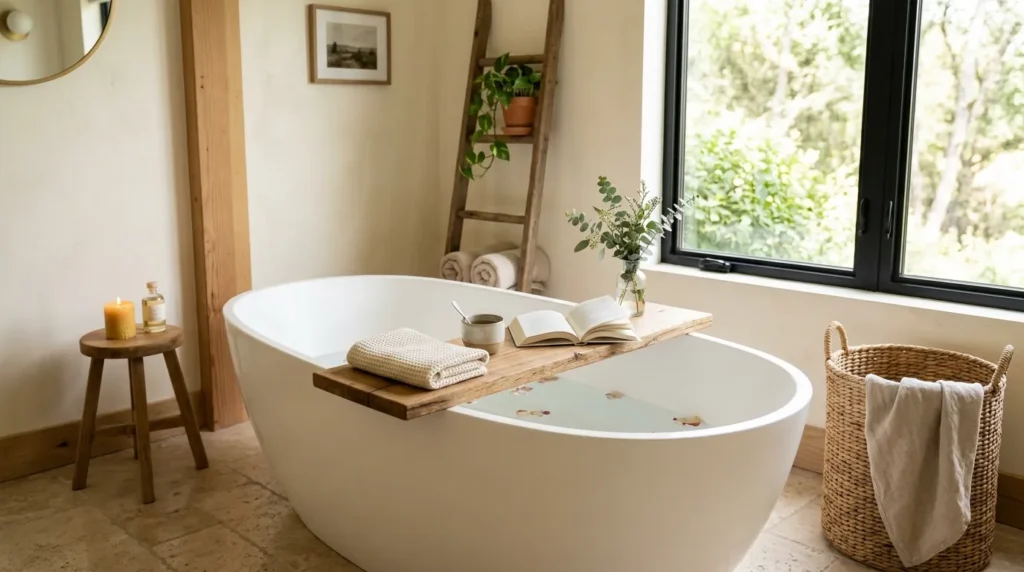
A wooden bath tray can instantly make an ordinary bathtub feel more intentional and luxurious. The natural texture of wood contrasts beautifully with porcelain, ceramic tile, glass, and stone. More importantly, it provides a practical place for items you may want nearby while bathing. A tray can hold a book, towel, cup, or suitable bath accessories without requiring another piece of furniture.
How To Style It
Choose a tray that fits securely across the bathtub.
Look for water-resistant or appropriately finished wood.
Keep the arrangement simple rather than filling every available section.
Add a folded hand towel, small plant, book, and one decorative container.
Choose natural wood tones for warm bathrooms or darker wood for a more dramatic look.
2. Greenery Around Tub
Quick Benefits
- Adds natural color
- Softens hard surfaces
- Creates a spa-inspired feeling
- Introduces organic texture
- Works with neutral bathrooms
Why It Works
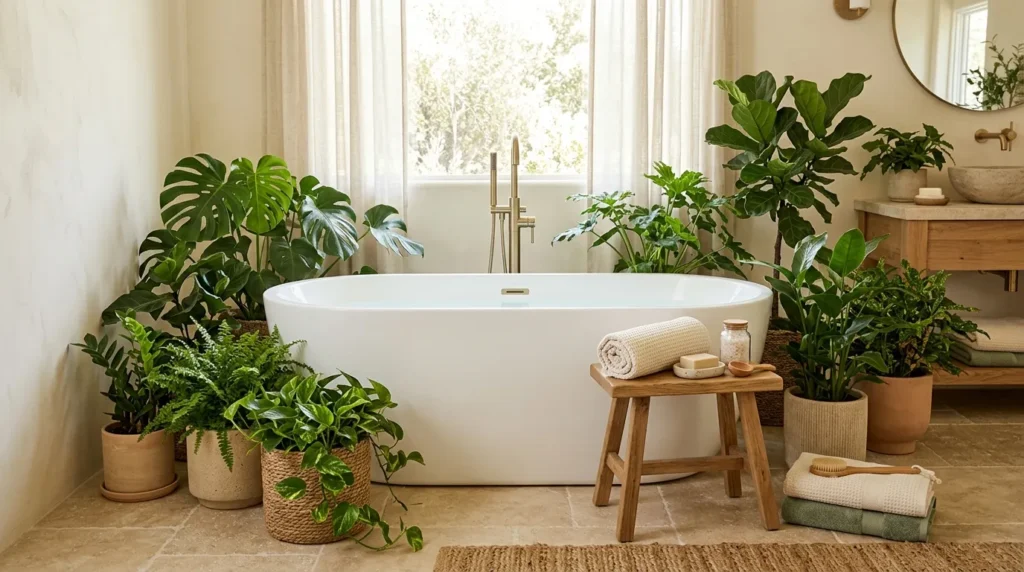
Plants can make a bathroom feel noticeably fresher and more connected to nature. Their organic shapes provide a welcome contrast to straight tile lines and smooth fixtures. In bathrooms with suitable natural light and humidity, plants can also become beautiful decorative features around a bathtub.
How To Style It
Choose plants based on the bathroom’s actual light and humidity.
Place a larger plant in a decorative floor planter near the tub.
Use smaller plants on a stool or shelf.
Choose simple ceramic, stone, or woven-style containers.
Avoid placing plants where water splashes could damage them or where they interfere with safe movement.
3. Freestanding Stool
Quick Benefits
- Adds a useful surface
- Fits beside most tubs
- Creates visual warmth
- Can be moved easily
- Works as both decor and storage
Why It Works
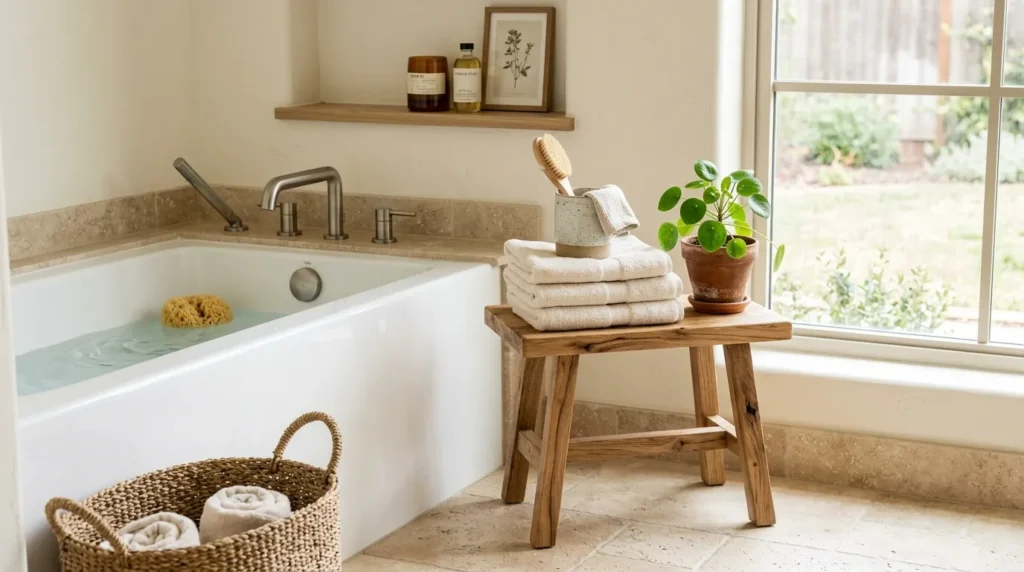
A small stool is one of the simplest ways to make the area beside a bathtub feel styled without adding a bulky cabinet. It can hold folded towels, toiletries, a small plant, or decorative objects. Because it can easily be moved, it also provides flexibility when cleaning or changing the layout.
How To Style It
Choose a stool made from bathroom-appropriate materials.
Natural wood works particularly well with neutral interiors.
Add one folded towel and a small ceramic container.
Keep the top surface relatively open.
Place the stool close enough to be useful without obstructing the bathtub entrance.
4. Soft Bath Textiles
Quick Benefits
- Adds comfort
- Softens hard surfaces
- Introduces color
- Makes the room feel finished
- Can be changed seasonally
Why It Works
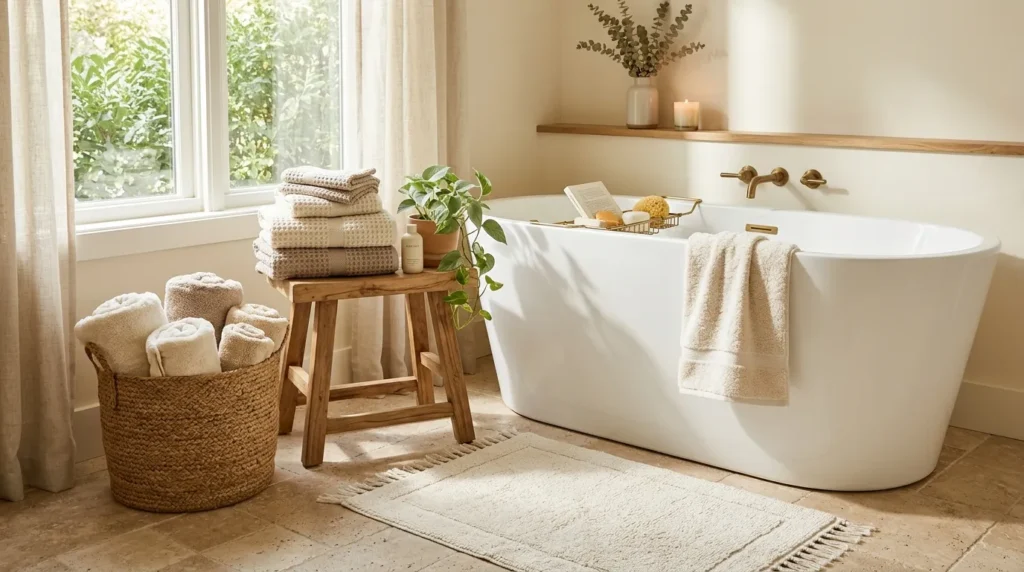
Bathrooms contain many hard surfaces, including tile, porcelain, glass, and stone. Soft textiles introduce visual warmth and tactile contrast. Coordinated towels, a washable bath mat, and a lightweight robe can make the bathtub area feel more inviting while remaining practical.
How To Style It
Choose towels in cream, white, beige, taupe, or another color that complements the room.
Fold larger towels neatly on an open shelf or stool.
Use a washable bath mat outside the tub where appropriate.
Coordinate textile colors instead of mixing too many unrelated shades.
Choose materials that can handle the bathroom’s humidity and laundering requirements.
5. Statement Wall Art
Quick Benefits
- Creates a focal point
- Adds personality
- Uses vertical space
- Complements the bathtub
- Makes the room feel finished
Why It Works
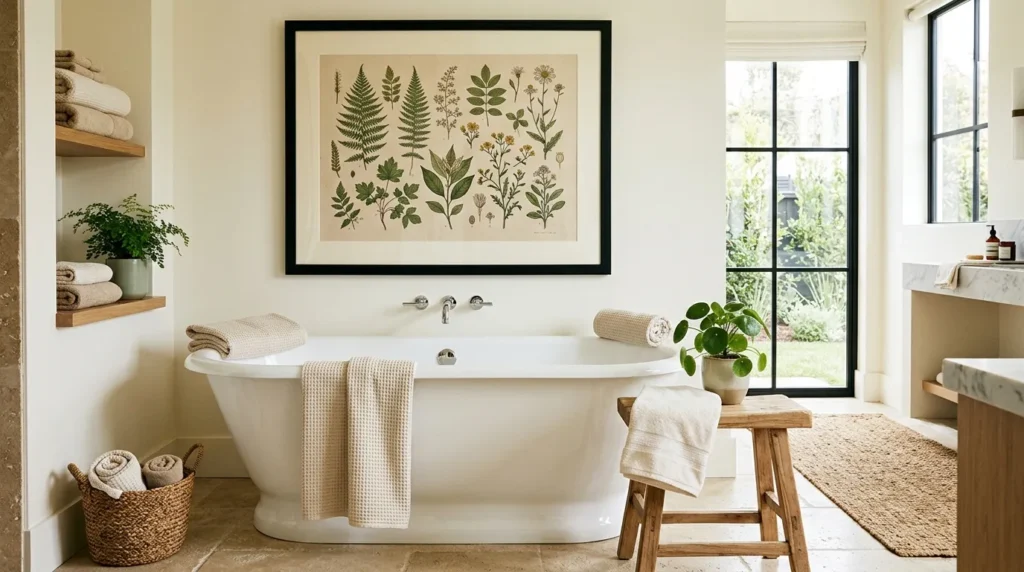
The wall surrounding a bathtub can sometimes feel empty, especially in larger bathrooms. A carefully selected artwork can turn that unused vertical space into a visual feature. Botanical prints, abstract art, landscape photography, or simple line drawings can complement the relaxing atmosphere of a bathing area.
How To Style It
Choose artwork that complements the bathroom’s existing colors.
Use one large piece instead of several small pieces when the wall is spacious.
Keep framed artwork away from direct water exposure.
Choose appropriate framing and materials for humid environments.
Coordinate the frame with nearby hardware or furniture finishes.
6. Warm Ambient Lighting
Quick Benefits
- Creates a relaxing mood
- Adds visual warmth
- Highlights the bathtub
- Makes evenings more inviting
- Adds decorative interest
Why It Works
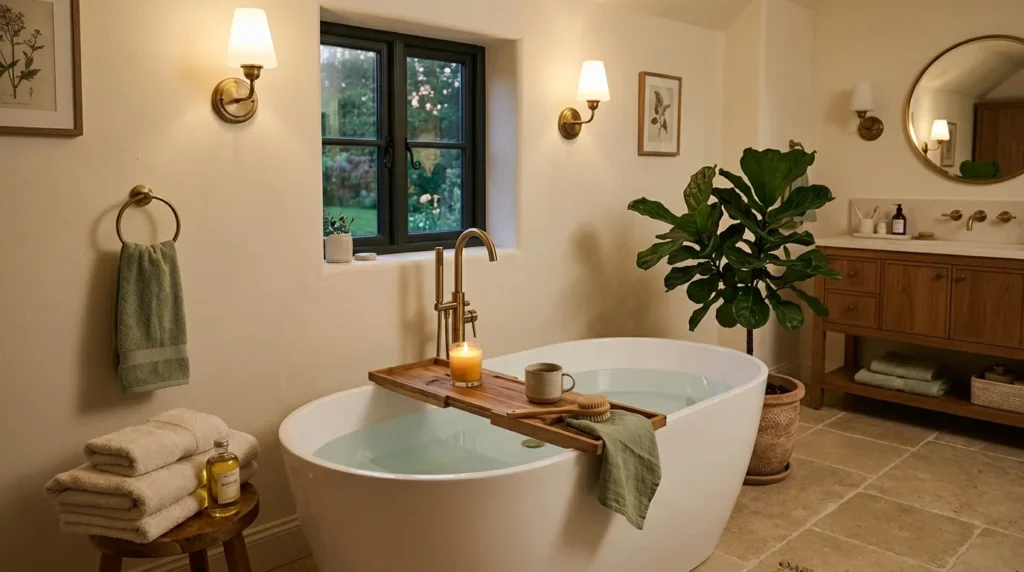
Lighting has a major influence on how a bathroom feels. Bright task lighting is useful for grooming, but softer ambient illumination can create a calmer atmosphere around the bathtub. Layered lighting allows the room to serve both practical and relaxing purposes without relying on one harsh overhead source.
How To Style It
Use dimmable fixtures where compatible and safely installed.
Add suitable decorative lighting around the room.
Choose warm-toned illumination for a softer atmosphere.
Use candles only where safe and appropriate.
Keep electrical fixtures and cords away from water and follow local electrical requirements.
7. Natural Stone Accents
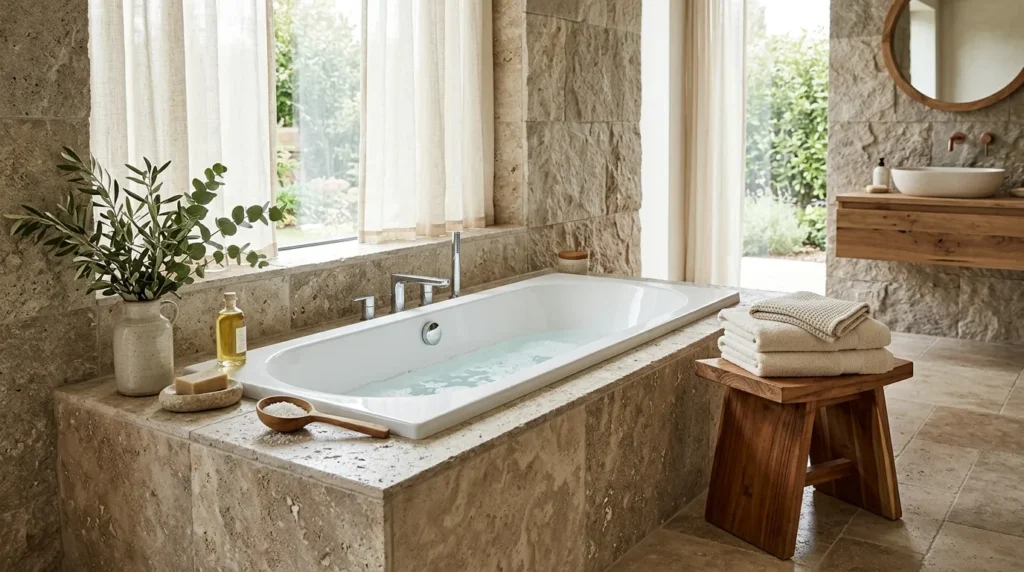
Quick Benefits
- Adds organic texture
- Creates a timeless appearance
- Complements neutral colors
- Works with modern designs
- Enhances a spa-like mood
Why It Works
Stone-inspired materials can make a bathroom feel grounded and sophisticated. Marble, travertine, limestone-inspired surfaces, river stones, and other natural textures introduce subtle variation that works beautifully with white porcelain and warm wood. You don’t need to remodel the entire bathroom to get this effect.
How To Style It
Introduce stone through a small tray, container, stool, accessory, or decorative vessel.
Pair stone textures with warm wood.
Keep the palette neutral so the materials remain the focus.
Combine smooth surfaces with rougher textures for contrast.
Use materials suitable for humid bathroom environments.
8. Elegant Bath Caddy
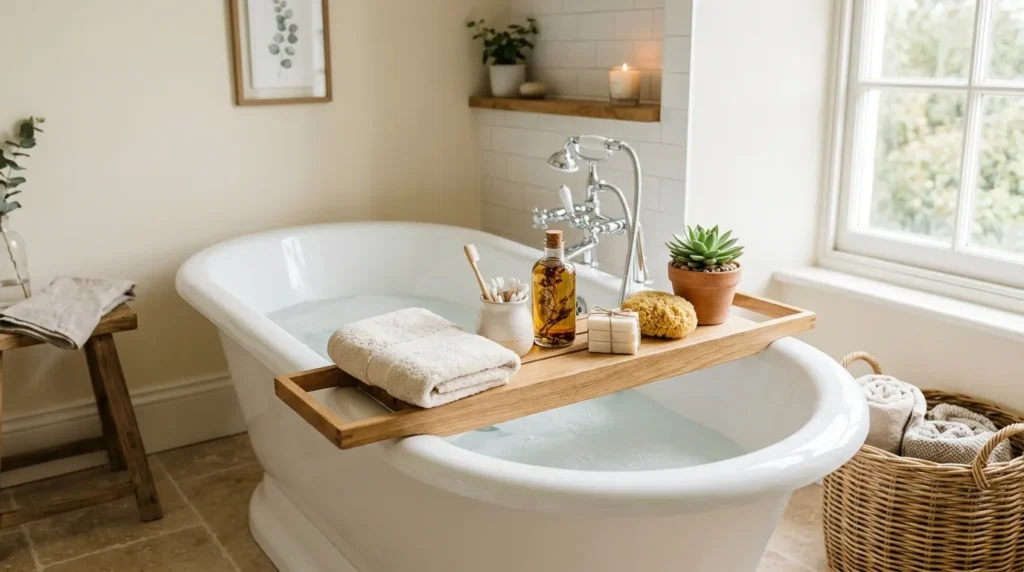
Quick Benefits
- Organizes bath essentials
- Keeps surfaces clear
- Adds practical luxury
- Works in many bathroom styles
- Creates an intentional look
Why It Works
A bath caddy combines function and decoration particularly well. Instead of scattering products around the bathtub, a well-designed caddy creates one organized zone. It can hold everyday essentials while also making the tub feel more like a dedicated relaxation area.
How To Style It
Choose a caddy that fits securely across your bathtub.
Use compartments to separate small items.
Keep only frequently used essentials visible.
Add one decorative element, such as a small waterproof container.
Choose bamboo, wood, metal, or another material that complements your bathroom finishes.
9. Minimal Decorative Shelf
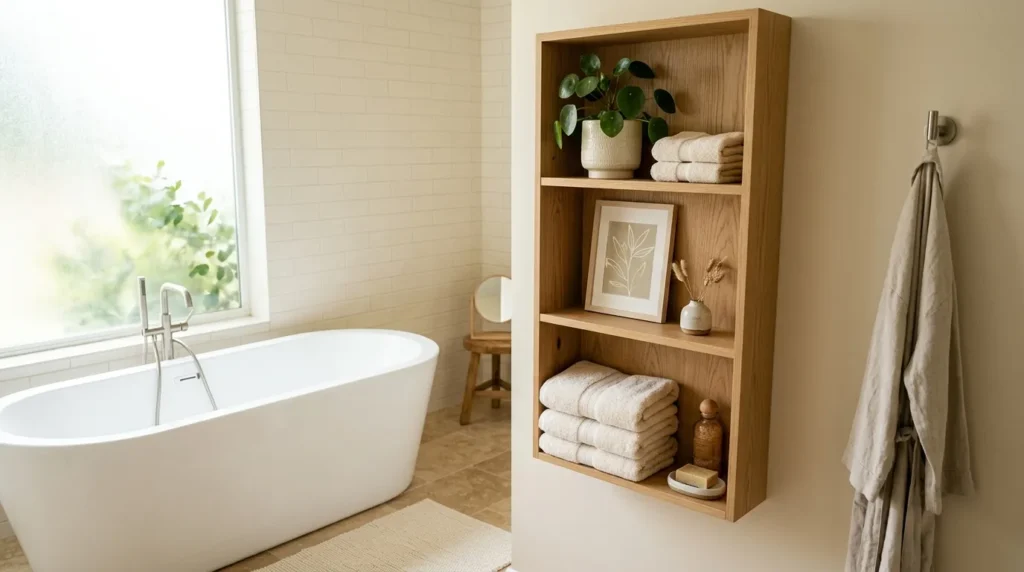
Quick Benefits
- Uses vertical space
- Adds storage
- Keeps decor organized
- Creates a focal point
- Works in small bathrooms
Why It Works
A small wall shelf can provide a home for decorative and practical items without consuming valuable floor space. This is particularly helpful in compact bathrooms where additional cabinets may feel bulky. The key is keeping the shelf edited rather than treating it as a place to store everything.
How To Style It
Choose a slim shelf that complements the wall.
Display folded towels, a small plant, ceramic containers, or simple artwork.
Use baskets for smaller items when appropriate.
Leave some empty space between objects.
Avoid installing shelves where they could create a hazard around the bathtub.
10. Layered Spa Styling
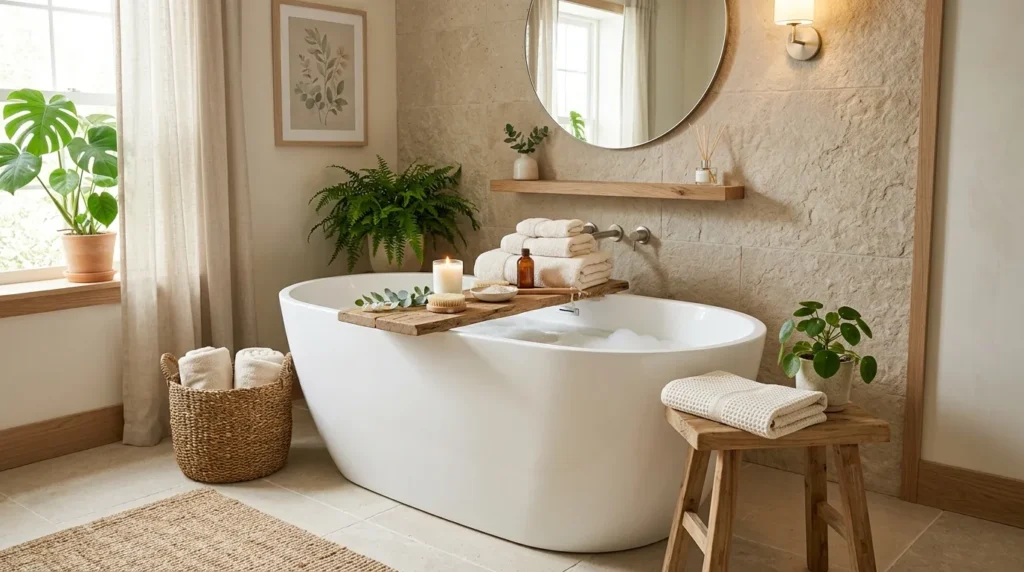
Quick Benefits
- Creates a cohesive look
- Combines practical and decorative elements
- Feels relaxing
- Works with different design styles
- Makes the bathtub the focal point
Why It Works
The most polished bathtub areas rarely depend on one decorative object. Instead, they combine several restrained elements that work together: soft towels, natural textures, greenery, warm lighting, and a few useful accessories. This layered approach creates the visual richness of a spa while keeping the overall design calm.
How To Style It
Begin with a clean and uncluttered bathtub area.
Add one natural material such as wood or stone.
Introduce greenery if the conditions are suitable.
Layer neutral towels nearby.
Add warm ambient lighting and one small decorative accent.
Step back and remove anything that feels unnecessary.
How to Make a Bathtub Area Look More Luxurious
Luxury doesn’t necessarily require expensive remodeling.
A clean, coordinated color palette can make the biggest difference. Warm white, cream, beige, soft gray, natural wood, and muted green create a sophisticated foundation.
Next, focus on texture. Plush towels, wood, stone, woven baskets, and subtle greenery can make a bathroom feel much more layered.
Lighting is another important element. A combination of functional lighting and softer ambient illumination can create a more relaxing atmosphere.
Finally, keep surfaces edited. A few beautiful objects usually look more sophisticated than a collection of unrelated accessories.
Best Colors for Bathtub Decor
Neutral colors work particularly well around bathtubs because they reinforce the calm atmosphere associated with bathing.
Consider:
- Warm white
- Cream
- Ivory
- Beige
- Taupe
- Soft gray
- Sage green
- Warm brown
- Muted blue
You can also introduce darker accents through wood frames, black hardware, or bronze-toned accessories when they complement the existing bathroom.
Small Bathroom Bathtub Decorating Tips
A compact bathroom benefits from restraint.
Choose wall-mounted storage whenever practical, use a slim stool instead of a cabinet, and keep the floor as open as possible.
Mirrors can help reflect light, while lighter colors can make the space feel brighter.
Avoid placing too many accessories around the tub. Instead, choose one focal point and support it with two or three smaller elements.
For renters, removable artwork, freestanding storage, plants, textiles, and decorative accessories can refresh the space without permanent alterations.
Frequently Asked Questions
How can I decorate around a bathtub?
Start with functional pieces such as a bath tray, stool, towels, or suitable storage. Then add decorative elements like greenery, artwork, natural textures, and warm lighting. Keep the area uncluttered and make sure accessories don’t interfere with safe access to the tub.
What looks good next to a bathtub?
A small wooden stool, tall plant, woven basket, slim cabinet, or decorative floor lamp designed for appropriate bathroom use can work well. The best choice depends on the bathroom’s size, moisture levels, and available clearance.
How do I make my bathtub look like a spa?
Use a calm color palette, soft towels, natural materials, greenery, organized bath accessories, and warm ambient lighting. Keep the bathtub area clean and uncluttered. The combination of texture and restrained styling usually creates a more relaxing atmosphere than adding many decorative objects.
What plants are good for bathroom decor?
Choose plants according to the bathroom’s actual light and humidity rather than simply selecting varieties marketed for bathrooms. Plants that tolerate your specific conditions will be easier to maintain. If the bathroom has little natural light, consider suitable artificial greenery instead.
Can I put artwork near a bathtub?
Yes, but artwork should be protected from direct splashes and excessive moisture. Choose appropriate framing and materials, and position the piece where it won’t interfere with movement or become exposed to constant water.
How do I decorate a small bathtub area?
Keep the floor open and use vertical space. A compact bath tray, slim stool, small plant, wall art, or narrow shelf can provide plenty of personality without overwhelming the room. Stick to a cohesive palette and avoid unnecessary accessories.
What makes a bathroom look expensive?
A coordinated color palette, quality-looking materials, good lighting, plush textiles, natural textures, and uncluttered surfaces can create a polished appearance. You don’t necessarily need luxury fixtures; thoughtful styling and consistency often have a stronger visual impact.
Conclusion
The bathtub can become one of the most beautiful features in a bathroom when it is treated as more than a functional fixture.
Start with the basics: clear clutter, coordinate your colors, and make sure the space around the tub is comfortable and safe. Then introduce a few elements that add warmth and personality, such as a wooden bath tray, soft towels, natural stone accents, greenery, or a small stool.
Lighting can take the design even further. A bathroom that feels bright and practical during the morning can become softer and more relaxing in the evening when you use appropriate ambient lighting.
You don’t need to purchase everything at once. Begin with one or two high-impact changes and build the look gradually. A new set of towels or a small plant may be enough to refresh the space, while a beautiful mirror or artwork can create a stronger focal point.
The most successful bathtub decor feels intentional rather than crowded. Give each item a purpose, repeat a few materials and colors, and leave enough open space for the room to breathe.
Whether your style is modern, farmhouse, minimalist, traditional, or spa-inspired, a thoughtfully decorated bathtub area can turn an everyday bathroom into a calming retreat you’ll genuinely enjoy using.