
11 Cozy Living Room Wall Color Ideas for a Warm and Inviting Home
The right wall color can completely change the feeling of a living room. A shade that looks ordinary on a paint chip can feel warm, sophisticated, airy, or deeply cozy once it surrounds the room. That’s especially true in living spaces, where natural light, furniture, flooring, and textiles all interact with the walls throughout the day.
If your living room feels a little flat or impersonal, changing the wall color can be one of the most noticeable ways to refresh it without replacing every piece of furniture. You don’t necessarily need a dramatic shade, either. Warm whites, creamy beige, earthy taupe, muted green, soft brown, and dusty blue can all create inviting interiors when they’re paired thoughtfully.
I’ve noticed that the coziest living rooms usually have more than one source of warmth. The wall color establishes the foundation, while wood furniture, woven textures, soft upholstery, rugs, curtains, and layered lighting reinforce the feeling. This is why choosing paint based only on a small sample can be misleading. The same color can look completely different beside cool gray flooring than it does beside warm oak.
Before painting, observe your room at different times of day. Notice whether the windows bring in cool northern light, warm afternoon sunshine, or limited natural light. Then consider the undertones of your existing sofa, flooring, trim, and major furniture pieces.
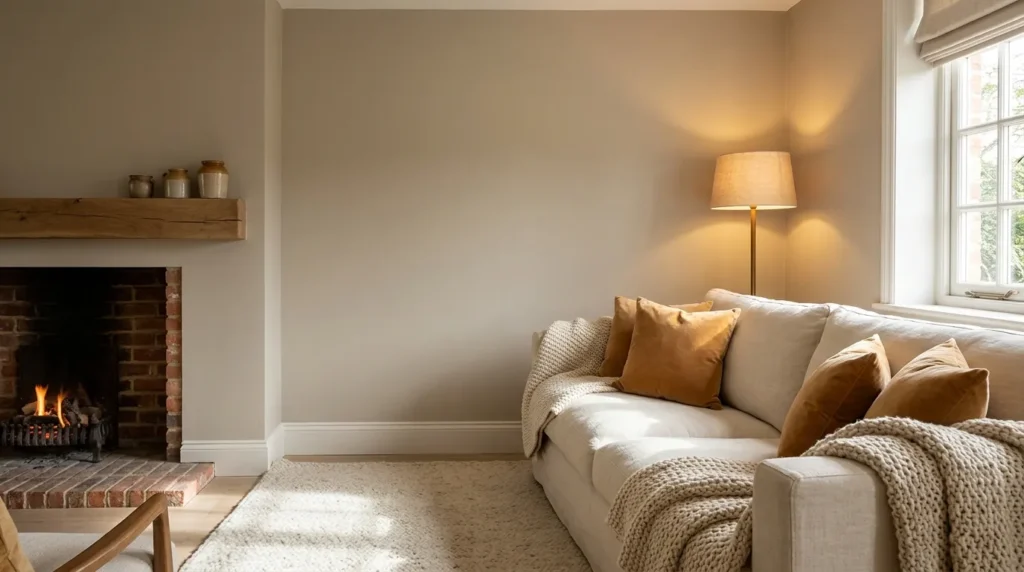
These cozy living room wall colors are designed to inspire a comfortable, welcoming atmosphere while remaining versatile enough for modern, traditional, farmhouse, organic, and transitional homes.
Table of Contents
1. Warm Cream Walls
Create a soft neutral backdrop that feels brighter without looking stark.
2. Earthy Beige Walls
Bring warmth and understated elegance to the living room.
3. Soft Taupe Walls
Blend gray and beige for a sophisticated cozy foundation.
4. Muted Sage Walls
Introduce a calming botanical tone with natural character.
5. Warm Greige Walls
Combine versatile gray and beige for a balanced modern look.
6. Terracotta Accent Walls
Add earthy warmth and personality with a richer statement shade.
7. Moody Olive Walls
Create an enveloping atmosphere with a deep natural green.
8. Dusty Blue Walls
Use a softened blue for a peaceful and welcoming interior.
9. Caramel Brown Walls
Bring depth and warmth through a rich earthy neutral.
10. Soft Blush Walls
Add subtle warmth and softness without overwhelming the room.
11. Warm White Walls
Create an inviting foundation that works with layered textures.
1. Warm Cream Walls
Quick Benefits
- Creates a soft atmosphere
- Works with natural materials
- Reflects light gently
- Complements warm furniture
- Feels timeless
Why It Works
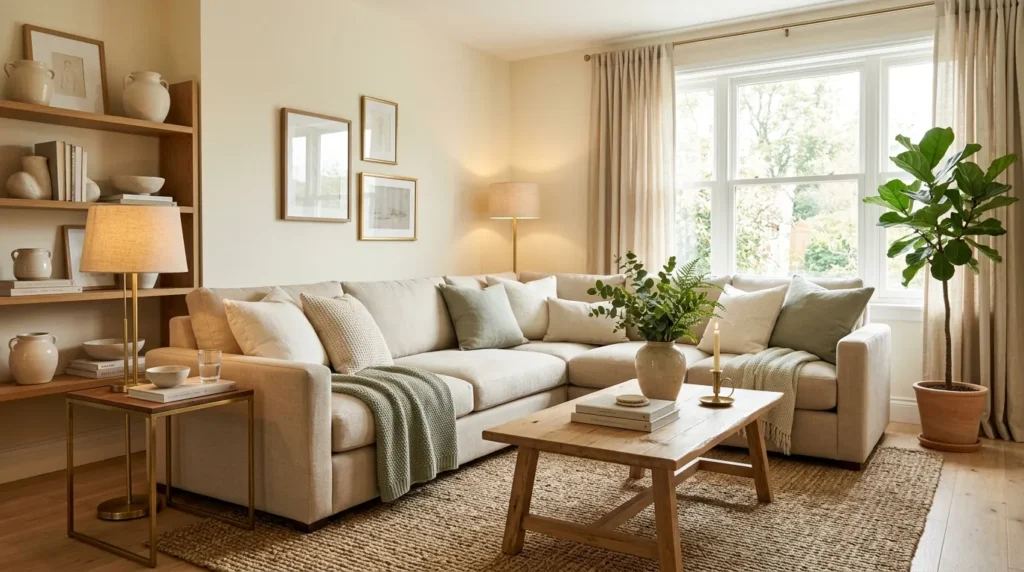
Warm cream is an excellent alternative to bright white when you want a living room to feel cozy rather than stark. Its subtle yellow or beige undertone can make natural wood, woven textures, and warm upholstery feel especially inviting. Cream also works beautifully in rooms with traditional architecture because it softens trim and architectural details without making them disappear. In my experience, cream walls are particularly effective when a room already contains beige, tan, brown, or brass accents. Instead of competing with those elements, the walls become a quiet backdrop that allows texture and furniture to take center stage.
How To Style It
Pair cream walls with warm oak, walnut, or natural wood furniture.
Choose upholstery in beige, camel, oatmeal, or soft brown.
Layer ivory curtains and textured rugs.
Add muted greenery for contrast.
Use warm metal finishes such as aged brass for a polished touch.
2. Earthy Beige Walls
Quick Benefits
- Adds warmth
- Feels grounded
- Works across styles
- Complements natural materials
- Creates a welcoming backdrop
Why It Works
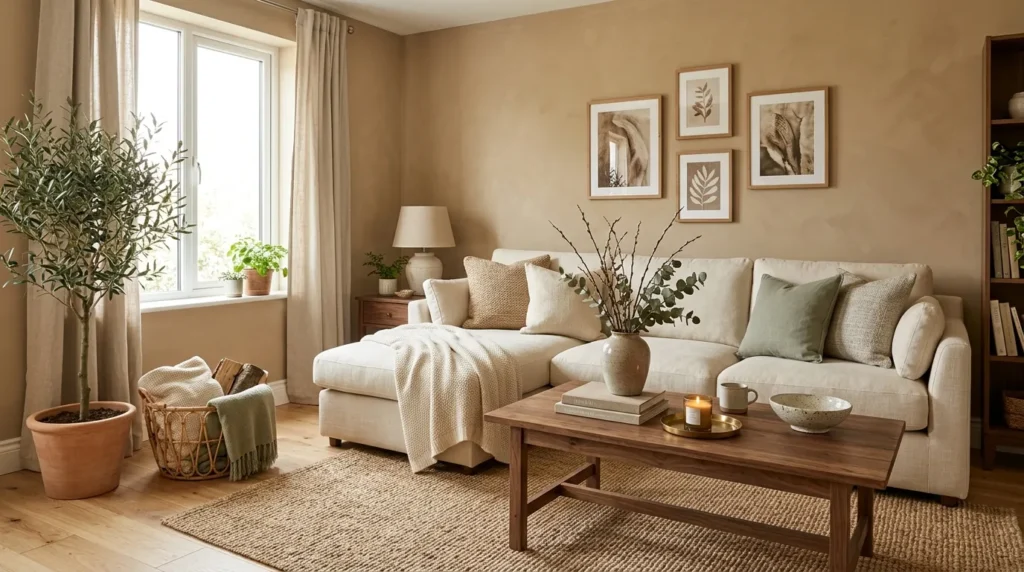
Beige has become much more versatile than the overly yellow shades associated with older interiors. Modern earthy beige can have subtle gray, taupe, or brown undertones that create a sophisticated foundation. It works particularly well in living rooms filled with natural materials because it echoes the colors found in wood, stone, linen, and woven fibers. A warm beige wall can also make a large room feel more intimate without visually shrinking it as dramatically as a very dark shade.
How To Style It
Choose a beige that complements your flooring undertones.
Pair it with cream upholstery for gentle contrast.
Add darker wood furniture to create depth.
Use woven baskets, jute rugs, and linen curtains.
Introduce black or bronze accents sparingly for definition.
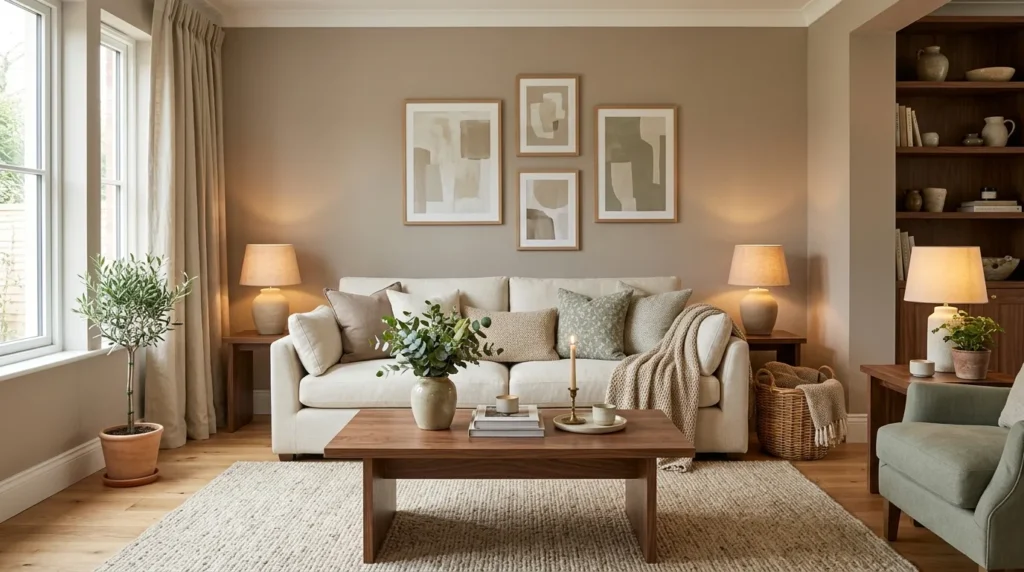
3. Soft Taupe Walls
Quick Benefits
- Looks sophisticated
- Balances warm and cool tones
- Creates visual depth
- Works with modern furniture
- Complements neutral palettes
Why It Works
Taupe is useful when you want the warmth of beige with a slightly more sophisticated gray influence. It can create a cocooning feeling without becoming as visually heavy as a dark brown. Soft taupe works particularly well with cream, charcoal, natural wood, and muted green. Because it sits between several neutral families, it can help connect furniture pieces that don’t share exactly the same undertones.
How To Style It
Use cream sofas and chairs against taupe walls.
Add walnut or medium-toned wood furniture.
Layer a textured beige rug.
Choose artwork with earthy neutrals.
Add warm lamps and soft textiles to reinforce the cozy atmosphere.
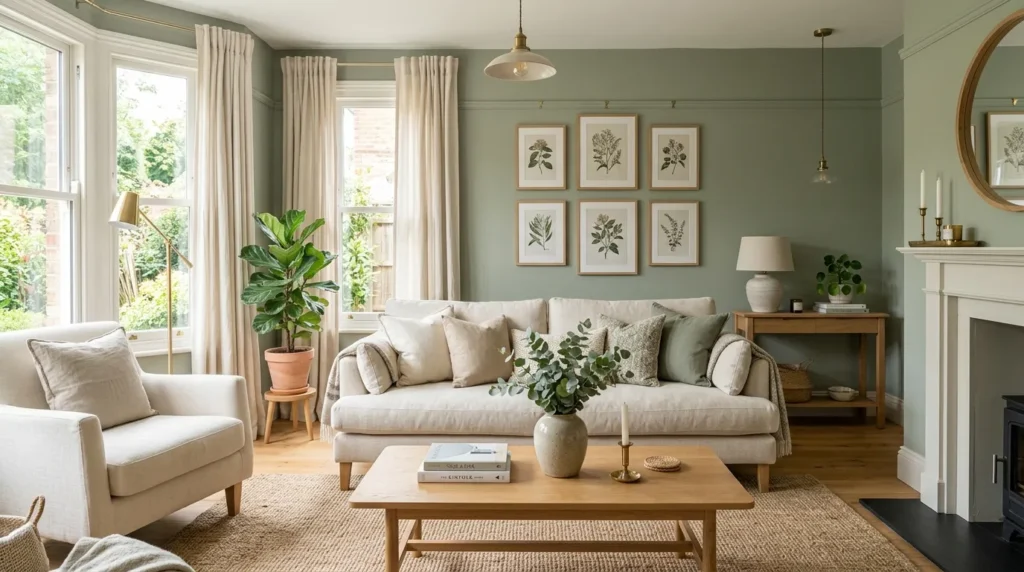
4. Muted Sage Walls
Quick Benefits
- Brings nature indoors
- Feels calming
- Adds subtle color
- Works with wood
- Creates a relaxed atmosphere
Why It Works
Muted sage green is an appealing choice for homeowners who want color without overwhelming the room. Its gray undertones keep it sophisticated, while the green connection to nature gives the living room a relaxed quality. Sage works especially well with natural wood, cream upholstery, rattan, linen, and botanical artwork. It can also create a beautiful backdrop for both modern and farmhouse-inspired furniture.
How To Style It
Pair sage walls with warm white trim.
Use cream or oatmeal sofas.
Add natural oak furniture.
Layer woven baskets and linen textiles.
Repeat sage subtly through pillows, artwork, or greenery.
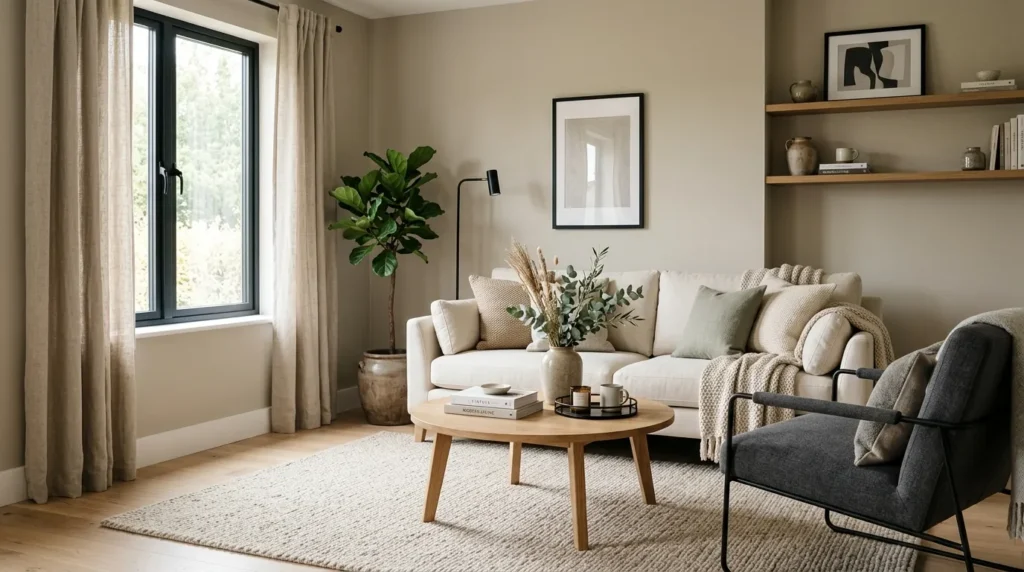
5. Warm Greige Walls
Quick Benefits
- Versatile neutral
- Balances warm and cool tones
- Works with many furnishings
- Feels contemporary
- Provides subtle depth
Why It Works
Greige combines gray and beige, creating a flexible neutral that can work in many living room styles. A warm greige is particularly useful when your furniture contains a mixture of warm and cool tones. Instead of forcing the room toward one color family, it can provide a bridge between them. This makes it especially practical for homeowners who already own furniture and don’t want to replace everything after repainting.
How To Style It
Choose warm greige if your room has mixed wood tones.
Pair it with cream and charcoal.
Add brass or bronze hardware.
Use textured neutral curtains and rugs.
Introduce one deeper accent shade through artwork or cushions.
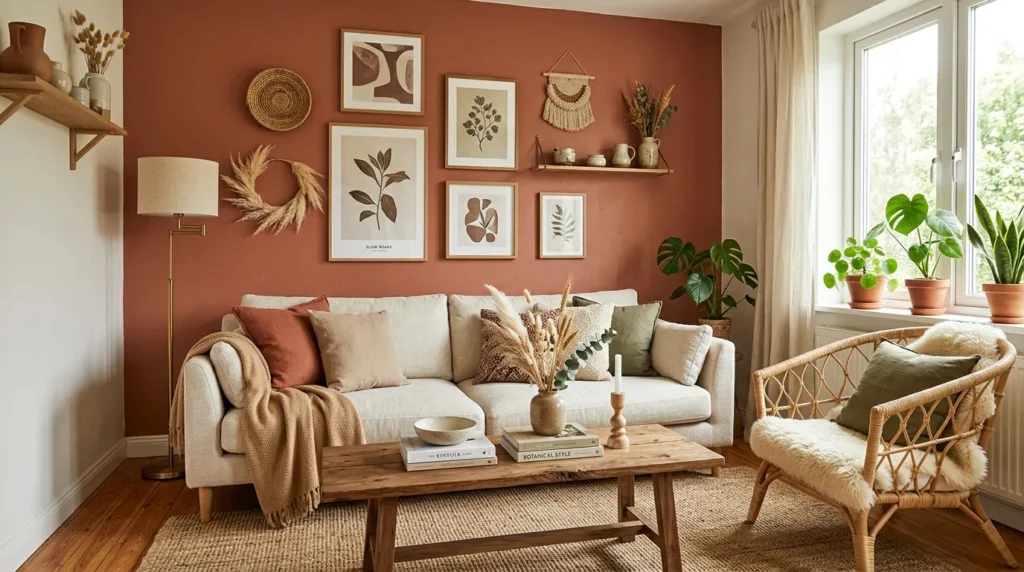
6. Terracotta Accent Walls
Quick Benefits
- Adds personality
- Creates warmth
- Works with natural materials
- Makes a strong focal point
- Complements neutral furniture
Why It Works
Terracotta brings an earthy richness that can make a living room feel warm and collected. Rather than painting every wall in a saturated terracotta, using it on one focal wall can provide personality while keeping the rest of the room balanced. It pairs beautifully with cream, camel, tan, walnut, olive, and natural stone. This approach is particularly appealing in homes inspired by Mediterranean, Southwestern, bohemian, or organic interiors.
How To Style It
Use terracotta behind a fireplace, sofa, or media console.
Keep surrounding walls lighter if desired.
Choose cream or beige upholstery.
Add warm wood furniture and woven accessories.
Repeat small amounts of terracotta in pillows or artwork.
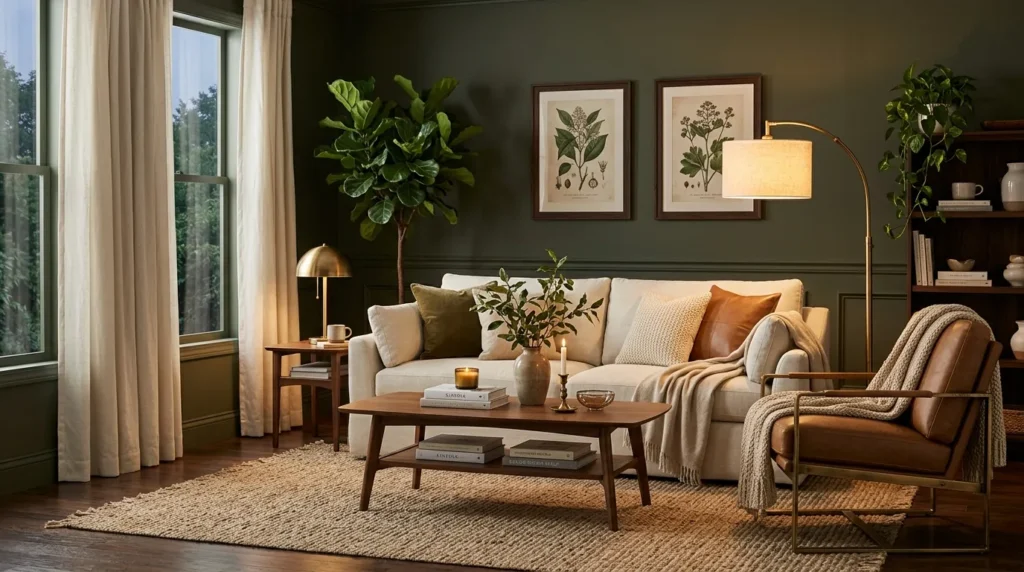
7. Moody Olive Walls
Quick Benefits
- Creates depth
- Feels intimate
- Adds natural color
- Works beautifully with wood
- Makes a dramatic backdrop
Why It Works
Deep olive can create the enveloping quality that many people associate with a cozy living room. Its earthy undertones prevent it from feeling as stark as some deep jewel tones. The shade works particularly well in rooms with natural wood, leather, brass, and cream upholstery. It can be especially effective in spaces with abundant artificial lighting or rooms where you want an evening-friendly atmosphere.
How To Style It
Pair olive walls with cream or oatmeal furniture.
Add walnut or dark wood pieces.
Use aged brass lighting.
Layer ivory textiles to create contrast.
Include plants or botanical artwork for a natural connection.
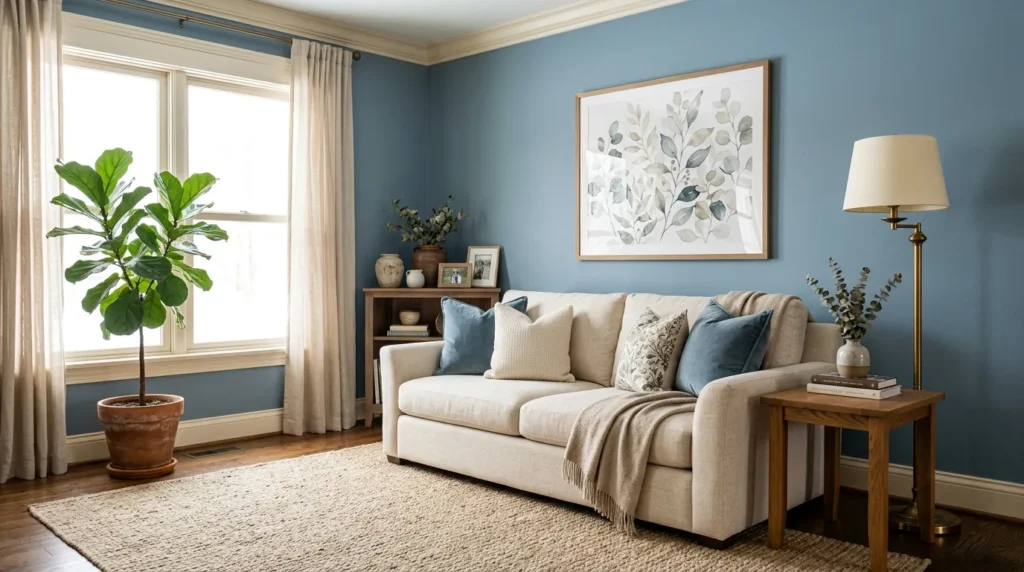
8. Dusty Blue Walls
Quick Benefits
- Feels peaceful
- Adds gentle color
- Works with neutrals
- Brightens traditional interiors
- Creates a relaxed mood
Why It Works
Dusty blue offers color while maintaining a soft, restful character. Unlike bright blue, a muted version can feel sophisticated and easy to live with. It works especially well with warm cream, beige, natural wood, and aged brass. The subtle coolness can also balance rooms that contain many warm furnishings, preventing the overall design from becoming visually too yellow or orange.
How To Style It
Pair dusty blue walls with warm white trim.
Choose cream or beige seating.
Add medium-tone wood furniture.
Use brass or antique bronze accents.
Layer neutral rugs and curtains to soften the cooler wall color.
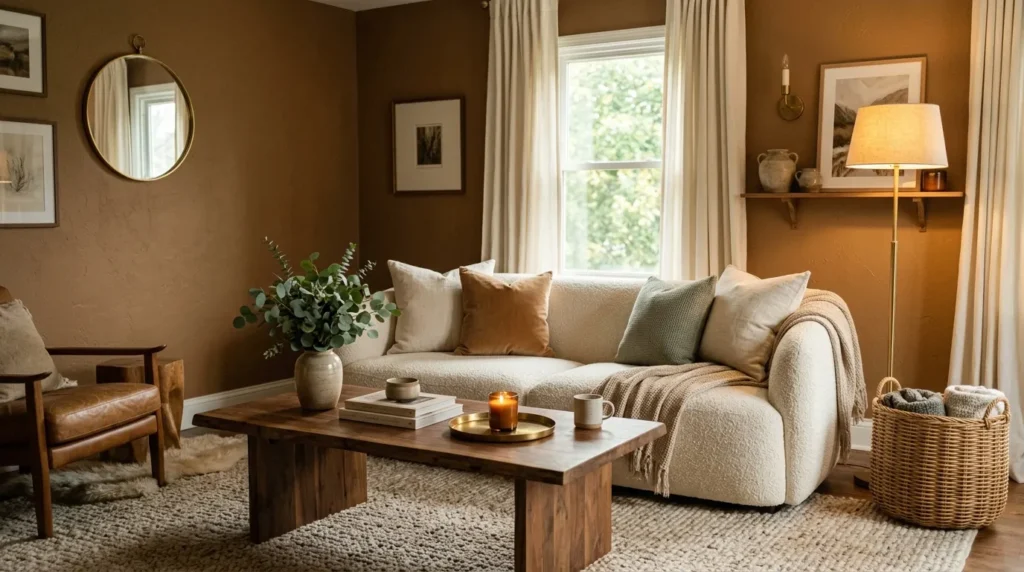
9. Caramel Brown Walls
Quick Benefits
- Creates richness
- Feels intimate
- Adds dramatic warmth
- Works with cream furniture
- Complements natural wood
Why It Works
A caramel or medium warm brown wall can create an incredibly cozy atmosphere, especially in living rooms designed for evening relaxation. Brown adds depth while maintaining an earthy quality. The key is balancing it with lighter furniture and textiles so the room doesn’t become visually heavy. This color is particularly beautiful alongside cream boucle, linen, leather, brass, and natural wood.
How To Style It
Use caramel brown on a feature wall or throughout a room with adequate light.
Pair it with cream seating.
Add warm ivory curtains.
Use natural wood and woven accessories.
Include layered lamps to create gentle pools of light in the evening.
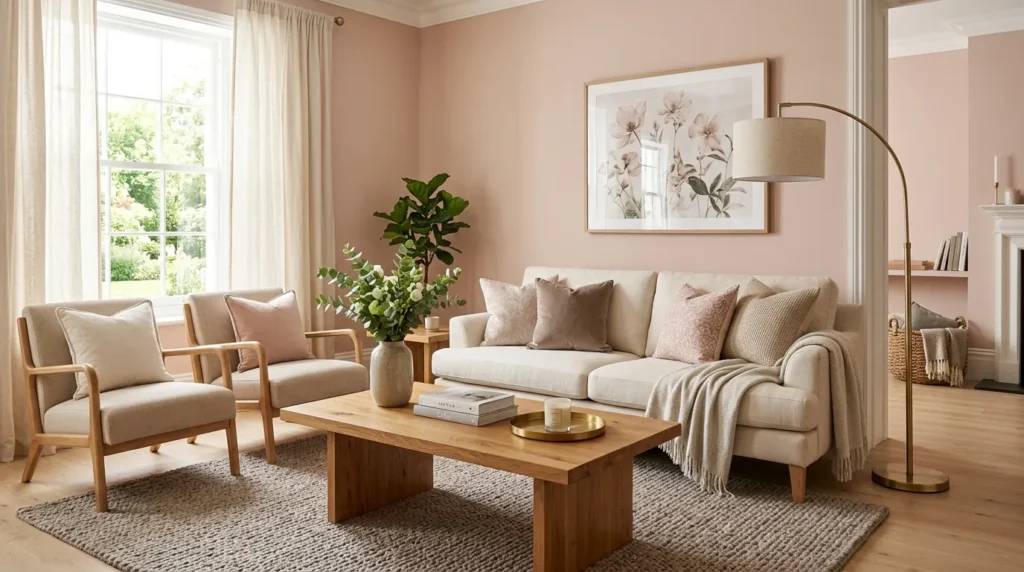
10. Soft Blush Walls
Quick Benefits
- Adds subtle warmth
- Feels welcoming
- Works with neutrals
- Creates a softer atmosphere
- Adds personality
Why It Works
A muted blush can function almost like a warm neutral when the saturation is kept low. It adds a gentle rosy quality without turning the living room into a distinctly pink space. Soft blush works especially well with cream, taupe, warm gray, natural wood, and brushed brass. It can be a lovely choice when you want a living room that feels feminine and welcoming while still remaining sophisticated.
How To Style It
Choose a dusty, muted blush rather than a bright pink.
Pair it with cream upholstery.
Use warm wood furniture.
Add beige and taupe textiles.
Repeat tiny amounts of the blush tone through artwork or decorative pillows.
11. Warm White Walls
Quick Benefits
- Keeps the room bright
- Creates a flexible foundation
- Works with many styles
- Highlights texture
- Feels clean but comfortable
Why It Works
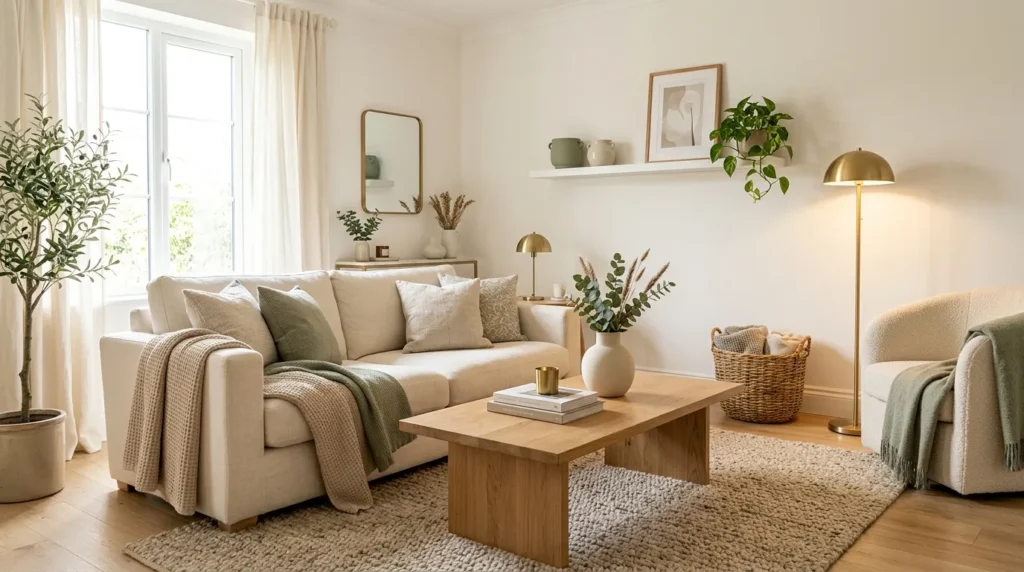
Warm white is one of the most adaptable choices for a cozy living room. Unlike a stark cool white, it contains enough warmth to work with wood, beige, woven materials, and soft textiles. It also allows you to change accent colors over time without needing to repaint. If your living room receives limited natural light, testing several whites is especially important because undertones can become much more noticeable in shadow.
How To Style It
Layer different shades of cream and ivory.
Use natural wood furniture for warmth.
Add a textured rug and linen curtains.
Introduce muted green plants.
Use warm lighting rather than relying exclusively on a bright ceiling fixture.
How Do I Choose a Cozy Living Room Wall Color?
Start by looking at the fixed elements you already have, especially flooring, sofa upholstery, wood furniture, countertops if the living room is open-plan, and architectural trim. Identify whether those elements lean warm, cool, or neutral.
Then observe the room at different times of day. Natural light changes how paint appears, while warm artificial lighting can make certain colors look more yellow or saturated.
Always test paint samples on the actual wall before committing. A small sample board can also be useful because you can move it around the room and see how the color responds to different lighting conditions.
What Colors Make a Living Room Feel Cozy?
Warm neutrals and earthy colors are generally effective for creating a cozy atmosphere. Consider cream, beige, taupe, warm greige, muted sage, olive, terracotta, dusty blue, and warm brown.
However, coziness comes from more than paint. Soft textiles, layered lighting, natural materials, comfortable furniture, and an uncluttered layout all contribute to the final feeling.
Should Small Living Rooms Use Dark Wall Colors?
They can. A dark color isn’t automatically unsuitable for a small room. Deep olive, brown, charcoal, or another saturated shade can create an intimate, enveloping atmosphere when balanced with adequate lighting and lighter furnishings.
If you’re nervous about using a dark shade throughout the room, start with one accent wall and evaluate it in both daytime and evening lighting.
How Do I Make Beige Walls Look Modern?
The easiest way is to choose a beige with a sophisticated undertone rather than a highly yellow shade. Pair it with contemporary furniture silhouettes, natural wood, black or bronze accents, textured fabrics, and modern artwork.
Layering several neutral tones also helps. Cream, taupe, beige, camel, and soft brown can create depth without making the room feel dated.
Frequently Asked Questions
What is the coziest color for a living room?
There isn’t one universally cozy color, but warm cream, beige, taupe, muted green, warm brown, and earthy terracotta are popular choices. The best option depends on the room’s natural light and existing furnishings. A color that feels cozy in a sunny room may look considerably different in a darker space.
What wall colors make a living room feel warm?
Warm whites, creams, beige, taupe, caramel, terracotta, olive, and warm greige can all create a warmer atmosphere. Pairing these colors with wood furniture, soft textiles, and warm lighting reinforces the effect.
Is sage green a good living room wall color?
Yes. Muted sage is versatile and works particularly well with cream, beige, natural wood, woven textures, and botanical accents. Its subdued quality allows it to introduce color without dominating the entire room.
Are dark colors good for cozy living rooms?
Dark colors can work beautifully when the goal is an intimate, enveloping room. Olive, brown, charcoal, and deep blue can create depth, but balance them with lighter upholstery, reflective surfaces, appropriate lighting, and contrasting textures.
What color goes best with a beige sofa?
A beige sofa can work with many wall colors, including warm white, cream, taupe, sage green, dusty blue, warm greige, and muted terracotta. The best choice depends on the sofa’s undertone and the colors already present in the room.
Should living room walls match the furniture?
They don’t need to match exactly. In fact, subtle contrast usually creates a more interesting interior. Instead of matching colors perfectly, look for relationships between undertones and repeat selected shades through artwork, textiles, and accessories.
How many wall colors should a living room have?
Most living rooms can feel cohesive with one primary wall color and perhaps one accent color. If you use an accent wall, repeat that color subtly elsewhere so it feels intentional. Too many competing wall colors can make a compact living room feel fragmented.
Conclusion
Choosing a wall color is one of the easiest ways to change the mood of a living room, but the best result comes from considering the entire space rather than the paint alone.
Warm cream and white create versatile foundations, while beige, taupe, and greige offer subtle depth. If you’re ready for more color, muted sage, dusty blue, or soft blush can add personality without becoming overwhelming. For a richer atmosphere, terracotta, olive, and caramel brown can create the enveloping feeling that makes a living room especially inviting.
Before choosing your final shade, pay attention to natural light, existing furniture, flooring, and undertones. Test samples in the actual room and observe them throughout the day.
Then build warmth through layers. Add natural wood, soft rugs, linen curtains, comfortable upholstery, greenery, and warm lighting. These elements work together with the wall color to create the finished atmosphere.
You don’t need to completely redesign your living room to make it feel different. Sometimes a thoughtful paint color, a few new textiles, and better lighting are enough to give the room an entirely new personality.
Start with the feeling you want your living room to have, then choose the color that supports it.