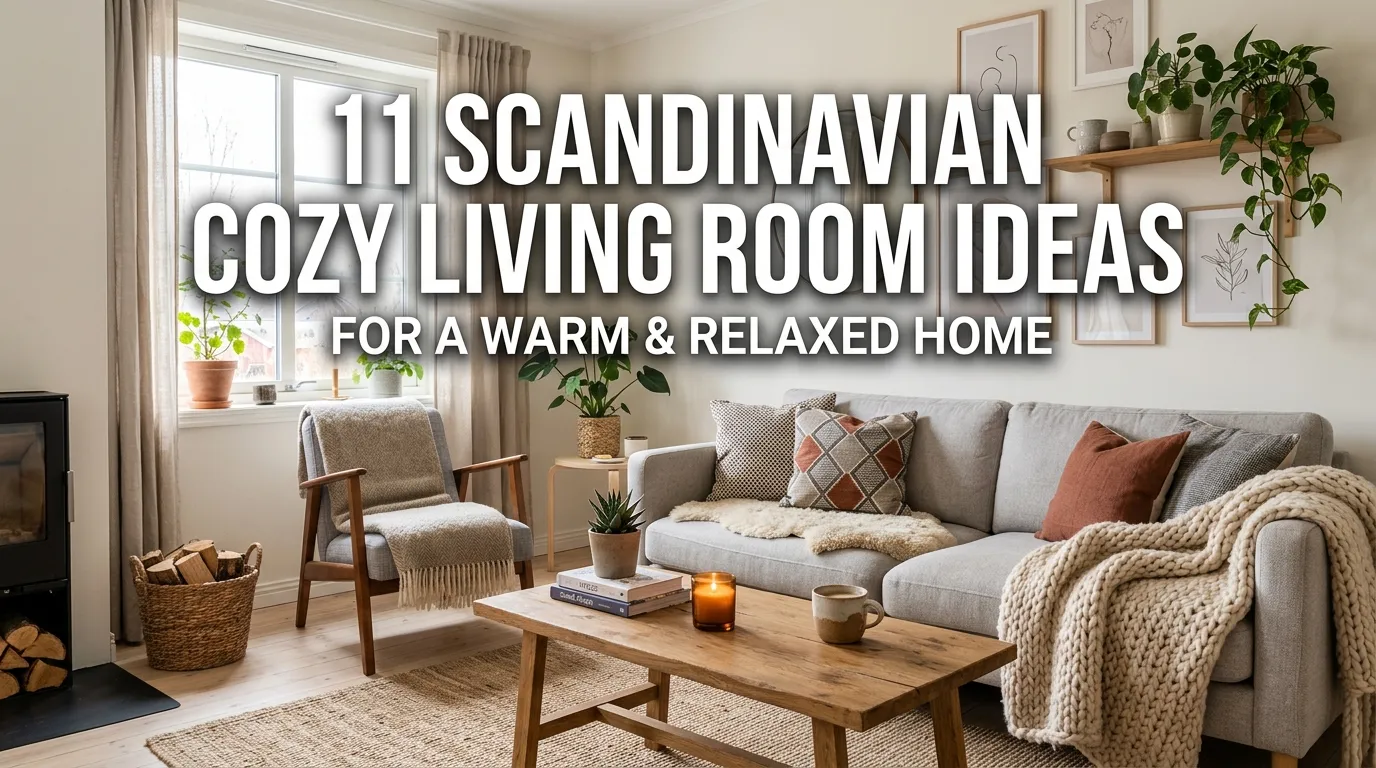
11 Scandinavian Cozy Living Room Ideas for a Warm & Relaxed Home
Scandinavian interiors have a special way of making a living room feel calm without feeling cold. The style is known for clean lines, natural materials, soft colors, practical furniture, and plenty of daylight, but the real magic comes from how those elements are layered together. The result is a room that feels simple, comfortable, and easy to actually live in.
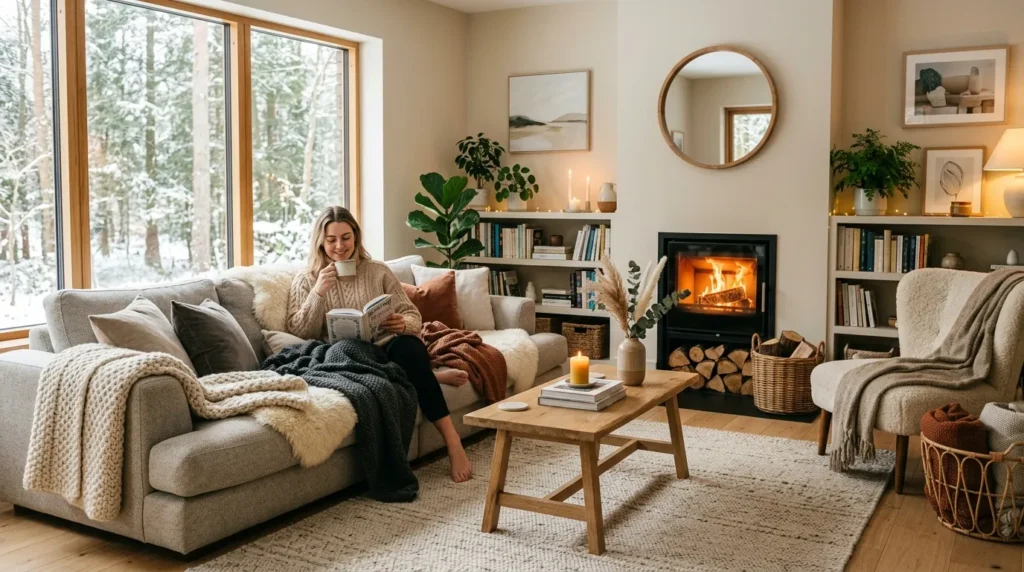
A Scandinavian-inspired living room doesn’t have to look stark or overly minimalist. In fact, the coziest versions often include chunky throws, textured rugs, warm wood, softly curved furniture, candles, plants, and plenty of comfortable seating. The goal is to create balance: enough decoration to give the room personality, but not so much that the space feels visually busy.
I’ve noticed that one of the easiest ways to achieve this look is to begin with a restrained neutral palette and then build warmth through texture. Cream walls, pale wood, oatmeal upholstery, woven baskets, and soft lighting can create an inviting foundation. From there, small accents in charcoal, muted green, dusty blue, or warm brown add definition.
This style is also practical for American homes because it works beautifully in both large open-plan spaces and smaller living rooms. You don’t need expensive designer furniture to capture the feeling. Thoughtful proportions, natural materials, comfortable textiles, and good lighting often matter more than the price of individual pieces.
Whether you’re refreshing your entire living room or simply looking for a few cozy Scandinavian touches, these ideas can help you create a space that feels welcoming, uncluttered, and effortlessly comfortable.
Table of Contents
1. Soft Neutral Palette
Create a peaceful foundation with warm whites, creams, beige, and gentle gray.
2. Light Wood Furniture
Bring natural warmth into the room with pale oak and simple wooden pieces.
3. Layered Textures
Combine soft textiles and tactile materials for a cozy Scandinavian atmosphere.
4. Cozy Area Rugs
Anchor the seating arrangement with a comfortable rug that adds warmth underfoot.
5. Curved Comfortable Seating
Soften clean Scandinavian lines with inviting rounded furniture.
6. Warm Ambient Lighting
Use multiple light sources to create a welcoming glow throughout the room.
7. Minimal Natural Decor
Add carefully chosen plants, ceramics, branches, and organic accessories.
8. Hygge Fireplace Corner
Create an intimate gathering spot around a fireplace or warm focal point.
9. Functional Open Shelving
Display useful and beautiful objects without creating unnecessary visual clutter.
10. Soft Window Treatments
Use lightweight curtains to filter daylight while adding softness.
11. Cozy Layered Seating
Finish the room with cushions, throws, and practical seating arranged for conversation.
1. Soft Neutral Palette
Quick Benefits
- Creates a calm atmosphere
- Makes the room feel brighter
- Works with natural materials
- Provides decorating flexibility
- Supports a cozy aesthetic
Why It Works
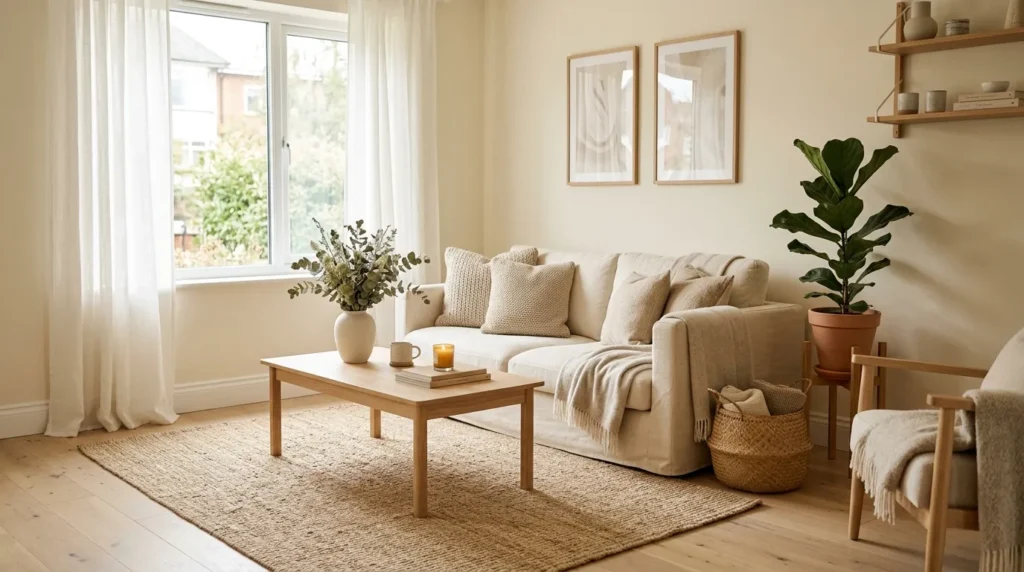
A soft neutral palette is the foundation of many Scandinavian interiors because it allows natural light and texture to become part of the design. Instead of relying on lots of colors, Scandinavian rooms often use several related shades of white, cream, beige, taupe, and soft gray. This creates visual continuity without making the room feel boring. The warmth comes from subtle differences in texture and tone. A cream sofa against an off-white wall, for example, can feel much richer when paired with a woven rug and pale wood furniture.
How To Style It
Start with warm white, cream, or light beige walls.
Choose a sofa in oatmeal, ivory, or light gray.
Add pale wood furniture for warmth.
Layer cream and beige cushions in different fabrics.
Introduce one darker accent, such as charcoal artwork or a black floor lamp, for contrast.
2. Light Wood Furniture
Quick Benefits
- Adds natural warmth
- Keeps the room visually light
- Works with neutral colors
- Creates timeless appeal
- Supports a natural aesthetic
Why It Works
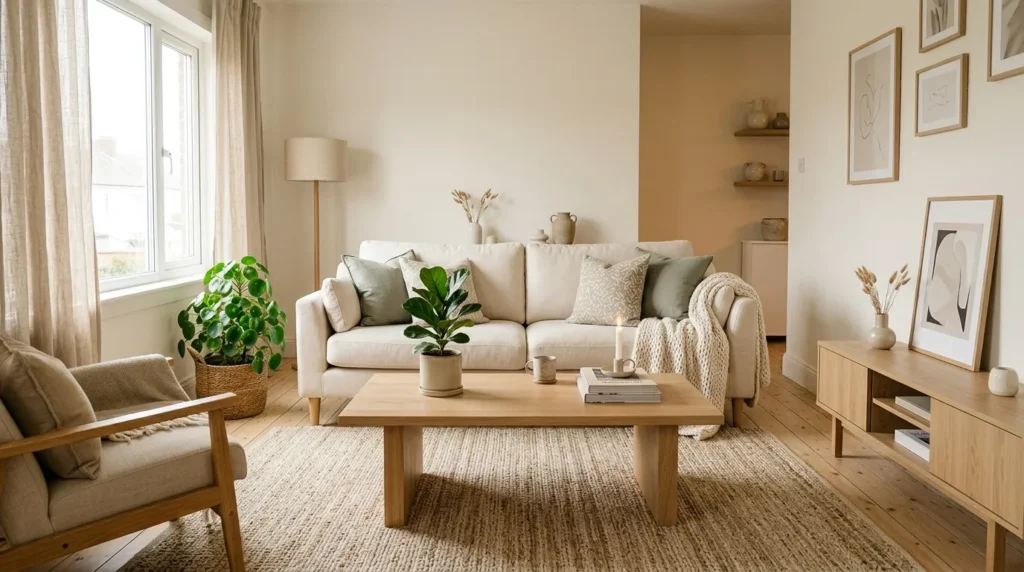
Light wood is one of the easiest ways to bring Scandinavian character into a living room. Pale oak, ash, birch, and similar finishes have a naturally bright appearance that works beautifully alongside neutral upholstery. Wood also adds visual warmth without requiring strong colors. I’ve found that even a few wooden elements can make a predominantly cream or white room feel much more welcoming.
How To Style It
Choose a simple oak coffee table with clean lines.
Add a pale wood side table or media console.
Mix wood finishes carefully rather than using too many competing tones.
Pair wooden furniture with woven baskets and linen textiles.
Keep the silhouettes simple so the natural material remains the focus.
3. Layered Textures
Quick Benefits
- Makes neutrals more interesting
- Adds warmth and depth
- Creates a comfortable atmosphere
- Prevents a room from feeling flat
- Works in every season
Why It Works
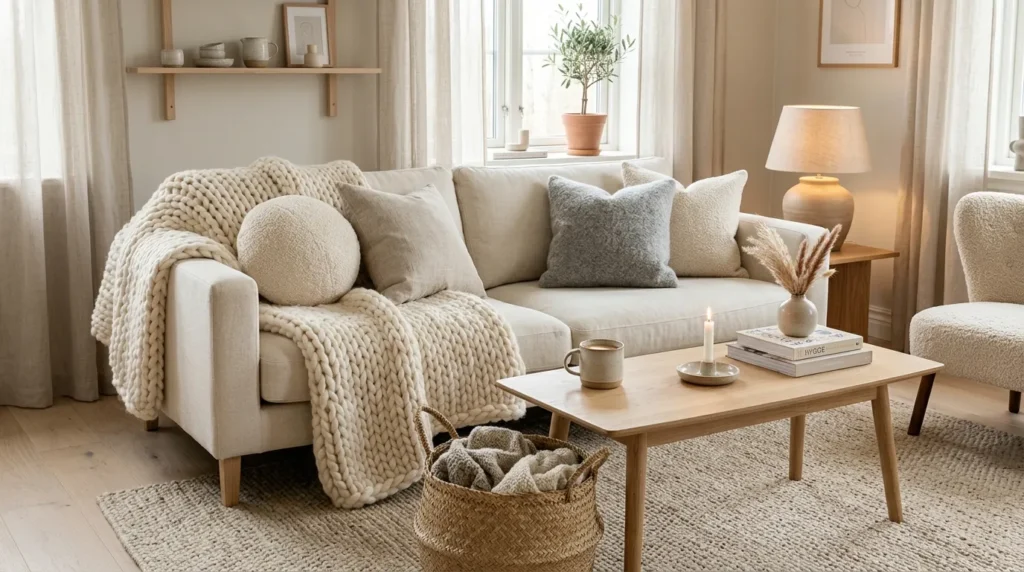
Texture is essential when decorating with a restrained color palette. Without it, a neutral Scandinavian living room can feel overly plain. Layering materials such as wool, linen, cotton, boucle, jute, rattan, and knitted textiles gives the eye something to explore while maintaining the calm aesthetic. This is where the cozy quality really begins to emerge. Different textures can make the same neutral shade feel completely different.
How To Style It
Start with a textured area rug.
Add a chunky knit throw over the sofa.
Mix linen, cotton, and boucle cushions.
Use a woven basket for blankets.
Add ceramic, wood, and stone accessories to introduce additional tactile contrast.
4. Cozy Area Rugs
Quick Benefits
- Adds warmth underfoot
- Defines the seating area
- Softens hard flooring
- Creates visual comfort
- Helps connect furniture pieces
Why It Works
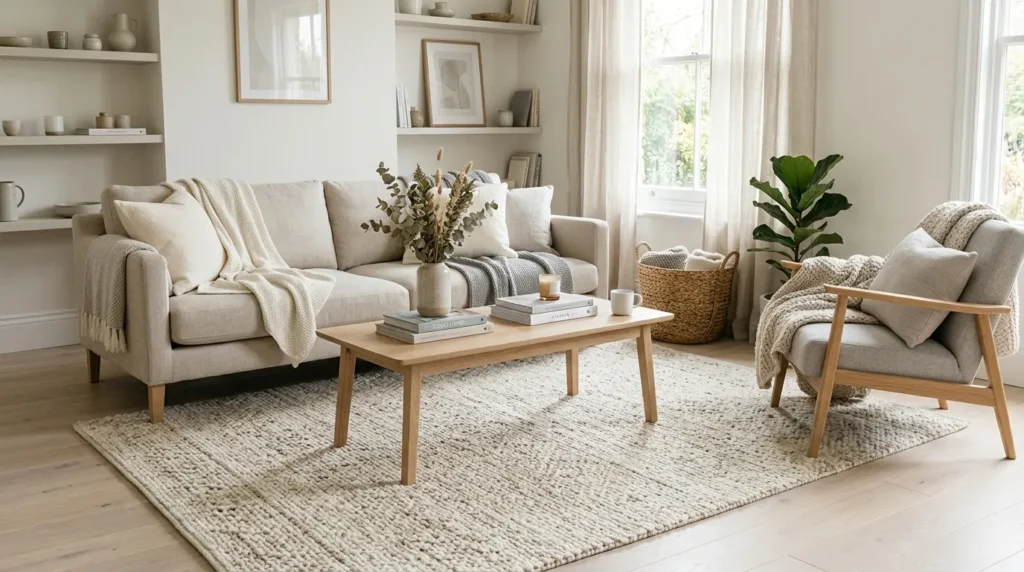
A well-sized rug can make a living room feel considerably more finished. Scandinavian interiors often favor simple rugs in neutral colors with subtle patterns or texture. Beyond aesthetics, rugs add softness and help define the area where people gather. This is especially useful in open-plan American homes where the living room needs to feel like a distinct zone without physical walls.
How To Style It
Choose a rug large enough to sit beneath at least the front legs of major seating.
Look for wool, cotton, jute, or textured synthetic options depending on your lifestyle.
Use cream, beige, light gray, or subtle geometric patterns.
Avoid extremely small rugs that visually disconnect the seating.
Choose a washable option for homes with children or pets.
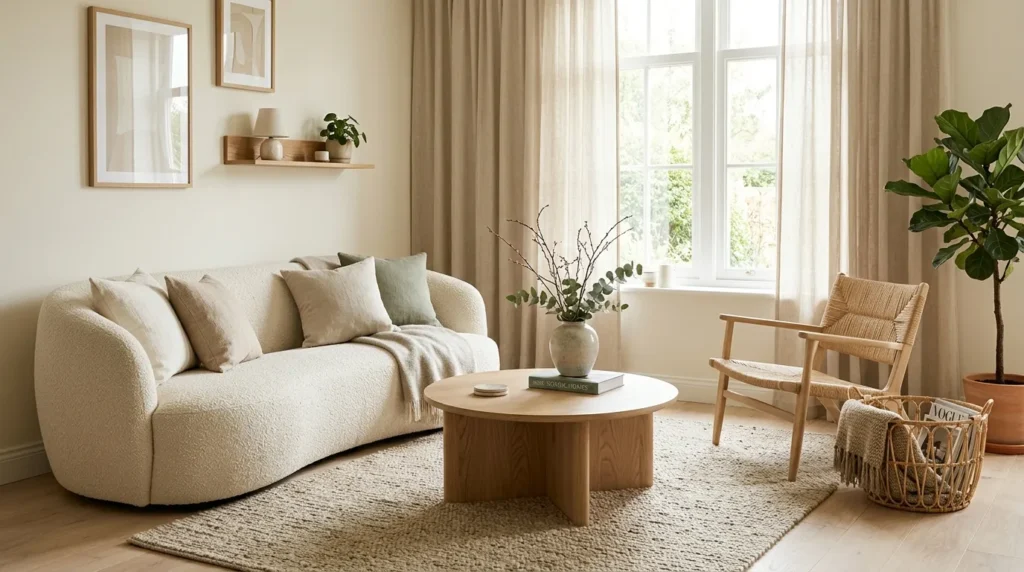
5. Curved Comfortable Seating
Quick Benefits
- Softens clean lines
- Creates a welcoming feel
- Encourages conversation
- Adds visual interest
- Works with modern interiors
Why It Works
Scandinavian design is often associated with straight, simple lines, but rounded furniture can add a softer and more contemporary interpretation. A curved sofa, rounded armchair, or oval coffee table introduces movement without making the room feel overly decorative. Curves are particularly useful when the rest of the room contains many straight architectural lines.
How To Style It
Choose one curved statement piece rather than making every item rounded.
Pair a curved sofa with a simple wooden coffee table.
Use rounded cushions to echo the silhouette.
Keep surrounding accessories minimal.
Arrange seating so people can comfortably face one another.
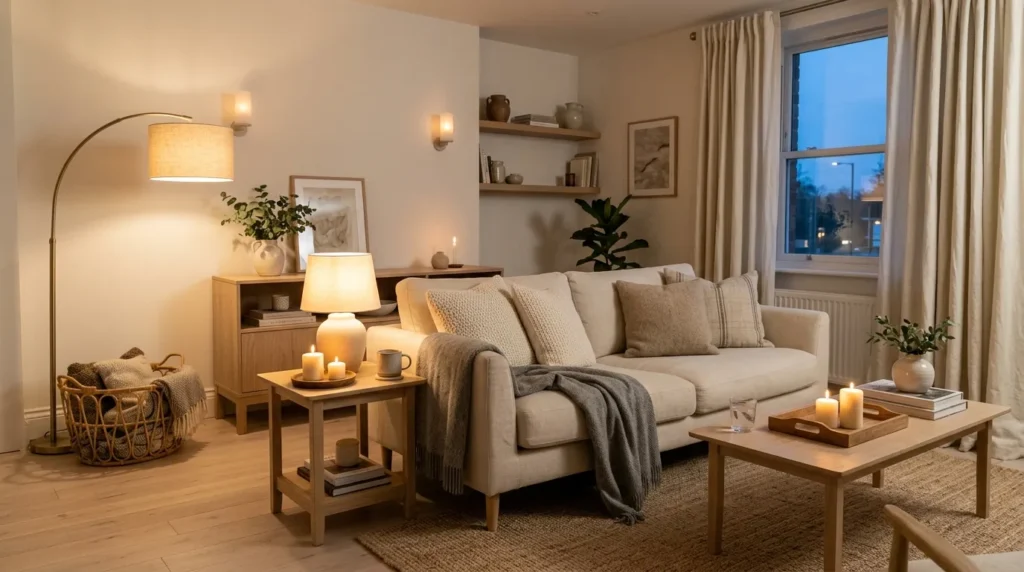
6. Warm Ambient Lighting
Quick Benefits
- Creates evening coziness
- Adds visual depth
- Makes the room more inviting
- Highlights textures
- Reduces reliance on overhead lighting
Why It Works
Lighting plays a major role in creating the relaxed atmosphere associated with Scandinavian interiors. Natural daylight is important during the day, while multiple warm light sources create intimacy after sunset. Rather than relying entirely on one bright ceiling fixture, use table lamps, floor lamps, wall sconces, and candles to create different levels of illumination.
How To Style It
Place a floor lamp beside a sofa or reading chair.
Add a small table lamp to a side table.
Choose fixtures with simple shapes and warm finishes.
Use warm-toned bulbs appropriate for living spaces.
Add candles or subtle lantern-style lighting for extra atmosphere.
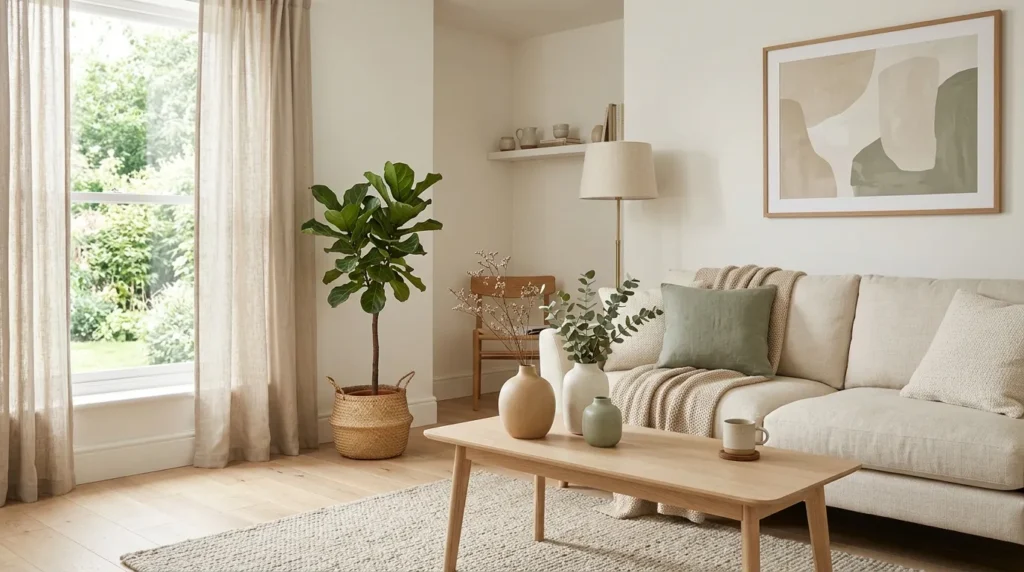
7. Minimal Natural Decor
Quick Benefits
- Keeps clutter controlled
- Adds personality
- Brings nature indoors
- Works with neutral palettes
- Creates a collected look
Why It Works
Scandinavian decorating isn’t about having an empty room. Instead, it emphasizes intentional objects. A few carefully selected natural elements can add life without creating visual noise. Green plants, ceramic vessels, branches, stone objects, woven baskets, and wooden trays all fit naturally into the aesthetic. The trick is leaving enough empty space around each piece so that the room can breathe.
How To Style It
Use one or two medium-sized plants instead of filling every surface.
Display simple ceramic vases.
Add a wooden tray to the coffee table.
Use woven baskets for functional storage.
Rotate seasonal branches or flowers for subtle changes throughout the year.
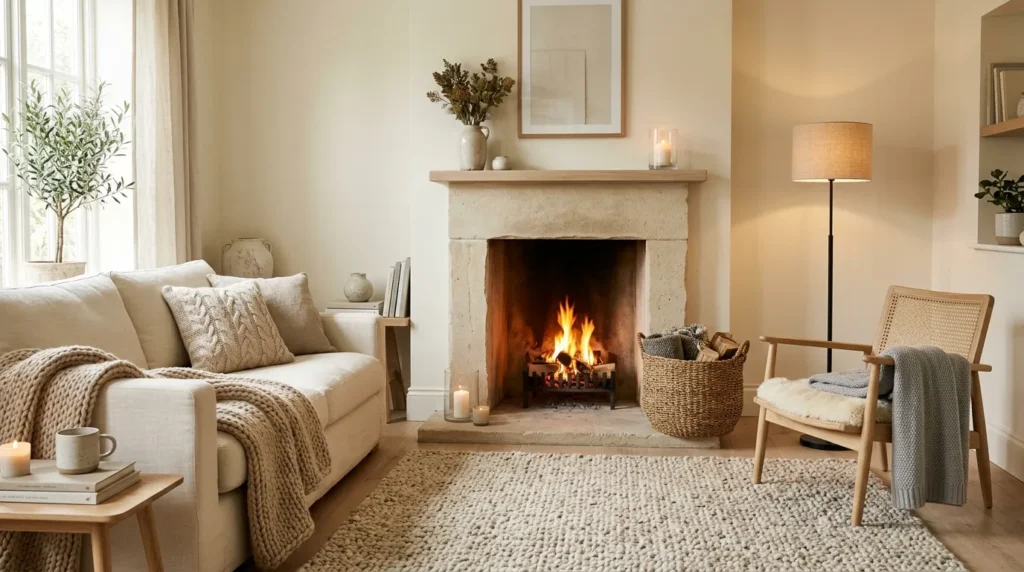
8. Hygge Fireplace Corner
Quick Benefits
- Creates a natural focal point
- Encourages relaxation
- Adds warmth
- Makes seating feel intimate
- Works beautifully in winter
Why It Works
A fireplace naturally creates the kind of gathering point that works beautifully with Scandinavian-inspired decorating. Whether you have a traditional fireplace, modern gas insert, or another approved heating feature, the area around it can become a cozy destination. The important part is to keep the styling simple and comfortable rather than filling the mantel with accessories.
How To Style It
Position comfortable seating within easy conversation distance.
Use a simple wood, stone, or plaster fireplace surround.
Add a basket of neatly folded blankets nearby.
Keep the mantel lightly decorated.
Layer warm lighting around the fireplace for evening use.
Always follow the manufacturer’s clearance and safety requirements for fireplaces and heating equipment.
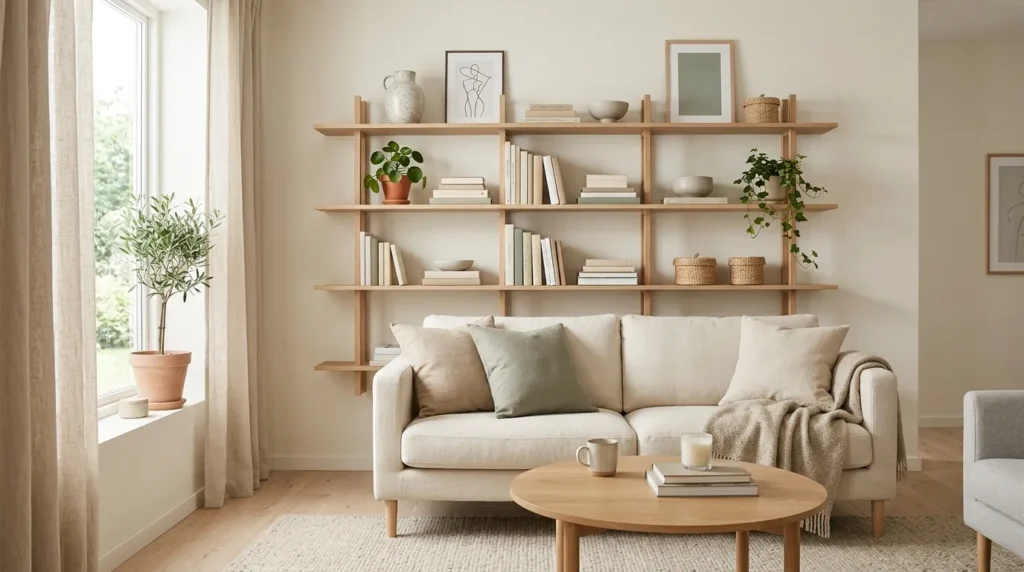
9. Functional Open Shelving
Quick Benefits
- Adds storage
- Displays meaningful pieces
- Keeps useful items accessible
- Adds vertical interest
- Supports minimalist styling
Why It Works
Open shelving can provide both storage and decoration when it is thoughtfully edited. Scandinavian interiors often balance useful objects with decorative ones, allowing everyday pieces to contribute to the overall look. The key is resisting the temptation to fill every shelf. Negative space helps individual objects feel intentional rather than cluttered.
How To Style It
Use simple wood shelves.
Group books horizontally and vertically.
Add ceramic vessels and small plants.
Include baskets for less attractive necessities.
Leave some sections completely empty.
Repeat colors from the rest of the room for visual continuity.
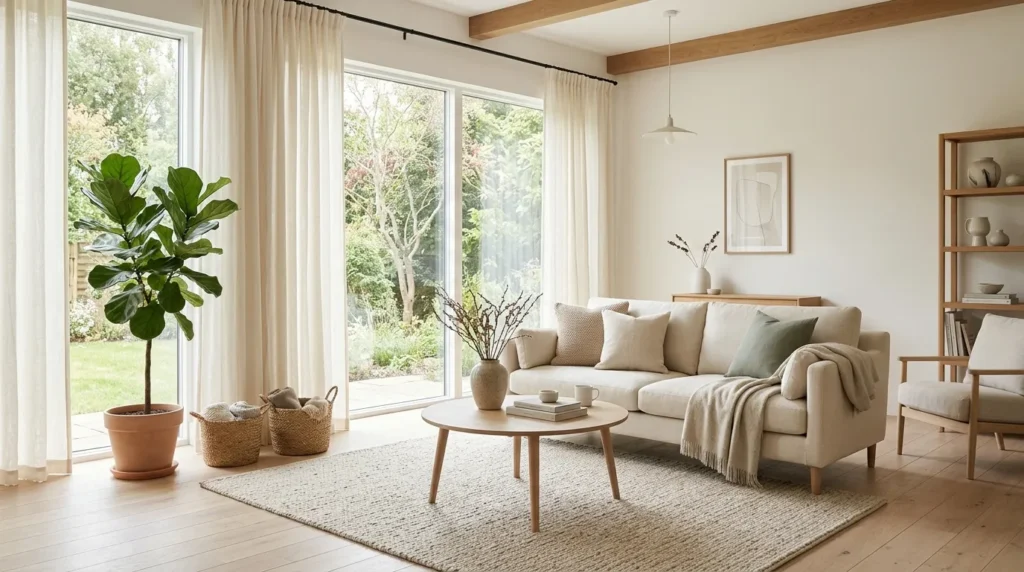
10. Soft Window Treatments
Quick Benefits
- Softens windows
- Filters harsh sunlight
- Adds warmth
- Creates privacy
- Complements neutral interiors
Why It Works
Window treatments can dramatically change the atmosphere of a living room. Lightweight linen or cotton curtains are especially compatible with Scandinavian interiors because they soften the architectural lines while allowing daylight to filter through. Instead of using heavy treatments that dominate the room, choose fabrics that add texture and movement.
How To Style It
Choose ivory, cream, warm white, or pale beige curtains.
Hang curtain rods high enough to create an elongated appearance.
Allow panels to frame rather than completely cover windows during the day.
Choose washable fabrics where practical.
Pair sheer curtains with appropriate privacy or light-control layers when needed.
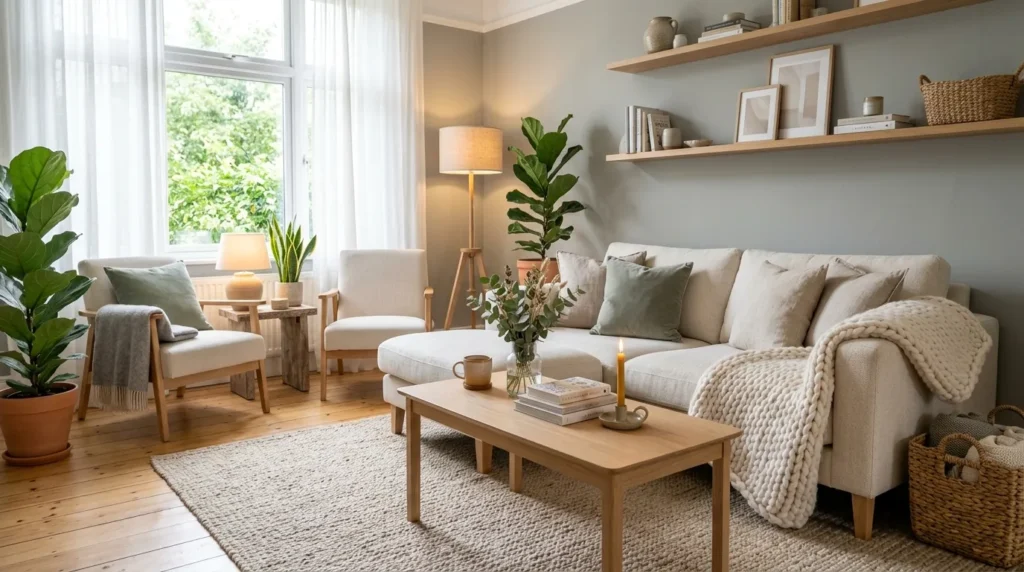
11. Cozy Layered Seating
Quick Benefits
- Encourages relaxation
- Makes the room feel finished
- Improves comfort
- Supports conversation
- Adds soft visual layers
Why It Works
The final layer of a cozy Scandinavian living room is comfortable seating arranged around everyday life. A beautiful sofa isn’t enough if the room doesn’t invite people to sit down. Cushions, throws, footstools, and occasional chairs make the space feel relaxed and usable. The arrangement should prioritize conversation and movement rather than simply facing every seat toward a television.
How To Style It
Begin with a comfortable sofa as the anchor.
Add one or two lightweight accent chairs if space allows.
Use cushions in cream, beige, gray, and muted natural colors.
Keep a folded throw within easy reach.
Add a compact footstool or ottoman for flexible seating.
Leave comfortable pathways around the furniture.
What Makes a Living Room Scandinavian?
A Scandinavian living room typically combines simplicity, functionality, natural materials, soft neutral colors, comfortable furniture, clean lines, and thoughtful lighting. The goal is not to remove all decoration but to keep the room purposeful and visually calm.
Natural wood, wool, linen, woven materials, plants, simple ceramics, and soft textiles are particularly useful for creating warmth.
How Do You Make Scandinavian Decor Cozy?
Focus on texture and lighting. Layer wool rugs, knitted throws, linen cushions, boucle upholstery, and woven baskets to add tactile warmth. Then introduce several soft light sources rather than relying solely on overhead lighting.
A comfortable furniture arrangement and a few natural decorative elements complete the cozy feeling without creating clutter.
Can Scandinavian Style Work in a Small Living Room?
Absolutely. Scandinavian design is particularly suitable for smaller spaces because it prioritizes functional furniture, light colors, visual simplicity, and open circulation.
Choose appropriately scaled seating, use furniture with visible legs, keep the palette restrained, and use vertical storage where possible. A large mirror can also help reflect available light.
Scandinavian Living Room Mistakes to Avoid
Avoid turning Scandinavian style into an overly stark minimalist room.
Common mistakes include:
- Using too much bright white
- Removing all decorative personality
- Choosing furniture that is too large
- Using only one light source
- Filling open shelves completely
- Mixing too many wood tones
- Ignoring comfort
- Adding excessive decorative clutter
The best Scandinavian-inspired rooms feel lived-in. They are organized, but they don’t look like nobody is allowed to sit down.
Frequently Asked Questions
What colors are best for a Scandinavian living room?
Warm white, cream, beige, soft gray, taupe, pale blue, muted green, and natural brown work beautifully. The palette should generally feel calm rather than highly saturated. Small amounts of black or charcoal can provide contrast.
What furniture works best with Scandinavian decor?
Look for comfortable furniture with simple silhouettes, natural wood details, and practical proportions. Sofas, lounge chairs, ottomans, clean-lined coffee tables, and functional storage pieces are all excellent choices.
How can I make Scandinavian decor warmer?
Add natural wood, layered textiles, warm lighting, rugs, woven baskets, plants, ceramics, and comfortable seating. These details prevent a neutral palette from feeling cold or unfinished.
Is Scandinavian design the same as minimalist design?
They overlap, but they aren’t identical. Scandinavian interiors often emphasize simplicity and functionality, but they also place strong emphasis on comfort, natural materials, warmth, and everyday livability.
What type of rug works in a Scandinavian living room?
Neutral wool, cotton, jute, or textured rugs work particularly well. Choose a size that properly anchors the seating arrangement. Subtle geometric patterns can also complement the style without overwhelming the room.
Can I use dark colors in Scandinavian decor?
Yes. Dark colors can provide useful contrast when used thoughtfully. Charcoal, deep brown, muted olive, or black can appear through lighting, artwork, furniture, or small accessories while the main palette remains light.
How do I decorate a Scandinavian living room on a budget?
Start with the largest visual changes: simplify the color palette, rearrange furniture, add a textured rug, introduce warm lighting, and use natural materials. Secondhand wood furniture, simple baskets, neutral textiles, and plants can also create the look without requiring a complete redesign.
Conclusion
A cozy Scandinavian living room is less about following a strict decorating formula and more about creating balance. The space should look clean and considered while still feeling comfortable enough for everyday life.
Start with a soft neutral palette, then introduce warmth through light wood furniture, layered textiles, rugs, and natural accessories. Comfortable seating and practical storage keep the room functional, while warm lamps and candles create the inviting atmosphere that becomes especially noticeable in the evening.
Don’t be afraid to add personality. A few meaningful ceramics, favorite books, plants, artwork, or vintage finds can make the room feel like your home rather than a showroom. Scandinavian-inspired decorating works best when simplicity supports real life instead of restricting it.
If you’re updating your living room, you don’t need to change everything at once. Begin with one or two elements that will have the greatest impact, such as a new rug, warmer lighting, or a more cohesive neutral palette. Then build the room gradually.
The result should be a living room that feels bright during the day, warm at night, comfortable year-round, and easy to enjoy.