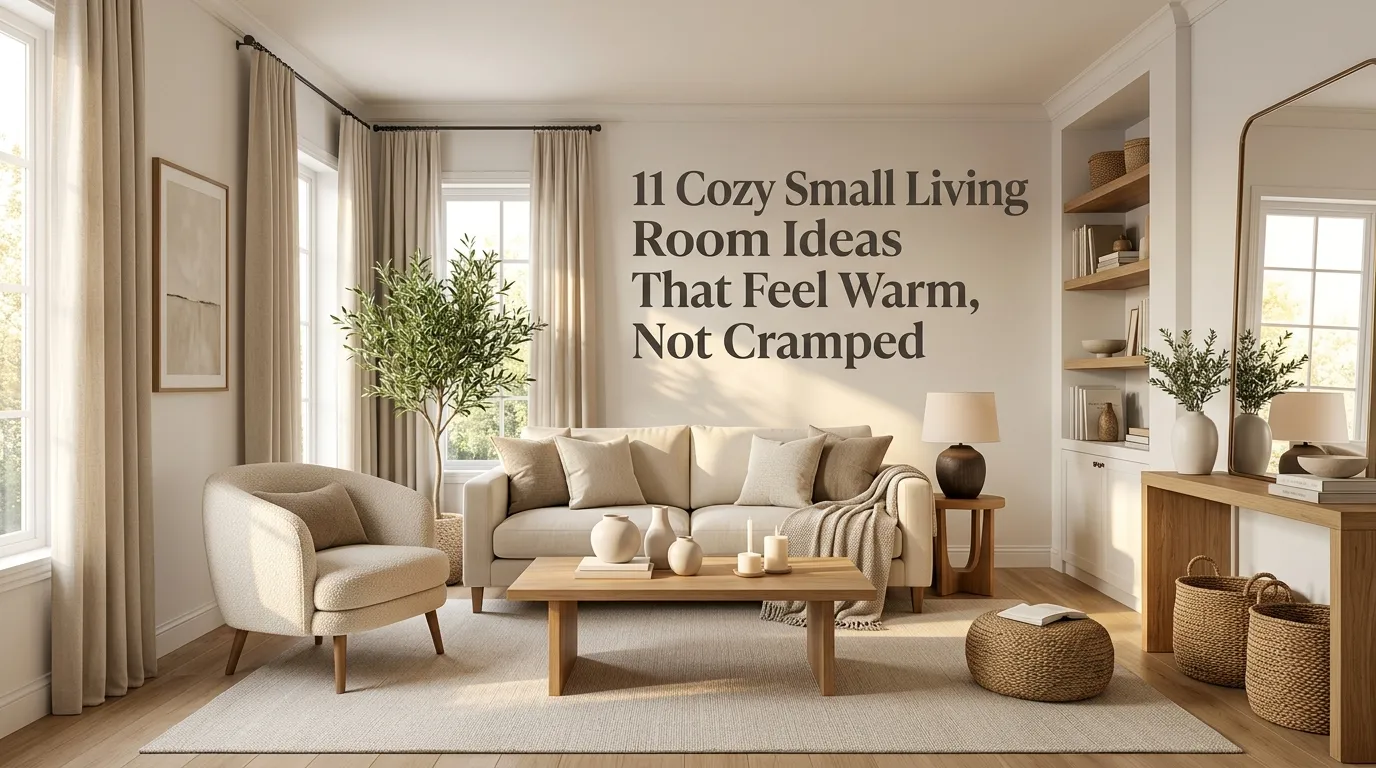
11 Cozy Small Living Room Ideas That Feel Warm, Not Cramped
There’s a common assumption that a small living room has to feel either sparse and minimal or cluttered and tight — but in my experience, the coziest living rooms I’ve seen are almost always the smaller ones. There’s something about a compact space, done right, that wraps around you the moment you sit down. The trick isn’t fighting the size of the room. It’s leaning into it.
If you’ve been searching for ways to make your small living room feel warmer without making it feel smaller, you’re asking exactly the right question. A mistake many homeowners make is assuming coziness requires more stuff — more pillows, more blankets, more furniture. In reality, a truly cozy small living room comes down to layering texture and warmth thoughtfully, choosing furniture that earns its place, and using light in a way that makes the whole room feel like it’s glowing from within.
I’ve noticed that the difference between a small room that feels cramped and one that feels cozy almost always comes down to intention. Every piece in a genuinely cozy small living room is doing something — providing seating, storage, softness, or light — rather than just filling space. That’s the mindset behind every idea in this guide.
Below are eleven ideas I’ve seen transform small, sometimes awkward living rooms into the kind of space people don’t want to leave. Each one includes specific, practical advice for bringing warmth and comfort into a limited footprint, whether you’re working with a studio apartment, a narrow city rowhouse living room, or just a smaller-than-average space in an otherwise larger home. None of these require knocking down walls or a major renovation — just thoughtful choices about furniture, texture, and light.
Let’s walk through them.
Table of Contents
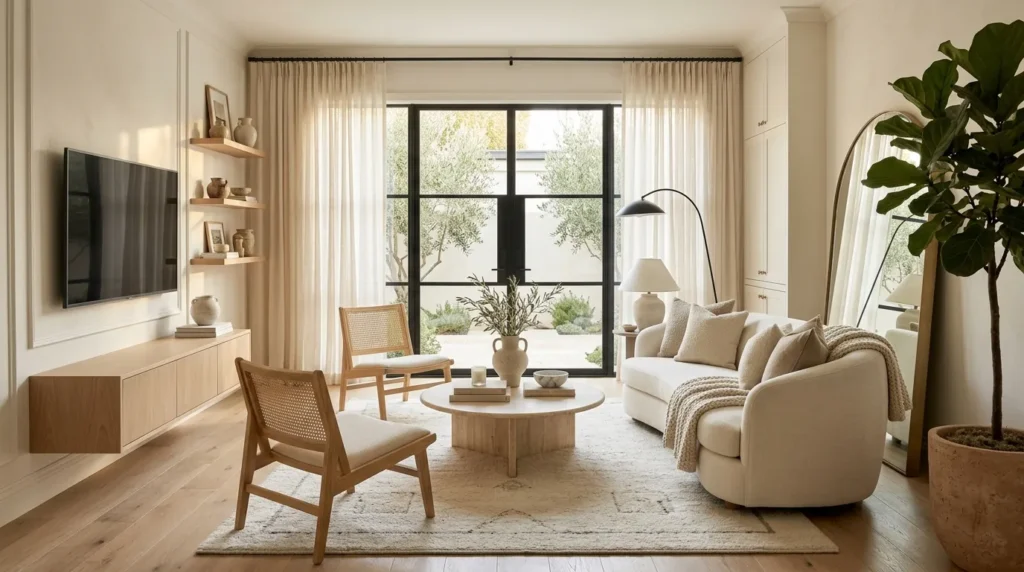
- Warm Layered Lighting — Replacing harsh overhead light with a softer, multi-source glow.
- Oversized Floor Pillows — Adding flexible, casual seating that doesn’t feel bulky.
- Multi-Functional Furniture — Choosing pieces that do more than one job.
- Textured Throw Blankets — Layering fabric for instant tactile warmth.
- Corner Reading Nooks — Turning an unused corner into a cozy retreat.
- Soft Area Rugs — Grounding the room and adding warmth underfoot.
- Vertical Wall Shelving — Using height instead of floor space for storage and display.
- Warm Wood Tones — Bringing in natural material for instant coziness.
- Curtain Height Tricks — Using window treatments to add height and softness.
- Candlelit Coffee Tables — Layering ambient light at eye level.
- Statement Accent Chairs — Adding a cozy focal point without crowding the room.
1. Warm Layered Lighting
Quick Benefits
- Replaces harsh, flat overhead light with a softer glow
- Makes the room feel warmer at any time of day
- Adds visual depth even in a small footprint
- Easy and affordable to implement with lamps alone
- Creates distinct zones without needing more furniture
Why It Works
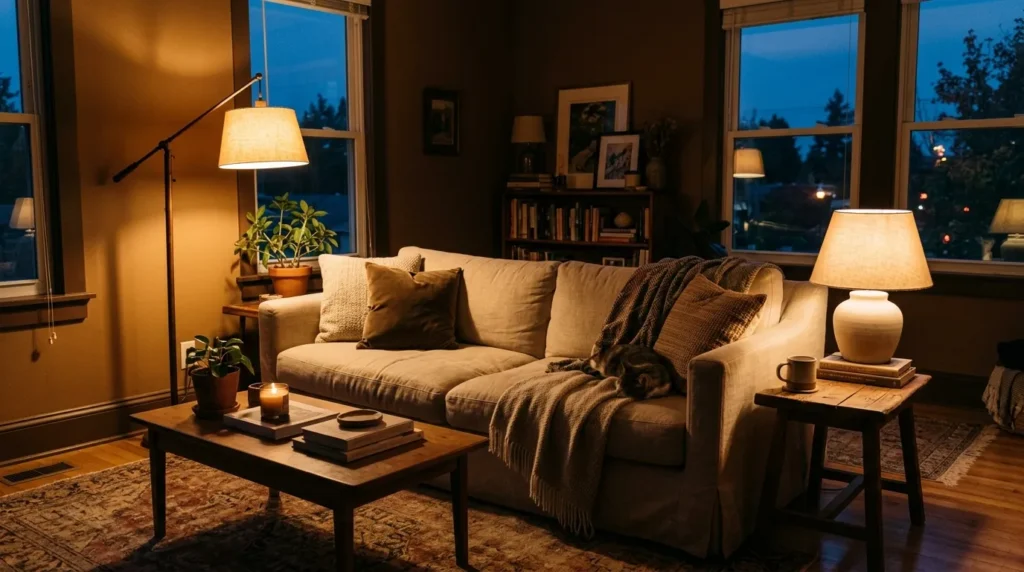
In my experience, lighting is the single most overlooked factor in whether a small living room feels cozy or cold. A single overhead fixture, especially one with a bright white bulb, flattens the whole room and makes even well-decorated spaces feel a little sterile. I’ve noticed that swapping to several smaller, warmer light sources — table lamps, floor lamps, string lights — does more to create a cozy atmosphere than almost any furniture change, because it mimics the layered, flickering quality of firelight rather than the flat wash of a single ceiling bulb.
How To Style It
Turn off the overhead light entirely in the evening and rely instead on two or three lamps placed at different heights around the room — a floor lamp beside the sofa, a table lamp on a side table, and perhaps a smaller accent lamp on a bookshelf. Choose warm white bulbs (around 2700K) rather than cool white or daylight bulbs, which read as more clinical than cozy. A dimmer switch on any remaining overhead fixture gives you flexibility to soften the light without removing it entirely. In a small room, even one additional lamp in a previously dark corner can dramatically change how warm and inviting the whole space feels.
2. Oversized Floor Pillows
Quick Benefits
- Adds flexible, casual seating without bulky furniture
- Easy to move, stack, or tuck away as needed
- Introduces soft texture at a lower, cozier eye level
- Works well for movie nights or extra guests
- More affordable than a second sofa or armchair
Why It Works
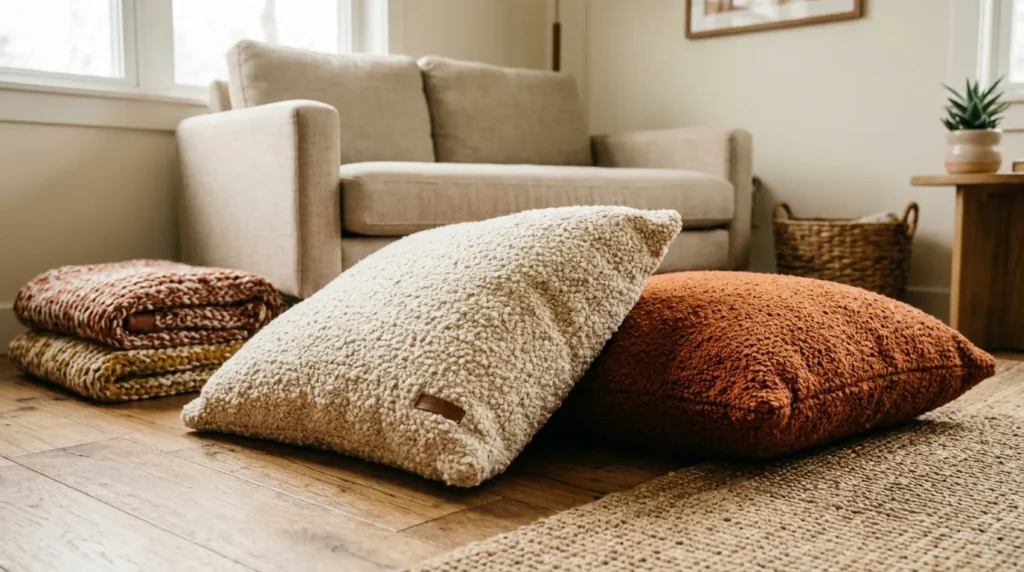
A mistake many homeowners make in a small living room is trying to fit in a second sofa or an extra armchair to accommodate more seating, which often just makes the room feel crowded. One thing that works especially well instead is a couple of oversized floor pillows or poufs, which provide genuinely comfortable extra seating without the visual bulk of another full-sized piece of furniture. I’ve seen this idea transform small living rooms because floor-level seating also tends to make a room feel larger, since it keeps sightlines open rather than blocked by tall furniture.
How To Style It
Choose floor pillows or poufs in a soft, textured fabric like bouclé, chunky knit, or velvet, which adds tactile coziness even when they’re not being sat on. Tuck one or two into a corner near the sofa when not in use, or pull them out for movie nights and extra seating when guests come over. A round pouf can also double as a footrest or a small side table with a tray on top, adding function beyond just seating. Stick to one or two floor pillows in a small room rather than several, since too many can start to clutter the floor space you’re trying to protect.
3. Multi-Functional Furniture
Quick Benefits
- Reduces the total number of pieces needed in the room
- Combines storage, seating, or surface space in one item
- Keeps the room feeling open rather than crowded
- Adds flexibility for different uses throughout the day
- Essential for studio apartments and compact layouts
Why It Works
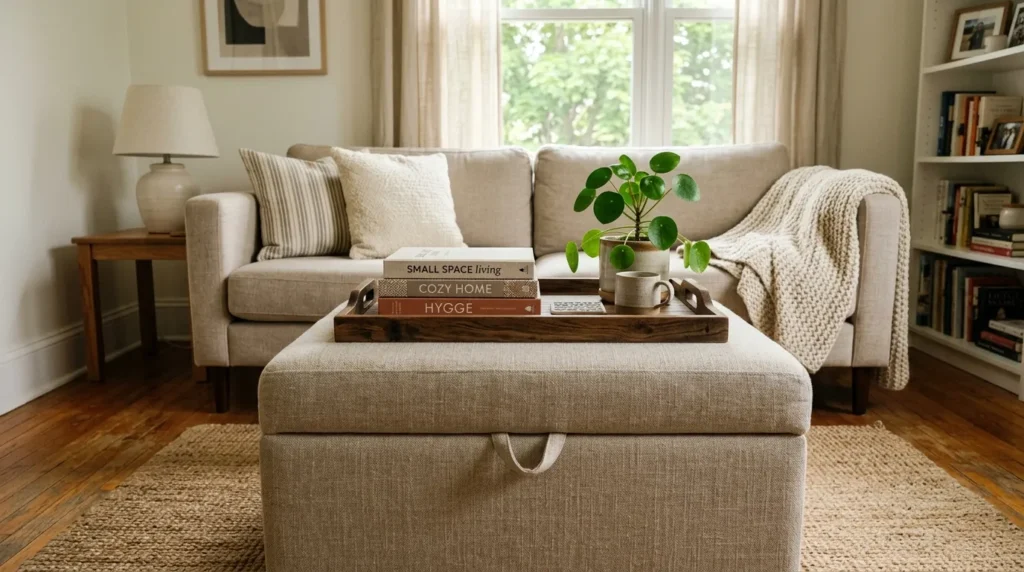
That’s why many designers recommend starting a small living room layout with multi-functional pieces rather than filling the room with single-purpose furniture. A storage ottoman that serves as a coffee table, footrest, and hidden storage all at once does the job of three separate pieces in the footprint of one. In my experience, this approach is what allows a small room to feel cozy rather than cramped, since fewer, smarter pieces leave more open floor space for movement and softness like rugs and pillows.
How To Style It
A storage ottoman with a tray top works beautifully as a coffee table that can also hold extra blankets or magazines inside. A daybed or a sleeper sofa allows the living room to double as a guest space without needing a separate piece of furniture just for occasional overnight visitors. Nesting side tables are another excellent option, since they can be tucked together to save space day-to-day and pulled apart when extra surface area is needed. When shopping for a small living room, prioritize furniture with a clear secondary function over pieces that only do one thing, even if the single-purpose option is slightly less expensive.
4. Textured Throw Blankets
Quick Benefits
- Adds instant tactile warmth to any seating area
- Easy and affordable way to introduce color or pattern
- Works well layered over sofas, chairs, or floor cushions
- Provides actual warmth on cooler evenings
- Simple to swap seasonally for a quick refresh
Why It Works
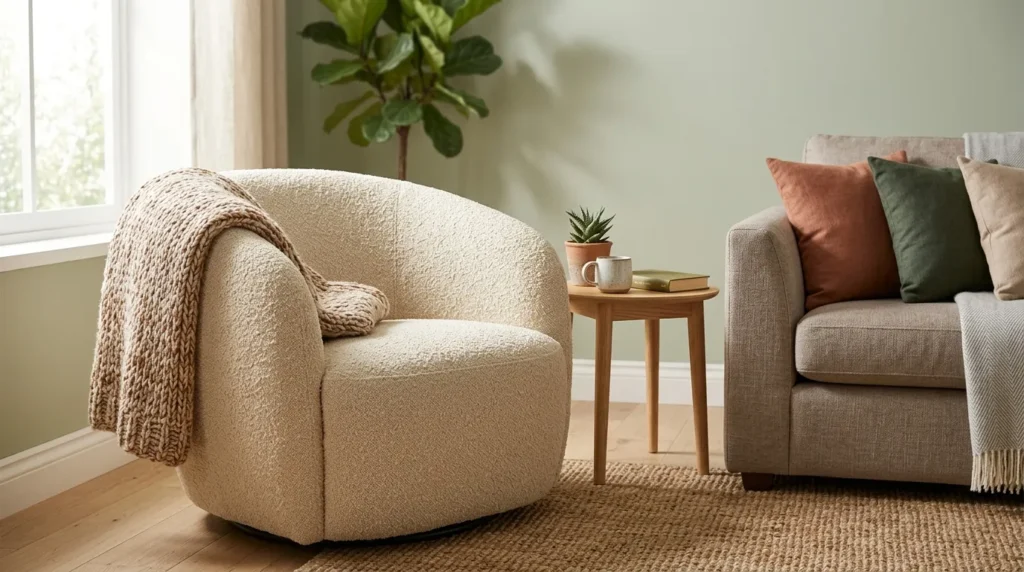
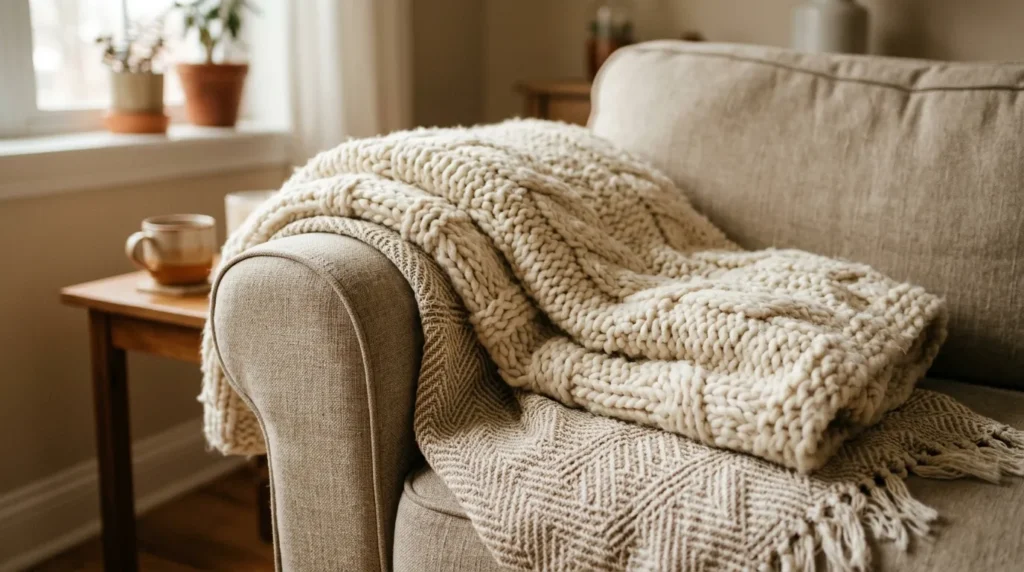
One thing that works especially well in a cozy small living room is a generously sized throw blanket in a chunky, textured knit or soft faux fur, draped casually over the sofa or an accent chair. I’ve noticed that texture does a huge amount of work in making a small room feel warm, since it engages a sense beyond just sight — you can practically feel how soft a room is going to be just by looking at it. A well-chosen throw blanket is also one of the most affordable ways to add both color and coziness without committing to new furniture.
How To Style It
Drape a throw blanket loosely over one arm of the sofa or an accent chair rather than folding it too precisely, which keeps the look relaxed rather than staged. Choose a chunky knit, bouclé, or faux fur texture for maximum tactile warmth, in a color that complements but doesn’t exactly match your other textiles. Layering two blankets of slightly different textures — a woven cotton throw under a chunkier knit one, for example — adds even more visual depth in a small space. Keep an extra blanket or two in a nearby storage ottoman or basket so you always have a fresh one on hand without cluttering the seating area.
5. Corner Reading Nooks
Quick Benefits
- Turns an unused or awkward corner into a functional retreat
- Adds a cozy focal point without taking over the room
- Works well with just a chair, a lamp, and a small shelf
- Provides a quiet spot separate from the main seating area
- Makes efficient use of otherwise wasted space
Why It Works
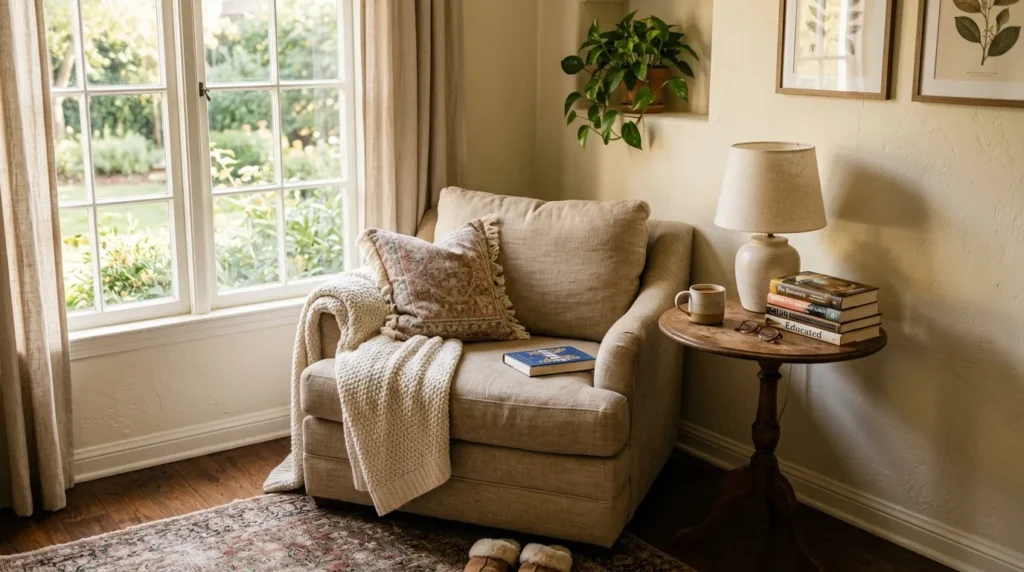
In my experience, almost every small living room has one slightly awkward corner that doesn’t quite fit into the main furniture arrangement — and that corner is often the perfect spot for a reading nook. I’ve seen this idea transform small living rooms because it gives the space a second, quieter zone without requiring additional square footage; it simply repurposes a corner that might otherwise sit empty or become a catch-all for clutter. A dedicated reading spot also adds a sense of intentional design, showing that every part of the room has a purpose.
How To Style It
A single comfortable armchair, angled slightly toward the window or a wall, paired with a small side table and a floor or table lamp, is really all a reading nook needs. Add a soft throw blanket and a small basket for current reads nearby to reinforce the cozy, purposeful feeling of the corner. If space allows, a slim bookshelf or a few floating shelves above the chair can hold a small book collection without taking up floor space. Keep the nook visually distinct from the main seating area by choosing a chair in a slightly different fabric or color than the sofa, which helps define it as its own little zone within the room.
6. Soft Area Rugs
Quick Benefits
- Grounds the furniture arrangement and defines the space
- Adds warmth and softness underfoot
- Introduces color and pattern at a large scale
- Helps absorb sound in a small, often echo-prone room
- Makes hard flooring feel warmer immediately
Why It Works
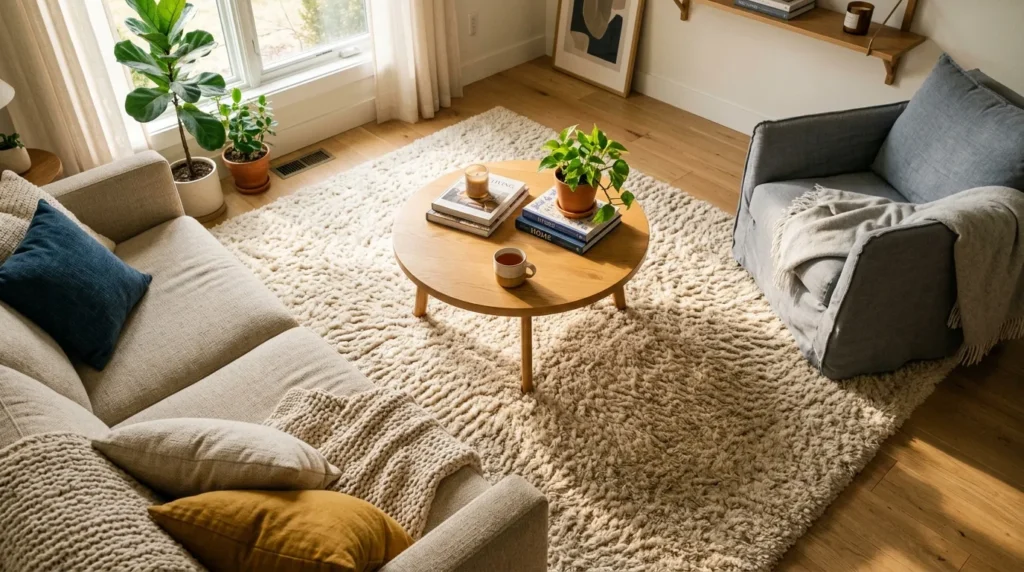
A mistake many homeowners make in a small living room is skipping a rug entirely, assuming it will make the space feel more crowded — but in my experience, the opposite is usually true. A well-sized rug visually grounds the furniture and gives the eye a clear sense of where the “room” begins and ends, which actually makes a small space feel more organized and complete rather than smaller. A soft, plush rug also adds genuine physical coziness, especially in rooms with hardwood or tile flooring that can otherwise feel cold and echoey.
How To Style It
Choose a rug large enough that at least the front legs of your sofa and chairs sit on it, since a rug that’s too small tends to make the furniture arrangement look disconnected and can actually shrink the perceived size of the room. A soft, high-pile rug in a warm neutral tone works well as a base layer in most small living rooms, adding plush texture underfoot. If your room gets a lot of foot traffic, a slightly lower pile with strong texture — like a chunky wool weave — offers a similar cozy feel with easier maintenance. Keep the rug’s color palette in the same family as your other textiles so it feels like part of a cohesive layered look rather than a separate statement.
7. Vertical Wall Shelving
Quick Benefits
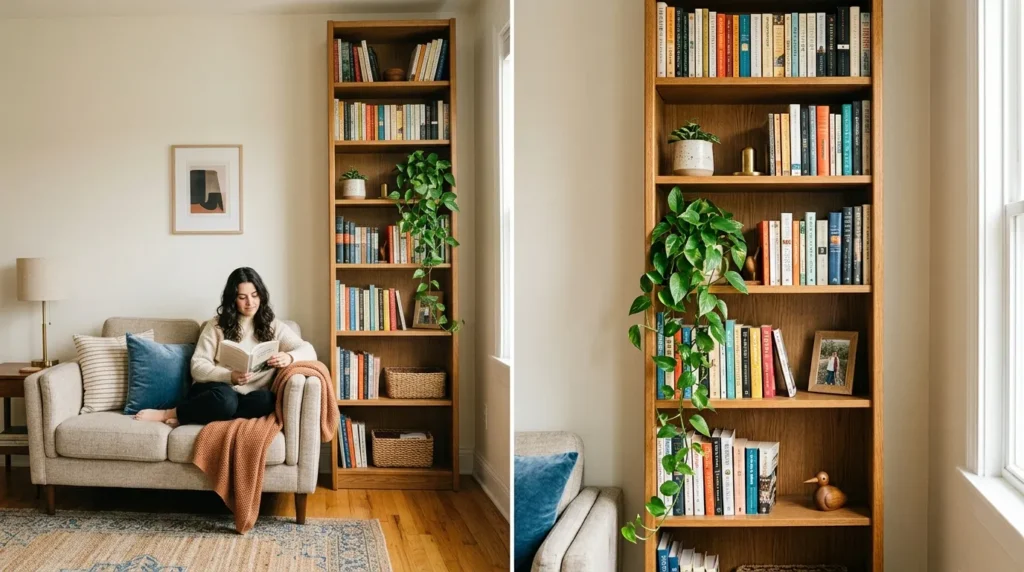
- Uses height instead of valuable floor space
- Provides storage and display in a small footprint
- Draws the eye upward, making ceilings feel taller
- Keeps the floor open and uncluttered
- Adds personality through books, plants, and small decor
Why It Works
That’s why many designers recommend vertical shelving as one of the smartest storage solutions for a small living room — by building up rather than out, you gain significant storage and display space without sacrificing any of the floor area you need for furniture and movement. I’ve noticed that tall, narrow shelving units also have the side effect of making ceilings feel higher, since they draw the eye upward rather than letting it stop at furniture height, which makes the whole room feel a little more spacious even as it holds more of your belongings.
How To Style It
A tall, narrow bookshelf flanking one side of the sofa or fireplace makes efficient use of vertical space while adding warmth through books and small decorative objects. Floating shelves above a console table or sofa are another excellent option, especially in very tight rooms where even a slim bookshelf would eat into walking space. Style shelves with a mix of books, a few plants, and small personal objects rather than filling every inch, since some negative space on the shelves keeps the display from feeling as crowded as the room itself might otherwise seem. Keep the lower few feet of any wall near seating relatively open, reserving shelving for the upper portions of the wall so the room doesn’t feel boxed in at eye level.
8. Warm Wood Tones
Quick Benefits
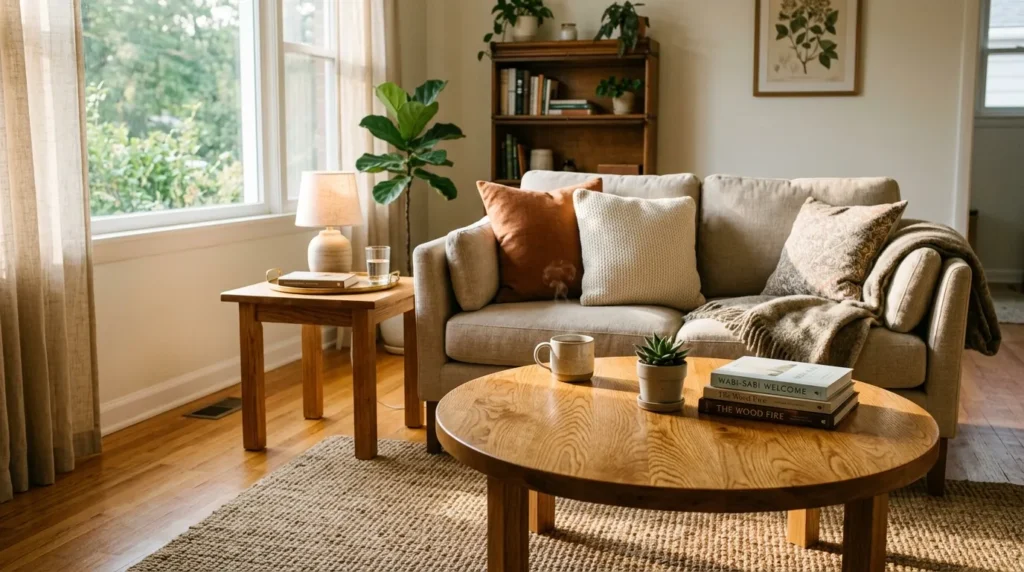
- Adds natural warmth without introducing bold color
- Grounds the room with an organic, tactile material
- Pairs well with almost any color palette
- Brings a sense of texture even in minimal spaces
- Ages well and rarely feels dated
Why It Works
If you’re anything like me, you’ve probably noticed that rooms with even a small amount of warm wood tend to feel instantly cozier than rooms dominated by cool metals, glass, or stark white surfaces. Wood has a natural warmth, both in color and texture, that makes a small living room feel more grounded and less clinical. In my experience, this is especially important in small spaces, where cooler materials can sometimes read as sparse or unfinished if not balanced with something organic and textured.
How To Style It
Introduce warm wood tones through a coffee table, a media console, or even just a few small accessories like picture frames or a bowl on a shelf. If your existing furniture leans more toward metal or glass, a single warm wood piece — a side table or a shelving unit — can balance the room without requiring a full furniture swap. Choose wood finishes on the warmer end of the spectrum, like honey oak, walnut, or reclaimed pine, rather than very light, cool-toned woods, which can feel more Scandinavian-minimal than cozy. Mixing a couple of different wood tones in the same room is fine as long as they share similar warm undertones, so they read as complementary rather than mismatched.
9. Curtain Height Tricks
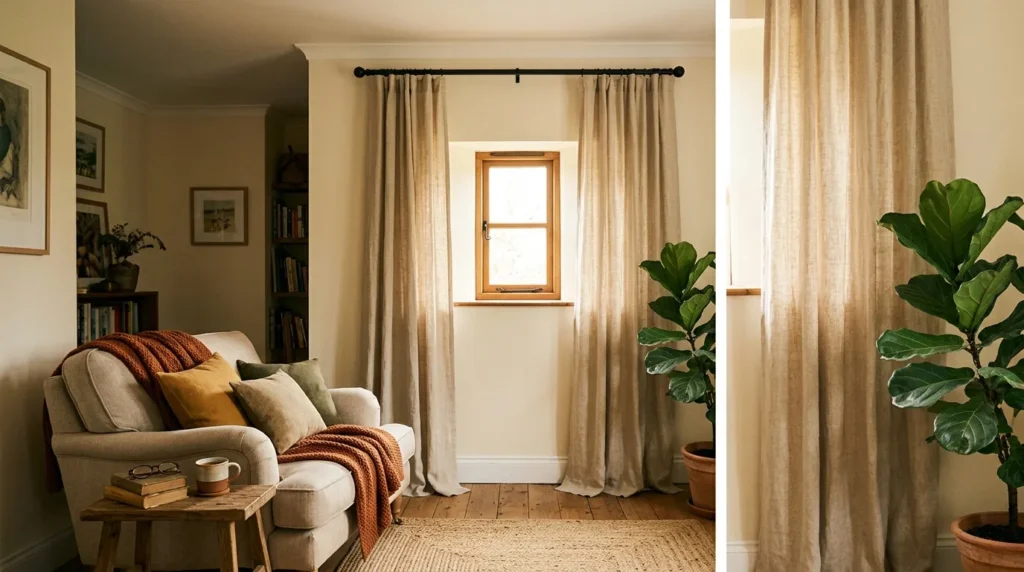
Quick Benefits
- Makes ceilings feel taller in a small room
- Adds softness and texture at the windows
- Frames natural light beautifully
- Simple, affordable update with a big visual impact
- Improves the overall proportions of the room
Why It Works
One thing that works especially well in a small living room is hanging curtains higher and wider than the window frame itself, rather than mounting the rod directly above the window. I’ve seen this idea transform small rooms because it’s a simple optical trick that makes ceilings appear taller and windows appear larger, which in turn makes the whole room feel more spacious and airy — a crucial part of keeping a cozy room from tipping into feeling cramped. Curtains also add a layer of soft fabric texture that hard window frames alone can’t provide.
How To Style It
Mount curtain rods as close to the ceiling as practical, ideally at least four to six inches above the window frame, and extend the rod several inches beyond each side of the window so the curtains can be pulled fully open without blocking any glass. Choose curtains in a soft, slightly heavier fabric like linen or velvet for a cozier feel than sheer or lightweight options, especially in cooler months. Floor-length curtains that just graze or slightly pool on the floor add an extra sense of height and luxury compared to curtains that stop short above the floor. Stick to one or two colors for your curtains that echo other textiles in the room, keeping the overall palette cohesive even as you add another layer of pattern or texture.
10. Candlelit Coffee Tables
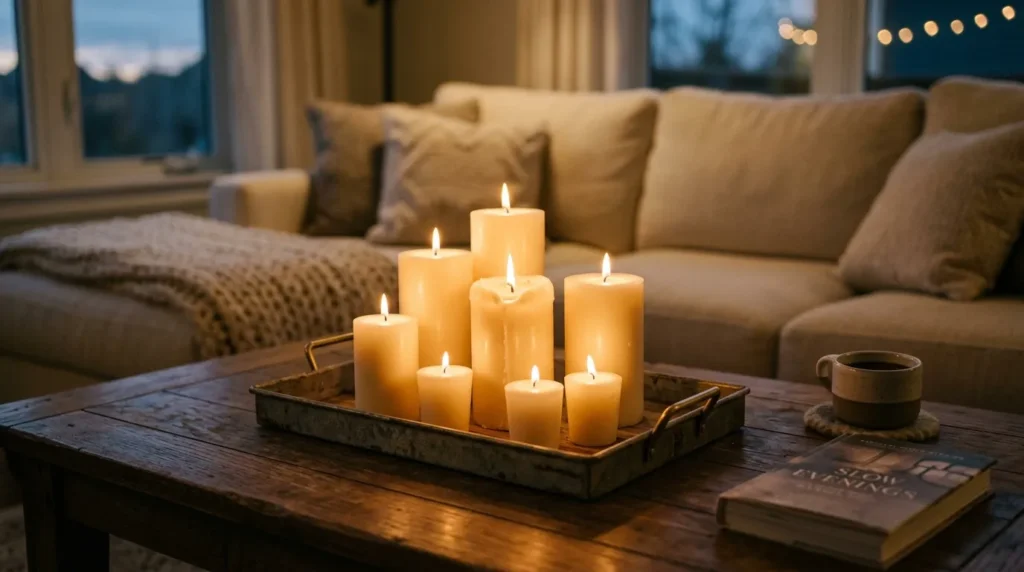
Quick Benefits
- Adds ambient light at a lower, more intimate eye level
- Creates a cozy focal point on an often-underused surface
- Inexpensive and easy to update seasonally
- Complements lamp lighting for a fuller layered glow
- Adds a sensory element through scent as well as light
Why It Works
A mistake many homeowners make is putting all their lighting effort into lamps and overhead fixtures while leaving the coffee table completely bare after dark. A small grouping of candles at coffee-table height adds a layer of soft, flickering light that sits right at eye level when you’re seated on the sofa, which creates an especially intimate, cozy glow. In my experience, this lower light layer is what often makes the biggest difference between a room that feels pleasantly lit and one that feels genuinely cozy in the evening.
How To Style It
Group two or three candles of varying heights on a small tray at the center of the coffee table, rather than spacing single candles around the room, which tends to look scattered rather than intentional. Choose warm-scented candles in tones like vanilla, sandalwood, or amber for an added layer of coziness beyond just the visual warmth. Flameless LED candles are a practical option if you have small children or pets, offering the same warm flicker without the fire risk. Pair the candle grouping with a small stack of books or a vase to keep the tray from feeling like it’s only serving one purpose.
11. Statement Accent Chairs
Quick Benefits
- Adds a cozy visual focal point without crowding the room
- Provides additional seating in a defined footprint
- Introduces color, pattern, or texture through one key piece
- Works well paired with a smaller sofa or loveseat
- Anchors a reading nook or secondary seating area
Why It Works
That’s why many designers recommend investing in one great accent chair rather than a second full-sized sofa in a small living room — a well-chosen chair provides genuine extra seating and a strong visual focal point, all in a much smaller footprint. I’ve noticed that a chair in a bold texture or a soft, inviting fabric like bouclé or velvet tends to become the piece people are drawn to sit in first, which says a lot about how effectively a single great chair can define the cozy character of an entire room.
How To Style It
Choose an accent chair in a soft, tactile fabric — bouclé, chenille, or velvet all read as especially cozy — and in a color or pattern that adds a little contrast to your sofa without clashing with it. Position the chair at a slight angle toward the sofa rather than facing it directly head-on, which tends to create a more natural, conversational layout in a small room. Add a small side table and a throw blanket to the chair to reinforce it as its own little seating moment within the larger room. If your living room is very tight on space, a slipper chair or an armless accent chair offers the same cozy visual impact with a slightly smaller physical footprint than a traditional armchair.
Frequently Asked Questions
How can I make a small living room feel cozy without making it feel cluttered? Focus on multi-functional furniture, layered lighting, and a few well-chosen textured pieces rather than adding lots of small decor items. Keep the floor as open as possible and use vertical space like shelving for storage and display.
What colors make a small living room feel cozier? Warm neutrals, soft terracottas, deep greens, and warm browns tend to feel cozier than stark whites or cool grays. Layering warm-toned textiles and wood finishes has a bigger impact on coziness than the wall color alone.
Should I avoid rugs in a small living room? No — a properly sized rug actually helps ground the room and makes it feel more complete rather than smaller. The key is choosing a rug large enough for at least the front legs of your furniture to sit on.
What’s the best lighting for a cozy small living room? Several smaller, warm-toned light sources — lamps, candles, string lights — placed at different heights around the room create a much cozier atmosphere than a single bright overhead fixture.
How do I fit extra seating into a small living room? Floor pillows, poufs, and a single well-chosen accent chair all add seating without the bulk of a second sofa. Multi-functional pieces like storage ottomans can also double as extra seating when needed.
Do heavy curtains make a small room feel smaller? Not if hung correctly. Mounting curtain rods high and wide, beyond the window frame itself, actually makes the room feel taller and more spacious, even with heavier, cozier fabric.
How many textures should I layer in a small cozy living room? Three to four different textures — like a knit throw, a woven rug, a velvet chair, and a wood coffee table — usually creates enough visual and tactile interest without feeling overdone in a smaller space.
Conclusion
A small living room doesn’t have to choose between feeling cozy and feeling spacious — with the right layering of light, texture, and smart furniture choices, it can genuinely offer both. From warm layered lighting and a textured throw blanket to a single great accent chair, each of these eleven ideas is about making intentional choices rather than simply adding more.
Start with one or two ideas and gradually build a space that reflects your style and supports everyday comfort. Maybe that’s swapping in warmer lightbulbs this week and finding the right rug the next. Over time, these small, thoughtful changes are what turn a small living room into the coziest, most lived-in room in the whole house.
Related Articles
- 10 Small Balcony Decorating Ideas
- Small Living Room Layouts
- Vintage Country Living Room Decor Ideas
- Neutral Home Styling
- Cozy Bedroom Ideas