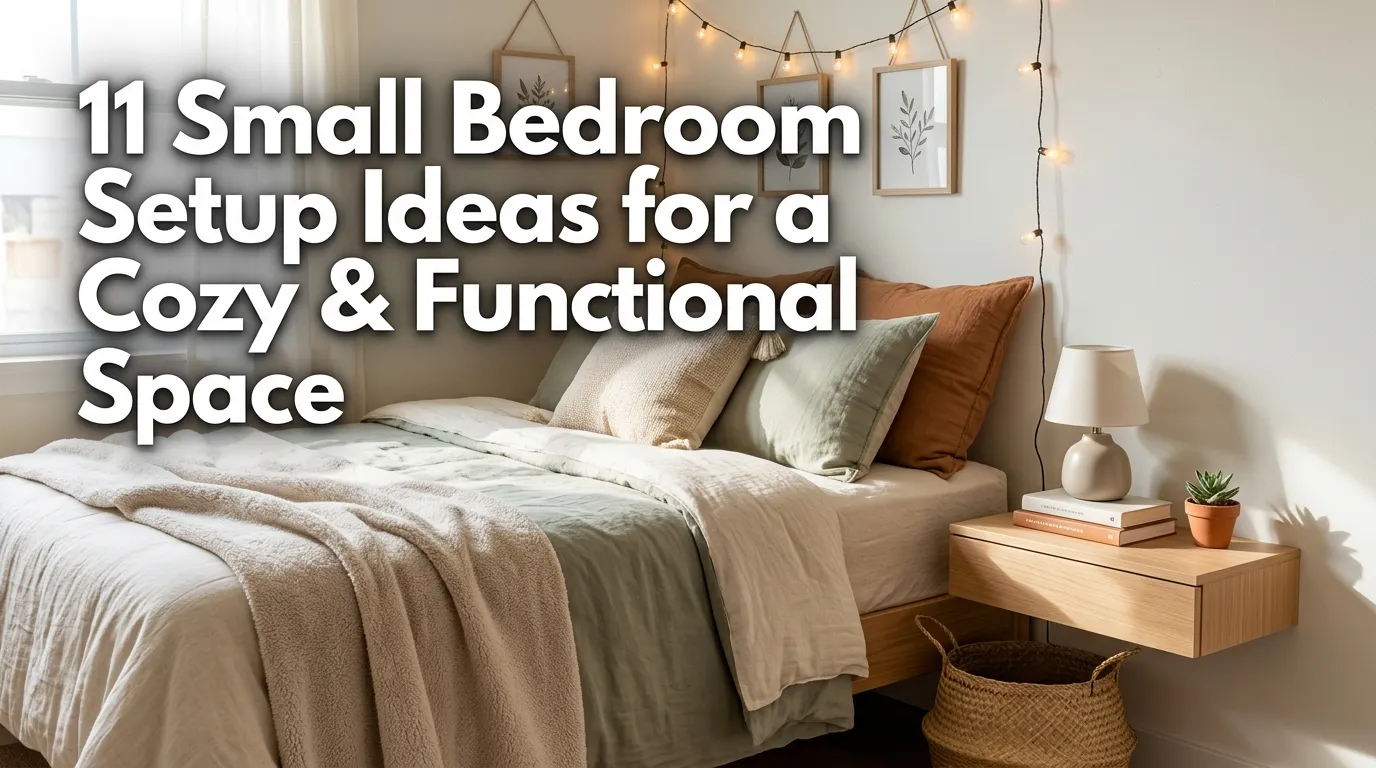
11 Small Bedroom Setup Ideas for a Cozy &Functional Space
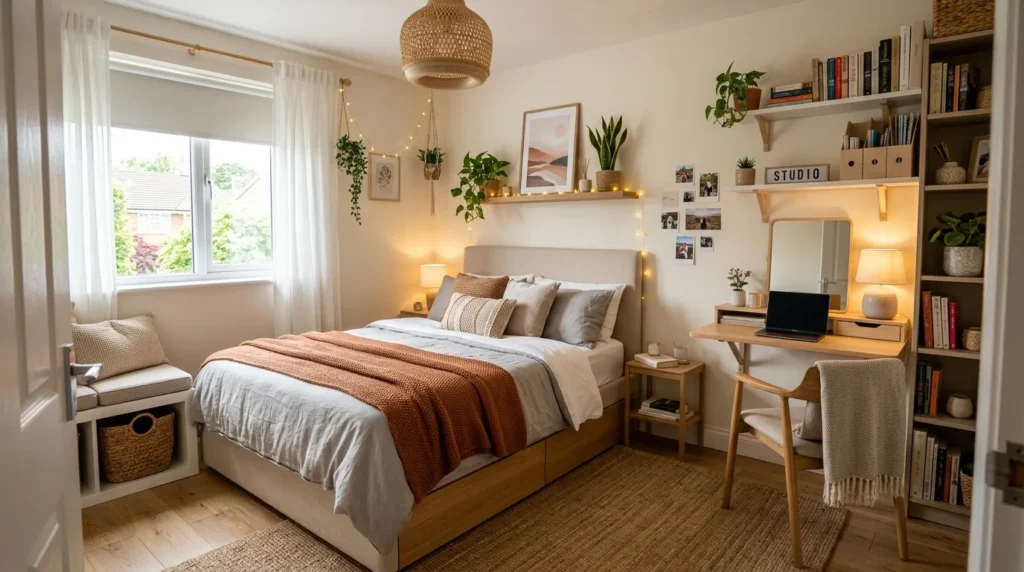
A small bedroom can be surprisingly comfortable when every piece has a purpose. The challenge is rarely the square footage itself; it is figuring out how to arrange furniture, store everyday essentials, and create enough visual breathing room without making the room feel sparse or unfinished.
I’ve noticed that the most successful small bedrooms usually don’t rely on complicated decorating tricks. Instead, they use a few smart principles repeatedly: furniture that fits the scale of the room, vertical storage, thoughtful lighting, lighter visual weight, and styling that makes the space feel personal without overwhelming it.
Whether you’re decorating a compact primary bedroom, guest room, apartment bedroom, or a smaller rental, the right setup can make the room feel considerably more comfortable. A narrow nightstand can replace a bulky bedside table. Wall-mounted lighting can free up valuable surface space. A bed with built-in drawers can quietly solve a storage problem. Even something as simple as keeping the floor visually open can make a noticeable difference.
The best part is that you don’t have to completely redesign the room to get results. Sometimes moving the bed, replacing one oversized piece of furniture, or taking advantage of an unused wall can change the entire feel of the space.
Below, you’ll find 11 practical small-bedroom setups that balance comfort, storage, style, and everyday usability. Think of them as flexible starting points rather than strict rules. You can mix several ideas together to create a bedroom that feels spacious enough for real life while still looking warm, layered, and Pinterest-worthy.
Table of Contents
1. Low Profile Furniture
Use streamlined pieces to keep a compact room feeling open and balanced.
2. Vertical Storage Walls
Take advantage of wall height when floor space is limited.
3. Underbed Storage
Turn the often-unused space beneath the bed into practical hidden storage.
4. Floating Nightstands
Free up floor space while keeping bedside essentials within easy reach.
5. Light Neutral Layers
Use soft, bright tones to create an airy and relaxing atmosphere.
6. Multipurpose Furniture
Choose furniture that performs more than one job without overcrowding the room.
7. Corner Reading Nook
Transform an overlooked corner into a useful and inviting retreat.
8. Wall Mounted Lighting
Replace bulky lamps with lighting that preserves precious surface area.
9. Mirror Light Tricks
Use carefully placed mirrors to increase brightness and visual depth.
10. Minimal Bedding
Create a polished bed without adding unnecessary visual bulk.
11. Clear Floor Paths
Protect circulation space so the bedroom feels easier to move through.
1. Low Profile Furniture
Quick Benefits
- Makes the ceiling feel taller
- Reduces visual bulk
- Creates more breathing room
- Helps a small bedroom feel modern
- Makes furniture easier to arrange
Why It Works
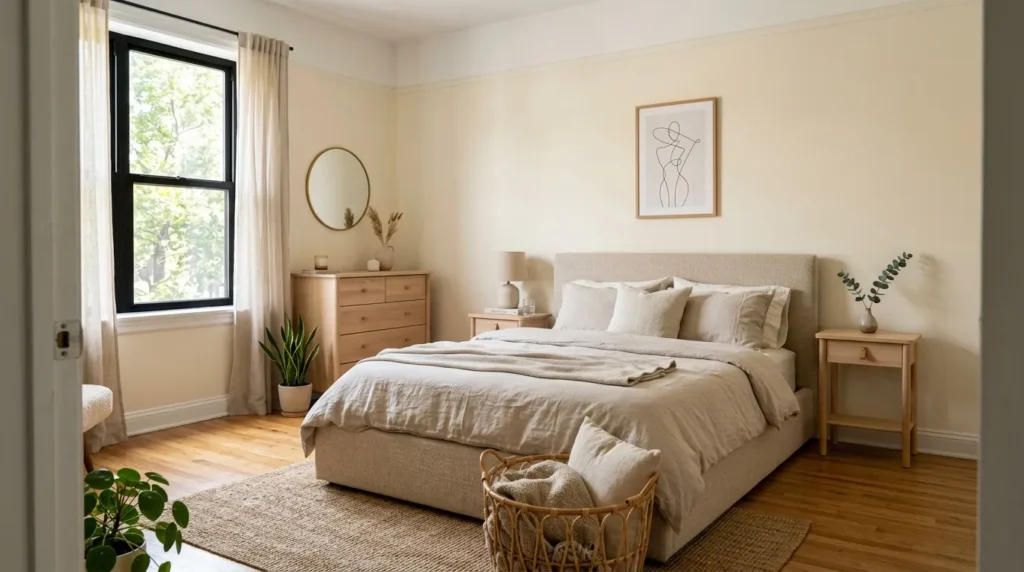
Furniture scale has a huge effect on how a compact bedroom feels. A tall, oversized bed frame, deep dresser, and chunky nightstands can quickly make an already-small room feel crowded. Low-profile furniture does the opposite by keeping more of the wall and surrounding space visually open.
A platform bed with a simple frame is especially useful because it creates a clean horizontal line without adding unnecessary height. Slim nightstands and a shallow dresser can provide essential storage while keeping pathways comfortable. In my experience, this approach works particularly well in rooms where the bed takes up most of the available floor area.
The goal isn’t to eliminate furniture. It is to choose pieces that feel proportional to the room rather than fighting against it.
How To Style It
Start with the bed because it is usually the largest piece. Look for a simple platform design, streamlined upholstered frame, or low wooden frame with minimal decorative bulk. Pair it with narrow nightstands rather than wide bedside tables.
If you need a dresser, measure the wall carefully before shopping. A shallower dresser can provide useful storage without making the walking area feel cramped. Keep decorative accessories restrained on top, perhaps using one lamp, a small tray, and a single piece of artwork.
For a softer look, layer natural materials such as light wood, linen, cotton, or woven baskets. Keep furniture finishes coordinated rather than mixing too many heavy colors. The result should feel intentional, calm, and easy to navigate.
2. Vertical Storage Walls
Quick Benefits
- Uses unused wall space
- Keeps belongings off the floor
- Creates more organized storage
- Works well in rental bedrooms
- Makes the room feel more functional
Why It Works
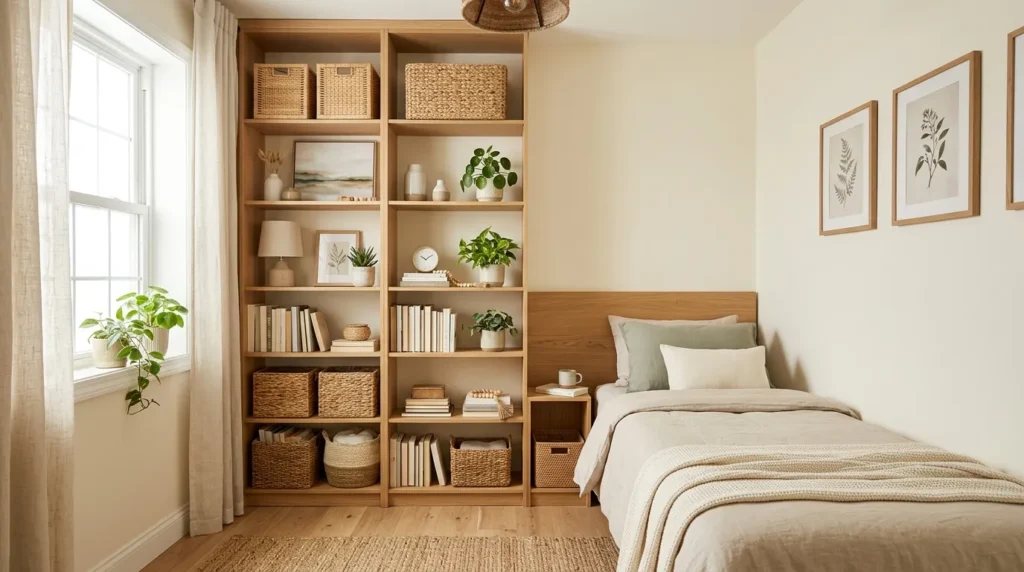
When floor space is limited, the walls become some of your most valuable real estate. Instead of trying to squeeze another cabinet or dresser into the room, look upward. Vertical storage takes advantage of height while preserving the floor area you need for walking, dressing, and relaxing.
Open shelves can hold books, baskets, framed art, and a few decorative objects, while taller closed cabinets can conceal clothing and personal items. A floor-to-ceiling shelving unit can also make a small room feel more architecturally intentional rather than simply short on storage.
One mistake many homeowners make is treating every wall as empty space that needs decoration. In a small bedroom, a wall should earn its keep when possible. Combining storage with attractive styling gives you both function and visual interest.
How To Style It
Consider installing two or three narrow shelves above a dresser or beside the bed. Use matching baskets for small belongings so the arrangement stays visually tidy. If you have more room, a tall bookcase can provide a combination of closed and open storage.
For renters, freestanding ladder shelves and slim shelving units are practical alternatives to built-ins. Choose a finish that complements your bed frame or flooring so the storage feels integrated.
Avoid filling every shelf. Leave some open space between objects to prevent the wall from looking cluttered. A balanced combination of books, woven baskets, small plants, artwork, and everyday essentials can make the storage feel decorative rather than purely utilitarian.
3. Underbed Storage
Quick Benefits
- Adds hidden storage
- Keeps seasonal items contained
- Reduces dresser clutter
- Makes better use of existing furniture
- Works especially well in apartments
Why It Works
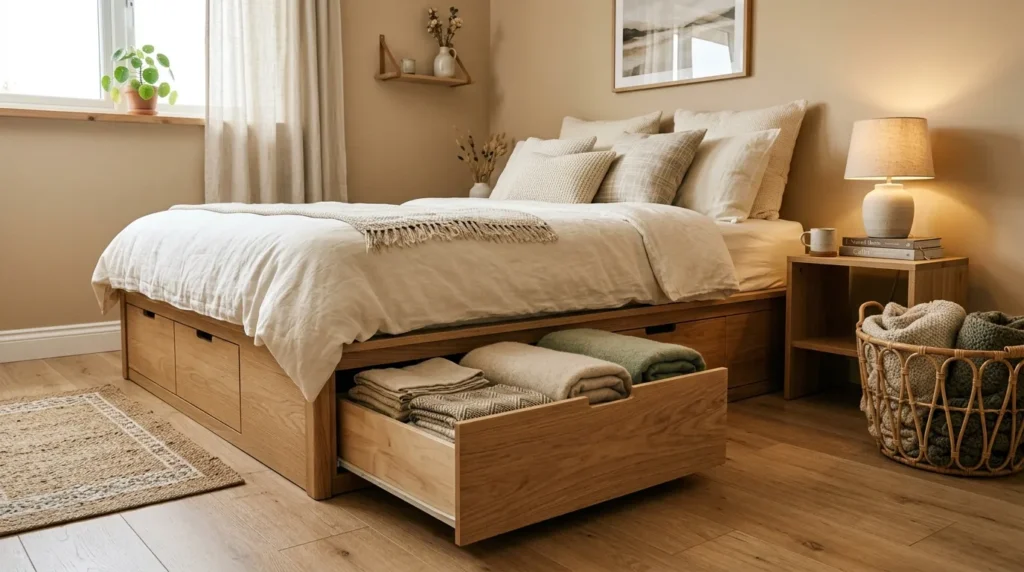
The space underneath your bed is easy to overlook, yet it can hold a surprising amount of rarely used belongings. In a compact bedroom, this hidden area can reduce the need for additional furniture and help keep visible surfaces clear.
Underbed storage is particularly useful for seasonal clothing, extra bedding, shoes, luggage, or items you don’t need every day. The key is choosing containers that are easy to access and appropriately sized for the available clearance.
I’ve found that the best storage solutions are the ones you can actually maintain. If pulling everything from beneath the bed requires moving the mattress, you’ll probably stop using the space efficiently. Simple rolling drawers, shallow bins, or built-in drawers make everyday organization much easier.
How To Style It
If you’re buying a new bed, consider a platform frame with integrated drawers. This gives the room a cleaner appearance because the storage is designed as part of the furniture.
For an existing bed, use low-profile containers with handles or wheels. Fabric zippered bags are useful for soft items such as blankets and seasonal clothing, while sturdy bins work well for shoes and accessories.
Keep frequently needed belongings toward the easiest-to-reach side. Label containers if you store several categories underneath the bed.
Visually, keep the area around the bed clean. A simple rug, neatly tucked bedding, and uncluttered nightstands will make the entire room feel more organized, even when you’re using every hidden inch of storage.
4. Floating Nightstands
Quick Benefits
- Opens up floor space
- Creates a cleaner look
- Keeps essentials nearby
- Makes vacuuming easier
- Works beautifully in narrow bedrooms
Why It Works
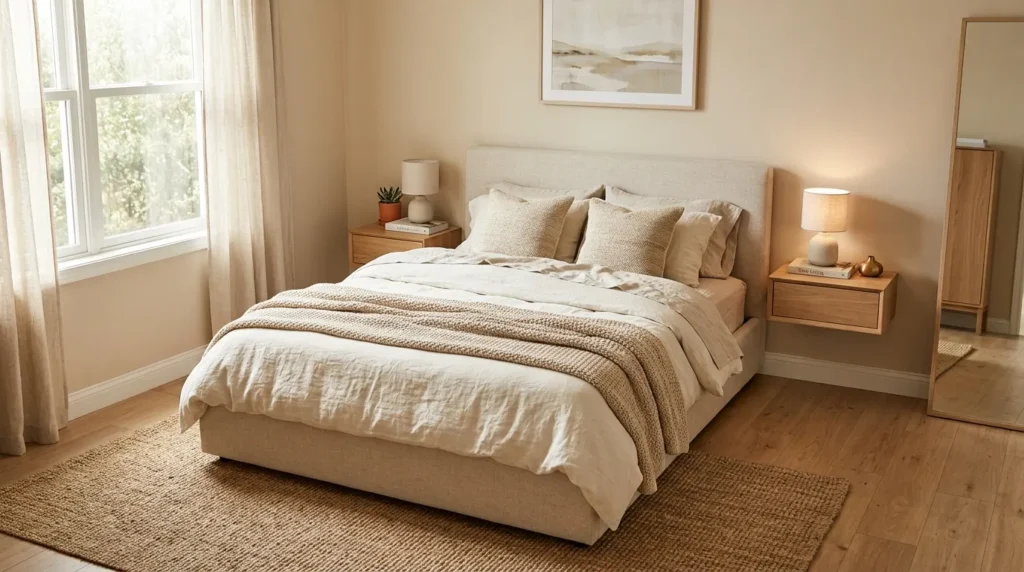
Traditional nightstands can take up more floor space than you realize. In a narrow bedroom, even a small cabinet can make the walkway beside the bed feel tight. A floating nightstand solves this problem by attaching directly to the wall and leaving the floor underneath open.
This arrangement creates a lighter visual effect while still giving you a convenient place for a phone, book, glass of water, or small lamp. It can also make cleaning easier because there are fewer furniture legs and corners collecting dust.
The design is especially effective when the bedroom has a tight space on one or both sides of the bed. Rather than forcing a conventional nightstand into an awkward area, you can create exactly the amount of surface you need.
How To Style It
Choose a compact floating shelf or wall-mounted drawer with enough depth for your essentials. A simple wooden shelf can suit a warm Scandinavian bedroom, while a painted drawer can work nicely in a traditional or colorful space.
Keep the surface edited. A small lamp or wall light, a book, and a tiny decorative object are usually enough. If you need more storage, choose a floating drawer instead of an open shelf.
For a coordinated look, match the nightstand finish with another element in the room, such as the bed frame, dresser, or flooring. Keep the wall above it relatively simple so the arrangement feels intentional rather than crowded.
5. Light Neutral Layers
Quick Benefits
- Creates an airy atmosphere
- Reflects available light
- Makes furniture feel less heavy
- Provides a calming bedroom backdrop
- Works with many decorating styles
Why It Works
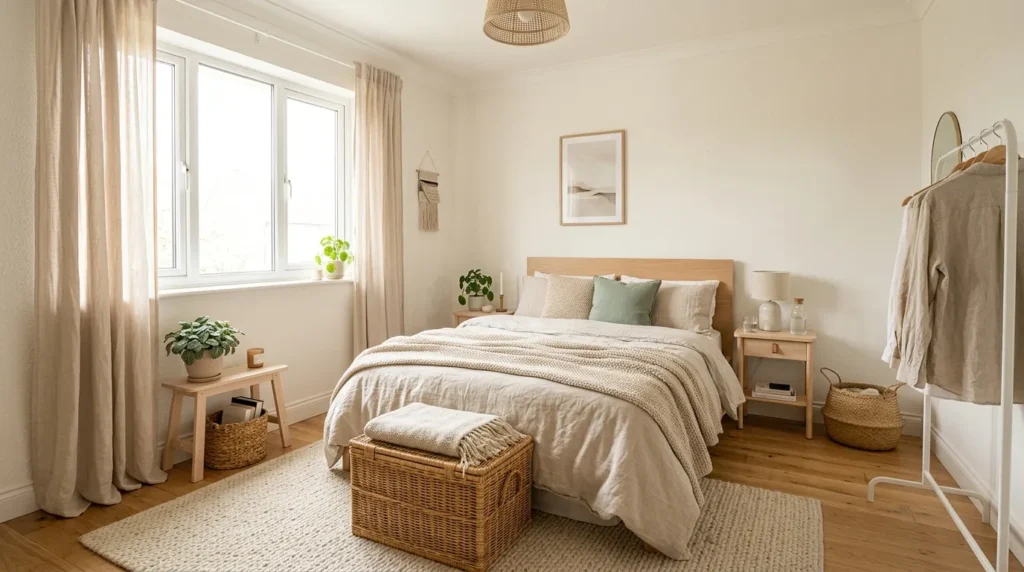
Color can’t physically add square footage, but it can significantly change how a room is perceived. Soft whites, warm creams, pale beige, muted taupe, and gentle gray can help light move around the room and create a more open visual impression.
That doesn’t mean a small bedroom needs to be completely white. In fact, a room with too many stark surfaces can feel cold. The trick is layering similar light tones through bedding, walls, curtains, rugs, and upholstery.
A warm neutral palette also gives you flexibility. You can introduce personality through artwork, pillows, wood tones, greenery, or small accents without creating a visually busy environment. If you’re anything like me, this is one of the easiest ways to create a peaceful bedroom without making it feel boring.
How To Style It
Start with one primary neutral shade for the walls and build around it. Creamy white walls pair beautifully with oatmeal bedding and natural wood, while pale gray can work with white linens and soft beige accents.
Add texture rather than lots of contrasting colors. Think linen duvet covers, cotton sheets, woven baskets, boucle cushions, wool-style rugs, or a chunky throw.
Curtains should ideally be hung high and kept relatively simple. If natural light is limited, choose window treatments that don’t block more light than necessary.
For contrast, add one or two darker elements such as a black picture frame, walnut stool, or charcoal pillow. Small doses of contrast keep the room from looking flat while preserving its airy character.
6. Multipurpose Furniture
Quick Benefits
- Combines several functions
- Reduces furniture requirements
- Saves valuable floor space
- Works well in apartments
- Makes the bedroom more flexible
Why It Works
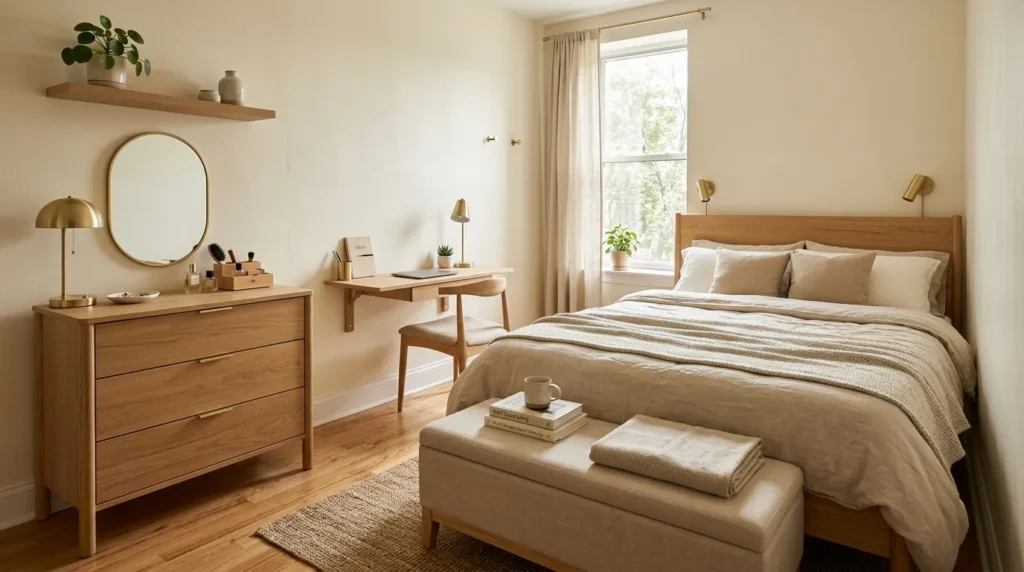
In a small bedroom, every piece of furniture has to justify its footprint. Multipurpose pieces are valuable because they allow one item to perform several jobs. A storage ottoman can provide seating and hide extra blankets. A dresser can double as a vanity. A bench at the end of the bed can provide seating while offering concealed storage.
This approach helps prevent the common mistake of adding individual pieces for every possible need. Instead, you can think about what functions the room actually requires and combine them wherever possible.
The best multipurpose furniture is comfortable and practical first. A beautiful piece isn’t useful if it creates an obstacle or becomes difficult to access.
How To Style It
Choose furniture based on your everyday routine. If you work from the bedroom occasionally, a slim desk can double as a vanity or writing surface. If you need additional seating, look for a small upholstered bench that also includes storage.
A narrow chest can act as both clothing storage and a bedside surface when positioned correctly. A wall-mounted desk can provide a workspace that folds away when you need more floor area.
Keep multifunctional furniture visually simple. Too many compartments, contrasting materials, or decorative details can make a small room feel busy. Neutral upholstery, natural wood, and simple hardware tend to blend beautifully with compact-bedroom designs.
7. Corner Reading Nook
Quick Benefits
- Makes use of an awkward corner
- Adds personality without much furniture
- Creates a relaxing secondary zone
- Gives the room a cozy focal point
- Can be adapted to very small spaces
Why It Works
An unused corner doesn’t always need a large chair and floor lamp to become useful. Even a small bedroom can accommodate a cozy reading or relaxation area if you choose furniture carefully.
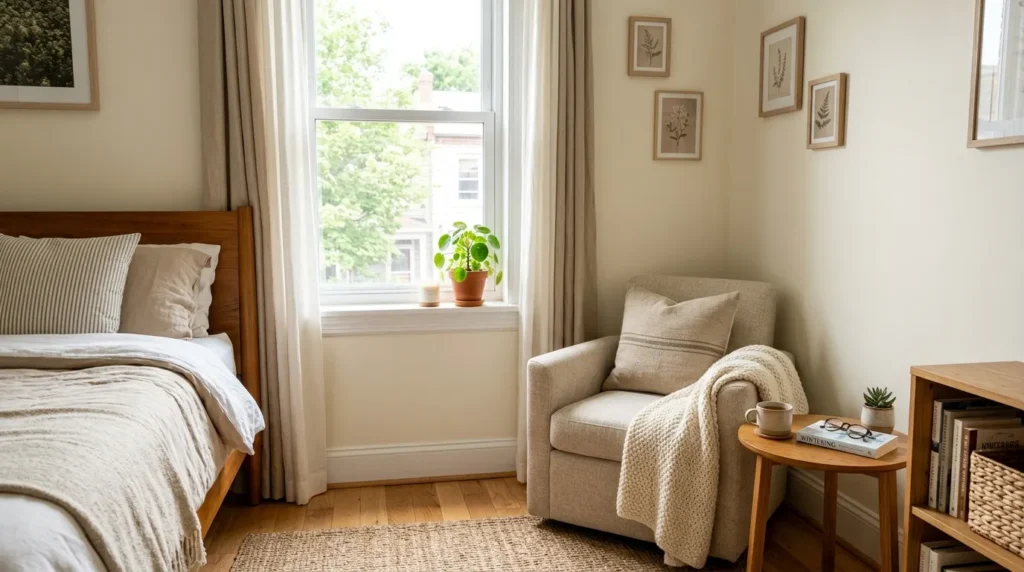
A compact chair can transform an empty corner into a destination rather than dead space. If the room is exceptionally tight, a small upholstered stool or wall-mounted shelf may be enough to create a mini reading station.
The trick is maintaining circulation. You don’t want a cozy nook that forces you to squeeze around the bed. When planned correctly, though, a corner zone can make the bedroom feel more complete and intentional.
How To Style It
Look for a narrow accent chair, small slipper chair, or compact upholstered seat. Place it near a window if possible so you can take advantage of natural light.
Add a small side table or wall-mounted shelf for a book and cup. Instead of a bulky floor lamp, consider a nearby wall sconce or slim table lamp.
Layer a small cushion and soft throw over the chair to make the nook feel inviting. A small plant or framed artwork can finish the corner without taking up valuable floor area.
If space is extremely limited, replace the chair with a narrow bench under the window. It can function as seating, a place to fold clothes, or an attractive surface for a cushion.
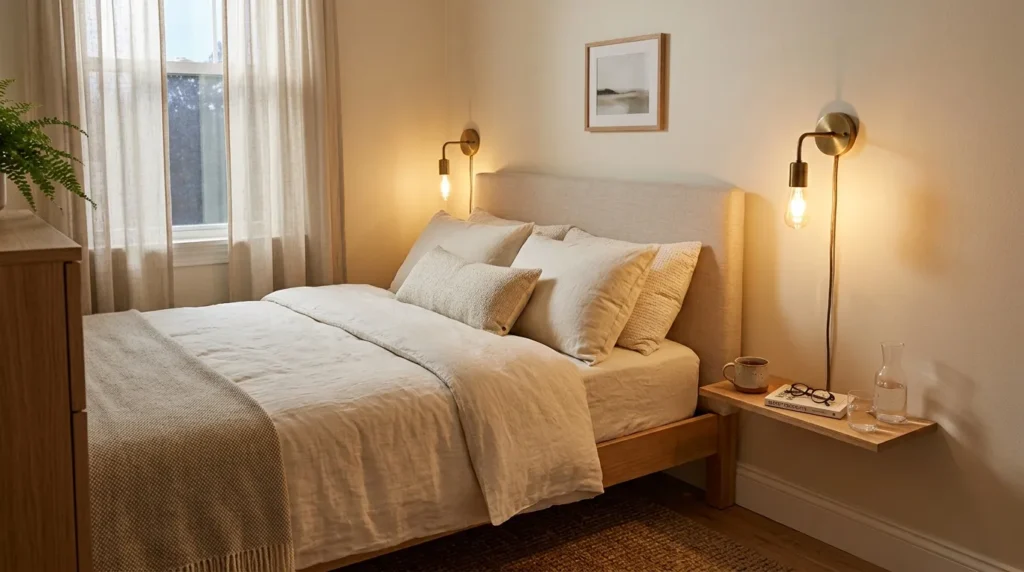
8. Wall Mounted Lighting
Quick Benefits
- Frees nightstand space
- Reduces visual clutter
- Adds focused illumination
- Creates a polished appearance
- Works in narrow layouts
Why It Works
Lighting is one of the easiest places to save space without sacrificing comfort. Traditional bedside lamps require both a nightstand and enough surface area to hold them. Wall-mounted sconces move the light source upward and leave the bedside surface available for things you actually use.
This can make a noticeable difference in a small bedroom, particularly when the bed is positioned close to a wall or when the nightstands are very narrow.
Layered lighting also makes a bedroom more pleasant at night. Instead of relying on one bright overhead fixture, you can combine ambient lighting with focused bedside illumination. The result feels warmer and more intentional.
How To Style It
Choose sconces that suit the room’s overall style. Black or brass fixtures can add contrast to a neutral bedroom, while white or soft-metal designs can blend more quietly into the background.
Position the lights at a comfortable height for reading while keeping switches easy to reach. If you’re renting, plug-in sconces can provide a similar effect without requiring permanent electrical changes.
Pair the lighting with compact floating nightstands. Keep the bedside surfaces minimal so the sconces remain visually important.
Warm-toned bulbs are generally more comfortable for evening use than harsh, cool lighting. Use dimmable fixtures when possible so you can adjust the atmosphere throughout the evening.
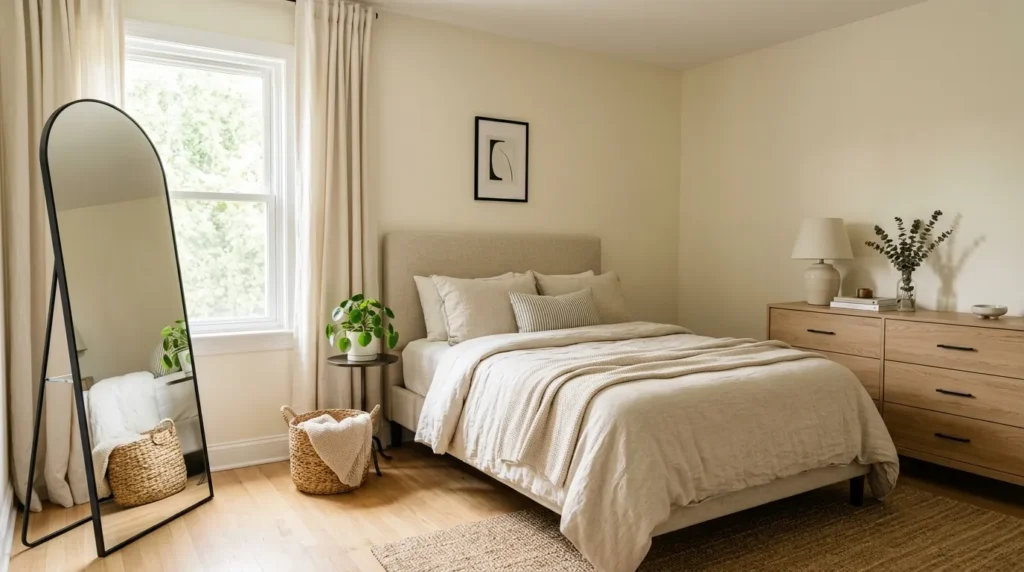
9. Mirror Light Tricks
Quick Benefits
- Reflects natural light
- Adds visual depth
- Creates a sense of openness
- Provides practical dressing functionality
- Can become a decorative focal point
Why It Works
Mirrors can be especially helpful in rooms that feel visually compressed. They reflect light and nearby surfaces, creating the impression of additional depth. A strategically placed mirror can also break up a blank wall without requiring another bulky decorative piece.
Placement matters more than size. A huge mirror isn’t automatically better for a small bedroom. What matters is what the mirror reflects. Positioning one opposite or near a window can help distribute daylight throughout the room.
A full-length mirror can also combine decoration with function, making it particularly useful when closet space is limited.
How To Style It
For a compact room, consider a tall, narrow mirror leaning against a wall if the layout allows it. This adds height while keeping the footprint relatively small.
If you prefer a wall-mounted option, choose a simple rounded mirror above a dresser or beside the wardrobe. Arched and softly curved designs can introduce visual interest without requiring additional artwork.
Keep the area around the mirror relatively uncluttered. You want the reflection to contribute to the room rather than multiply visible clutter.
A warm wood frame works beautifully with neutral and Scandinavian interiors, while black metal can provide a crisp modern accent. Choose a frame that repeats another finish in the bedroom for a cohesive look.
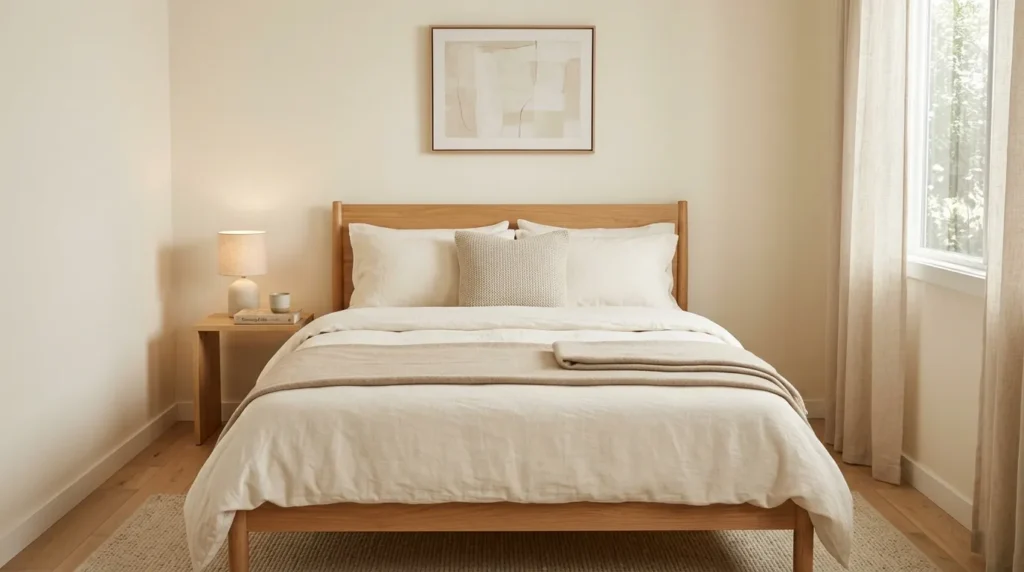
10. Minimal Bedding
Quick Benefits
- Reduces visual clutter
- Makes the bed feel less bulky
- Creates a polished focal point
- Simplifies daily maintenance
- Works across many design styles
Why It Works
The bed is usually the visual centerpiece of a bedroom, which means its styling has an outsized effect on how the entire room feels. In a compact space, excessive pillows, multiple blankets, bold patterns, and heavy layers can make the bed appear even larger.
Minimal bedding doesn’t mean boring bedding. Instead, it means being selective about the layers you use. A quality duvet, comfortable sheets, two or four sleeping pillows, and one decorative layer can be enough to create a beautiful finished look.
Keeping the bedding palette relatively restrained also gives your eyes somewhere to rest. This is especially helpful when the bedroom already has limited space for decorative elements.
How To Style It
Start with a simple duvet or quilt in a soft neutral. Add sleeping pillows in matching or coordinating tones, then introduce one or two accent pillows if you want more personality.
A folded throw across the lower third of the bed can add texture without creating a pile of bedding. Linen, cotton, and woven materials work especially well because they provide visual interest through texture instead of busy patterns.
If your walls are neutral, you can introduce a subtle accent color through the bedding. Dusty blue, muted sage, warm terracotta, or soft blush can add character while remaining calm.
Keep the area around the bed simple. A small rug, streamlined nightstands, and one piece of artwork can be enough to complete the composition.
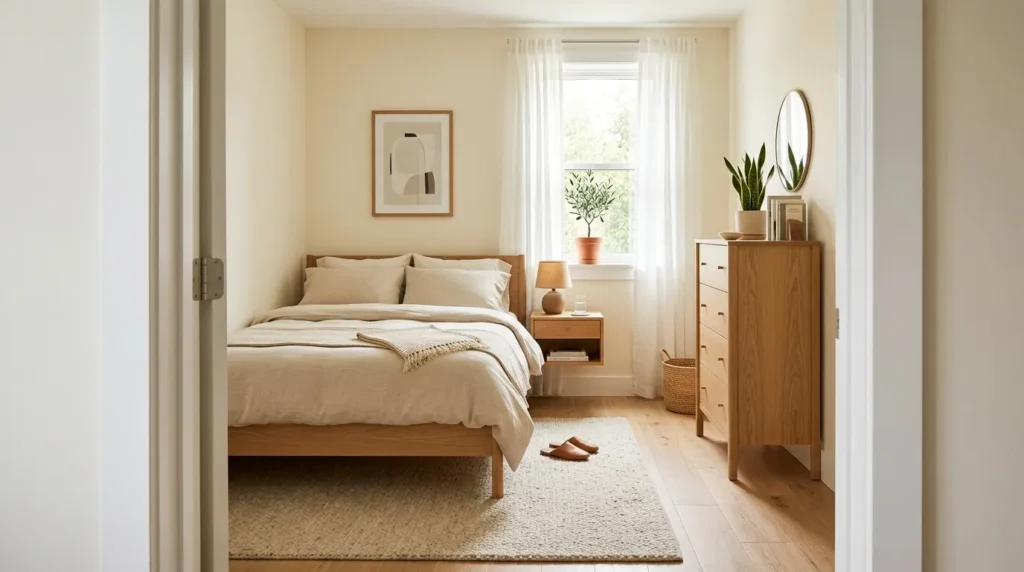
11. Clear Floor Paths
Quick Benefits
- Improves everyday movement
- Makes the room feel larger
- Reduces visual clutter
- Makes cleaning easier
- Helps furniture feel intentionally arranged
Why It Works
One of the most overlooked elements of a successful small bedroom setup is circulation. You can have beautiful furniture and carefully selected colors, but if you have to squeeze between the bed and dresser every morning, the room won’t feel comfortable.
Clear floor paths create visual breathing room and make the bedroom easier to use. This doesn’t necessarily mean leaving large areas completely empty. It means placing furniture so that the routes you naturally take through the room remain unobstructed.
A simple layout often feels more spacious than one filled with additional storage pieces. In my experience, removing one unnecessary item can sometimes improve a small bedroom more than adding three organizing products.
How To Style It
Begin by identifying your main routes: the path into the room, the space around the bed, and access to the closet or dresser. Keep these areas as open as possible.
If the dresser creates a tight walkway, consider moving it to another wall or replacing it with a narrower piece. Avoid placing stools, baskets, floor plants, or decorative benches where they interrupt natural movement.
Use rugs carefully. A correctly sized rug can anchor the bed and add warmth, but an awkwardly positioned rug can make the room feel fragmented.
Finally, try viewing the bedroom from the doorway. This perspective often reveals clutter or furniture that feels unnecessarily heavy. A clear first sightline can make the entire room feel calmer.
Making a Small Bedroom Feel Bigger
You don’t need to follow every idea above to create a successful setup. In fact, the strongest rooms usually combine a few strategies that solve the specific problems of the space.
If storage is your biggest challenge, prioritize vertical shelving, underbed storage, and multifunctional furniture. If the bedroom feels cramped, focus first on low-profile pieces, floating nightstands, and clear floor paths. If it feels dark, work with light neutral layers, mirrors, and better lighting.
A useful rule is to solve function before adding decoration. Once you know where clothing, books, bedding, electronics, and everyday essentials will live, decorating becomes much easier.
Another helpful trick is to keep the largest visual elements relatively simple. A streamlined bed, calm bedding, and uncluttered walls create a foundation that allows smaller decorative pieces to stand out.
And remember that a small bedroom doesn’t need to look like a showroom. It still needs to support real life. Leave room for the things you use every day, choose finishes that are easy to maintain, and don’t sacrifice comfort simply to make the room look larger.
Small Bedroom Layout Tips
Before buying new furniture, measure the room and create a rough floor plan. Mark windows, doors, closets, outlets, and heating or cooling units. These details can determine where your largest pieces can realistically go.
Whenever possible, position the bed so that it doesn’t block a doorway or closet. If placing the bed against a wall is your only practical option, make the arrangement intentional with a slim bedside surface and coordinated bedding.
Use furniture with a smaller footprint when necessary. A narrow dresser may hold slightly less than a wide one, but preserving a comfortable walkway can be worth the trade-off.
Think vertically when you need more storage. Tall shelving can often replace multiple short storage pieces while leaving more usable floor space.
Finally, avoid buying furniture simply because you have an empty corner. Empty space is not wasted space in a small bedroom. Sometimes that breathing room is exactly what makes the entire layout feel comfortable.
Small Bedroom Storage Ideas
Storage works best when it matches how you actually use the room. Keep everyday items within easy reach and move seasonal or rarely used belongings into less accessible areas.
Use the space beneath the bed for bulky soft goods such as spare blankets, winter clothing, or luggage. Use vertical shelving for books, accessories, baskets, and decorative pieces. Keep small daily essentials contained in trays or drawers so surfaces remain tidy.
Closet organization can also make a surprisingly large difference. Slim hangers, shelf dividers, hanging organizers, and labeled bins can help you use the existing space more efficiently.
One thing I’ve noticed is that small bedrooms often become cluttered because there isn’t a designated home for small objects. Creating simple storage zones for jewelry, electronics, books, accessories, and laundry can prevent that daily accumulation.
The goal isn’t to hide everything. It’s to make the room easy to reset.
Common Small Bedroom Mistakes
A few decorating mistakes can make a compact bedroom feel smaller than it actually is.
Choosing oversized furniture: A king-size bed, deep dresser, and large nightstands may leave little room for circulation. Always consider scale.
Overdecorating the walls: Too many frames, shelves, signs, and decorative objects can create visual noise.
Using too many furniture pieces: Every piece should have a clear purpose.
Blocking natural light: Heavy curtains or tall furniture placed directly in front of a window can make the room feel darker.
Ignoring vertical space: Walls can provide storage without consuming valuable floor area.
Focusing only on appearance: A beautiful room still needs to function comfortably every day.
The best setup is one that feels good at 7 a.m. when you’re getting ready, not just one that photographs beautifully at noon.
FAQ
How do you set up a small bedroom?
Start by choosing the correct bed position and creating clear walking paths. Then use appropriately scaled furniture, vertical storage, underbed organization, and wall-mounted lighting to preserve floor space. Keep the color palette relatively light and avoid unnecessary furniture. The most important goal is to make the room comfortable to use while reducing visual and physical clutter.
What furniture is best for a small bedroom?
Low-profile beds, narrow nightstands, slim dressers, floating shelves, storage ottomans, and multifunctional furniture tend to work especially well. Look for pieces with a small footprint and useful storage. Avoid choosing furniture solely based on appearance; measure the room and consider how each piece will affect circulation before purchasing.
How can I make a small bedroom look bigger?
Use a light, cohesive color palette, keep floor paths open, choose furniture that fits the scale of the room, and use mirrors to reflect light. Vertical storage can reduce floor clutter, while wall-mounted lighting can free up nightstand space. Keeping bedding and decorative accessories relatively simple also creates more visual breathing room.
Should a bed go against the wall in a small bedroom?
Sometimes it is the most practical choice, particularly when the room is very narrow. If the bed must sit against a wall, make the arrangement feel intentional by using coordinated bedding, a slim bedside surface, and wall-mounted lighting. If possible, leave enough clearance for comfortable movement and access to storage.
How do you add storage to a tiny bedroom?
Start with hidden and vertical storage. Use underbed drawers or bins, tall shelving, floating cabinets, closet organizers, and multifunctional furniture. You can also replace a bulky bedside table with a wall-mounted shelf or drawer. The key is to use available wall and furniture space before adding another large item to the floor.
What colors work best in a small bedroom?
Soft whites, warm creams, pale beige, light taupe, gentle gray, and other muted shades can create an airy appearance. However, you don’t have to avoid color completely. Muted sage, dusty blue, warm blush, and soft terracotta can be introduced through bedding, artwork, and accessories without overwhelming the room.
How do I keep a small bedroom from looking cluttered?
Give everyday belongings designated homes, limit the number of decorative accessories, and regularly clear surfaces. Use baskets and drawers for smaller objects and keep floor paths open. Rather than filling every available space, allow some visual breathing room. A simple reset routine at the end of the day can also make the room much easier to maintain.
Conclusion
A compact bedroom can be every bit as inviting as a larger one when the layout works with the space instead of against it. The secret isn’t squeezing more furniture into every available corner. It is choosing pieces carefully, creating useful storage, protecting circulation, and giving the room enough visual breathing space to feel comfortable.
Start with the biggest problem in your room. If you need storage, look underneath the bed and upward toward the walls. If the space feels crowded, reconsider furniture scale and remove anything that doesn’t serve a purpose. If the room feels dark, work with lighter layers, mirrors, and strategically placed lighting.
You can also make small changes gradually. Swap a bulky nightstand for a floating shelf, simplify the bedding, reorganize the closet, or move a dresser to improve the walking path. Small adjustments can have a surprisingly noticeable effect.
The most beautiful compact bedrooms are not necessarily the ones with the most expensive furniture or elaborate styling. They’re the ones that feel calm, personal, organized, and easy to live in.
Choose one or two ideas that solve your biggest challenge first, then build from there. With thoughtful planning, even a tight bedroom can become a cozy retreat that feels functional, polished, and completely your own.