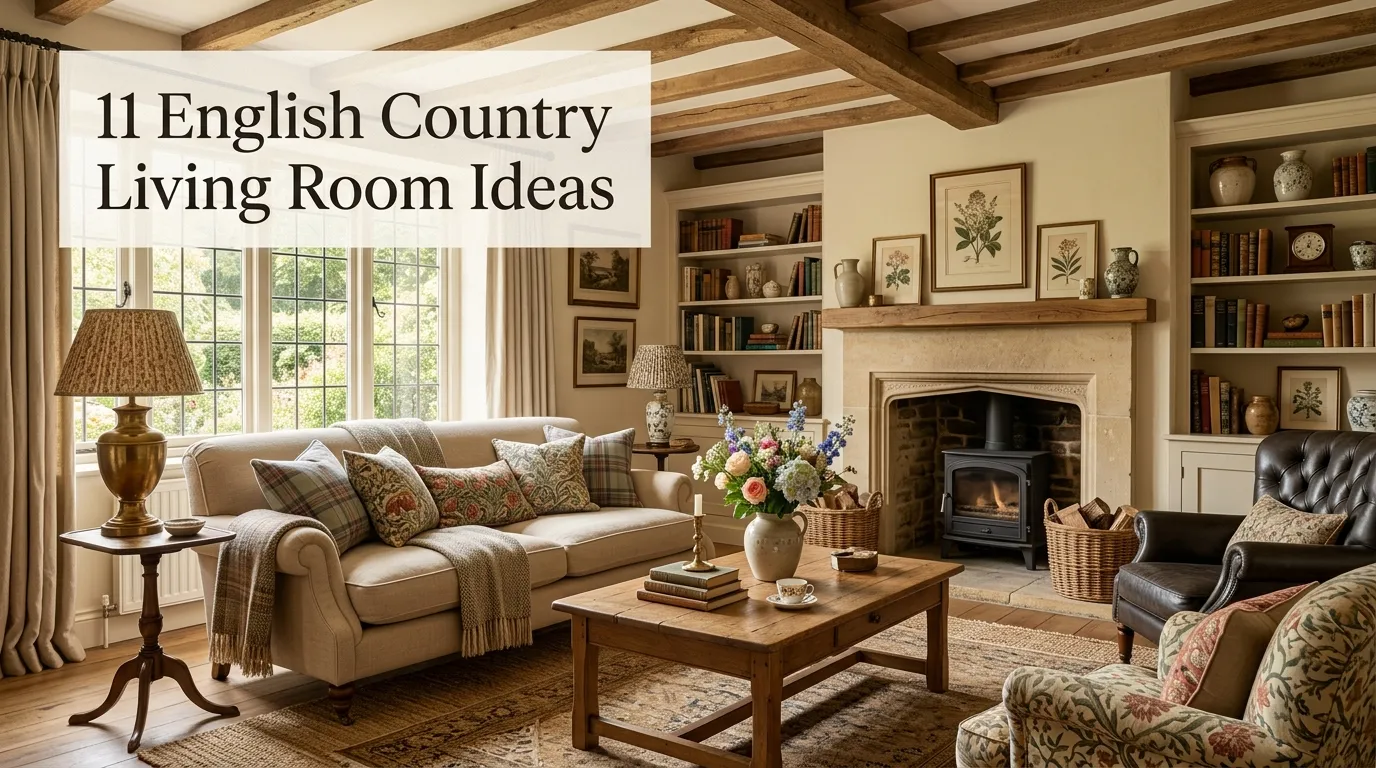
11 English Country Living Room Ideas
English country style has a warmth and a sense of history that few other decorating styles manage to capture quite the same way. In my experience, that’s exactly why it holds such lasting appeal — it doesn’t chase trends, and it doesn’t rely on a single statement piece to carry the whole room. It’s built from layers: pattern, texture, worn-in furniture, and collected objects that feel like they’ve been gathered over years rather than purchased all at once for a single project.
I’ve noticed that people often assume English country style means committing to heavy florals and dark, formal furniture throughout, when in reality the look is far more flexible and livable than that stereotype suggests. A mistake many homeowners make is trying to replicate a single, very specific “English country” showroom look, rather than understanding the underlying principles — layered pattern, comfortable and slightly worn furniture, a mix of old and new — and applying those principles to their own space and taste.
This article walks through eleven English country living room ideas that capture the style’s genuine warmth and character without requiring a complete overhaul or an unlimited budget. Each idea includes the reasoning behind why it works within this particular style, along with practical guidance on materials, furniture, and layout so you can bring the look into your own home at whatever scale makes sense for you.
One thing that works especially well in English country rooms specifically is embracing a slightly imperfect, collected look rather than aiming for a perfectly matched, showroom-ready space. That relaxed, layered quality is really at the heart of the style, and it’s woven through every idea below.
Table of Contents
- Layered Floral Patterns — Mixing prints for a collected, personal look.
- Chintz Upholstered Furniture — Classic fabric with genuine character.
- Antique Wood Furniture Pieces — Sourcing pieces with real history.
- Deep Rich Wall Colors — Bold, saturated tones for a cozy feel.
- Skirted Sofa Silhouettes — A soft, traditional furniture shape.
- Needlepoint Pillow Accents — Handcrafted texture and detail.
- Brass and Wood Details — Warm material pairing throughout the room.
- Layered Area Rug Combinations — Depth and pattern underfoot.
- Botanical Print Wall Art — Classic, nature-inspired framed pieces.
- Fringe and Trim Textiles — Traditional detailing on curtains and cushions.
- Collected Ceramic Displays — A personal, gathered decorative story.
1. Layered Floral Patterns
Quick Benefits
- Creates the collected, personal quality central to the style
- Adds visual richness without relying on a single bold statement
- Works well combined with solids and stripes for balance
- Allows for gradual updating over time
- Available across a wide range of price points
Why It Works
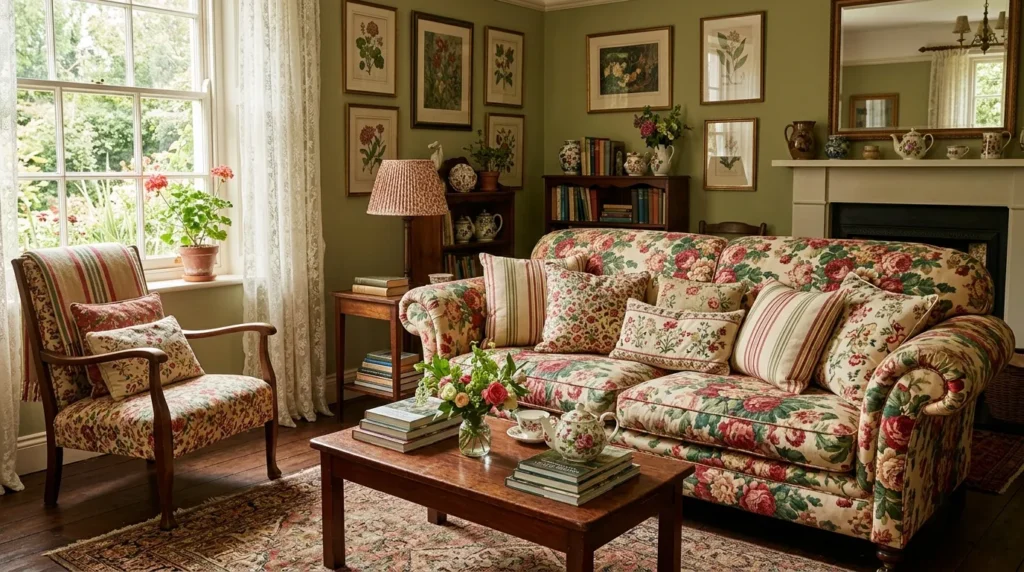
Layered floral patterns are perhaps the most recognizable feature of English country style, but the key to doing this well isn’t matching everything to a single print. It’s mixing several different florals, often in varying scales, alongside solids and stripes to create a room that feels gathered rather than purchased as a coordinated set. In my experience, rooms that mix two or three different floral patterns thoughtfully tend to feel considerably more authentic to this style than rooms built around one dominant floral fabric used everywhere.
How To Style It
Choose one larger-scale floral for a key piece, like a sofa or an armchair, then layer in smaller-scale florals or complementary patterns through pillows, a lampshade, or curtains. Balance the florals with solid-colored pieces, such as a plain velvet chair or solid drapery, so the room has visual breathing room between patterns. Vary the color palette slightly between the different florals while keeping an overall unifying tone, whether that’s warm reds and greens or softer blues and creams. Don’t worry about perfect coordination between every pattern, since a slightly imperfect mix is actually part of the style’s genuine, collected character.
2. Chintz Upholstered Furniture
Quick Benefits
- Iconic fabric closely associated with the style
- Adds a classic, historic quality to upholstered pieces
- Available in a range of colors and scales
- Pairs beautifully with solid and striped fabrics
- Durable and long-lasting when properly cared for
Why It Works
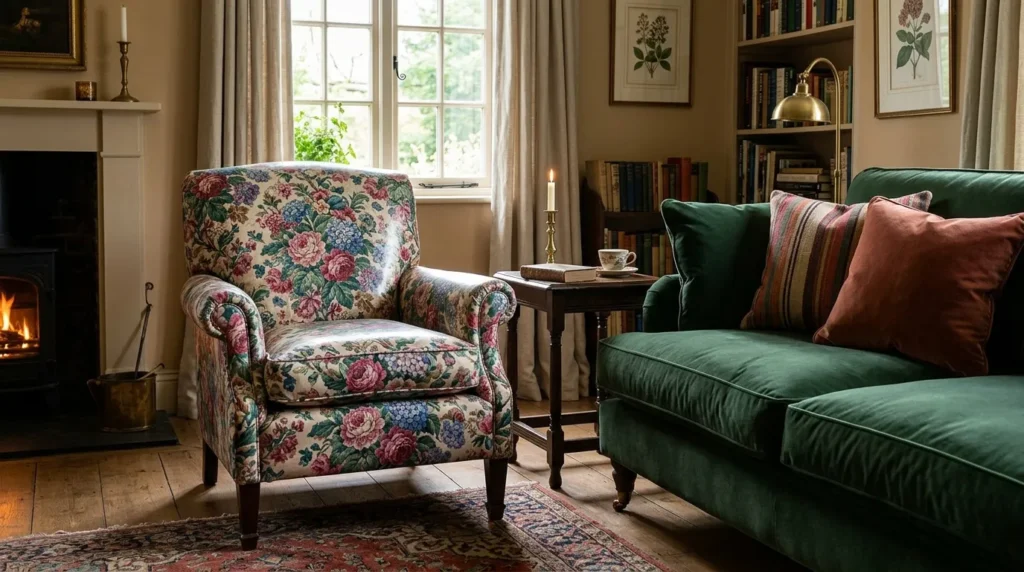
Chintz, a glazed cotton fabric typically featuring floral or botanical prints, has a long history in English interiors and remains one of the clearest visual signatures of the style. That’s why many designers recommend at least one chintz piece as a starting point for an English country living room, since the fabric’s characteristic sheen and floral motifs immediately signal this particular aesthetic in a way that few other fabric choices can replicate. A mistake many homeowners make is assuming chintz needs to cover an entire sofa to have an impact, when even a single chair or a set of pillows can introduce the fabric effectively.
How To Style It
Choose a chintz-upholstered armchair or a pair of chairs as a starting point if a full sofa feels like too much commitment, allowing the fabric to make a strong statement without covering the room’s largest piece of furniture. Pair chintz with solid velvet or linen upholstery elsewhere in the room, which lets the printed fabric stand out rather than competing with other bold patterns. Look for vintage or antique chintz furniture at estate sales or secondhand shops, since older pieces often have more authentic character and a lower price point than new reproductions. Have chintz pieces professionally cleaned periodically to maintain the fabric’s characteristic glazed finish and extend its lifespan.
3. Antique Wood Furniture Pieces
Quick Benefits
- Adds genuine history and character to the room
- More affordable than custom-built furniture in many cases
- Introduces natural material warmth
- Suits the collected, layered nature of the style
- Environmentally conscious reuse of existing furniture
Why It Works
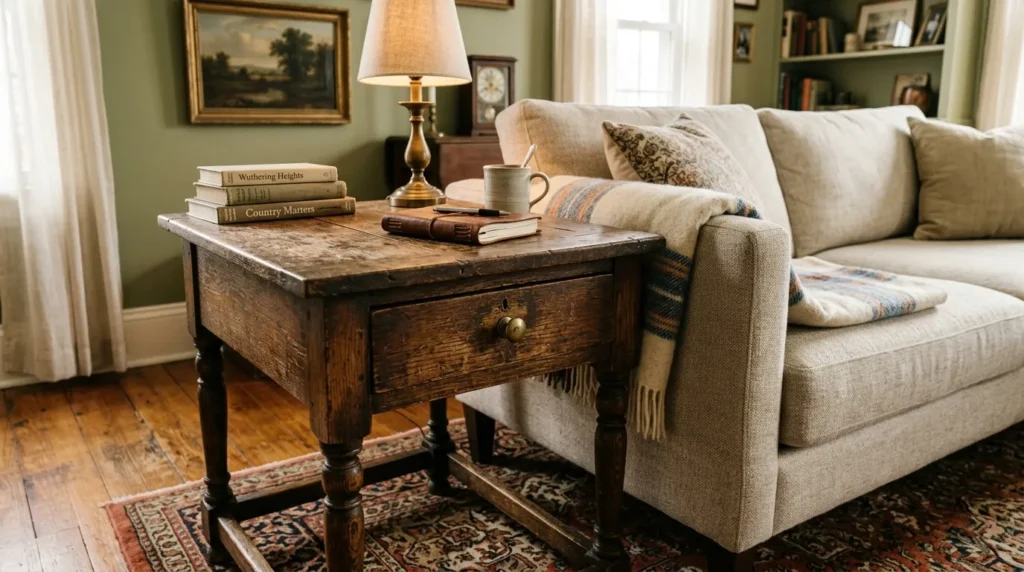
Genuine antique or vintage wood furniture pieces — a weathered side table, an aged bookcase, a worn writing desk — bring an authentic sense of history to an English country living room that new furniture simply can’t replicate. I’ve noticed that rooms built entirely around new furniture, even furniture designed to look traditional, tend to feel slightly less convincing than rooms that include at least a few genuinely old pieces mixed in among newer, more comfortable seating. A mistake many homeowners make is assuming antique furniture needs to be expensive or difficult to source, when local estate sales, auctions, and secondhand shops often carry quality antique pieces at very reasonable prices.
How To Style It
Mix at least one or two genuine antique or vintage wood pieces among your newer furniture, such as an antique side table beside a comfortable modern sofa, rather than trying to furnish the entire room with older pieces at once. Look for solid wood construction with visible joinery and patina, both signs of genuine age and quality that differ from mass-produced reproduction furniture. A bit of visible wear, like a slightly worn finish or small scratches, tends to suit the style’s collected character rather than detracting from it. Have larger antique pieces professionally assessed for structural soundness before heavy daily use, particularly for seating furniture that will bear regular weight.
4. Deep Rich Wall Colors
Quick Benefits
- Creates a cozy, enveloping atmosphere
- Provides a rich backdrop for layered patterns and antiques
- Suits both formal and relaxed English country rooms
- Hides everyday wear better than lighter colors
- Adds genuine depth and drama to the space
Why It Works
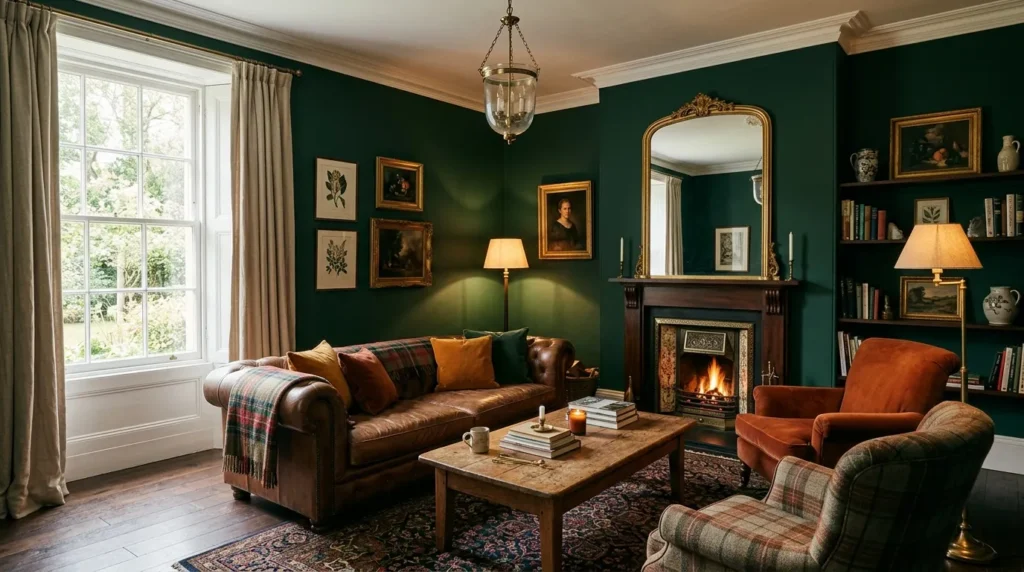
Deep, saturated wall colors — hunter green, deep burgundy, rich navy — are a hallmark of traditional English interiors, creating a cozy, enveloping quality that works especially well in living rooms meant for lingering conversation and quiet evenings. In my experience, these darker colors also provide a wonderfully rich backdrop for the layered patterns, antique wood tones, and brass accents typical of the style, since the deep color grounds everything else in the room rather than competing with it. A mistake many homeowners make is assuming a small room can’t handle a dark, saturated color, when a well-lit small room in a deep, cozy tone can actually feel more intentional and enveloping than the same room in a pale, undefined neutral.
How To Style It
Choose a deep, warm-toned color like hunter green, aubergine, or deep navy rather than a cooler, more austere dark shade, since warmth is central to the overall feel of English country style. Ensure adequate lighting throughout the room to balance the darker wall color, layering in table lamps, floor lamps, and any overhead fixtures so the space doesn’t feel dim or cave-like in the evening. Pair the deep wall color with warm wood furniture and brass or gold hardware accents, which read particularly well against a rich, saturated backdrop. Consider a glossy or semi-gloss paint finish, which was traditionally used in many historic English interiors and helps reflect available light more effectively than a flat finish.
5. Skirted Sofa Silhouettes
Quick Benefits
- Softens the overall look of upholstered seating
- Classic silhouette strongly associated with the style
- Conceals furniture legs for a more traditional appearance
- Pairs beautifully with floral or chintz upholstery
- Available in a range of fabric options
Why It Works
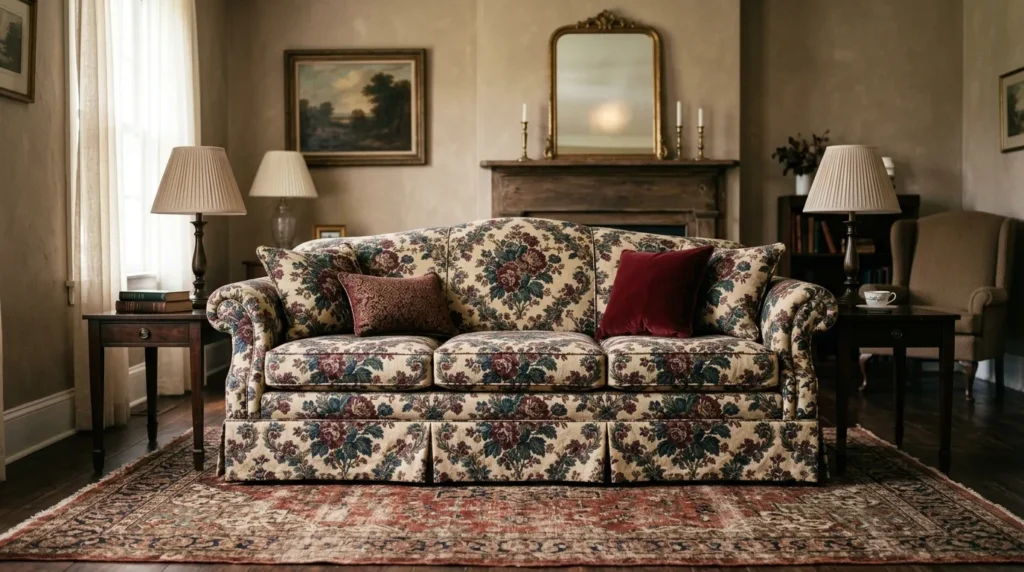
A skirted sofa, where fabric extends to the floor rather than exposing furniture legs, creates a softer, more traditional silhouette that suits English country style particularly well, especially when paired with a floral or chintz fabric. This detail contrasts with the more common exposed-leg silhouette popular in many modern furniture designs, and that difference is part of what gives an English country room its distinctly traditional, comfortable feel. I’ve seen this idea used effectively on both sofas and armchairs throughout a room, reinforcing the soft, enveloping quality that’s central to the overall aesthetic.
How To Style It
Choose a sofa or armchair with a fully skirted base, either box-pleated for a slightly more tailored look or gathered for a softer, more relaxed appearance. Pair a skirted silhouette with the floral or chintz fabrics discussed earlier, since this combination reads as particularly authentic to the traditional English country aesthetic. Consider skirted furniture for at least the room’s largest seating piece, even if other chairs have a more exposed, traditional leg, to establish this soft silhouette as a recurring visual theme. Choose a fabric weight and construction suited to daily use, since skirted furniture in a heavily trafficked living room needs to hold up to regular sitting and occasional pet or child interaction.
6. Needlepoint Pillow Accents
Quick Benefits
- Adds handcrafted texture and detail
- Introduces additional pattern in a smaller, manageable scale
- Available secondhand at accessible price points
- Suits both traditional and slightly updated color palettes
- Easy to rotate and update over time
Why It Works
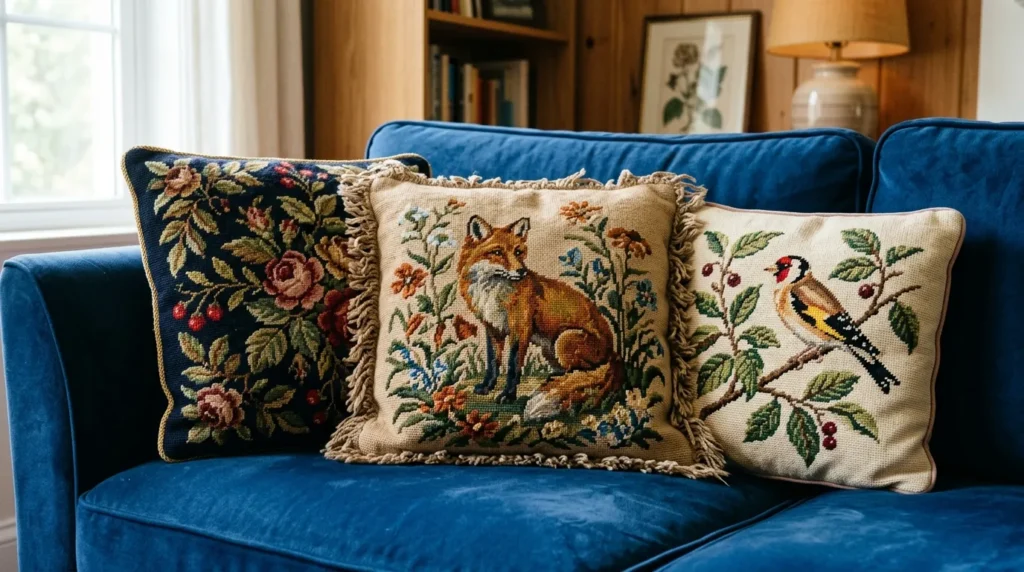
Needlepoint pillows, whether vintage finds or newly made pieces, bring a handcrafted quality and additional layer of pattern to an English country living room without the commitment of a larger upholstered piece. That’s why many designers recommend needlepoint specifically as an accessible entry point into the style, since a single well-chosen pillow can introduce genuine character and craftsmanship at a much lower cost and commitment than reupholstering a sofa. A mistake many homeowners make is overlooking smaller decorative details like this in favor of larger furniture purchases, when these smaller accents are often what gives a room its genuinely collected, personal feel.
How To Style It
Mix two or three needlepoint pillows featuring different but complementary motifs, such as botanical, animal, or geometric designs, rather than a single matched pair. Look for vintage needlepoint pillows at estate sales, antique shops, or secondhand marketplaces, since these often have more character and a lower price point than new options. Pair needlepoint with simpler solid or striped pillows on the same sofa, so the detailed pattern of the needlepoint stands out rather than competing with other busy prints. Rotate pillows seasonally or as your collection grows, keeping the display feeling fresh and continuing to reflect the collected nature of the style.
7. Brass and Wood Details
Quick Benefits
- Reinforces the warm, traditional material palette
- Adds a sense of craftsmanship throughout the room
- Coordinates furniture, lighting, and hardware cohesively
- Pairs beautifully with deep wall colors
- Available across a wide range of price points
Why It Works
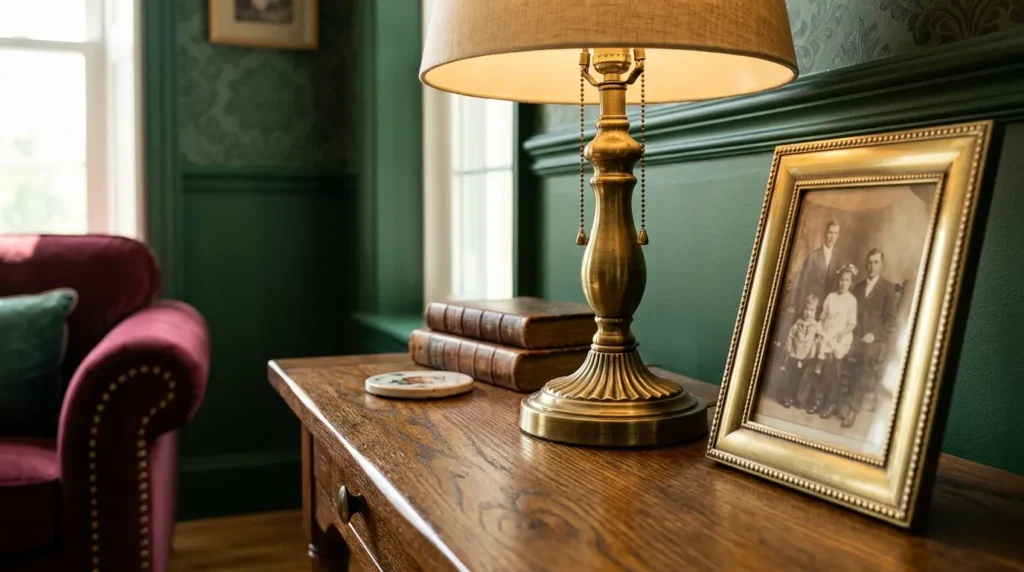
Brass hardware, lighting, and small decorative details, paired with warm wood furniture tones, reinforce the traditional, historic material palette that runs throughout English country style. In my experience, this material pairing is part of what ties together otherwise varied elements in the room — different patterns, different furniture eras, different textures — since the consistent warmth of brass and wood provides a unifying thread throughout. A mistake many homeowners make is mixing cooler-toned metals like chrome or brushed nickel into this style, which can undercut the warm, traditional feel that brass specifically helps establish.
How To Style It
Choose brass or aged brass finishes for lighting fixtures, picture frame hardware, and any decorative accents like a fireplace fender or andirons, keeping this warm metal consistent throughout the room. Pair brass details with your existing wood furniture tones, whether that’s antique pieces or newer furniture in a similar warm wood finish. Small brass accents, like a picture light above a piece of art or a set of brass candlesticks on a mantel, can introduce this detail even without a larger furniture investment. Allow brass to develop a natural patina over time rather than keeping it highly polished, since a bit of age and warmth in the finish suits the collected, historic character of the style.
8. Layered Area Rug Combinations
Quick Benefits
- Adds depth and pattern underfoot
- Creates a cozy, collected floor treatment
- Works well over both hardwood and existing carpet
- Introduces additional color and texture variation
- Suits the style’s overall layered aesthetic
Why It Works
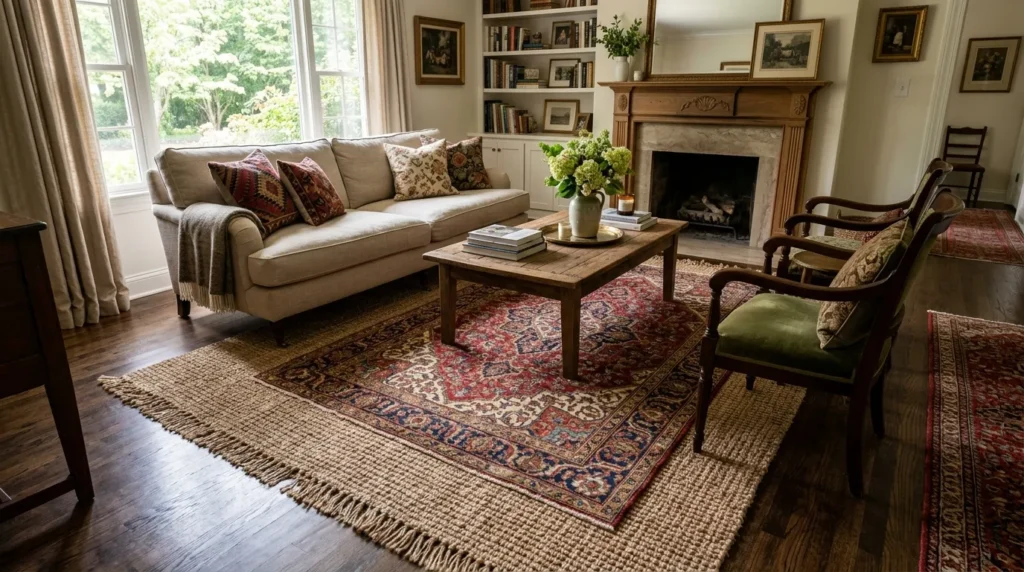
Layering a smaller, more decorative rug over a larger neutral one, or combining a couple of different patterned rugs within the same room, extends the collected, gathered quality of English country style down to the floor. I’ve seen this idea work particularly well in rooms that already feature bold upholstery patterns, since a well-chosen rug layer can either complement those existing patterns or provide a grounding neutral base beneath them. A mistake many homeowners make is treating flooring as an afterthought in this style, when a well-considered rug layer actually contributes significantly to the room’s overall sense of depth and history.
How To Style It
Choose a larger, more neutral base rug, such as a jute or sisal weave, and layer a smaller, more decorative Oriental or Persian-style rug on top for added color and pattern. Ensure the layered rugs are proportional to the room and furniture arrangement, with the smaller top rug typically positioned to define a specific seating area within the larger room. A rug pad beneath both layers helps prevent slipping and adds cushioning, particularly important in a layered rug setup where movement between layers could otherwise be an issue. Choose colors and patterns in the rugs that complement, rather than exactly match, your upholstery and wall color, allowing for the same kind of collected variation found in the room’s other layered elements.
9. Botanical Print Wall Art
Quick Benefits
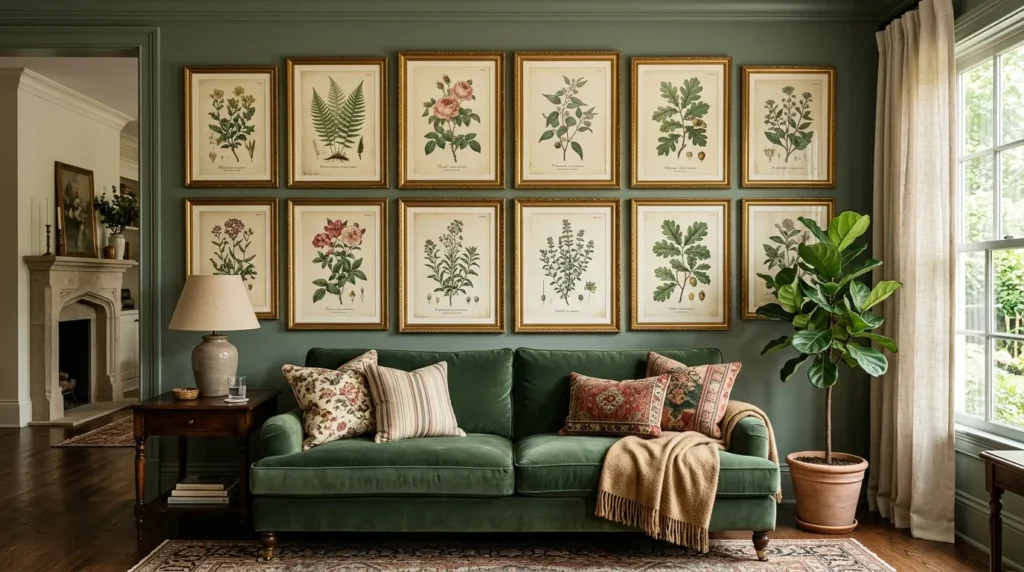
- Classic, nature-inspired subject matter suited to the style
- Widely available at a range of price points
- Works well in gallery wall arrangements
- Pairs beautifully with traditional wood frames
- Timeless choice that won’t feel dated
Why It Works
Botanical prints, whether antique reproductions or vintage originals, are a classic feature of English country interiors, reflecting a long historical tradition of naturalist illustration and garden-inspired art. In my experience, these prints work particularly well because they’re detailed and traditional without being overly formal, fitting naturally into a room that already features floral upholstery and antique furniture without feeling redundant or overly matched. That’s why many designers recommend botanical prints specifically over more abstract or modern art choices for this particular style, since the subject matter itself reinforces the room’s overall traditional, nature-inspired character.
How To Style It
Choose a set of botanical prints, whether matching or slightly varied, and arrange them in a gallery wall grouping above a sofa or mantel for a classic, layered look. Traditional wood or gilt frames suit botanical prints particularly well, reinforcing the warm material palette established elsewhere in the room. Vintage botanical prints, sourced from antique shops or estate sales, often carry more authentic character and a lower cost than new reproductions, though quality reproduction prints are also widely available if genuine vintage pieces aren’t accessible. Vary the print sizes slightly within a gallery arrangement rather than using all identical frames, which adds visual interest while still maintaining a cohesive overall theme.
10. Fringe and Trim Textiles
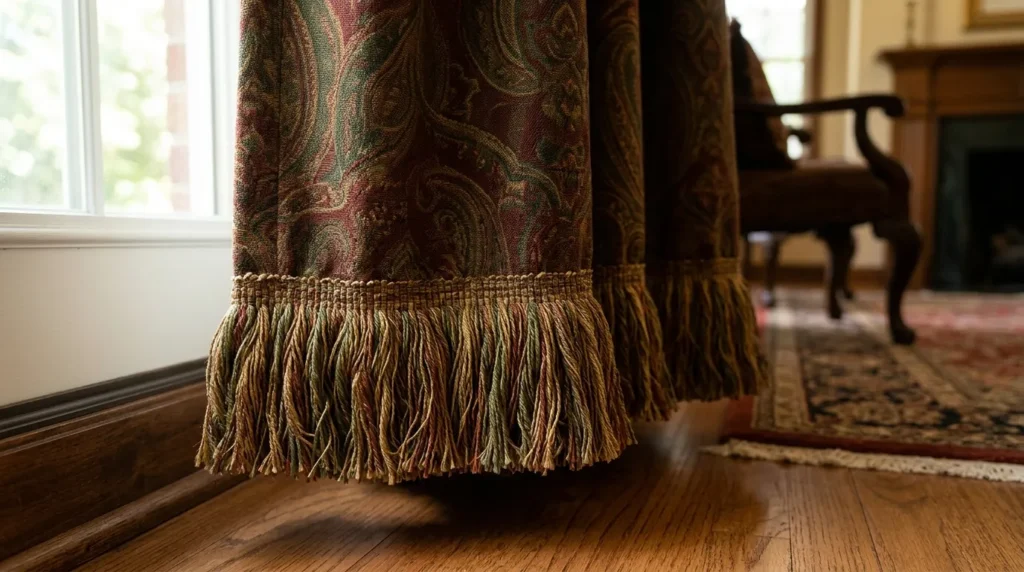
Quick Benefits
- Adds traditional detailing to curtains and cushions
- Introduces a handcrafted, tailored quality
- Available in a range of colors to coordinate with existing fabrics
- Small-scale detail with meaningful visual impact
- Reinforces the style’s overall attention to craftsmanship
Why It Works
Fringe, tassels, and decorative trim on curtains, cushions, and lampshades are a traditional detail in English interiors that adds a tailored, handcrafted quality often missing from more minimal, modern decorating approaches. One simple trick I always suggest for anyone wanting to lean further into this style is adding trim to existing plain curtains or cushions rather than replacing them entirely, since this detail alone can shift a fairly neutral piece toward a more traditional, English country appearance. I’ve noticed that this kind of small detailing tends to get noticed and appreciated precisely because it’s become relatively uncommon in more contemporary decorating approaches.
How To Style It
Add a simple brush fringe or bullion trim along the bottom edge of curtain panels, choosing a color that either matches the curtain fabric for subtlety or contrasts slightly for a bit more visual interest. Trim cushion edges with a coordinating cord or small fringe, which adds a tailored, finished look to even simple solid-colored pillow covers. Consider fringe on a lampshade as well, extending this traditional detail throughout the room’s smaller textile elements. Keep trim colors within your established palette so the detail feels intentional and coordinated rather than randomly introduced.
11. Collected Ceramic Displays
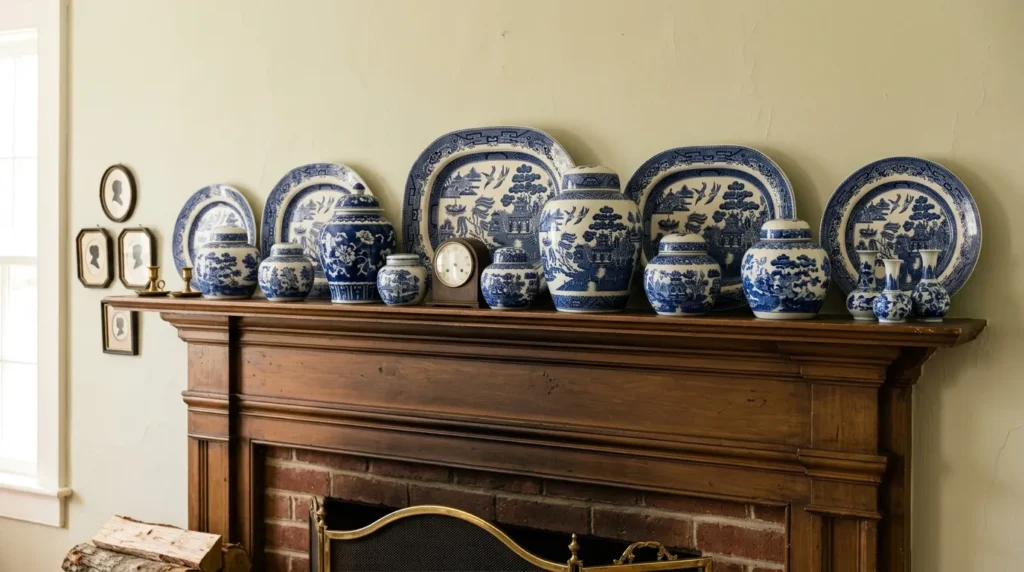
Quick Benefits
- Adds a personal, gathered decorative quality
- Suits open shelving, mantels, and side tables alike
- Available secondhand at accessible price points
- Reinforces the style’s overall collected character
- Easy to add to gradually over time
Why It Works
A collection of ceramic pieces — transferware plates, ginger jars, small figurines — displayed on a mantel, shelf, or side table brings the same collected, gathered-over-time quality to decorative objects that layered patterns bring to textiles. If you’re anything like me, you’ve noticed how a curated ceramic collection, even a modest one, adds genuine personality and a sense of history to a room in a way that a single new decorative object typically can’t match. This kind of display is particularly well-suited to English country style specifically, since the look has always embraced a slightly eclectic, personally curated collection over a single matched decorative set.
How To Style It
Start with a few pieces, whether inherited, thrifted, or collected over time, and display them together on a mantel or open shelf rather than scattering single pieces throughout different rooms. Blue and white transferware, ginger jars, and classic English pottery all pair particularly well together and suit the style’s traditional color palette. Vary the height and shape of pieces within the display for visual interest, rather than choosing all identical items. Continue adding to the collection gradually over time through secondhand shops, estate sales, or family pieces, since this ongoing, unhurried collecting process is really at the heart of what makes the display feel genuinely personal rather than purchased all at once.
Frequently Asked Questions
Is English country style too formal for a family living room?
Not necessarily — while the style has historical, traditional roots, it can be adapted for a comfortable, family-friendly living room by choosing durable fabrics, prioritizing comfortable seating, and leaning into the more relaxed, collected side of the aesthetic rather than its most formal expressions. Many of the ideas in this list, like layered patterns and skirted sofas, work well with practical, family-friendly materials. The key is choosing furniture and fabrics that suit your actual daily life while still incorporating the style’s signature details.
How do I mix patterns without it looking chaotic?
Vary the scale of your patterns, pairing a larger floral with smaller prints and solid colors to give the eye some visual rest between busier elements. Keeping a consistent, unifying color palette across the different patterns also helps them feel intentional rather than randomly combined. Starting with one dominant pattern and building the rest of the room’s other patterns and solids around it tends to work better than trying to balance several equally bold prints at once.
What colors work best for an English country living room?
Deep, warm tones like hunter green, burgundy, and navy are traditional choices, often paired with warm creams and florals featuring similar rich color families. These deeper colors provide a cozy backdrop for the room’s layered patterns, antique wood furniture, and brass accents. Lighter, softer palettes can also work within this style, particularly for smaller rooms, as long as the overall feel remains warm rather than stark or cool-toned.
Where can I find affordable antique furniture for this style?
Estate sales, local auctions, secondhand furniture shops, and online marketplaces are all reliable, often very affordable sources for genuine antique or vintage furniture suited to English country style. These sources frequently offer better quality construction at lower prices than new furniture designed to look traditional. Building a collection gradually over time, rather than trying to furnish an entire room at once, also tends to result in a more genuinely collected, authentic look.
Can I achieve this look in a small living room?
Yes, English country style can work well in a small room, particularly with a deep, cozy wall color and a few well-chosen layered elements rather than trying to fit in every idea on this list at once. Prioritizing one or two key pieces, like a chintz armchair or a collected ceramic display, allows the style’s character to come through without overwhelming a smaller space. Adequate lighting becomes especially important in a small room with a deep wall color, helping the space feel cozy rather than cramped.
Do I need to use floral patterns to achieve this style?
Florals are strongly associated with English country style, but they’re not strictly required — the underlying principles of layered pattern, antique or vintage furniture, warm materials, and a collected feel can be achieved through other patterns like stripes, checks, or paisley as well. A room built around these broader principles, even without heavy florals, can still read clearly as English country in character. The specific patterns matter less than the overall layered, collected approach to the room as a whole.
Conclusion
English country style earns its lasting appeal through genuine warmth, layered pattern, and a collected quality that develops naturally over time rather than being achieved in a single shopping trip. From chintz upholstery and antique wood furniture to deep wall colors and a curated ceramic display, each of these ideas contributes to a living room that feels rich with character and genuinely comfortable to spend time in.
If you’re working toward this look in your own living room, start with whichever element feels most accessible right now, whether that’s a deep coat of paint, a single antique find, or a set of needlepoint pillows. This style rewards patience and gradual collecting far more than an all-at-once renovation, and the room will only become more genuinely layered and personal as your collection grows over time.
Start with one or two ideas and gradually build a space that reflects your style and supports everyday comfort.
Related Articles
- 10 Modern Living Room Ideas with Cozy Furniture
- 10 French Style Kitchen Ideas with Timeless Beauty
- How to Decorate a Bedroom with Natural Materials
- Small Living Room Ideas with Budget-Friendly Decor
- Neutral Home Styling Tips