10 Small Bedroom Design Ideas
Designing a small bedroom can feel challenging, especially when you want it to look stylish without sacrificing the comfort and storage you need every day. The good news is that a limited footprint doesn’t mean you have to settle for a room that feels cramped or unfinished.
The most successful small bedrooms usually focus on a few smart priorities: choosing furniture that fits the scale of the room, using vertical space, keeping pathways clear, and creating visual continuity with color and materials.
I’ve noticed that small bedrooms often feel larger when there is less competing for attention. That doesn’t mean removing all personality. Instead, it means choosing fewer pieces and making each one work harder.
A wall-mounted light can free up a nightstand. A bed with built-in drawers can replace a separate dresser. A large mirror can reflect daylight, while curtains hung thoughtfully can make the ceiling feel taller. Even the color palette can influence how open the room feels.
You also don’t have to make every small bedroom look minimalist. Warm textures, artwork, patterned bedding, and decorative objects can still work beautifully when they’re used intentionally.
Whether you’re furnishing a compact primary bedroom, guest room, apartment bedroom, or a teenager’s space, these ideas focus on practical design choices that make a smaller room feel comfortable, organized, and visually appealing.
Start with the layout before buying accessories. Once the major furniture is positioned correctly, the rest of the design becomes much easier to build.
Table of Contents
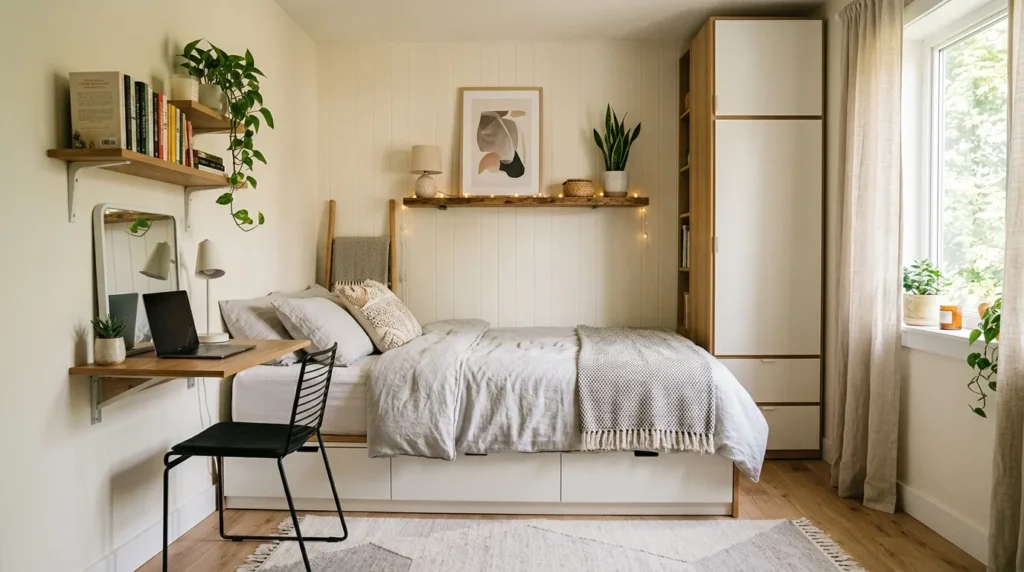
1. Space-Saving Bed
Choose a bed that provides comfort while making better use of floor space.
2. Vertical Storage
Use the walls to create additional storage without crowding the floor.
3. Light Neutral Palette
Create visual openness with soft, cohesive colors.
4. Wall-Mounted Lighting
Free up bedside surfaces with practical lighting solutions.
5. Oversized Mirror
Reflect light and create a stronger sense of visual depth.
6. Floating Nightstands
Keep the bedside area functional while preserving floor space.
7. Layered Window Treatments
Use curtains to soften the room and emphasize ceiling height.
8. Under-Bed Storage
Turn unused space beneath the bed into practical storage.
9. Multi-Use Furniture
Choose pieces that perform more than one job.
10. Minimal Layered Decor
Add warmth and personality without creating visual clutter.
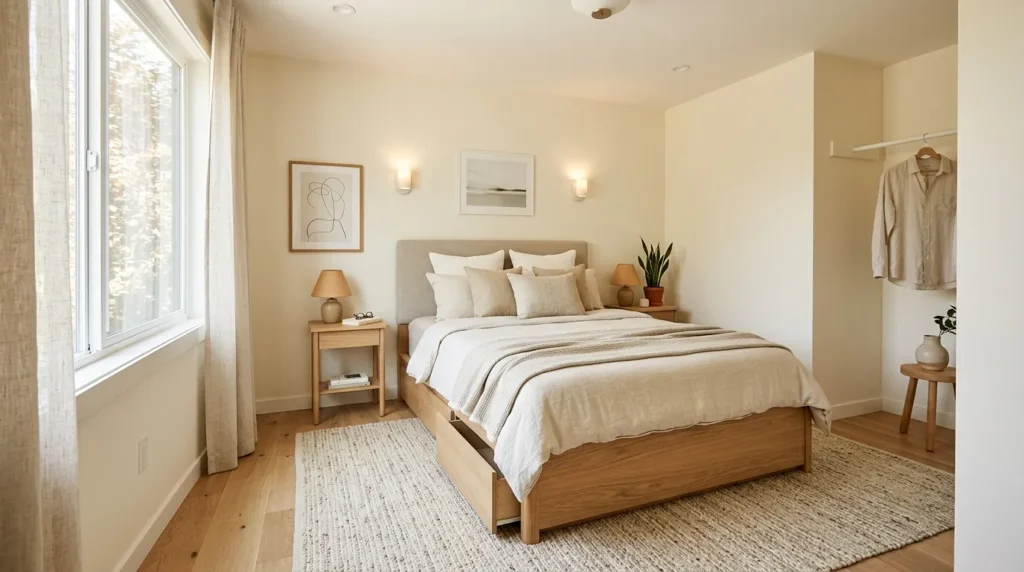
1. Space-Saving Bed
Quick Benefits
- Maximizes floor space
- Keeps pathways clear
- Provides comfortable sleeping space
- Can include built-in storage
- Makes furniture planning easier
Why It Works
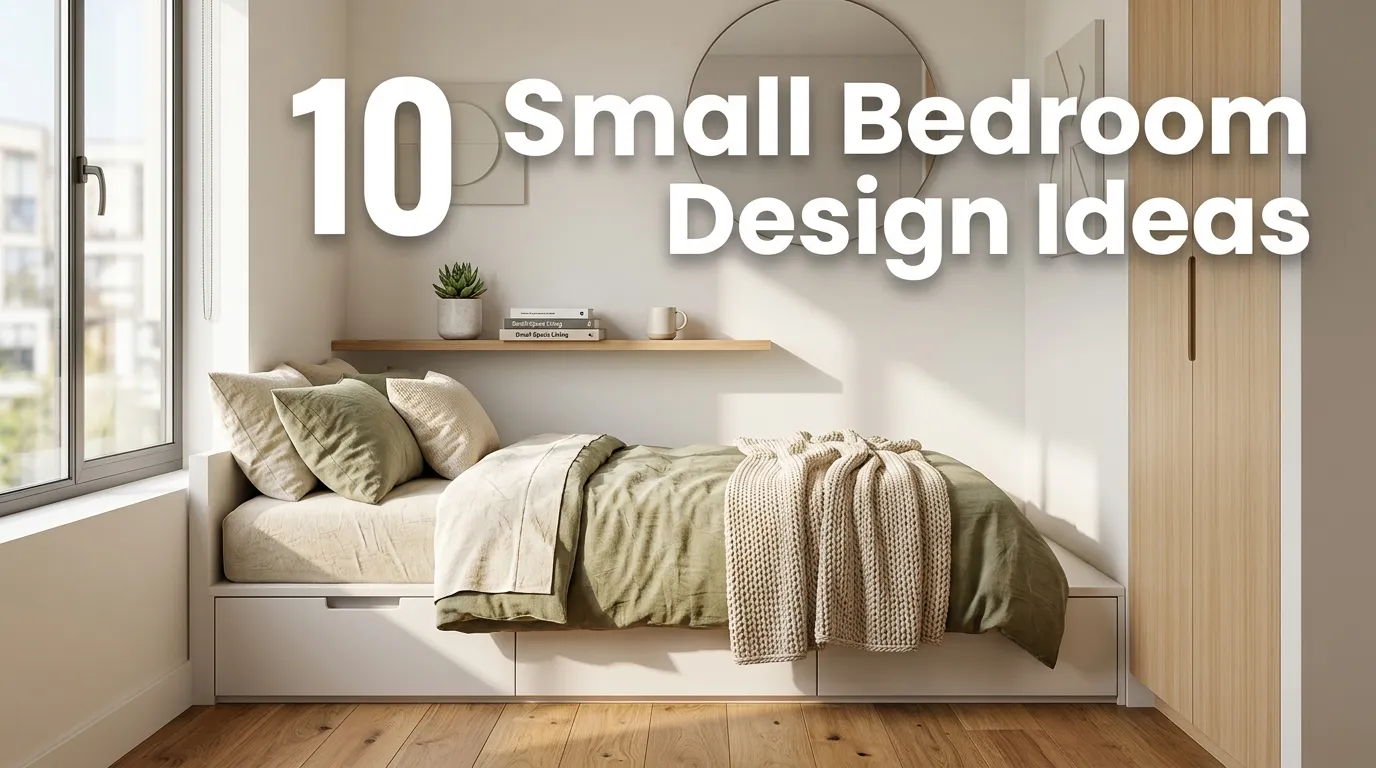
The bed is usually the largest piece of furniture in a bedroom, so its size and shape have an enormous impact on how the room functions.
In a small space, choosing a bed with a streamlined frame can create more breathing room around it. A platform bed with a low profile can make the room feel visually lighter, while a storage bed can eliminate the need for another bulky piece of furniture.
The goal isn’t simply to choose the smallest possible bed. It’s to select one that provides the sleeping comfort you need without unnecessarily consuming valuable floor area.
How To Style It
Choose a frame with clean lines and limited visual bulk.
If storage is a priority, consider drawers beneath the bed or a lift-up platform designed for accessible storage.
Keep the bedding relatively streamlined and avoid excessive layers that spill onto the floor.
Position the bed so the main walking route remains clear.
If possible, center the bed on its focal wall to create visual balance.
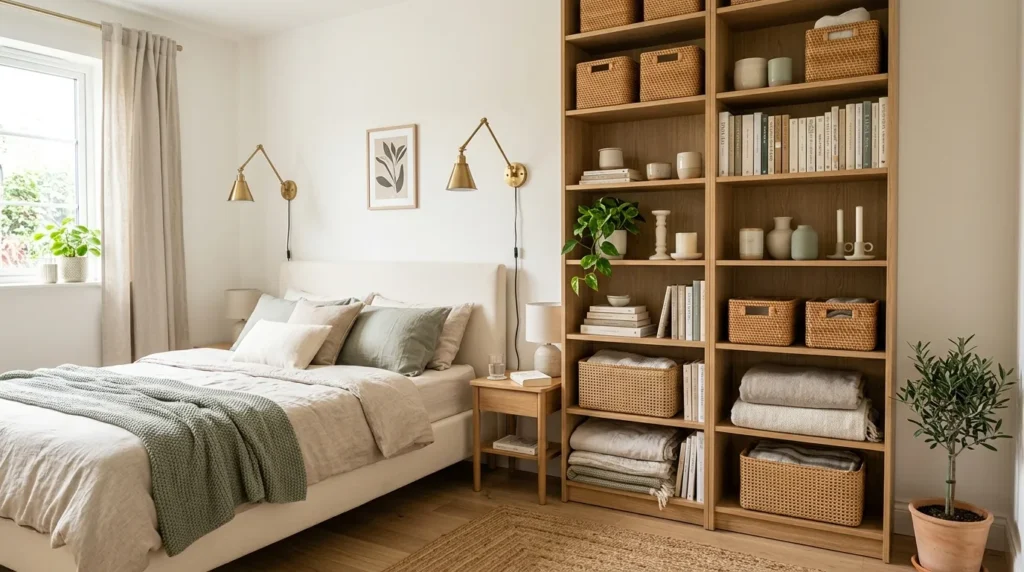
2. Vertical Storage
Quick Benefits
- Uses unused wall space
- Keeps floors clearer
- Adds useful storage
- Works in rental-friendly ways
- Creates visual height
Why It Works
When floor space is limited, look upward.
Walls offer valuable storage potential without taking up the same footprint as a dresser or cabinet.
Tall shelving, wall-mounted cabinets, peg rails, hooks, and narrow bookcases can all help organize a small bedroom.
Vertical storage also draws the eye upward, which can make the room feel taller.
A common mistake is trying to solve every storage problem with floor-standing furniture. That approach can quickly make a compact room feel crowded.
How To Style It
Install shelves above a desk or dresser when appropriate.
Use a tall narrow bookcase instead of a wide low unit.
Choose baskets or matching containers to keep smaller items visually organized.
For renters, consider removable hooks or freestanding shelving where permanent installation isn’t practical.
Keep the highest shelves for less frequently used items and everyday essentials within easy reach.
3. Light Neutral Palette
Quick Benefits
- Creates visual continuity
- Reflects available light
- Makes furniture feel less dominant
- Creates a calm atmosphere
- Works with many decorating styles
Why It Works
A light color palette can help a small bedroom feel more open by reducing strong visual boundaries.
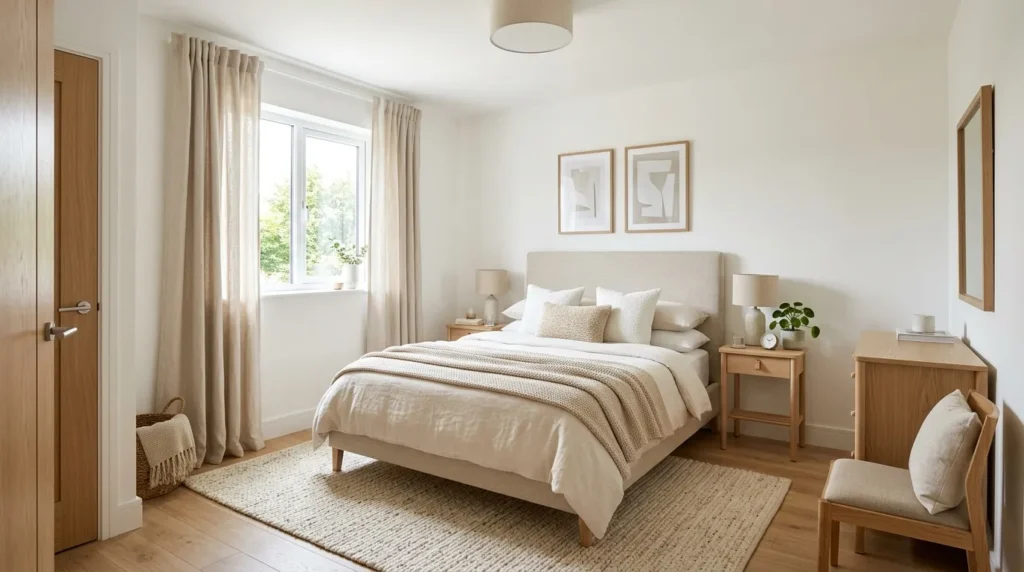
Warm white, cream, pale beige, soft gray, and muted earthy tones can create a cohesive background that allows furniture to blend rather than dominate.
However, the room doesn’t need to be completely white.
A few subtle contrasts can actually add depth and prevent the space from feeling flat.
The important part is maintaining visual consistency.
How To Style It
Choose one dominant light neutral for the walls.
Repeat related shades through bedding, curtains, rugs, and larger furniture.
Add contrast through natural wood, black hardware, or muted green accents.
If you want a darker color, consider using it on one smaller feature rather than covering every surface.
Keep large patterns limited so the room doesn’t feel visually fragmented.
4. Wall-Mounted Lighting
Quick Benefits
- Frees up nightstand space
- Improves bedside lighting
- Adds style
- Keeps floors clear
- Works well in narrow rooms
Why It Works
Traditional bedside lamps require both a nightstand and enough surface area to accommodate them.
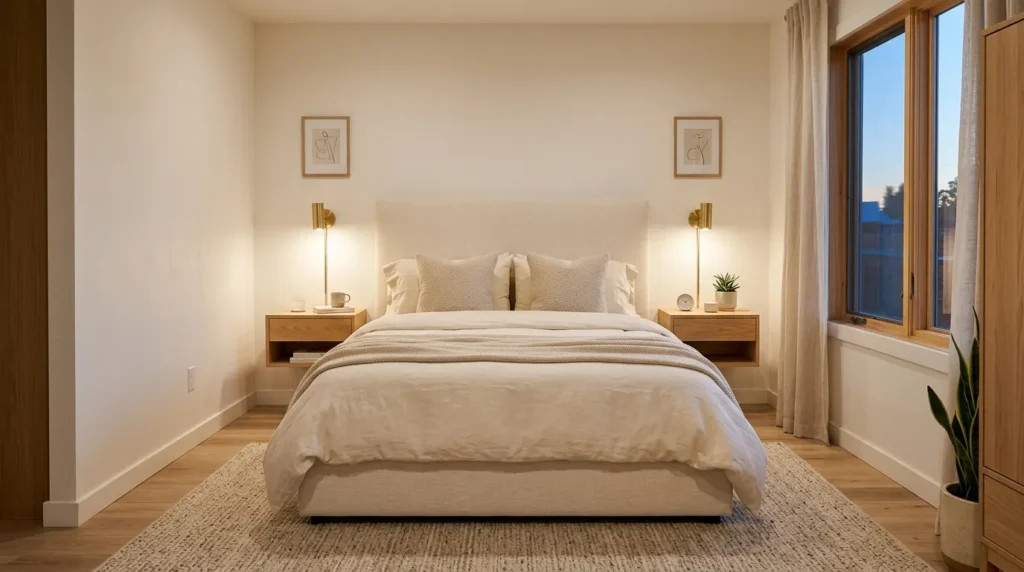
Wall-mounted sconces solve both problems.
They provide useful light while keeping the nightstand available for books, glasses, chargers, or other essentials.
This is particularly helpful when the bed is positioned close to a wall or the room doesn’t have enough width for substantial bedside furniture.
How To Style It
Install sconces at a comfortable height for reading and according to appropriate electrical requirements.
Choose slim fixtures for particularly narrow spaces.
Adjustable sconces can provide flexibility.
For a softer appearance, look for fabric or opal-glass shades.
For a contemporary bedroom, simple metal fixtures can create a clean architectural detail.
5. Oversized Mirror
Quick Benefits
- Reflects light
- Adds visual depth
- Creates a focal point
- Makes walls more interesting
- Can make the room feel more open
Why It Works
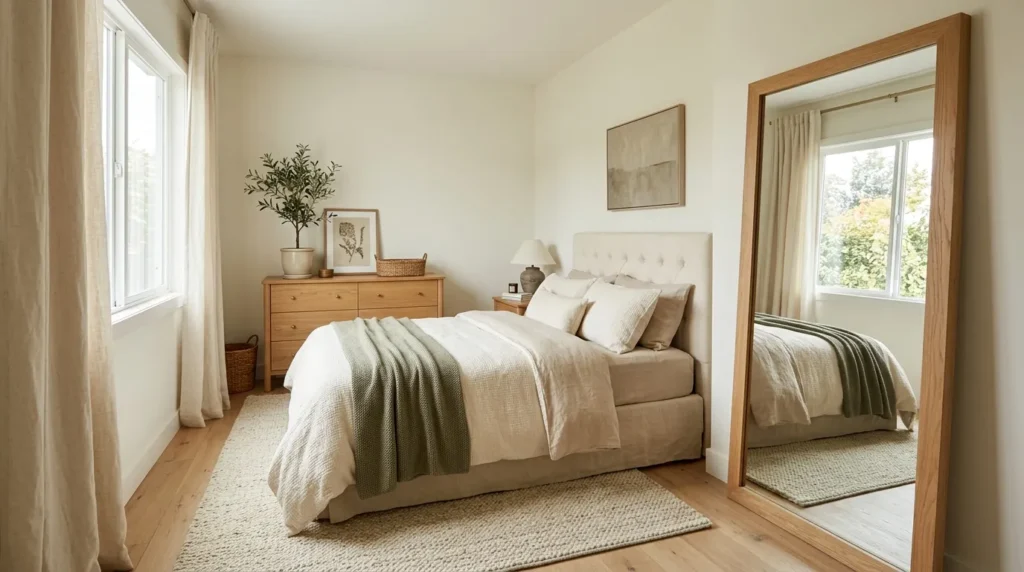
Mirrors can be extremely useful in compact bedrooms because they reflect both light and visual space.
A large mirror doesn’t physically increase the room’s dimensions, but it can create a stronger sense of depth.
Placement matters more than simply adding any mirror.
A mirror positioned opposite or near a window can help reflect available daylight.
How To Style It
Use a large framed mirror above a dresser or lean a properly secured full-length mirror against a suitable wall.
Choose a frame that complements the bedroom’s style.
A slim black frame can add modern contrast, while natural wood can create warmth.
Avoid placing a mirror where it reflects clutter or an unattractive view.
6. Floating Nightstands
Quick Benefits
- Saves floor space
- Creates a lighter appearance
- Provides bedside storage
- Makes cleaning easier
- Works well with small bedsides
Why It Works
A traditional nightstand can occupy more floor area than you realize.
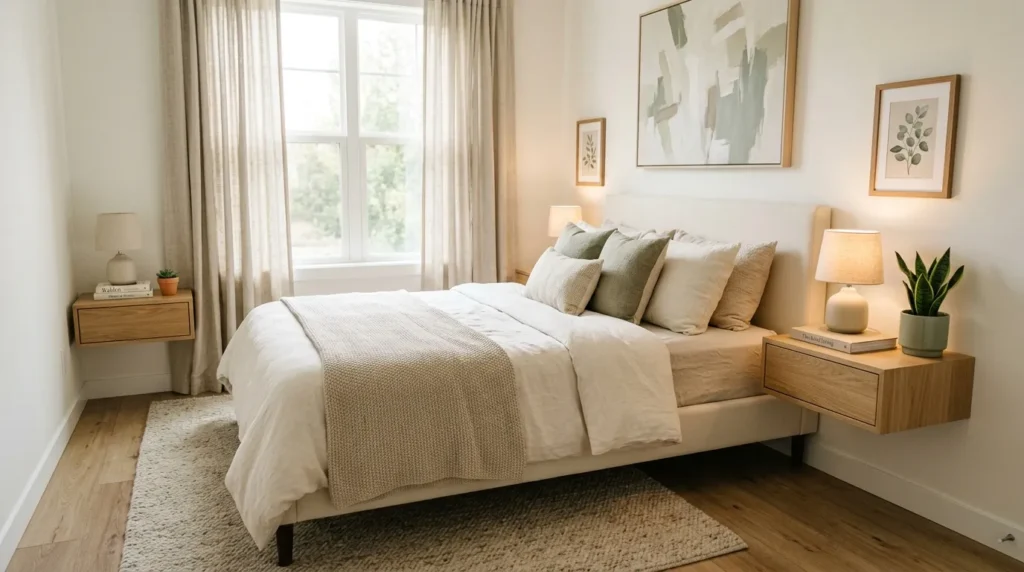
A floating shelf or wall-mounted nightstand keeps the floor visible beneath it, making the room feel less crowded.
It also creates useful space for a lamp, book, phone, or small decorative object.
For extremely small bedrooms, even a narrow floating shelf can provide enough bedside functionality.
How To Style It
Choose a shelf or floating cabinet wide enough for your essentials.
Keep the surface edited.
A compact lamp, small plant, book, and tray may be enough.
Use a drawer or nearby storage solution for less attractive items.
If installing a floating piece, ensure the wall and mounting hardware can safely support its intended load.
7. Layered Window Treatments
Quick Benefits
- Adds softness
- Emphasizes ceiling height
- Provides privacy
- Controls daylight
- Makes the room feel finished
Why It Works
Window treatments can dramatically affect the perceived proportions of a small bedroom.
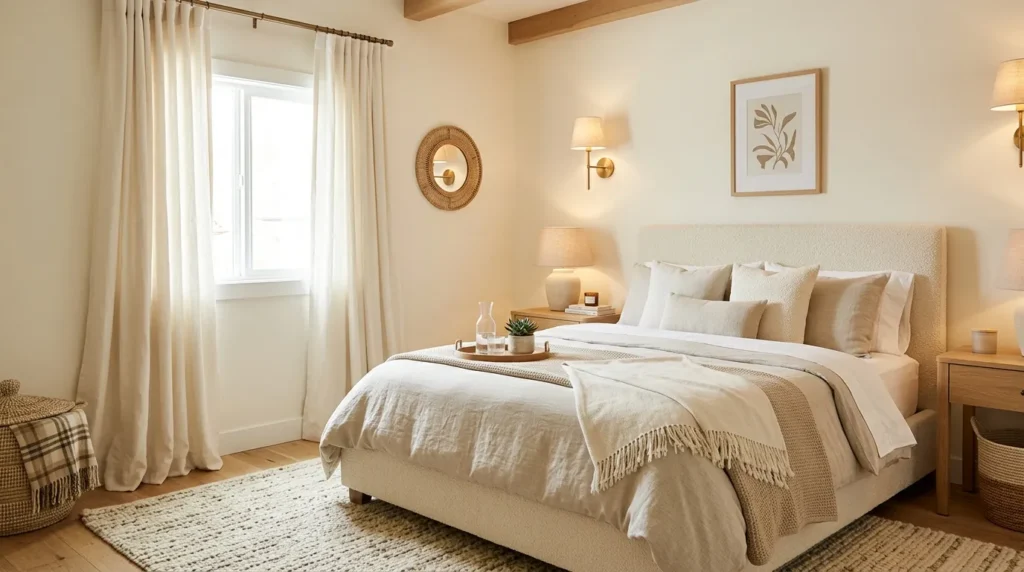
Curtains that extend vertically can draw the eye upward and create the impression of greater height.
Soft fabrics also reduce the visual hardness of walls, windows, and furniture.
The trick is to avoid overly bulky treatments that consume valuable visual space.
How To Style It
Choose lightweight curtains in cream, ivory, beige, or another shade close to the wall color.
Where practical, hang the rod higher than the window frame.
Extend the rod slightly beyond the window so the curtains can sit outside the glass when open.
Combine curtains with shades or blinds when additional privacy or light control is needed.
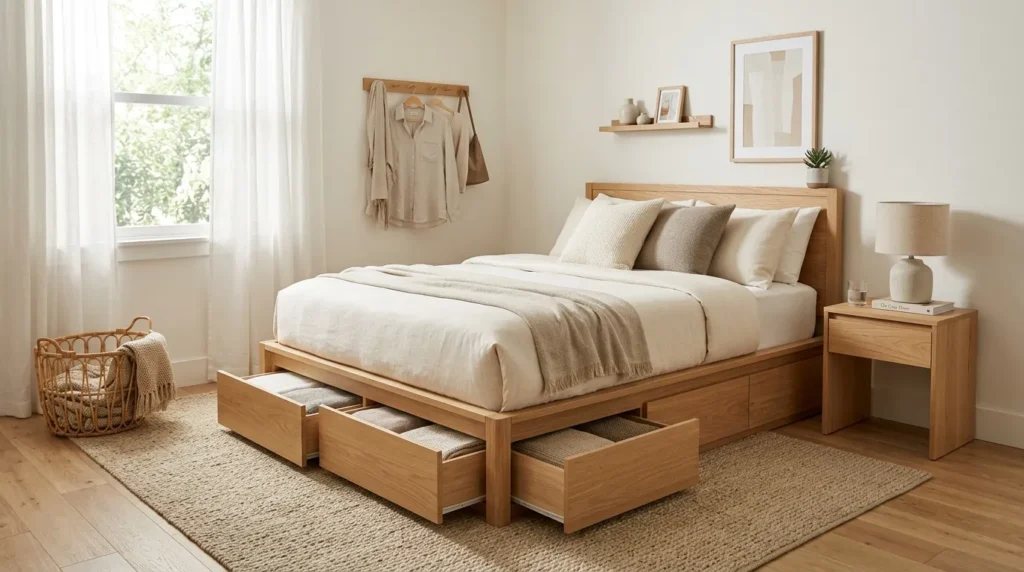
8. Under-Bed Storage
Quick Benefits
- Uses otherwise wasted space
- Stores seasonal items
- Reduces closet pressure
- Keeps belongings organized
- Works especially well in apartments
Why It Works
The space beneath the bed is often overlooked.
In a small bedroom, that unused area can become valuable storage for items you don’t need every day.
This can reduce the amount of furniture required in the room and make the overall layout feel less crowded.
The key is keeping the storage organized so the area doesn’t become a hidden source of clutter.
How To Style It
Choose a bed with built-in drawers if you want easy daily access.
Alternatively, use appropriately sized storage containers designed to slide underneath the bed.
Store seasonal clothing, spare bedding, luggage, or less frequently used items there.
Label containers so you don’t have to pull everything out when searching for something.
Avoid storing items that could be damaged by dust or moisture without appropriate protection.
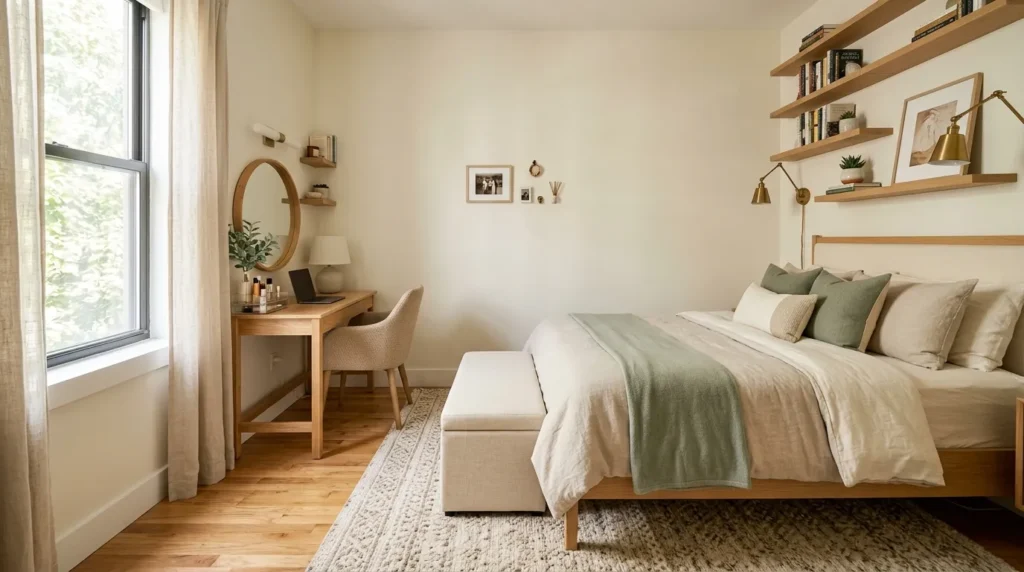
9. Multi-Use Furniture
Quick Benefits
- Saves space
- Reduces furniture quantity
- Improves functionality
- Works well in apartments
- Creates a more flexible room
Why It Works
When space is limited, every piece of furniture should have a purpose.
A storage ottoman can provide seating and hidden storage.
A narrow desk can double as a vanity.
A bench at the foot of the bed can provide seating while offering internal storage.
This approach allows you to keep the room useful without filling it with separate pieces.
How To Style It
Before purchasing furniture, consider everything you need the bedroom to do.
If you work from home, choose a compact desk that can also function as a getting-ready area.
If you need occasional seating, choose an ottoman that opens for storage.
Look for furniture with clean lines and appropriate proportions.
Avoid oversized multifunctional pieces that technically perform several jobs but still consume too much floor space.
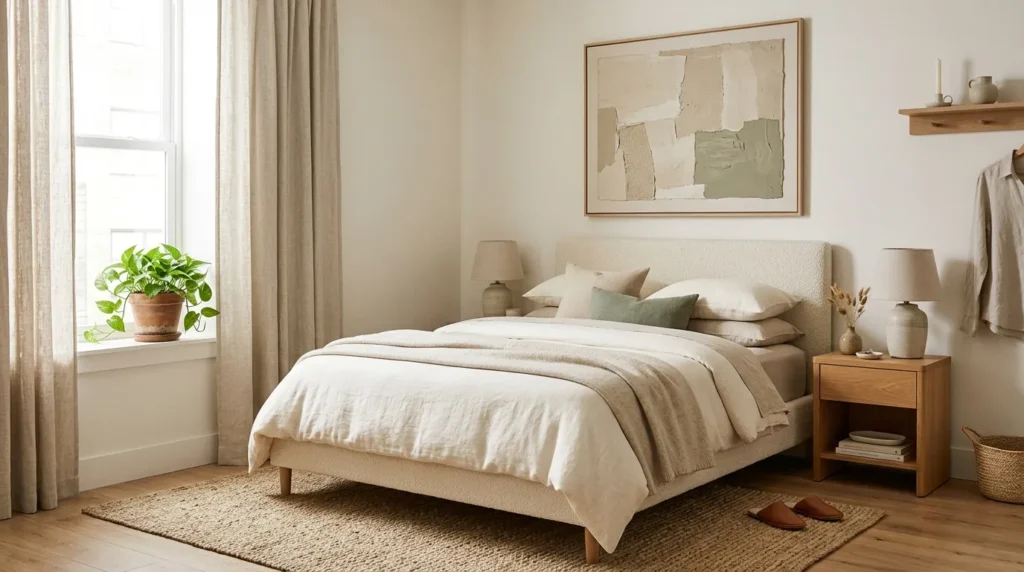
10. Minimal Layered Decor
Quick Benefits
- Adds personality
- Prevents visual clutter
- Creates warmth
- Makes the room feel finished
- Easy to maintain
Why It Works
Small doesn’t mean boring.
The challenge is knowing when to stop.
A compact bedroom can still have beautiful artwork, cozy bedding, plants, candles, books, and decorative objects. The difference is that each piece needs to earn its place.
Instead of filling every surface, create a few intentional focal points.
This makes the room feel decorated without making it feel crowded.
How To Style It
Choose one major artwork piece above the bed or dresser.
Add two or three useful decorative objects to the nightstand.
Use one larger plant instead of many tiny ones when space allows.
Keep bedding layered but controlled.
Leave some wall and surface space empty.
That negative space is part of what makes a small bedroom feel calm.
How to Make a Small Bedroom Look Bigger
The most effective strategy is to create visual breathing room.
Start by clearing unnecessary furniture.
Then consider whether each remaining piece is appropriately scaled.
Use light colors on larger surfaces, keep pathways open, and take advantage of vertical storage.
Mirrors can help reflect light and create depth, while curtains installed thoughtfully can emphasize ceiling height.
Another useful trick is to maintain consistency between colors. When walls, curtains, and larger furniture are closely related in tone, there are fewer visual interruptions.
You can still introduce contrast through wood, artwork, textiles, and small accents.
The goal isn’t to make everything disappear. It’s to prevent individual objects from visually competing for attention.
Small Bedroom Layout Tips
Keep the Main Path Clear
The route between the doorway, bed, closet, and bathroom should feel easy to navigate.
Measure Before Buying
Measure the room, door swings, windows, and furniture carefully before purchasing anything.
Use the Corners
A narrow desk, reading chair, or vertical shelf can make awkward corners functional.
Prioritize the Bed
The bed is the largest piece, so build the layout around it.
Avoid Oversized Furniture
Large dressers and deep nightstands can quickly overwhelm a compact bedroom.
Think Vertically
Tall storage often provides more capacity without consuming as much floor area.
Small Bedroom Color Ideas
Warm White + Oak
Bright and naturally warm.
Cream + Beige
Soft and sophisticated.
White + Sage
Fresh and calming.
Greige + Walnut
Modern and grounded.
Pale Blue + White
Light and peaceful.
Taupe + Cream
Warm and elegant.
Choose a palette that complements your existing flooring and furniture rather than starting with paint color alone.
FAQ
How do you make a small bedroom look bigger?
Use appropriately scaled furniture, keep pathways clear, choose cohesive light colors, use vertical storage, and introduce mirrors where they can reflect useful light or attractive views. Reducing visual clutter can also make a surprisingly large difference.
What furniture is best for a small bedroom?
Look for streamlined beds, narrow nightstands, vertical shelving, storage beds, compact dressers, floating furniture, and multifunctional pieces. The best furniture depends on your exact dimensions and storage needs.
What colors make a small bedroom look larger?
Warm white, cream, light beige, soft gray, pale blue, and other light coordinated colors can help create visual openness. You don’t have to avoid darker colors entirely, but using them selectively usually creates a more balanced result.
Should a small bedroom have a large bed?
That depends on your sleeping needs and the room’s dimensions. Choose the largest bed that allows comfortable movement around it. A slightly smaller bed may be worthwhile if it creates substantially better circulation and storage.
How can I add storage without making my bedroom feel crowded?
Use vertical shelving, under-bed storage, floating nightstands, over-door organization, and multifunctional furniture. Keep storage visually organized with baskets, boxes, and concealed compartments where possible.
Is a mirror good for a small bedroom?
Yes. A strategically positioned mirror can reflect light and create a stronger sense of depth. Choose the size and placement based on what it reflects rather than adding a mirror simply because the room is small.
How do I decorate a small bedroom without cluttering it?
Choose a few meaningful decorative pieces instead of filling every surface. Prioritize functional decor, keep the palette cohesive, use larger focal pieces strategically, and leave some empty space around furniture and accessories.
Conclusion
A small bedroom can be just as comfortable and beautiful as a much larger one when the design is intentional.
The key is to make every decision work harder. Choose furniture that fits the room rather than forcing oversized pieces into limited space. Use vertical walls for storage, the area beneath the bed for less frequently used belongings, and multifunctional furniture when it genuinely improves the room.
Then focus on visual simplicity.
A light, cohesive color palette can create a sense of openness, while mirrors, curtains, and appropriate lighting can help the room feel brighter and more balanced. Soft bedding, artwork, natural wood, and a few decorative pieces bring personality without requiring a lot of space.
Don’t feel like you need to make your bedroom completely minimalist. What matters is creating enough breathing room for the furniture, pathways, and decorative elements to work together.
Start with the layout, solve your biggest storage or functionality problem, and then layer in the details you love. With a thoughtful approach, even a compact bedroom can become a comfortable, organized retreat that feels distinctly yours.