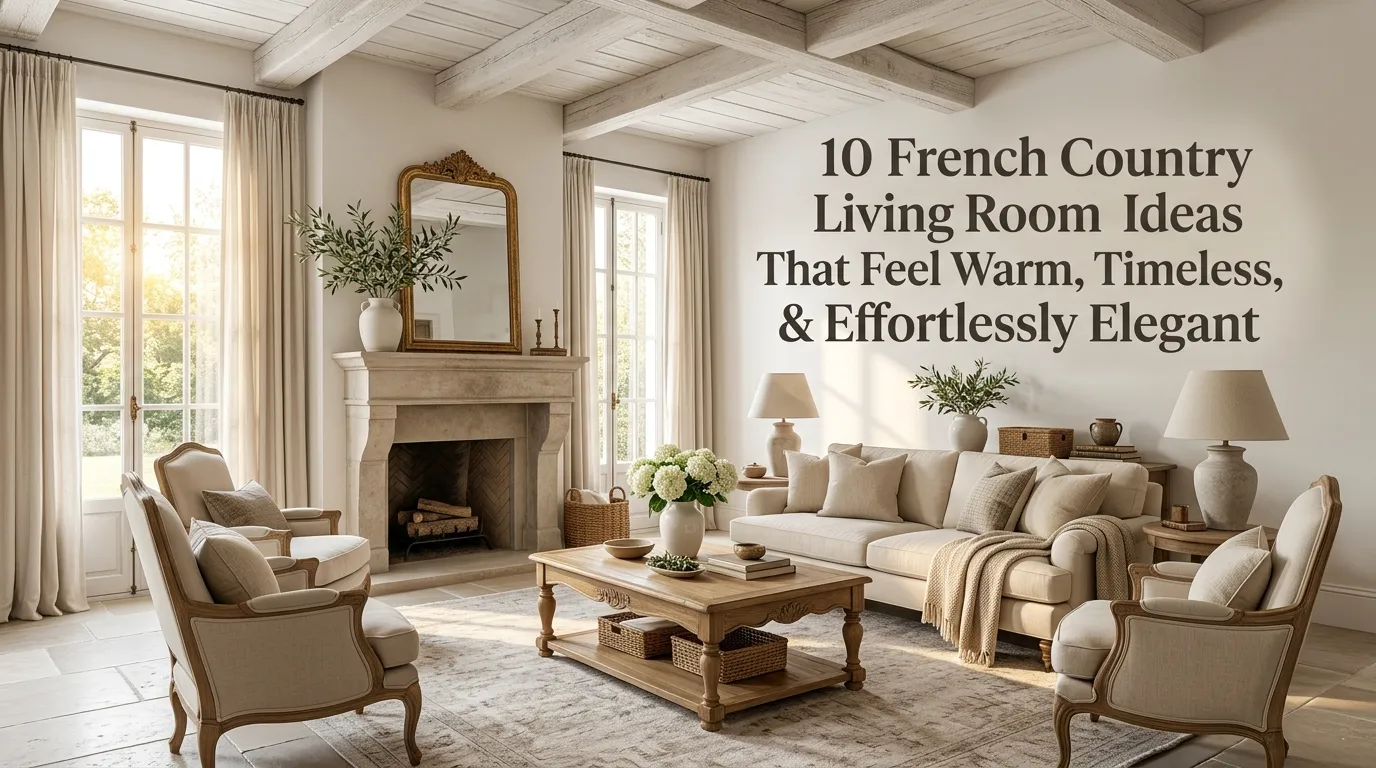
10 French Country Living Room Ideas That Feel Warm, Timeless, and Effortlessly Elegant
There’s a reason French country style never really goes out of fashion. In my experience walking through hundreds of homes over the years, the living rooms that feel the most inviting almost always share the same soul: a little bit worn, a little bit polished, and full of pieces that feel collected rather than purchased all at once.
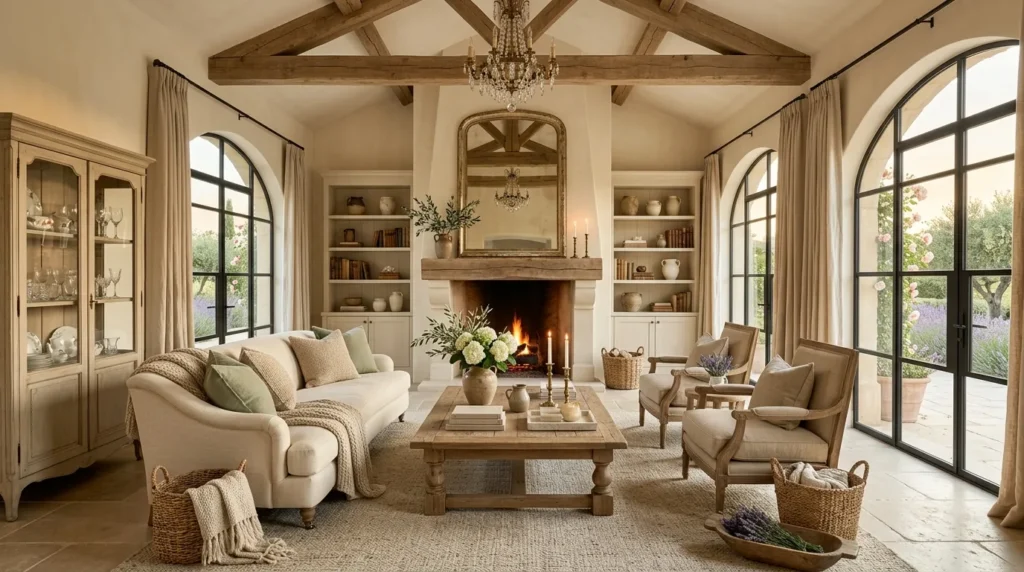
If you’ve ever scrolled through Pinterest late at night, dreaming of a living room that feels like a countryside farmhouse in the Loire Valley but still works for your actual life in the United States, you already know the appeal. French country style blends rustic textures with refined details — weathered wood next to soft linen, a gilded mirror above a stone fireplace, faded florals mixed with simple neutrals. It’s warm without being cluttered, elegant without feeling stiff.
A mistake many homeowners make when trying to recreate this look is going too far in one direction. Either the room ends up feeling like a museum of antiques, or it swings the other way into a generic “farmhouse” look with none of the romance that makes French country so special. The magic is in the balance.
That’s exactly what this guide is here to help you find. Below, you’ll find ten ideas I’ve seen transform ordinary living rooms into spaces that feel curated, comfortable, and genuinely lived-in — the kind of room you want to spend a Sunday afternoon in with coffee and a good book. Each idea includes practical styling advice, real furniture and material suggestions, and the reasoning behind why it works, so you’re not just copying a look but understanding how to make it your own.
Whether you’re starting from scratch or slowly transforming a room piece by piece, these ideas are meant to be flexible. You don’t need a full renovation or a big budget. You need the right foundation, a few key pieces, and an eye for texture and imperfection. Let’s get into it.
Table of Contents
- Soft Neutral Palette — Building a calm, warm base that lets texture and detail shine.
- Weathered Wood Furniture — Using aged, imperfect wood to ground the space in history.
- Toile Fabric Accents — Bringing in the most recognizable French textile pattern with restraint.
- Antique Mirror Details — Adding light, depth, and old-world character above mantels and walls.
- Linen Slipcovers — Softening furniture silhouettes with relaxed, breathable fabric.
- Wrought Iron Fixtures — Introducing handcrafted metal details for structure and contrast.
- Vintage Floral Textiles — Layering faded botanical patterns for romantic warmth.
- Rustic Stone Elements — Anchoring the room with natural, tactile architectural features.
- Curated Collectibles Display — Styling shelves and mantels like a slowly gathered collection.
- Layered Area Rugs — Creating coziness and definition underfoot with vintage-inspired rugs.
1. Soft Neutral Palette
Quick Benefits
- Creates a calm, restful foundation for the whole room
- Makes bold or antique pieces feel intentional instead of busy
- Reflects natural light beautifully, especially in older homes
- Works with almost any furniture style you add later
- Ages well and rarely feels dated
Why It Works
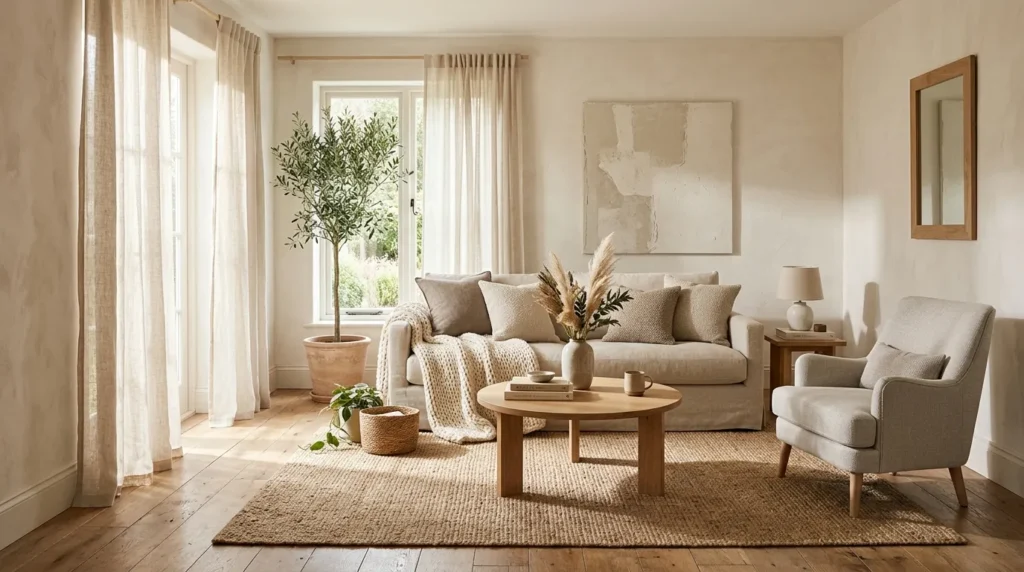
In my experience, the biggest difference between a French country living room that feels chic and one that feels chaotic almost always comes down to the wall color and base palette. French country design leans on soft, chalky neutrals — think warm whites, buttery creams, pale greige, and dusty stone tones. These colors mimic the limewashed plaster walls found in old French farmhouses, and they do something modern paint colors often can’t: they make a room feel like it has history, even if it was built last year. A neutral palette also acts like a blank canvas, letting your weathered furniture, floral textiles, and iron details become the stars of the room instead of competing with a busy wall color.
How To Style It
Start with your wall color — a warm off-white or soft putty tone works best, especially in living rooms with lots of natural light. Avoid stark, cool whites, which can feel more Scandinavian than French. For trim and ceilings, a slightly softer version of the wall color (rather than bright white) helps the whole room feel cohesive and aged. Bring the neutral palette into your upholstery too: think oatmeal linen sofas, cream slipcovers, and soft taupe accent chairs. Layer in texture through nubby wool throws, jute rugs, and raw wood furniture so the neutral base never feels flat. One simple trick I always suggest is testing paint samples on the wall at different times of day, since French country tones shift dramatically between morning and evening light.
2. Weathered Wood Furniture
Quick Benefits
- Adds instant warmth and a sense of history to the room
- Hides everyday wear and tear better than polished finishes
- Pairs beautifully with both rustic and refined accents
- Offers durability for family-friendly living rooms
- Creates a grounded, collected-over-time feeling
Why It Works
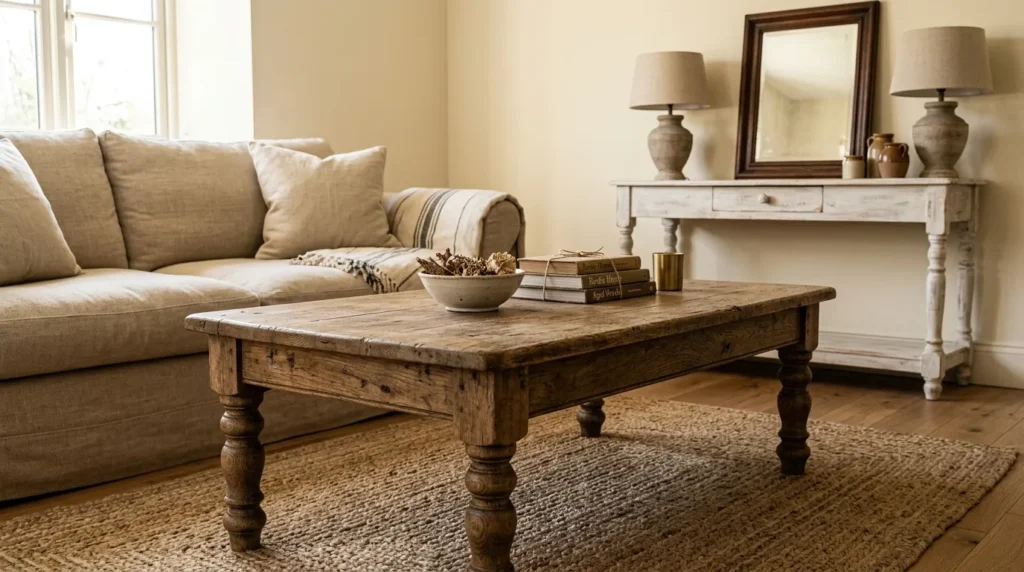
Weathered, imperfect wood is one of the clearest signatures of French country style, and it’s one of the easiest ideas to bring in even on a modest budget. I’ve noticed that homeowners often gravitate toward brand-new furniture with flawless finishes, but in French country design, the imperfections — the knots, the worn edges, the slightly uneven stain — are exactly what create authenticity. A coffee table with a distressed finish or a farmhouse-style console with visible grain tells a story that a factory-perfect piece simply can’t. This is also why the style photographs so well for Pinterest: the texture of aged wood catches light and shadow in a way that flat, glossy surfaces never do.
How To Style It
Look for reclaimed oak, whitewashed pine, or fruitwood pieces with turned legs, curved edges, or hand-carved details. A trestle-style coffee table, a weathered wood bench at the foot of a sofa, or an old farm table repurposed as a console behind the couch are all excellent anchor pieces. If you’re working with newer furniture, a light distressing technique — sanding edges, applying a wax finish, or choosing a whitewash stain — can mimic the look convincingly. Mix wood tones slightly rather than matching everything exactly; in real French farmhouses, furniture was gathered over generations, not bought as a matching set. Pair your wood pieces with soft textiles nearby so the room doesn’t feel too heavy or masculine.
3. Toile Fabric Accents
Quick Benefits
- Instantly signals French country style at a glance
- Adds pattern without overwhelming a neutral room
- Works beautifully on pillows, drapery, or a single accent chair
- Bridges rustic and refined elements seamlessly
- Timeless pattern that doesn’t feel trend-driven
Why It Works
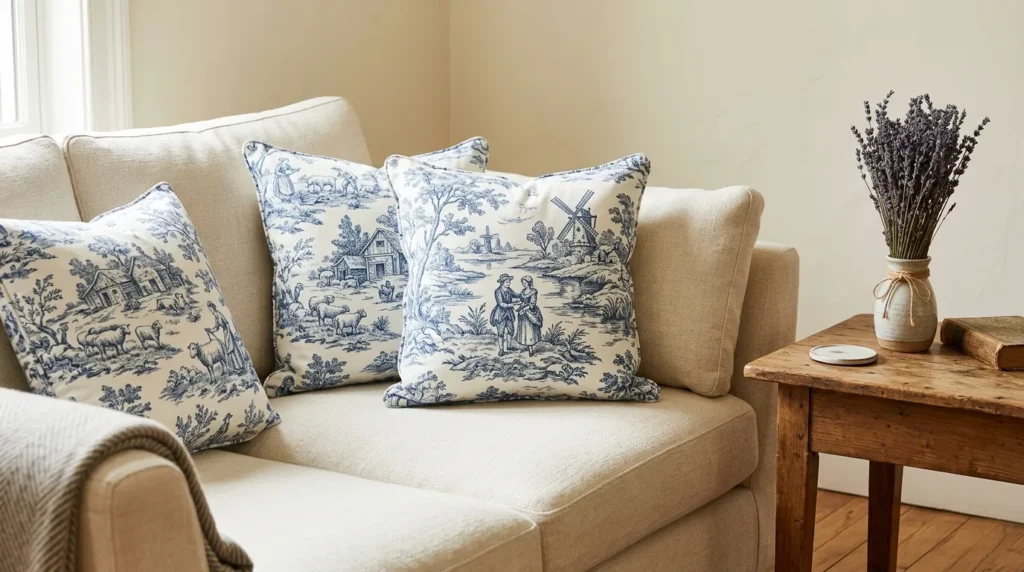
If there’s one fabric that says “French country” more than any other, it’s toile de Jouy — those pastoral, single-color scenes printed on linen or cotton, often in soft blues, reds, or greens on a cream background. One thing that works especially well is using toile sparingly rather than throughout the whole room. A little goes a long way, and I’ve seen this idea transform spaces when it’s used as an accent rather than the main event. It gives the room its most recognizable French detail while still leaving room for the weathered wood and neutral palette to breathe.
How To Style It
The easiest entry point is toile throw pillows on a neutral linen sofa — two or three pillows in a classic blue-and-cream or red-and-cream toile print instantly set the tone. For a bolder statement, consider a single toile accent chair, drapery panels, or even a toile-lined lampshade. If you want to go further, a toile wallpaper on one accent wall (rather than the whole room) can create a beautiful backdrop for a reading nook or fireplace wall without overwhelming the space. A mistake many homeowners make is pairing toile with too many other busy patterns; let it be the one standout print, and keep everything else solid or subtly textured.
4. Antique Mirror Details
Quick Benefits
- Bounces natural light around the room
- Adds instant old-world elegance above mantels or consoles
- Makes smaller living rooms feel more spacious
- Provides an easy focal point without major renovation
- Available at a range of price points, including thrifted finds
Why It Works
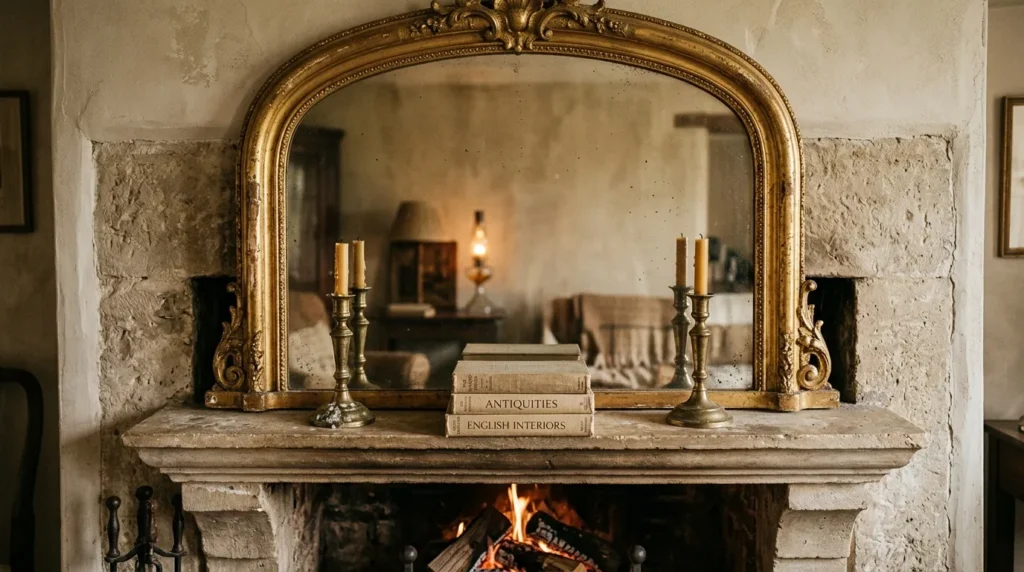
An aged, gilded, or slightly foxed mirror is one of the fastest ways to add French character to a room. In my experience, mirrors with a distressed frame or naturally aged glass (with those soft, cloudy imperfections) do more visual work than almost any other single item you can buy. They reflect the warm, layered light that comes through linen curtains, and they add a sense of depth and history that a plain, modern mirror simply doesn’t offer. This is also why antique mirrors are such a popular Pinterest save — they photograph beautifully above a mantel, flanked by candlesticks or fresh greenery.
How To Style It
A large arched or oval mirror with a carved, gold-leaf, or aged wood frame works beautifully above a fireplace mantel or a console table. If your budget allows, look for genuinely antique pieces at estate sales or architectural salvage shops — the slightly clouded glass is part of the charm. Budget-friendly alternatives include newer mirrors with an artificially aged finish, which are widely available and much easier to source. Style the area around the mirror with a pair of candlesticks, a small vase of dried lavender or eucalyptus, and a stack of old books for a layered, collected look. Avoid hanging the mirror too high; French interiors tend to keep mirrors at a scale and height that feels human and approachable rather than grand.
5. Linen Slipcovers
Quick Benefits
- Softens the overall silhouette of furniture
- Easy to remove and wash, ideal for busy households
- Adds a relaxed, lived-in texture that hard fabrics can’t
- Works well in both formal and casual French country rooms
- Naturally wrinkles in a way that feels intentional, not messy
Why It Works
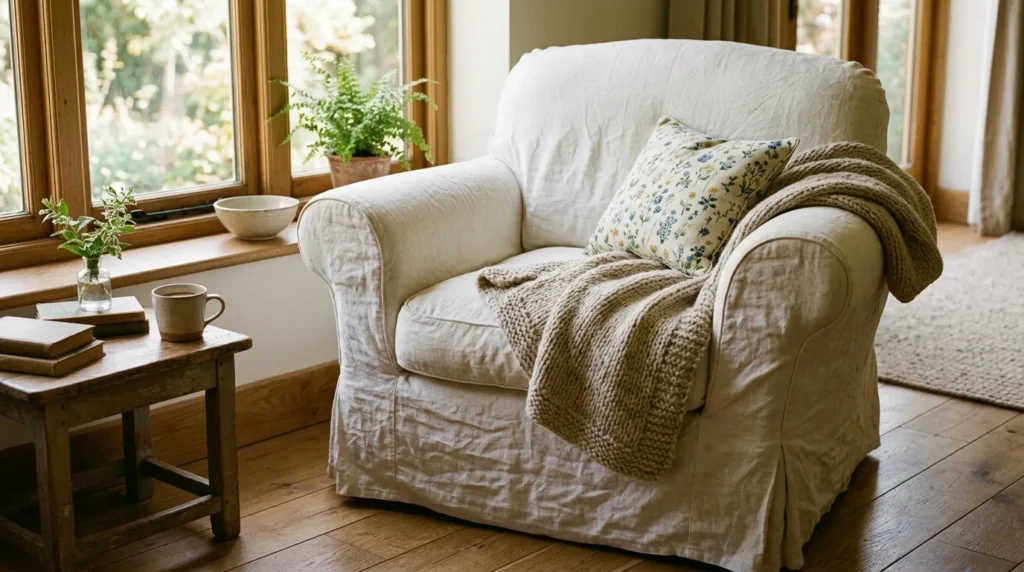
Linen slipcovers are one of my favorite details because they solve two problems at once: they bring in that soft, effortless French texture, and they’re genuinely practical for everyday life. A mistake many homeowners make is choosing stiff, structured upholstery when trying to achieve this look — but French country furniture is meant to look a little relaxed, almost like it’s been lived in for decades. Linen’s natural wrinkle and drape does exactly that, giving even a brand-new sofa an instantly softer, more approachable feel.
How To Style It
Choose a slipcover in a soft, warm white, oatmeal, or dove gray linen rather than a bright white, which can feel more contemporary. Loose-fit slipcovers with simple ties or skirted bases tend to read more authentically French than tightly tailored ones. If reupholstering isn’t in the budget, a well-made linen slipcover over an existing sofa or armchair is a budget-friendly way to transform the whole feel of the room. Pair slipcovered seating with a mix of textures nearby — a wool throw, a jute rug, a few toile or floral pillows — so the softness of the linen has something to contrast against. Because linen shows wrinkles easily, embrace that texture rather than fighting it; it’s part of what makes the style feel genuine.
6. Wrought Iron Fixtures
Quick Benefits
- Adds structure and contrast against soft fabrics and wood
- Brings in handcrafted, artisanal character
- Works well for lighting, curtain rods, and small furniture
- Balances the softness of linen and floral textiles
- Durable and long-lasting compared to trend-driven metals
Why It Works
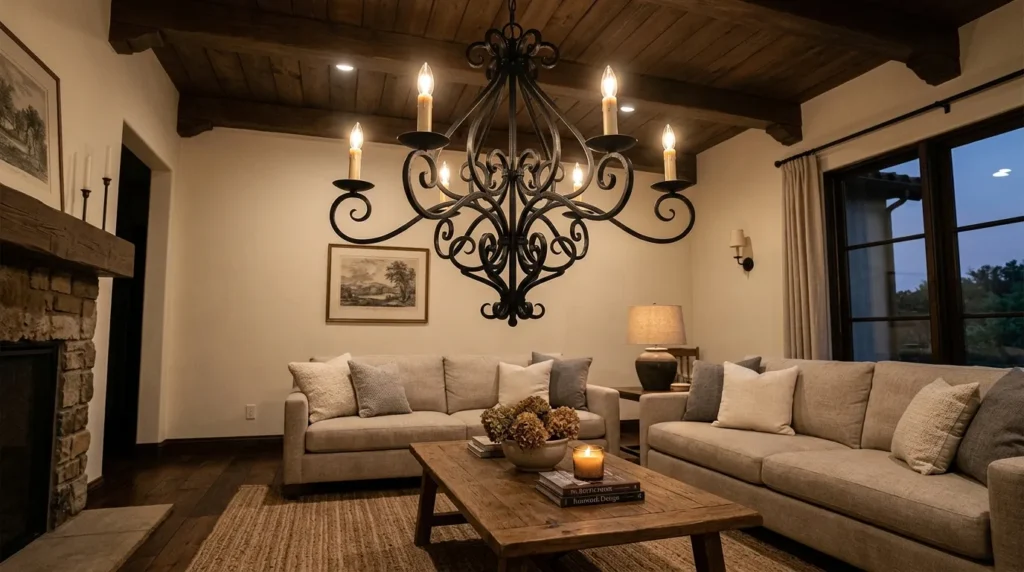
That’s why many designers recommend wrought iron as the metal of choice for French country spaces — it has a handmade, slightly imperfect quality that mirrors the weathered wood and aged mirrors already in the room. Where a sleek chrome or brushed gold fixture can feel more modern farmhouse or industrial, wrought iron carries a rustic, old-world warmth that ties the whole look together. It also provides visual weight and contrast, which keeps a room full of soft linens and pale neutrals from feeling flat or overly delicate.
How To Style It
Look for wrought iron chandeliers with candle-style bulbs, scrolled curtain rods, or a slim iron-framed coffee table to introduce this material. A wrought iron plant stand in the corner, holding a trailing ivy or a potted olive tree, is a small detail that reads as distinctly French. If a full chandelier replacement isn’t realistic, iron sconces flanking a mirror or fireplace can achieve a similar effect on a smaller scale. Keep the iron details matte black, aged bronze, or slightly rusted rather than glossy black, which can feel more modern than rustic. Balance a few iron pieces throughout the room rather than clustering them all in one spot, so the contrast feels woven in naturally.
7. Vintage Floral Textiles
Quick Benefits
- Adds romantic, layered warmth without feeling overdone
- Works beautifully on pillows, curtains, or a single upholstered chair
- Complements toile and neutral palettes without clashing
- Brings softness and femininity to rustic wood and iron
- Easy to source secondhand for an authentic, aged look
Why It Works
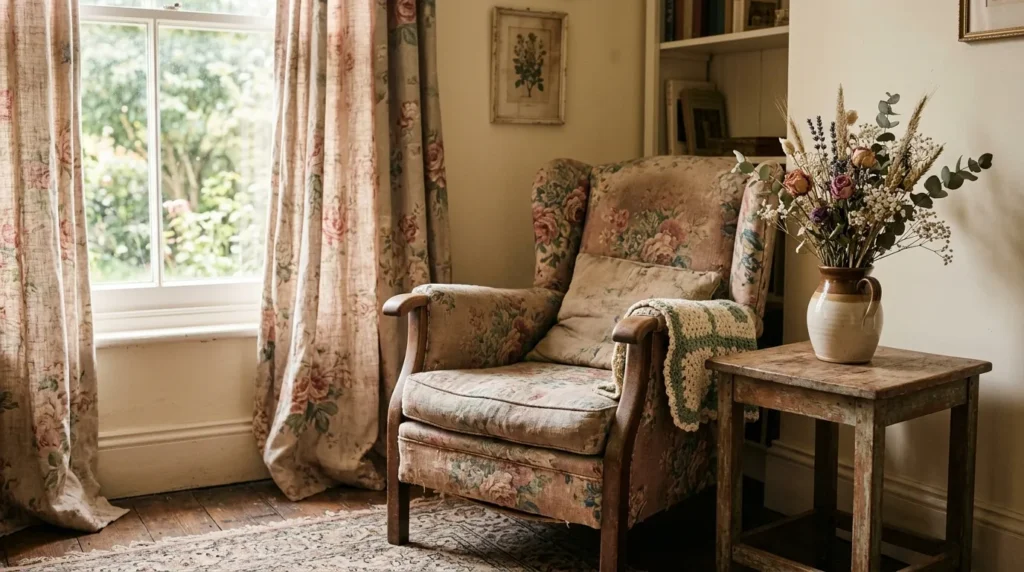
If you’re anything like me, you’ve probably noticed that faded floral fabric feels completely different from bold, saturated florals you’d see in other design styles. French country florals are muted — dusty roses, soft sage greens, faded blues — almost like the pattern has spent decades in the sun. I’ve seen this idea transform spaces by adding a layer of softness and romance that pairs beautifully with the more structural elements like iron and weathered wood. It keeps the room from feeling too rustic or too masculine, striking that signature French balance between refined and lived-in.
How To Style It
A single vintage floral armchair, reupholstered or found as-is at an estate sale, makes a wonderful accent piece near a window or fireplace. If reupholstering isn’t practical, floral throw pillows in muted, aged tones can bring in the same warmth on a smaller scale. Curtains in a soft floral linen, hung with simple iron rings, add texture at the windows without overwhelming the room. When mixing florals with toile, choose one dominant pattern and let the other appear only in small doses — a floral chair alongside toile pillows works, but two competing large-scale patterns in the same sightline can feel busy. Look to secondhand shops and estate sales first; genuinely aged floral textiles have a softness that new reproductions often can’t fully replicate.
8. Rustic Stone Elements
Quick Benefits
- Adds an authentic architectural anchor to the room
- Brings natural texture that contrasts beautifully with soft fabrics
- Works especially well around fireplaces and hearths
- Grounds the room in a sense of permanence and history
- Complements both wood and iron accents
Why It Works
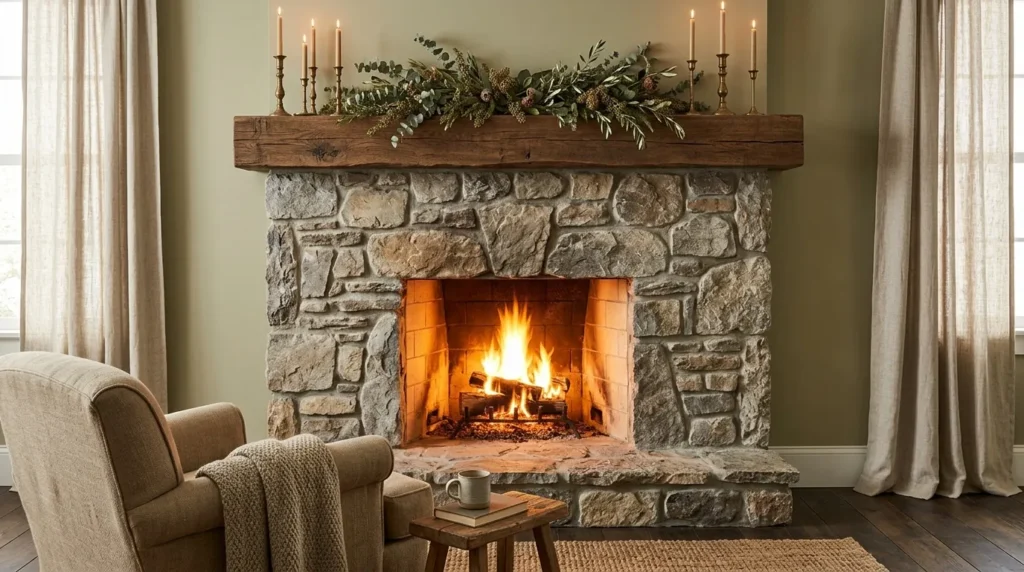
A mistake many homeowners make is focusing entirely on furniture and textiles while overlooking architectural texture, but stone is one of the most authentic elements of true French farmhouse interiors. A stone fireplace surround, exposed stone accent wall, or even a smaller stone hearth detail brings a sense of age and permanence that no amount of furniture styling alone can achieve. In my experience, rooms with even a small stone element feel more architecturally interesting and less like a styled set — because stone reads as structural rather than decorative, it grounds the whole space.
How To Style It
If you have an existing fireplace, consider a stone or limestone-look surround rather than painted brick or drywall — many home centers now offer stone veneer panels that are relatively simple to install over an existing mantel. For renters or smaller budgets, a faux stone fireplace insert or a large stone-textured piece of art can hint at the same material without construction. Pair stone surfaces with warm wood mantels, iron candle sconces, and soft linen drapery nearby to keep the hard texture from feeling cold. If your living room doesn’t have a fireplace at all, a stone-topped console table or a few chunky stone accessories — bookends, vases, or a stone garden urn used as a planter — can bring in the same tactile quality on a smaller scale.
9. Curated Collectibles Display
Quick Benefits
- Adds personality and a sense of history to open shelves or mantels
- Creates natural conversation pieces for guests
- Allows the room to evolve and change over time
- Costs very little if sourced from thrifting or family pieces
- Reinforces the “gathered over time” feeling central to French style
Why It Works
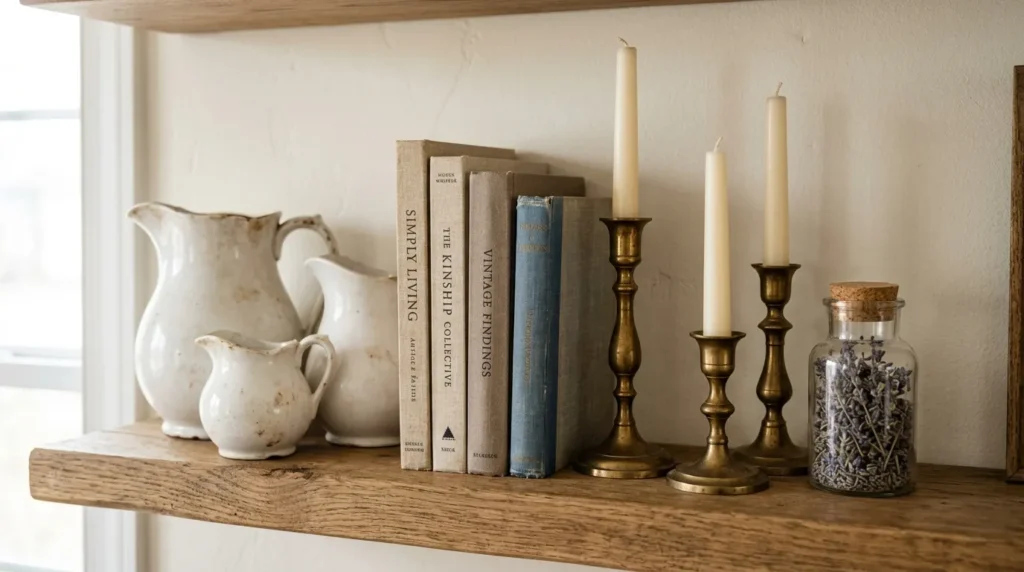
One thing that works especially well in French country living rooms is a display that looks gathered rather than staged — old books, ironstone pottery, a chipped ceramic pitcher, a few brass candlesticks of different heights. I’ve noticed that the rooms which feel most authentically French are rarely the ones with matching decor sets; they’re the ones where every object seems to have its own small story. This kind of curated, slightly imperfect display is also what makes a mantel or bookshelf so satisfying to photograph for Pinterest, since the varied heights, textures, and colors create natural visual interest.
How To Style It
Group items in odd numbers — threes and fives tend to look more natural than pairs — and vary the height, texture, and material within each grouping. Ironstone pitchers, chipped enamelware, vintage glass cloches, and stacks of linen-bound books all work beautifully together on a mantel or open shelf. Mix in a small amount of greenery, like a sprig of dried lavender or olive branch in a simple glass jar, to soften the display. When arranging a mantel, follow a loose rule of a large anchor piece (like the mirror discussed earlier) at the center or off to one side, medium items flanking it, and small details tucked in the gaps. Resist the urge to buy everything new — this is one area of the room where a few real thrifted or inherited finds will always look more convincing than a full matching set.
10. Layered Area Rugs
Quick Benefits
- Adds warmth and softness underfoot
- Helps define seating areas in open floor plans
- Introduces subtle pattern and texture at ground level
- Works well over hardwood, tile, or existing carpet
- Ties together the room’s color palette from the floor up
Why It Works
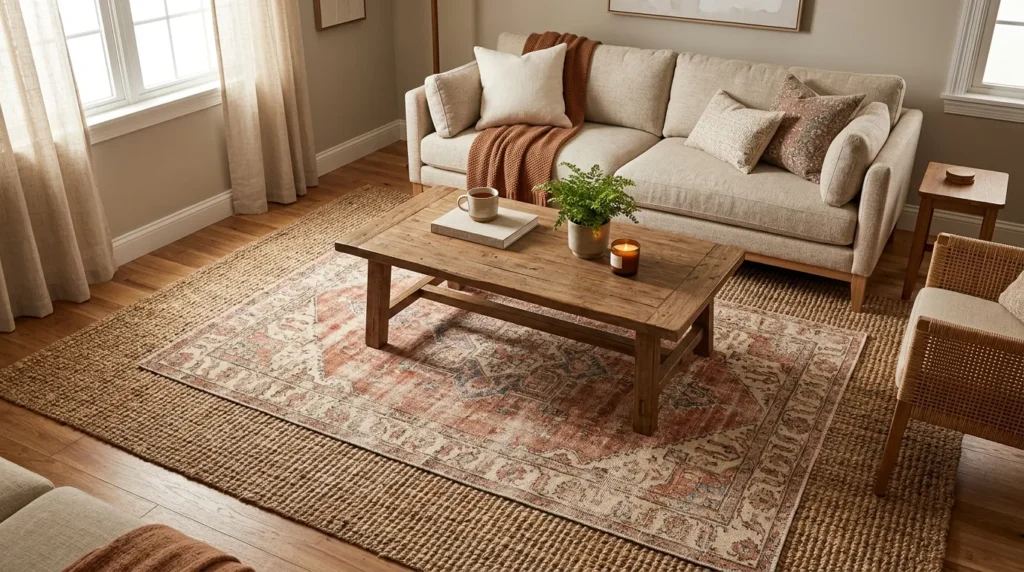
The floor is easy to overlook, but in my experience, a well-chosen rug (or a layered pair of rugs) can pull an entire French country living room together. A natural jute or sisal rug as a base layer adds texture and warmth, while a smaller vintage-style rug — think faded Oriental patterns or soft floral motifs — layered on top brings in color and softness underfoot. This layering technique is a favorite among designers because it adds visual depth to the floor plane, which often gets neglected in favor of walls and furniture, and it photographs beautifully for that classic, collected French farmhouse look.
How To Style It
Start with a jute or sisal rug sized to anchor your seating area, extending slightly under the front legs of your sofa and chairs. Layer a smaller, patterned rug on top — a faded vintage-style Oriental rug in soft rust, blue, or cream tones works particularly well against the neutral jute base. If you have hardwood floors, this layering also helps soften footsteps and adds insulation during colder months. Keep the pattern of the top rug relatively muted so it doesn’t compete with toile or floral textiles elsewhere in the room. For smaller living rooms, a single well-chosen vintage-style rug can achieve a similar warmth without the bulk of two full layers — just be sure it’s large enough that all your furniture legs sit at least partially on it, which keeps the room feeling grounded rather than floating.
Frequently Asked Questions
What colors are best for a French country living room? Soft, warm neutrals work best — think buttery cream, pale greige, dusty stone, and warm off-white. These tones mimic limewashed plaster walls found in traditional French farmhouses. Accent colors typically come from muted florals or toile prints in dusty blue, soft red, or sage green, rather than bold or saturated shades.
Is French country the same as modern farmhouse? No, though they’re often confused. Modern farmhouse tends to favor crisp black-and-white palettes, shiplap, and industrial metal accents. French country is softer and more romantic, leaning on aged wood, gilded details, toile and floral textiles, and wrought iron rather than stark contrast or industrial materials.
How do I get this look on a budget? Focus on secondhand and thrifted pieces first — mirrors, ironstone pottery, wood furniture, and vintage textiles are often more affordable and more authentic-looking than new reproductions. A few well-chosen accents, like toile pillows or an aged mirror, can transform a room without a full furniture overhaul.
Can French country style work in a small living room? Yes. Keep the palette light and consistent, choose one or two statement pieces (like a mirror or an accent chair) rather than many small items, and use a single layered rug instead of bulky furniture to add warmth without crowding the space.
What kind of lighting fits French country design? Wrought iron chandeliers with candle-style bulbs, aged brass sconces, and lamps with linen or pleated shades all fit well. Lighting with warm, soft bulbs (rather than cool white LEDs) helps reinforce the aged, romantic feeling central to the style.
Do I need antiques to make this style work? Not necessarily. While genuine antiques add authenticity, many retailers now offer intentionally distressed or aged-look furniture and decor. Mixing a few real vintage or thrifted pieces with newer distressed items usually gives the most convincing and budget-friendly result.
How do I avoid making the room feel too busy? Choose one dominant pattern (toile or floral) and keep everything else solid or subtly textured. Stick to a consistent neutral base color, and let your collected objects and textures — rather than multiple competing patterns — carry the visual interest.
Conclusion
French country style has staying power because it isn’t about chasing a trend — it’s about building a room that feels warm, textured, and a little bit storied, the kind of space that looks like it grew over years rather than a single weekend project. From a soft neutral palette and weathered wood furniture to the romance of toile and floral textiles, each of these ideas works best when it’s layered thoughtfully alongside the others rather than treated as a standalone checklist.
You don’t need to tackle all ten ideas at once, and honestly, you shouldn’t. Start with one or two ideas and gradually build a space that reflects your style and supports everyday comfort. Maybe that’s swapping in a linen slipcover this month and hunting for the right antique mirror the next. Over time, those small, intentional choices are what give a French country living room its most important quality: the feeling that it was never really “finished,” just lovingly built one piece at a time.
Related Articles
- Cozy Bedroom Ideas
- Small Living Room Layouts
- Modern Farmhouse Decor
- Neutral Home Styling
- DIY Accent Wall Ideas