
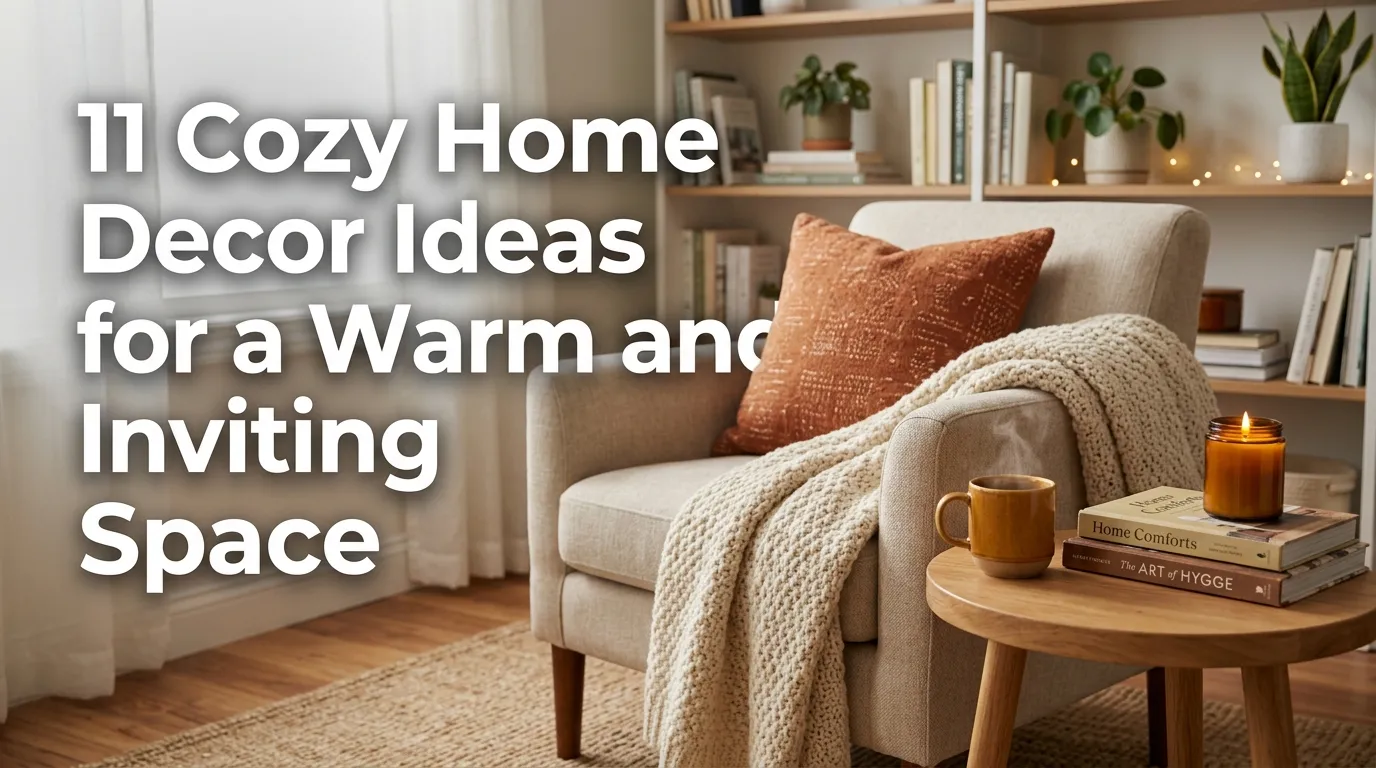
11 Cozy Home Decor Ideas for a Warm and Inviting Space
Creating a cozy home isn’t about filling every corner with blankets, candles, and decorative objects. The spaces that feel most inviting usually have a thoughtful balance of comfortable textures, warm lighting, natural materials, and personal details.
I’ve noticed that a room can look beautiful in photos but still feel surprisingly cold in person. The difference often comes down to atmosphere. Cozy rooms invite you to sit down, stay awhile, and actually use the space. That might mean a deep sofa with soft pillows, warm lamps instead of harsh overhead lighting, layered rugs underfoot, or a reading corner that makes you want to pick up a book.
The good news is that you don’t need to completely redecorate your home to create this feeling. Small changes can make a meaningful difference. Adding curtains, warming up your color palette, rearranging furniture, or introducing natural wood can transform the mood without requiring a major renovation.
These cozy home decor ideas work across different interior styles, from modern and Scandinavian to farmhouse, traditional, boho, and transitional. The goal isn’t to copy one exact aesthetic. Instead, think about which elements make your home feel comfortable and incorporate those details in ways that reflect your personality.
Whether you’re refreshing your living room, bedroom, entryway, or entire home, these ideas can help you create spaces that feel warmer, softer, and more welcoming.
Table of Contents
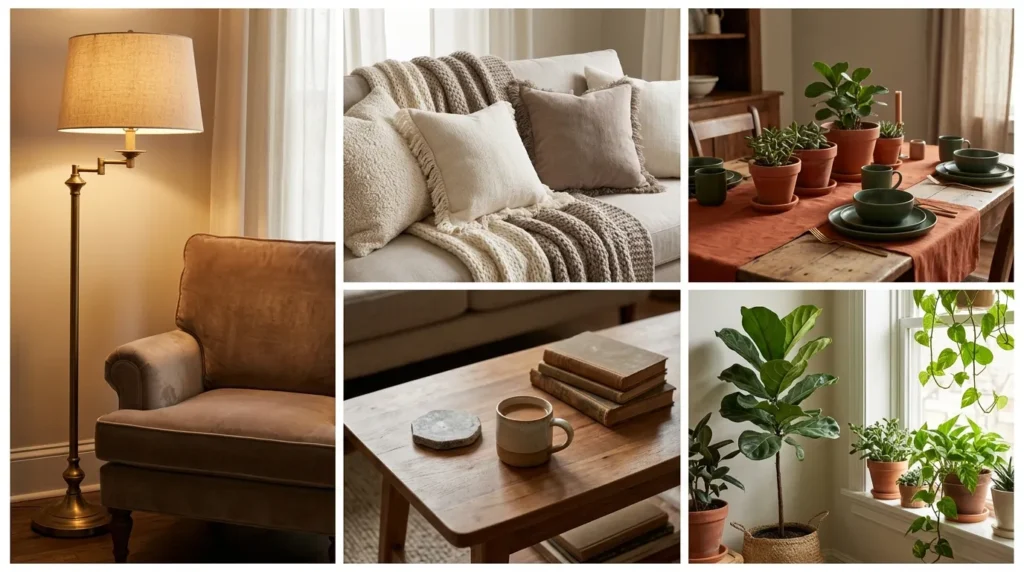
1. Layered Textures
Combine soft fabrics and tactile materials to make rooms feel inviting.
2. Warm Lighting
Use multiple light sources to create a softer atmosphere throughout the home.
3. Natural Wood
Introduce wood tones to bring warmth and organic character indoors.
4. Soft Neutral Colors
Build a calming foundation with warm, versatile shades.
5. Cozy Seating
Make relaxation easier with comfortable, inviting furniture arrangements.
6. Layered Rugs
Add softness, warmth, and visual definition beneath your furniture.
7. Draped Curtains
Use fabric at the windows to soften architecture and improve the atmosphere.
8. Personal Accents
Bring personality into the room through meaningful objects and artwork.
9. Indoor Greenery
Add natural color and texture with thoughtfully placed plants.
10. Cozy Reading Nook
Turn an unused corner into a comfortable space for quiet moments.
11. Seasonal Details
Refresh your home throughout the year with subtle seasonal touches.
1. Layered Textures
Quick Benefits
- Makes rooms feel warmer
- Adds visual depth
- Creates a more comfortable atmosphere
- Prevents neutral rooms from feeling flat
- Works with almost any decorating style
Why It Works
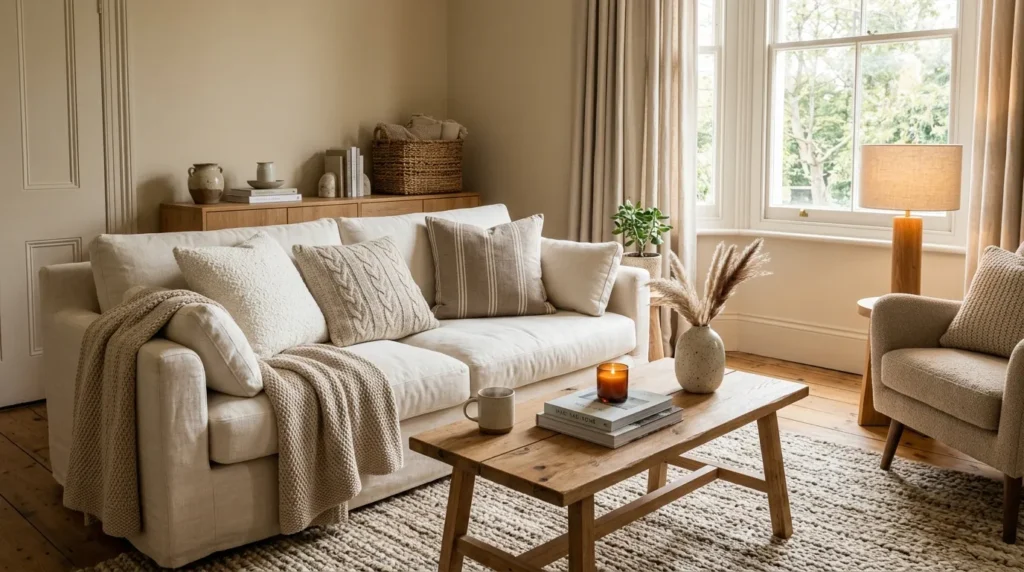
Texture is one of the easiest ways to make a room feel cozy without dramatically changing its color scheme. A space decorated entirely with smooth surfaces can sometimes feel visually cold, even when the furniture itself is comfortable.
Layering different tactile materials creates a sense of depth. Think chunky knits, linen, boucle, cotton, velvet, wool, woven baskets, natural wood, and softly finished ceramics. The contrast between these materials gives the eye something to explore while making the room feel more relaxed.
In my experience, texture becomes especially important in neutral interiors. When there aren’t many strong colors competing for attention, variations in fabric and material keep the space interesting.
How To Style It
Start with your largest upholstered pieces, such as a sofa, bed, or accent chair. Add a few cushions in different fabrics rather than choosing everything from the same material.
A chunky knit throw can soften a structured sofa, while a woven basket adds texture near a fireplace or media cabinet. In bedrooms, layer cotton bedding with a quilt and a heavier throw.
Don’t forget hard surfaces. Wood, rattan, stone, ceramic, and aged metal can provide beautiful contrast against soft fabrics.
The key is variety without chaos. Choose three or four dominant textures and repeat them throughout the room.
2. Warm Lighting
Quick Benefits
- Creates a relaxing atmosphere
- Makes rooms feel more intimate
- Adds depth after dark
- Highlights decorative features
- Reduces reliance on harsh overhead lighting
Why It Works
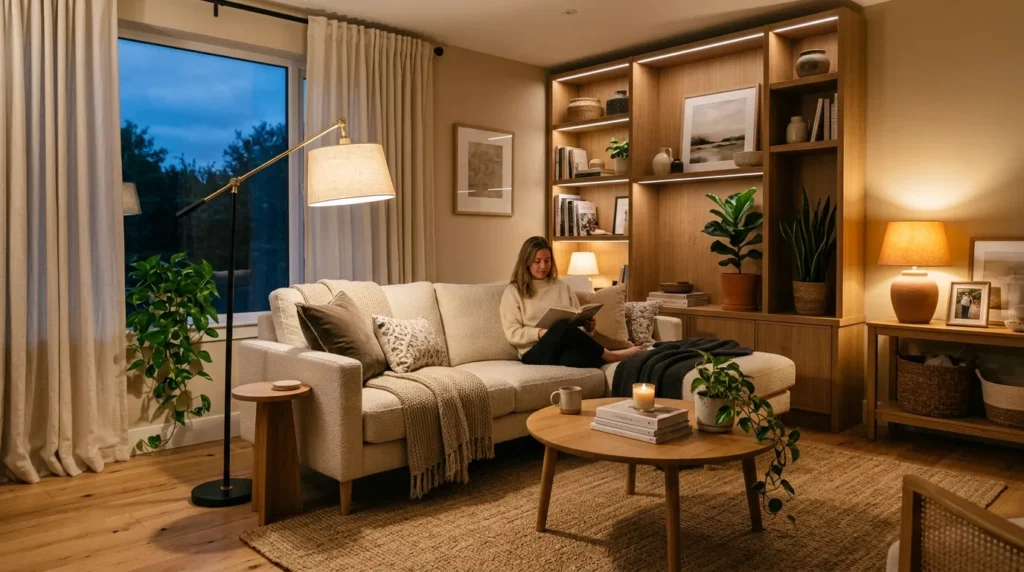
Lighting can completely change the emotional feeling of a room. A space with only one bright ceiling fixture may feel functional, but it rarely feels especially cozy.
Layered lighting creates several smaller pools of illumination. A floor lamp beside the sofa, table lamp on a console, wall sconce near a reading chair, or small accent lamp on a shelf can make the room feel much more welcoming.
Warm-toned light also complements materials commonly found in cozy interiors, including wood, cream upholstery, woven textiles, and brass accents.
How To Style It
Think in layers rather than relying on one fixture.
Use ceiling lighting for general illumination, table lamps for side tables and consoles, floor lamps near seating areas, and accent lighting to highlight artwork or architectural features.
Place lamps at different heights to create visual depth. A floor lamp beside a sofa can balance a table lamp on the opposite side of the room.
For a particularly cozy evening atmosphere, use dimmable fixtures where possible. Always choose bulbs and fixtures appropriate for their intended use, and follow manufacturer recommendations.
3. Natural Wood
Quick Benefits
- Adds warmth
- Introduces organic texture
- Balances cool finishes
- Works across decorating styles
- Creates a timeless foundation
Why It Works
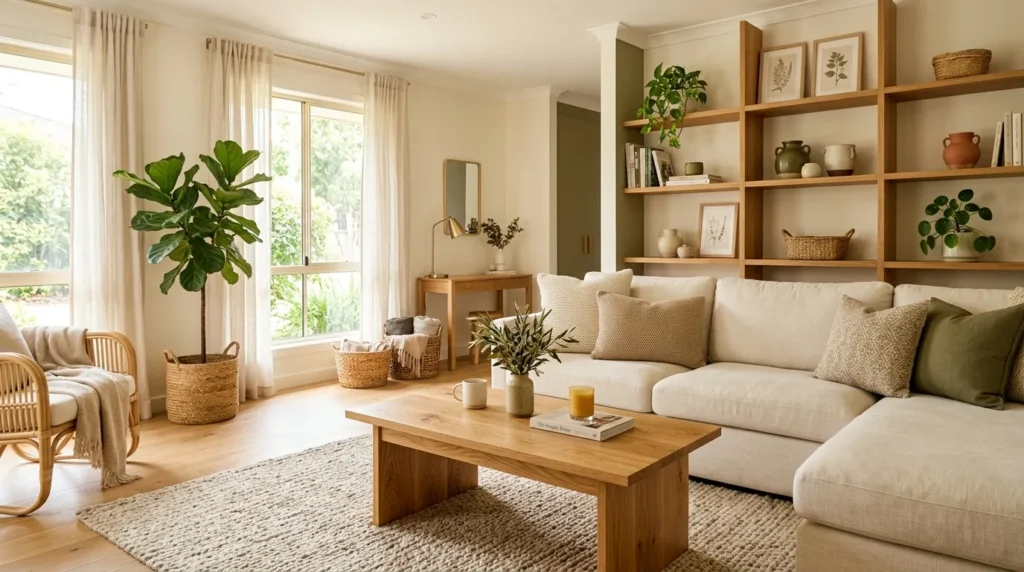
Natural wood has a warmth that can be difficult to recreate with manufactured materials. Even a small amount can make a room feel more grounded and inviting.
You don’t need matching wood furniture throughout the entire home. In fact, mixing related wood tones can create a more collected appearance.
Light oak can brighten a room, medium wood adds traditional warmth, while walnut creates a richer and moodier feeling. Reclaimed or distressed wood can add character to farmhouse and rustic spaces.
How To Style It
Choose one or two major wood elements first, such as a coffee table, dining table, console, or bed frame.
Then repeat the material in smaller ways through picture frames, trays, shelving, stools, or decorative boxes.
If your room contains cool gray upholstery or white walls, warm oak can soften the palette. If you already have warm beige walls, deeper walnut can add contrast.
Balance wood with textiles and greenery so the room feels layered rather than overly furniture-heavy.
4. Soft Neutral Colors
Quick Benefits
- Creates a calming backdrop
- Makes decorating easier
- Works across multiple styles
- Allows texture to stand out
- Creates a timeless appearance
Why It Works
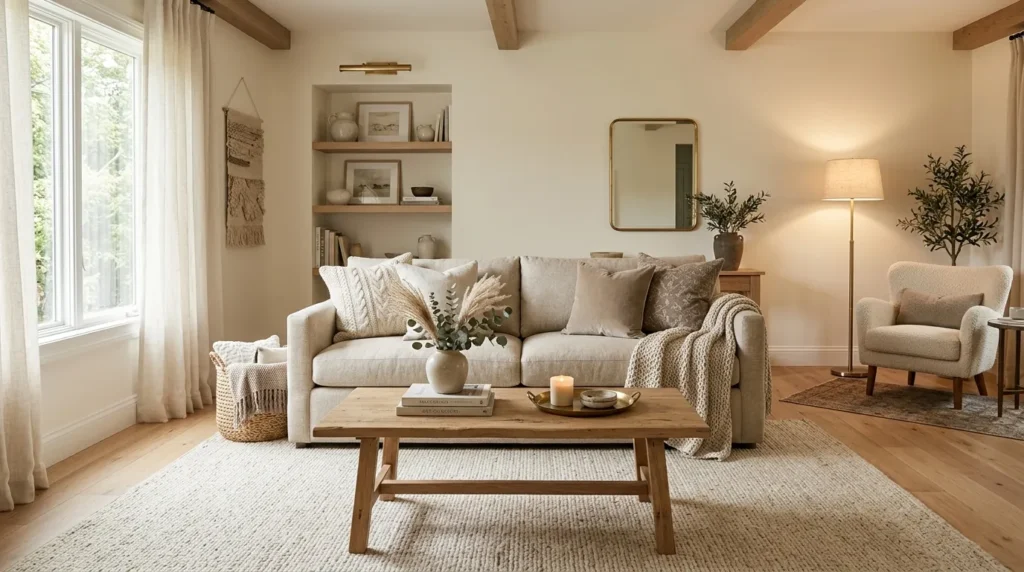
Warm neutrals are incredibly useful when you’re trying to create a cozy home. Shades such as ivory, cream, beige, taupe, oatmeal, warm gray, and muted brown can create a soothing foundation without making the room feel boring.
The trick is using several tones rather than relying on one shade everywhere. A cream sofa against warm white walls can be complemented by beige curtains, taupe cushions, and natural wood.
This tonal approach creates depth while keeping the overall room visually calm.
How To Style It
Choose one dominant neutral for the walls or largest furniture pieces. Then introduce two or three related shades through textiles and accessories.
For example, a cream sofa can be paired with oatmeal pillows, a beige rug, warm white curtains, and a light wood coffee table.
If the room begins to feel too monochromatic, add a small amount of contrast with charcoal, muted green, terracotta, or aged brass.
Avoid making every surface the exact same shade. Cozy interiors usually benefit from subtle tonal variation.
5. Cozy Seating
Quick Benefits
- Encourages relaxation
- Creates a welcoming focal point
- Makes living rooms more functional
- Supports conversation
- Adds softness to the room
Why It Works
A cozy home should feel comfortable to actually live in, and seating plays a major role in that experience.
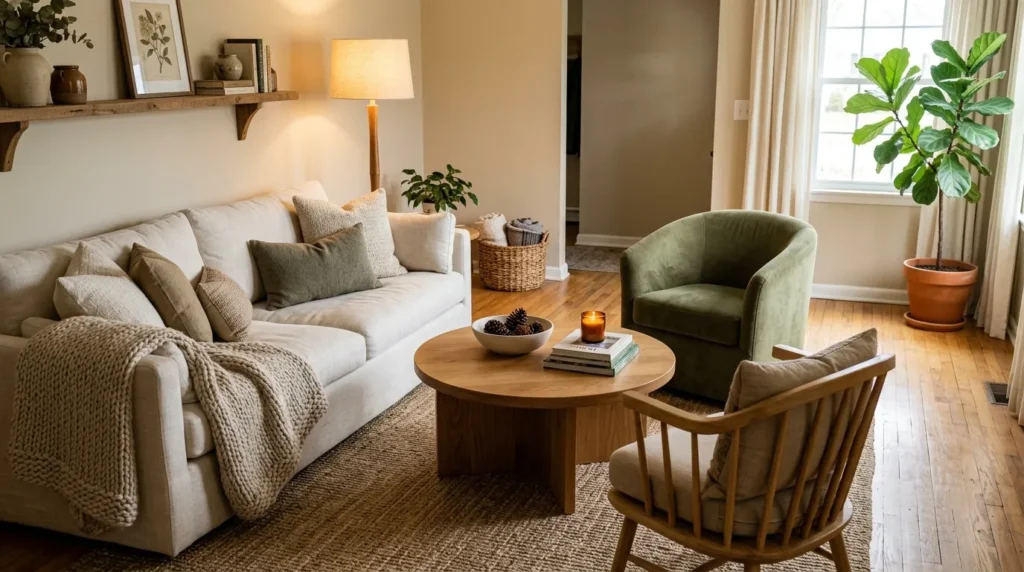
A beautiful sofa isn’t enough if the arrangement makes conversation awkward or leaves the room feeling disconnected. Furniture placement should encourage people to sit together while preserving enough space to move around comfortably.
One mistake many homeowners make is pushing every piece of furniture against the walls. Depending on the room, bringing seating slightly inward can create a more intimate arrangement.
How To Style It
Start with the primary sofa or sectional and position it toward the room’s main focal point, whether that’s a fireplace, television, large window, or coffee table.
Add one or two accent chairs when space allows. A small ottoman can provide extra seating while doubling as a footrest or coffee-table alternative.
Use cushions and throws to make the seating look inviting without covering every available surface.
Leave enough clearance around walkways, doors, and furniture so the room remains comfortable for everyday life.
6. Layered Rugs
Quick Benefits
- Adds softness underfoot
- Defines seating zones
- Introduces texture
- Helps rooms feel finished
- Can visually connect furniture
Why It Works
Rugs make a room feel grounded. In open-plan homes especially, they can help distinguish one functional area from another while creating a softer, more intimate atmosphere.
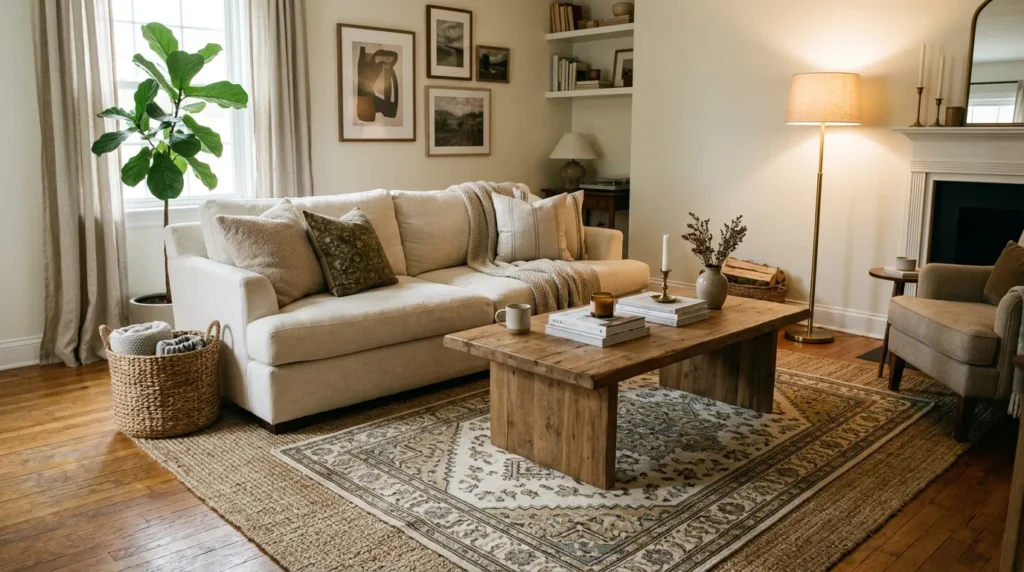
Layering doesn’t necessarily mean placing two large rugs directly on top of one another. It can also mean combining a textured base with a smaller patterned rug or using different rugs throughout adjoining spaces.
The right rug can also bring together colors from the furniture, curtains, artwork, and accessories.
How To Style It
Choose a rug large enough for the main furniture arrangement whenever possible. In a living room, the front legs of the sofa and chairs should ideally relate to the rug rather than floating completely outside it.
For a layered look, start with a neutral textured base and add a smaller patterned piece.
Natural fibers, vintage-inspired patterns, wool textures, and subtle geometric designs can all support a cozy aesthetic.
Make sure rugs are appropriate for the room’s traffic level and use suitable rug pads to improve stability.
7. Draped Curtains
Quick Benefits
- Softens windows
- Adds warmth
- Creates visual height
- Improves privacy
- Makes rooms feel more finished
Why It Works
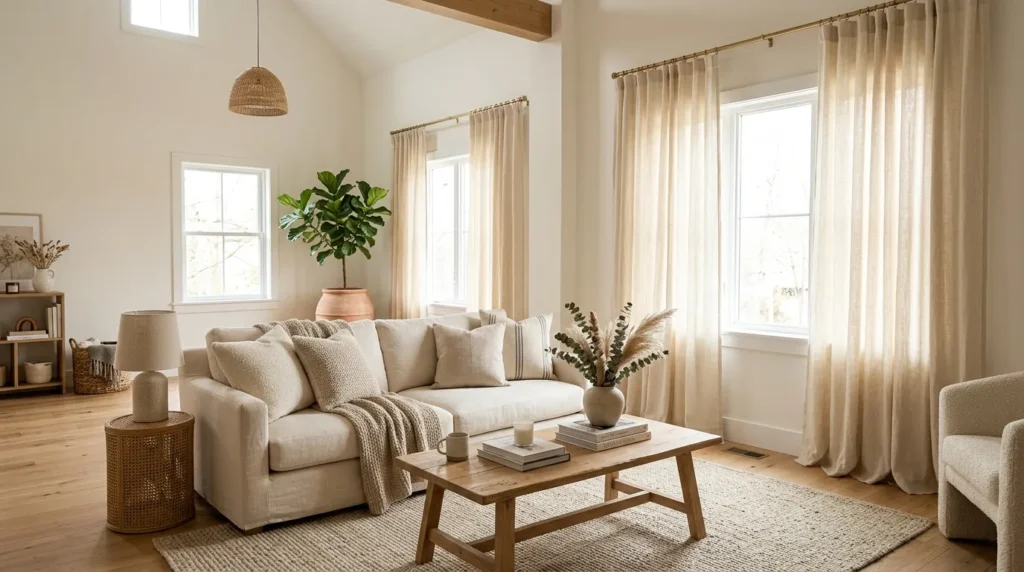
Windows can occupy a large portion of a room, so the way they’re dressed has a noticeable effect on the overall atmosphere.
Soft curtains introduce fabric and movement while reducing the hard visual edge around the window. Hanging them correctly can also make ceilings appear taller.
For cozy interiors, curtains are often more effective when they extend beyond the exact dimensions of the window rather than stopping immediately at the frame.
How To Style It
Mount curtain hardware high enough to visually elongate the wall, while ensuring the placement works with the window and surrounding architecture.
Choose linen-look, cotton, velvet, or other suitable fabrics depending on the room.
Warm white and beige curtains create a soft neutral appearance. Deeper shades can add drama in bedrooms and living rooms.
Allow enough fabric fullness for the curtains to look substantial when closed, and consider lining based on privacy, insulation, and light-control needs.
8. Personal Accents
Quick Benefits
- Makes the home feel individual
- Adds visual interest
- Creates conversation points
- Prevents rooms from feeling staged
- Connects decor with memories
Why It Works
A cozy home shouldn’t look like a showroom. Personal objects are what give a room a sense of history and identity.
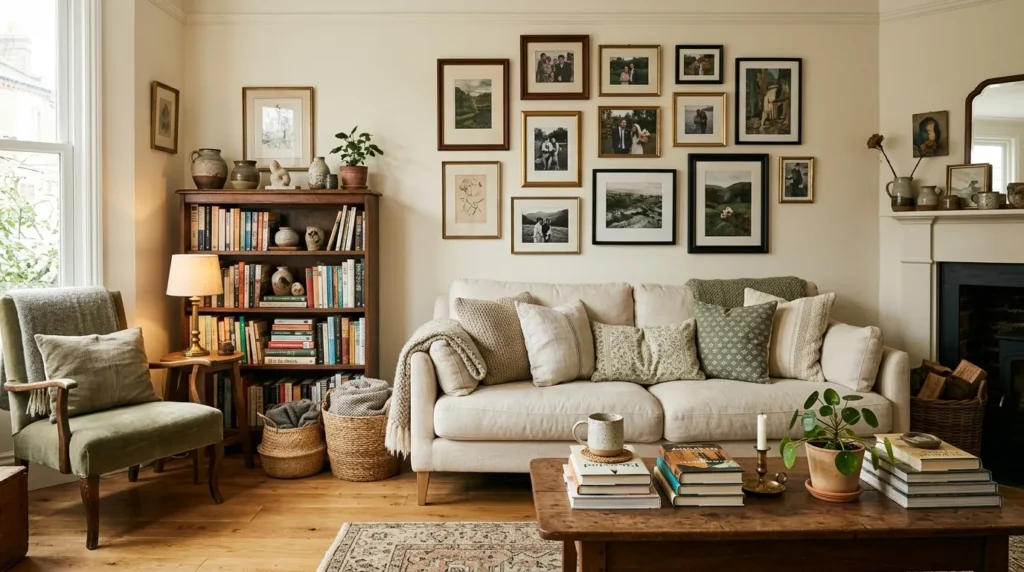
Family photographs, artwork collected during travels, inherited furniture, handmade ceramics, books, or favorite decorative pieces can make the space feel genuinely lived in.
The goal isn’t to display everything you own. Select objects that have meaning or contribute something visually useful.
How To Style It
Create small collections instead of scattering individual objects randomly.
A console table might hold a framed photograph, ceramic bowl, lamp, and stack of books. A bookshelf can combine books with artwork, plants, and meaningful keepsakes.
Vary the height of objects to create a more interesting arrangement. Keep some empty space between groups so individual pieces can breathe.
If you have many sentimental objects, rotate them seasonally instead of displaying everything at once.
9. Indoor Greenery
Quick Benefits
- Adds natural color
- Introduces organic shapes
- Softens hard furniture lines
- Brings energy to neutral rooms
- Works in nearly every interior style
Why It Works
Plants add life and movement to interiors. Their organic shapes contrast beautifully with rectangular furniture, straight shelving, and architectural lines.
Greenery can be especially effective in neutral homes because it introduces color without requiring a dramatic change to the overall palette.
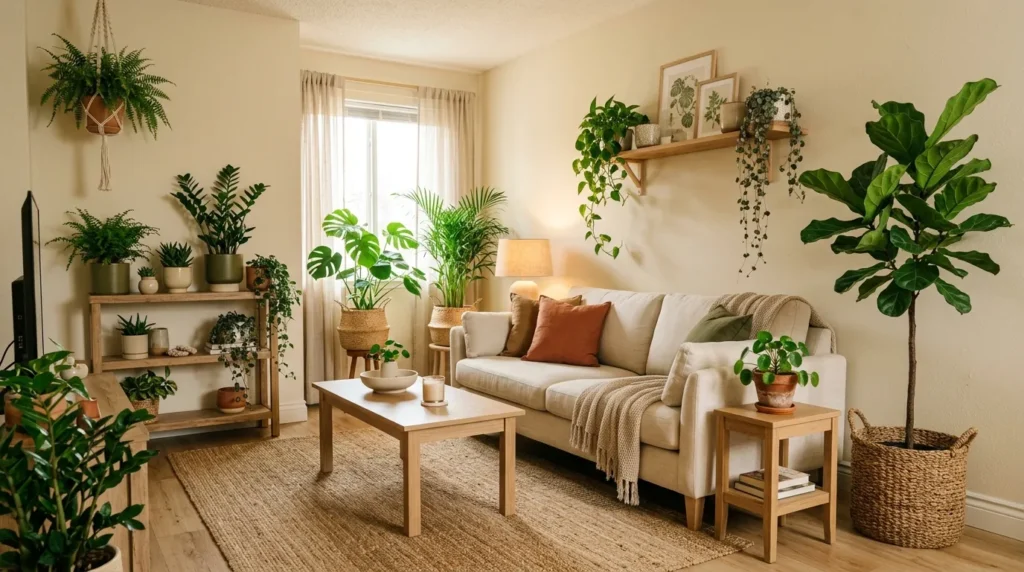
Plants also provide an opportunity to use attractive containers. Terracotta, woven baskets, ceramic pots, and simple stone-look planters can become part of the decor.
How To Style It
Choose plants according to the actual light conditions in your home. Don’t place a plant in a dark corner simply because it looks good there unless the variety can tolerate those conditions.
Use different heights to create layers. A tall plant can fill an empty corner, while smaller plants work on shelves and tables.
Keep containers coordinated with the room’s palette.
If you’re not confident caring for plants, start with a few low-maintenance varieties rather than filling every room immediately.
10. Cozy Reading Nook
Quick Benefits
- Uses overlooked corners
- Creates a dedicated relaxation area
- Adds personality
- Encourages screen-free downtime
- Works in bedrooms and living rooms
Why It Works
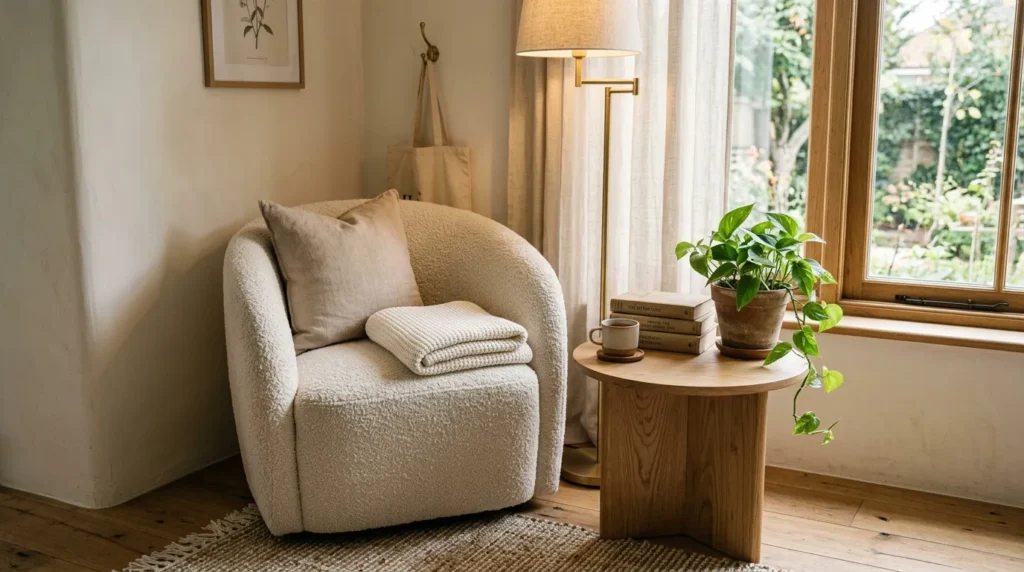
A reading nook can transform an unused corner into one of the most inviting areas in the home. It doesn’t need to be large. A comfortable chair, small table, lamp, and soft throw can be enough.
What makes the nook feel special is the sense of purpose. Instead of being another decorative corner, it becomes a place associated with relaxing, reading, listening to music, or enjoying a quiet cup of coffee.
How To Style It
Choose a chair that is genuinely comfortable rather than selecting one based only on appearance.
Place a small side table nearby for books, a drink, or a lamp. Add a floor lamp or wall light so the area remains functional after sunset.
A small rug can visually define the nook. Add one soft throw and a cushion rather than overcrowding the chair.
If the nook is near a window, take advantage of natural light while making sure furniture placement doesn’t obstruct the opening or necessary access.
11. Seasonal Details
Quick Benefits
- Keeps decor feeling fresh
- Adds personality throughout the year
- Allows inexpensive updates
- Creates a welcoming atmosphere
- Makes decorating more enjoyable
Why It Works
You don’t need to completely redesign your home every season. A few carefully chosen changes can shift the mood while keeping your main furniture and larger decor pieces intact.
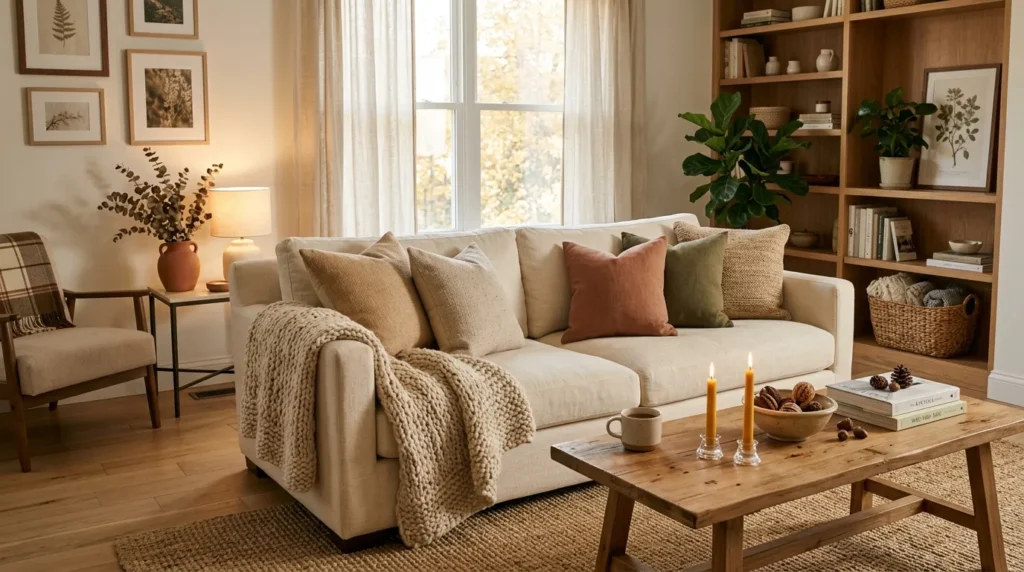
In fall, warmer textiles and earthy tones can make rooms feel especially inviting. Winter can bring chunky knits and deeper accents. Spring often works beautifully with lighter fabrics and fresh greenery, while summer can benefit from breathable textiles and natural textures.
The trick is keeping seasonal decor subtle enough that it works with your existing style.
How To Style It
Start with removable elements such as cushion covers, throws, table linens, artwork, and small decorative objects.
For fall, try rust, camel, olive, and warm brown accents. During winter, incorporate cream, charcoal, forest green, or burgundy.
Spring can introduce soft greens and muted florals, while summer works well with linen, rattan, pale blue, and lighter neutrals.
Store seasonal pieces carefully and rotate them rather than continually adding new decorations. This keeps your home feeling fresh without creating unnecessary clutter.
How to Make a Home Feel Cozy Without Clutter
Cozy doesn’t mean crowded.
One of the easiest ways to create warmth is actually to remove things that don’t contribute to the room. Give furniture enough breathing room, keep walking paths clear, and group decorative objects instead of spreading them across every available surface.
Use baskets and closed storage for everyday items that need to stay accessible but don’t need to be visible.
Then focus on a few high-impact details: comfortable textiles, warm lighting, natural materials, and meaningful accessories.
A room often feels cozier when there is a balance between decorated areas and quiet spaces.
Cozy Home Color Combinations
If you’re unsure where to start, consider one of these approachable palettes:
Cream + Warm Beige + Oak — soft and timeless.
Ivory + Sage + Natural Wood — relaxed and nature-inspired.
Taupe + Chocolate Brown + Brass — warm and sophisticated.
Warm White + Terracotta + Olive — earthy and welcoming.
Charcoal + Cream + Walnut — cozy with a moodier modern edge.
You don’t have to follow a palette perfectly. Use these combinations as starting points and adjust them to suit the natural light and existing finishes in your home.
Cozy Home Decor on a Budget
You don’t need a large decorating budget to make your home feel warmer.
Start with rearranging furniture. Sometimes improving the layout creates a bigger impact than buying new pieces.
Next, focus on textiles. New pillow covers, a throw, curtains, or a rug can dramatically change the atmosphere without replacing your main furniture.
Lighting is another worthwhile upgrade. Adding one or two table or floor lamps can completely change an evening atmosphere.
Finally, shop your own home. Move artwork, baskets, plants, lamps, and decorative objects between rooms. You may already own everything needed to create a fresh arrangement.
FAQ
What makes a home feel cozy?
A combination of comfortable seating, warm lighting, layered textures, natural materials, and personal details usually creates a cozy atmosphere. The goal is to balance softness and visual interest without making the room feel cluttered. Warm neutral colors, rugs, curtains, greenery, and meaningful accessories can all contribute.
How can I make my house cozy on a budget?
Start with inexpensive changes such as rearranging furniture, adding throw pillows, changing lamp shades, introducing warm lighting, and using blankets or curtains. Shop your existing decor before buying new pieces. Moving plants, artwork, baskets, and accessories into different rooms can give your home a surprisingly fresh appearance.
What colors make a room feel cozy?
Warm neutrals such as cream, beige, taupe, camel, warm gray, brown, terracotta, and muted olive can make rooms feel inviting. You don’t need to use dark colors to create coziness. Layering several warm shades with different textures can create the same feeling while keeping the space bright.
How do I make a modern home feel cozy?
Balance clean modern furniture with softer elements such as textured throws, upholstered seating, natural wood, woven accessories, warm lighting, and greenery. Avoid adding too many decorative objects. A modern home often feels cozier when a few tactile materials are thoughtfully layered against the clean architectural backdrop.
How do I make a living room feel cozy?
Start with the seating arrangement. Position sofas and chairs so they encourage conversation and face the room’s main focal point. Add a properly sized rug, layered cushions, a throw, warm lamps, curtains, and a few natural materials. Keep the coffee table and surrounding surfaces edited rather than overcrowded.
What is the easiest way to make a bedroom cozy?
Soft bedding, layered blankets, warm bedside lighting, curtains, a comfortable rug, and a calming color palette can make an immediate difference. Keep harsh overhead lighting to a minimum in the evening and introduce tactile fabrics such as cotton, linen, wool, or boucle.
Can a small home still feel cozy?
Absolutely. Small homes can actually feel especially inviting when furniture is appropriately scaled and clutter is controlled. Focus on comfortable seating, warm lighting, vertical storage, layered textiles, and a cohesive color palette. Multifunctional furniture can provide comfort without overwhelming the available space.
Conclusion
A cozy home is ultimately less about a particular decorating style and more about how the space makes you feel when you walk through the door.
You can create that feeling with soft textures, warm lighting, natural wood, comfortable seating, layered rugs, curtains, greenery, and personal objects that tell your story. None of these elements needs to be expensive or dramatic.
The most important thing is to build layers gradually. Start with the room’s biggest needs, then add smaller details that make everyday life more comfortable. A beautiful throw is wonderful, but it becomes much more meaningful when it’s placed over a chair you actually love sitting in.
Don’t be afraid to leave some areas simple. Empty space gives your favorite pieces room to stand out and keeps cozy decorating from becoming cluttered.
Start with one room and choose two or three ideas from this list. Add them slowly, live with the changes, and notice what makes the room feel better to you. Over time, those small choices can create a home that feels warm, personal, comfortable, and genuinely welcoming.